10 Best Hard-Bottom Baby Shoes for Secure, Confident Steps
Most babies develop better in soft-soled shoes, but some need hard-bottom shoes for specific reasons like hypermobility, joint instability, or rough outdoor terrain. Here's when your baby needs them and which ones actually work.




Published December 22, 2025
AI Summary


If you're wondering if your baby needs hard-bottom shoes or if softer soles are better, this is a very common question to ask. Every parent around you will have a different opinion according to what worked best for their kids.
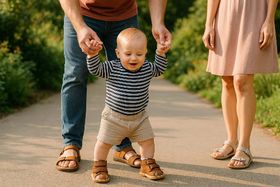
But most pediatric experts agree on the fact that as babies go through their development milestones, they learn to walk better in soft, flexible shoes that let them feel the ground. But some babies genuinely need hard-bottom shoes, those with hypermobility, joint instability, or babies spending lots of time on rough outdoor terrain.
This guide will help you figure out which category your baby falls into and show you the best options if hard soles are what they need.
Our Picks for the 10 Best Hard-Bottom Baby Shoes
Dandy Dominic Sandals
Thomas heel and built-in arch support with shock absorption.
Miki Angela Sandals
Three-strap high-top with specialized indoor grip sole.
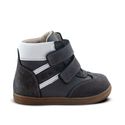
Silas Mateo Sneakers
High-cut sneaker with dual velcro and enclosed protection.
Show more
When Babies Actually Need Hard-Bottom Shoes
Research shows that soft-soled shoes work better for most babies learning to walk. Babies learn to walk by gripping the ground with their toes—something that's easier without rigid soles [2].
But some babies genuinely need hard-bottom shoes:
- Babies with diagnosed hypermobility or joint laxity
- Toddlers who trip and fall frequently due to ankle instability
- Children walking primarily on rough outdoor terrain (gravel, rocky paths)
- Babies following therapist recommendations for structured support
- Toddlers with delayed motor milestones need extra stability
If your baby doesn't fit these categories, soft, flexible shoes (or barefoot time) will serve them better during these crucial development months.
Hard Soles vs. Soft Soles: Understanding the Difference
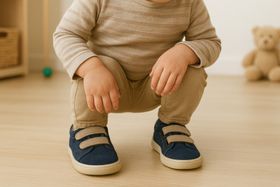
Hard-soled shoes have rigid rubber or plastic bottoms that don't bend much. They provide protection and structure, but reduce the ground feel that babies use to learn balance.
Soft-soled shoes use thin, bendy materials that move with your baby's foot. A 2021 study found soft-soled footwear barely changed how babies walked compared to being barefoot, while hard soles altered their walking more noticeably [2].
The developmental concern is that hard soles can reduce how well babies grip with their toes and feel the ground. For typical babies, this might slow down foot muscle development. For babies with foot conditions, hypermobility, or instability, though, the structure actually prevents problems that would happen without it.
What to Look for Beyond the Firm Sole
Lightweight Construction to Prevent Fatigue
Heavy shoes tire out little legs fast. Look for shoes under 150 grams—structured enough for support but light enough that your baby doesn't drag their feet.
You can hold the shoe in your hand. If it feels heavy to you, it'll feel much heavier on your baby's foot.
Ankle Support Without Being Too Stiff
Padded ankle collars or high-tops help prevent ankle rolling without locking the joint completely. You want stabilization, not a cast.
Check the heel area. It should resist when you squeeze it, but still allow some forward-backward movement.
Good Grip Without Too Much Grab
Rubber bottoms with textured patterns prevent slips on tile and wood floors. But super grippy soles can catch on carpet and cause trips. There must be enough grip to prevent sliding, but not so much that they stick during normal steps.
Wide Toe Box So Toes Can Spread
Hard shoes often squeeze the front more than soft ones. Your baby's toes need room to spread out when they stand and walk—that's how they balance.
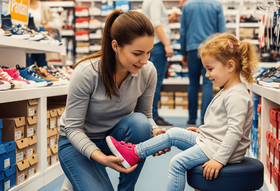
There should be about a thumb's width between your baby's longest toe and the shoe end when they're standing.
Red Flags to Avoid in Hard-Bottom Baby Shoes
Soles That Don't Bend at All
If the sole won't flex where the toes naturally bend, your baby will walk funny to compensate. They need some flexibility in the front, even if the heel stays firm.
The shoe should bend at the ball of the foot. Completely stiff soles force weird hip and knee movements.
Any Kind of Heel
Even small heels throw off your baby's center of gravity, making them lean backward to compensate. Babies already have balance challenges—heels make it worse.
Choose flat shoes or almost flat (under 4-6mm difference from heel to toe).
Narrow Fronts That Squeeze Toes
When toes get pinched, they can't spread for balance. Your baby loses their natural base of support, making falls more likely. If your little one's toes can't wiggle freely when standing, the shoe won't work, no matter what else it does right.
The 10 Best Hard-Bottom Baby Shoes
1

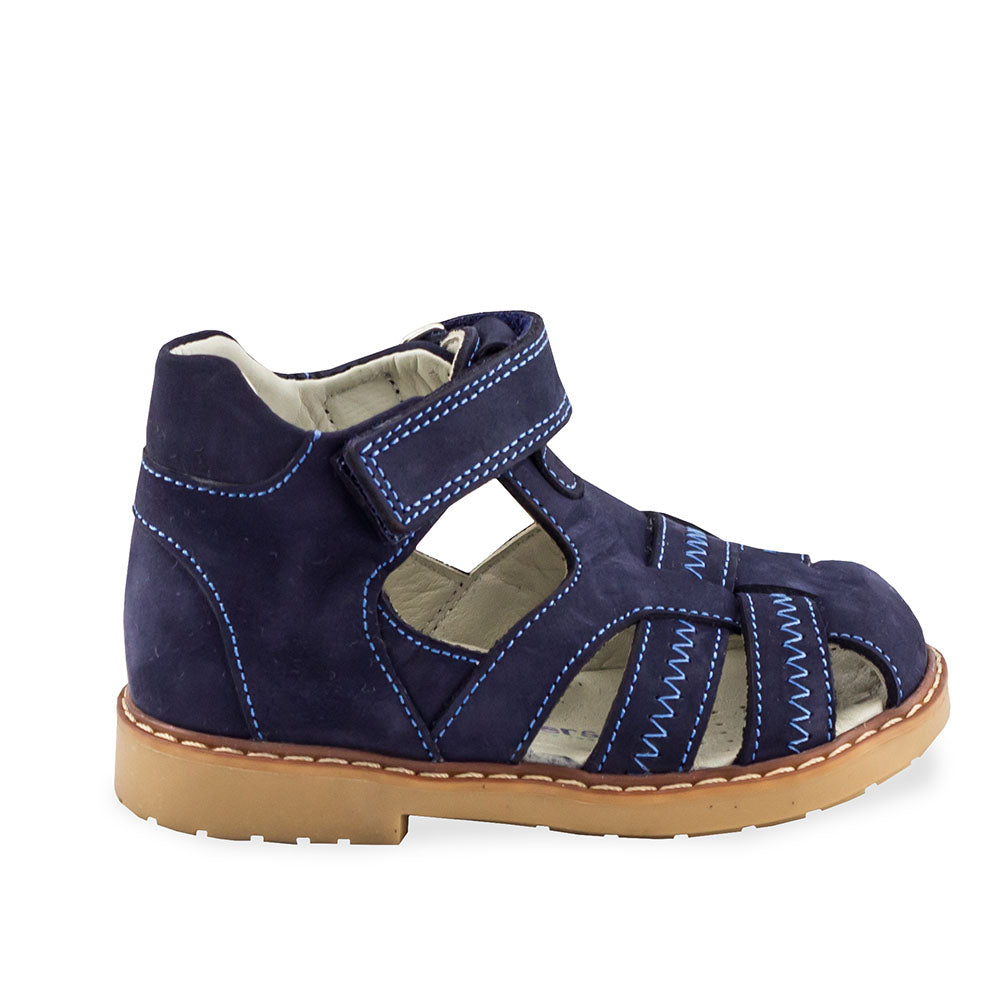
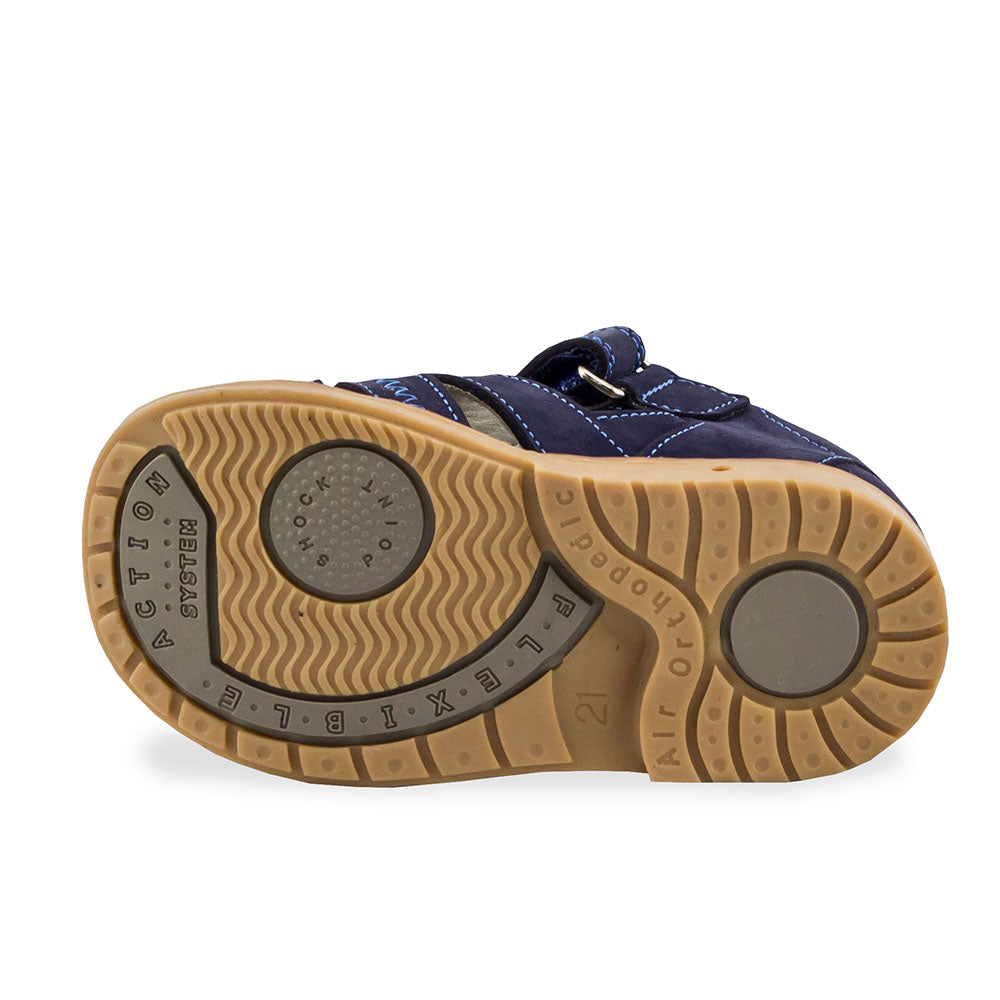
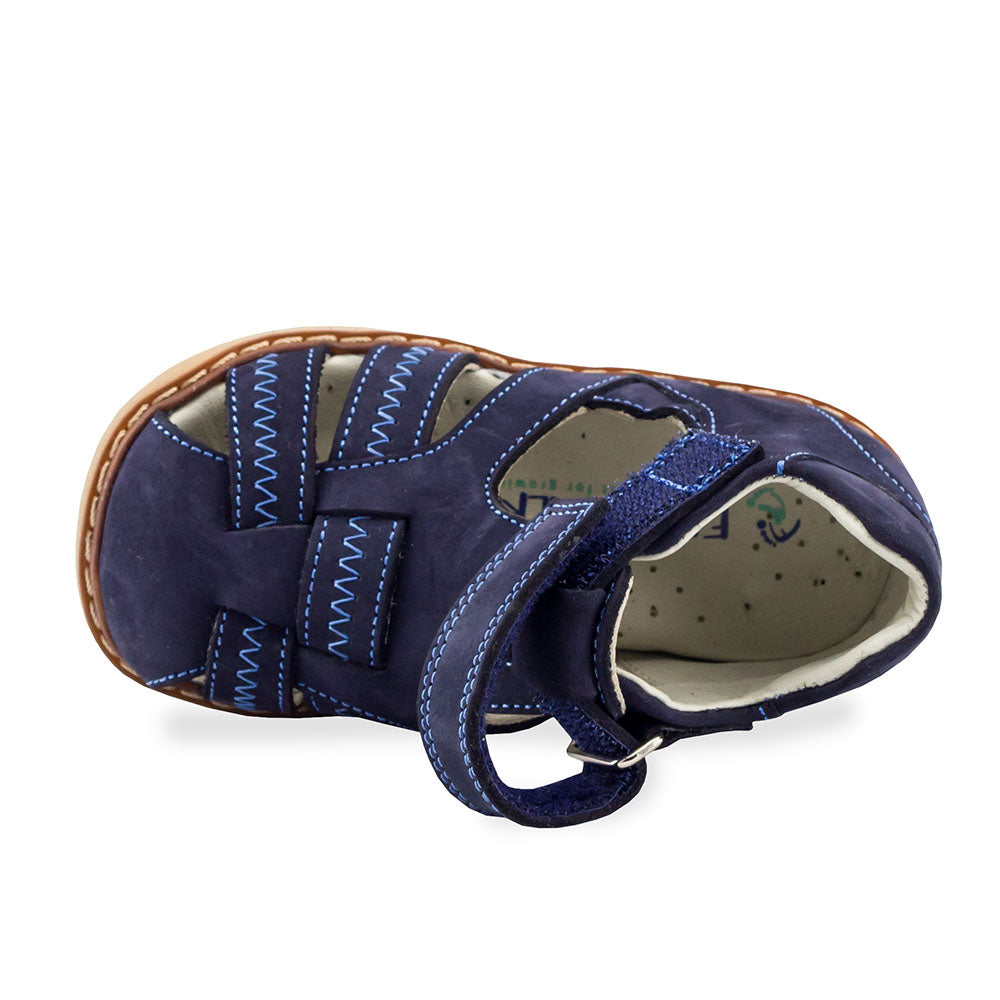
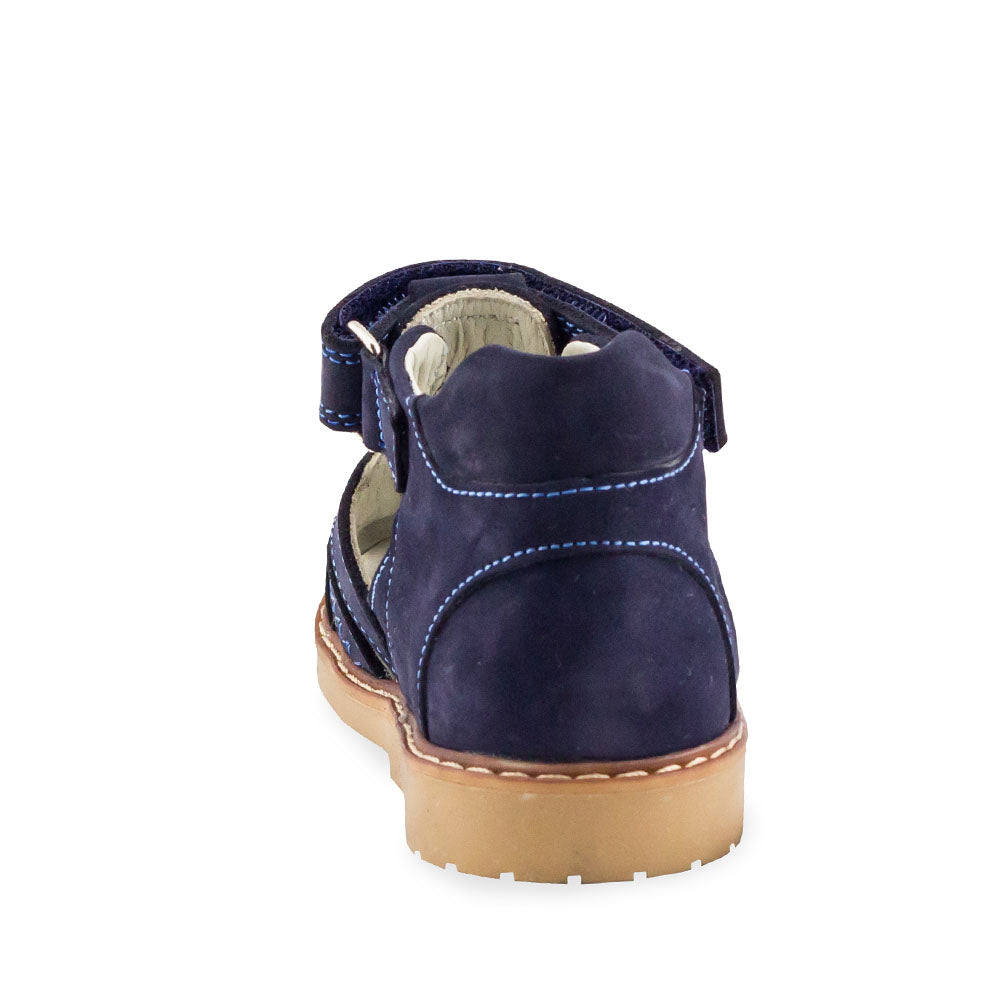
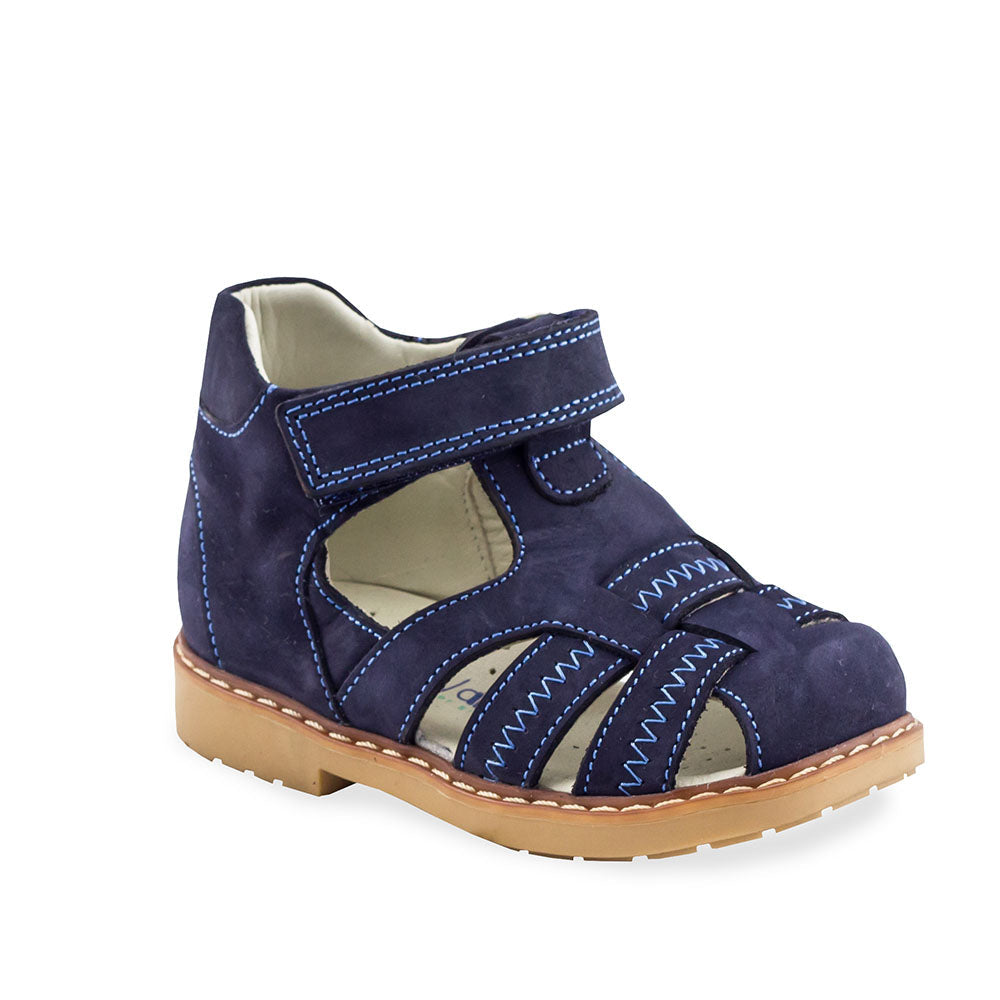
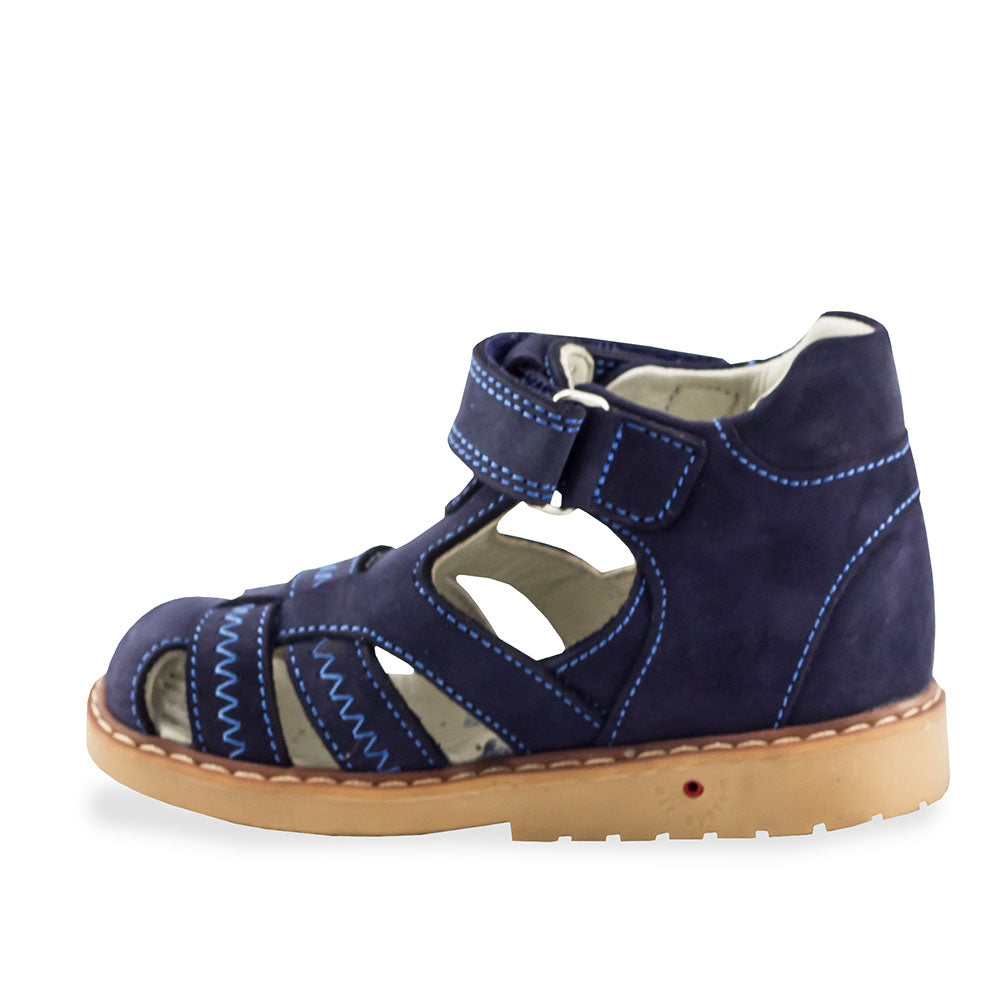
Dandy Dominic Sandals
Daily stability that handles everything from home to the playground.
Type
Sandals
Material
Nubuck Leather
Sizes
18–30 (EU) | 2–11.5 (UK)
Benefits for kids needing hard-bottom shoes
- Special heel design stops that inward ankle rolling you're seeing
- Built-in arch keeps feet aligned during each step
- Sandal style keeps feet cool while protecting toes
- One Velcro strap makes getting them on and off super fast
Why they're a top choice
The Dandy Dominic sandals work for everyday wear when your baby genuinely needs hard soles. The heel design gives extra support on the inside edge where ankles tend to roll in, while the sandal format means your baby's feet won't overheat during active play.
It handles the quick transitions from tile floors to concrete driveways to grass without losing grip.
2
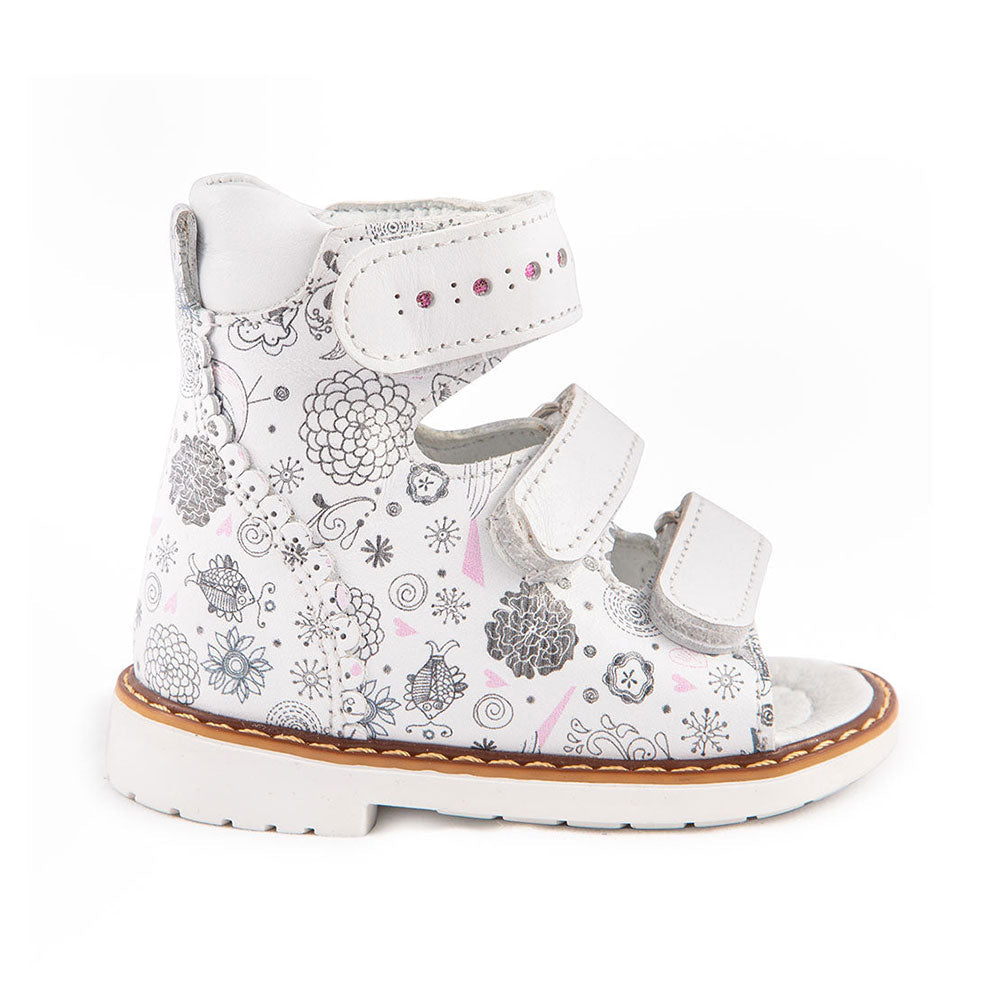
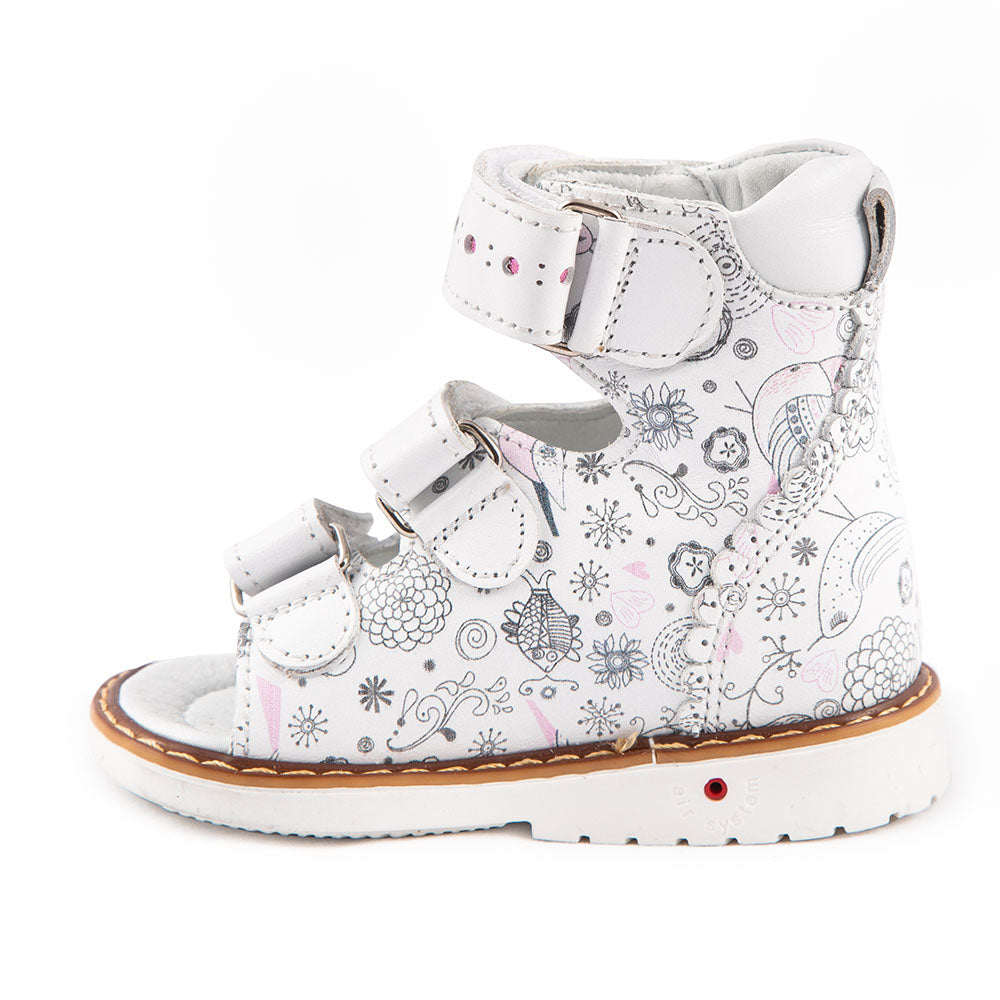
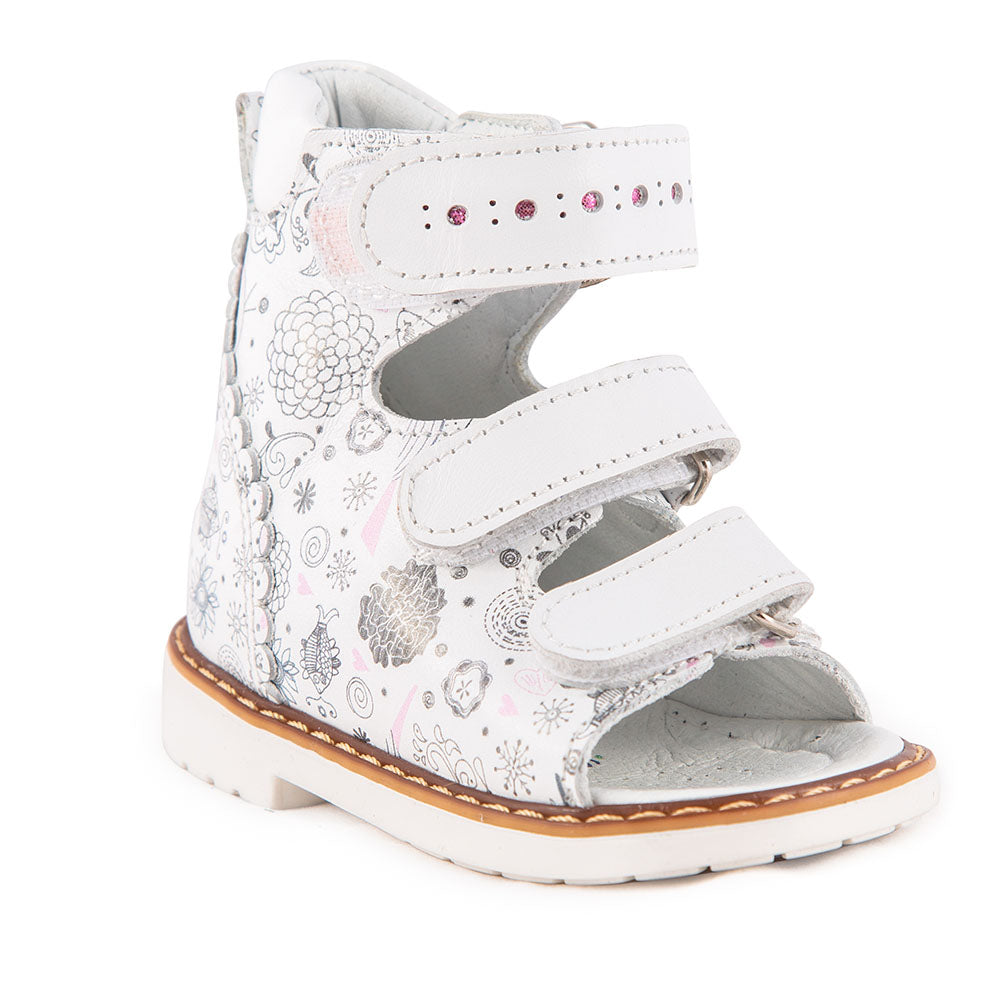
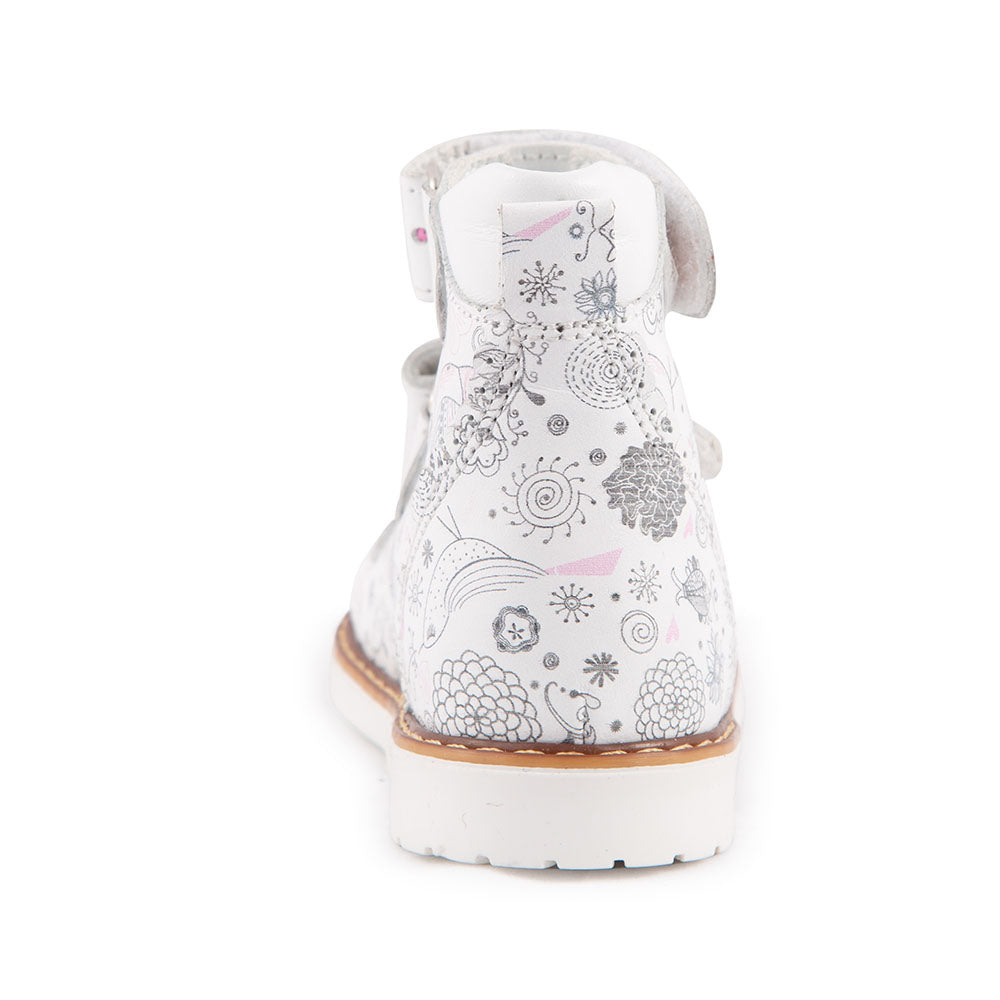
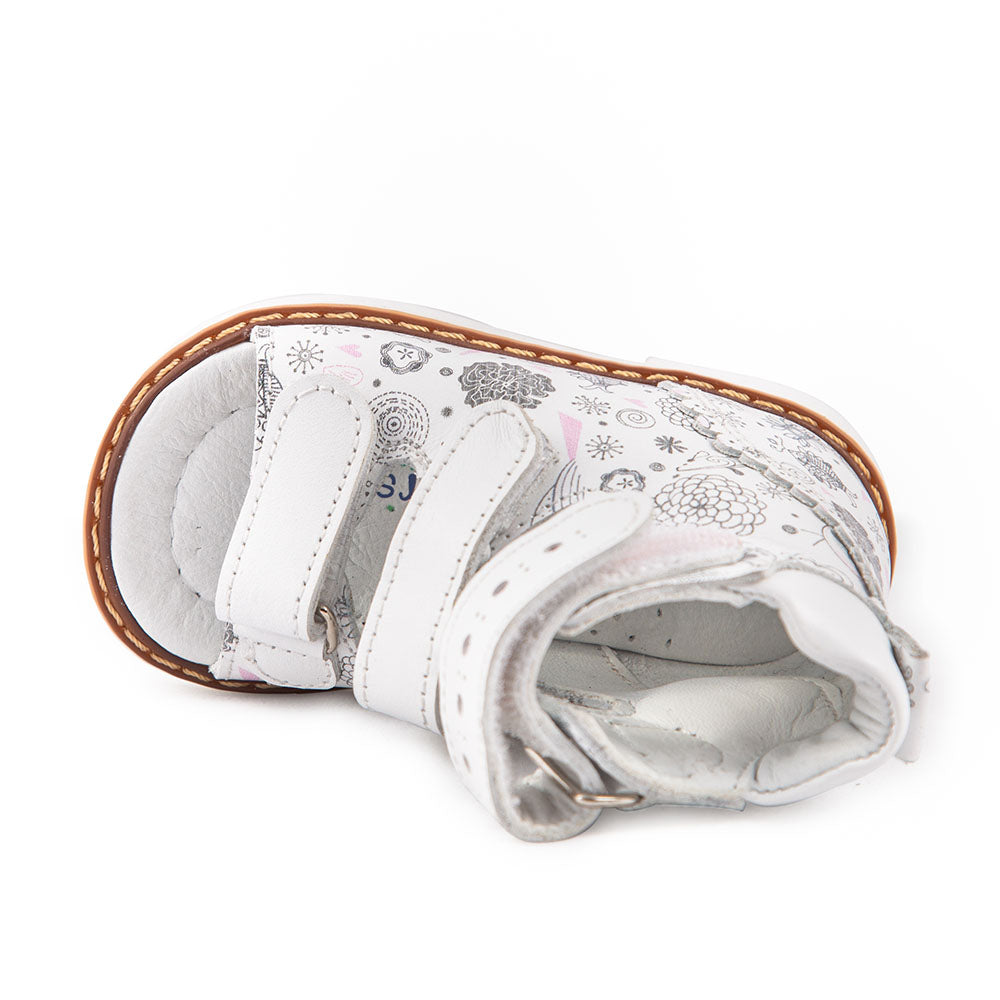
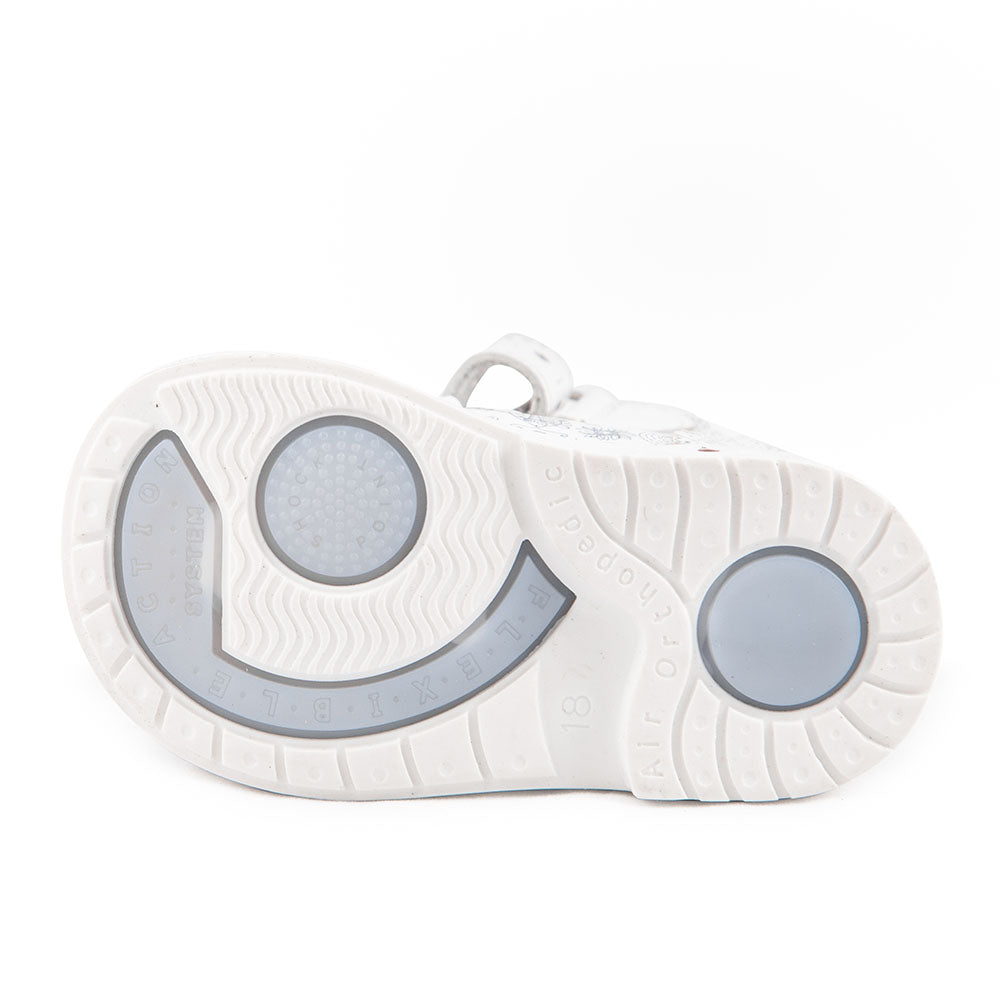
Miki Angela Sandals
Serious grip for slippery floors at home and daycare.
Type
Sandals
Material
Leather
Sizes
18–30 (EU) | 2–11.5 (UK)
Benefits for kids needing hard-bottom shoes
- Three velcro straps lock everything in place separately
- High-top wraps around ankles for extra stability
- Special sole made specifically for indoor floors
- Fun sketchy pattern makes them less boring to wear
Why they're a top choice
The Miki Angela sandal tackles slippery indoor floors head-on—those hardwood and tile surfaces where babies lose their footing easily. Three separate straps mean the heel, middle, and ankle all stay secure independently.
The high-top design helps during that furniture-cruising phase when your baby is pulling up and shifting weight unpredictably.
3
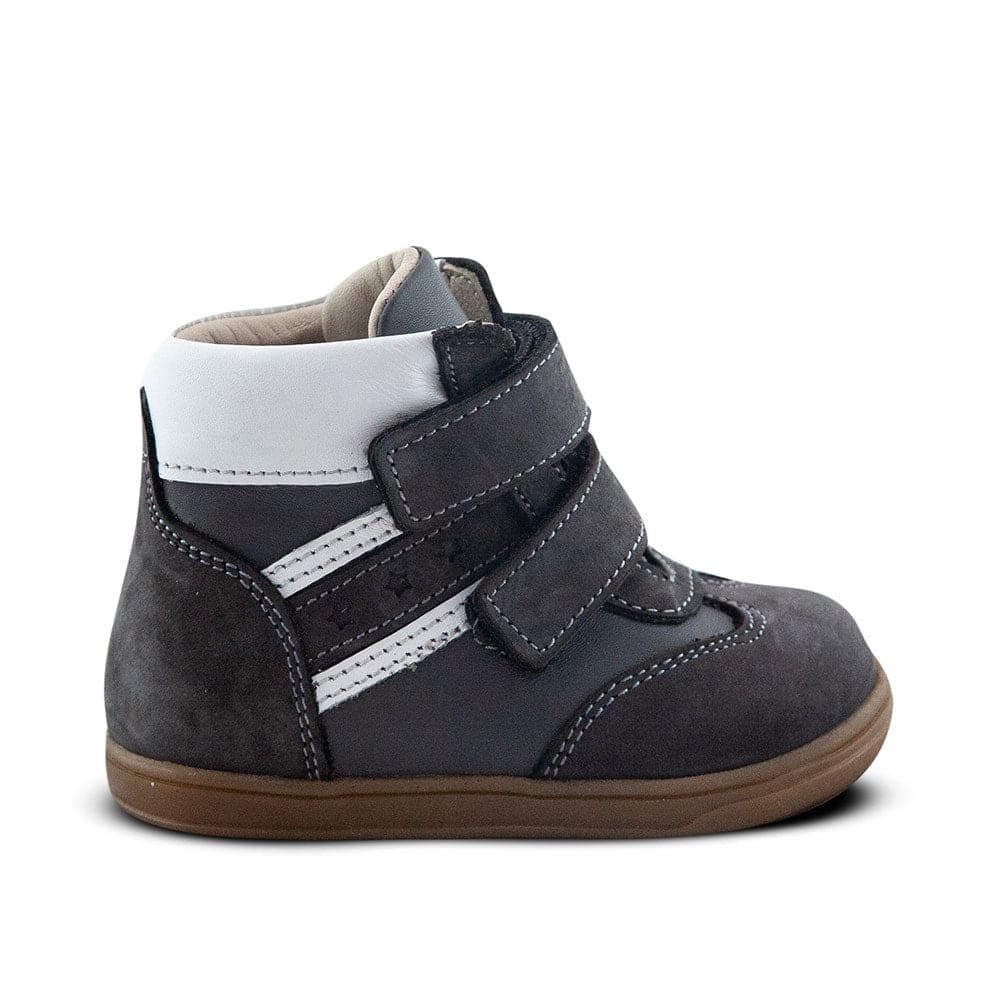
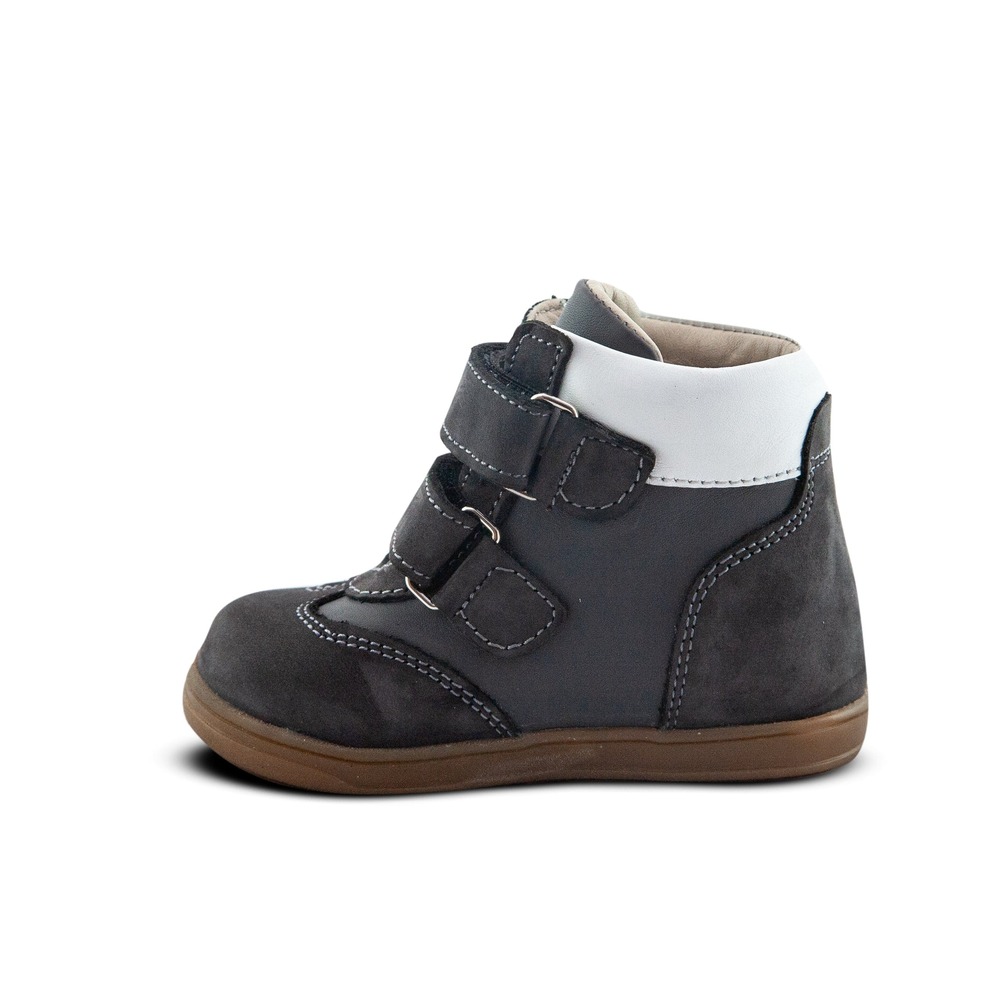
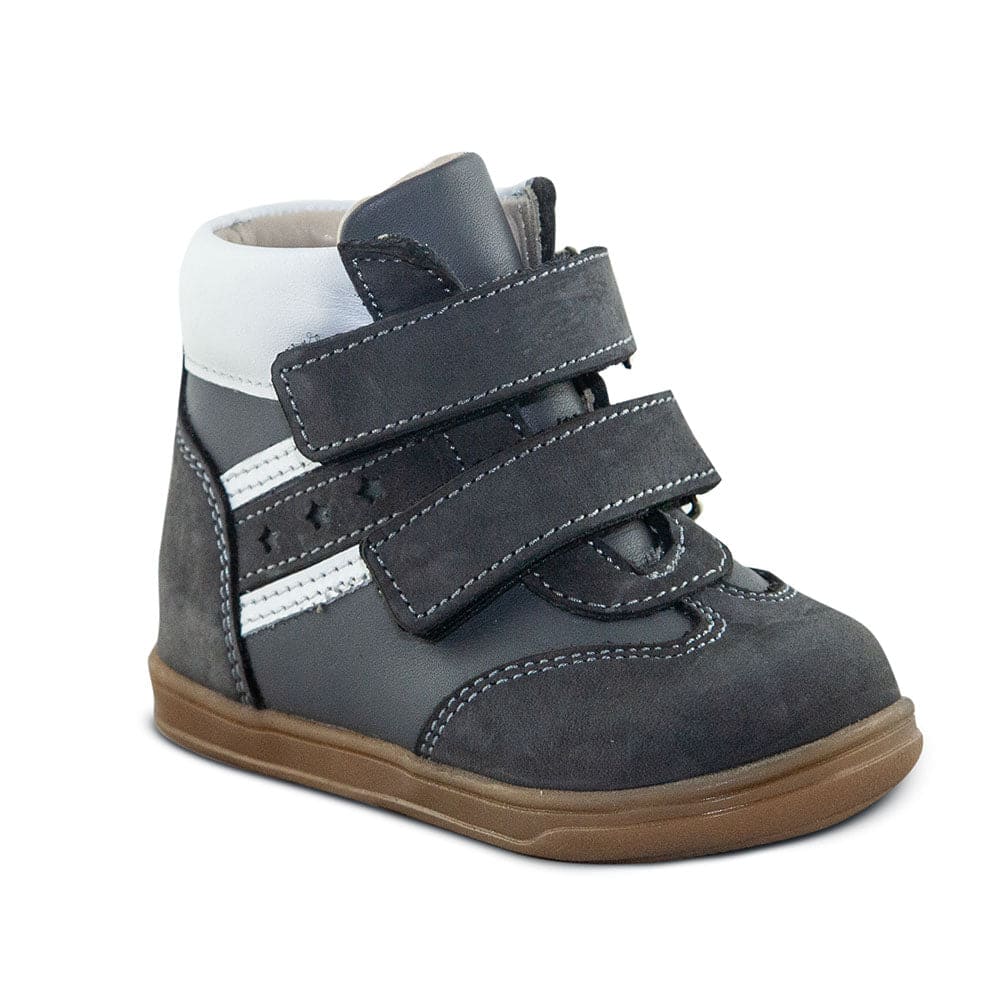
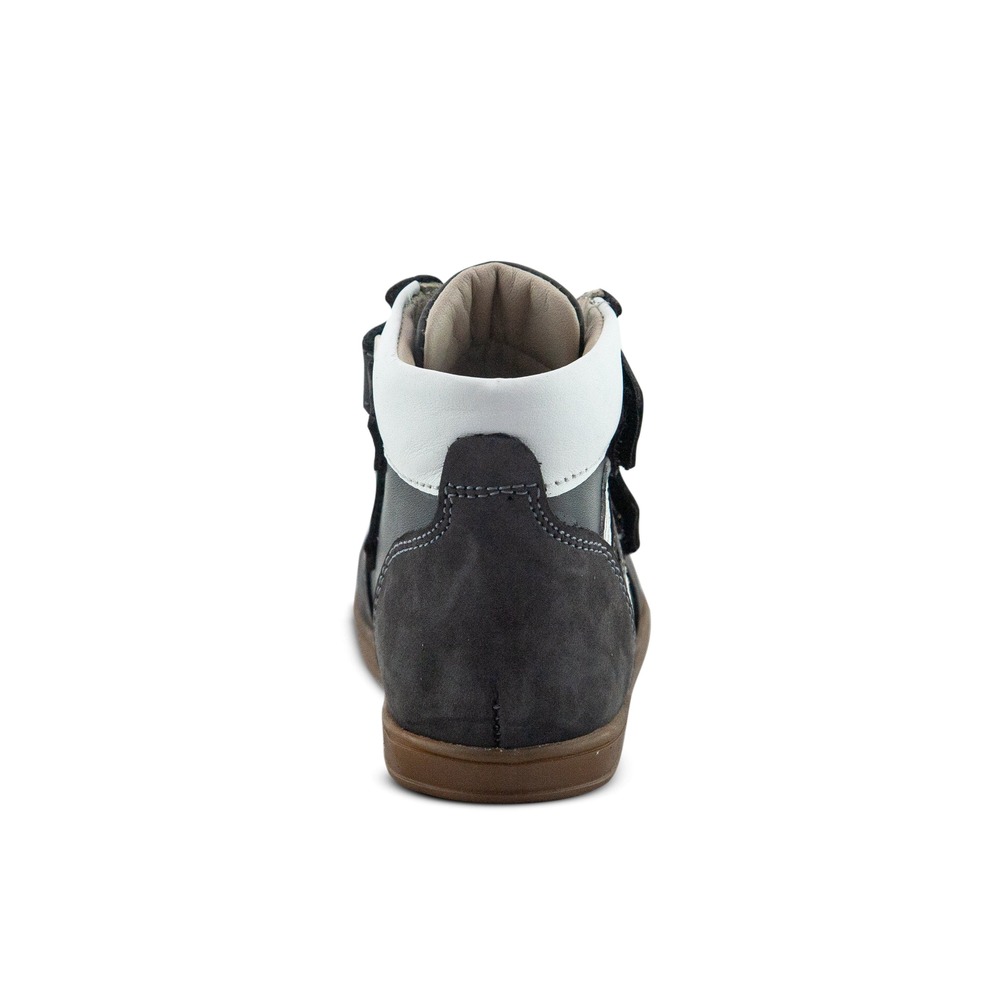
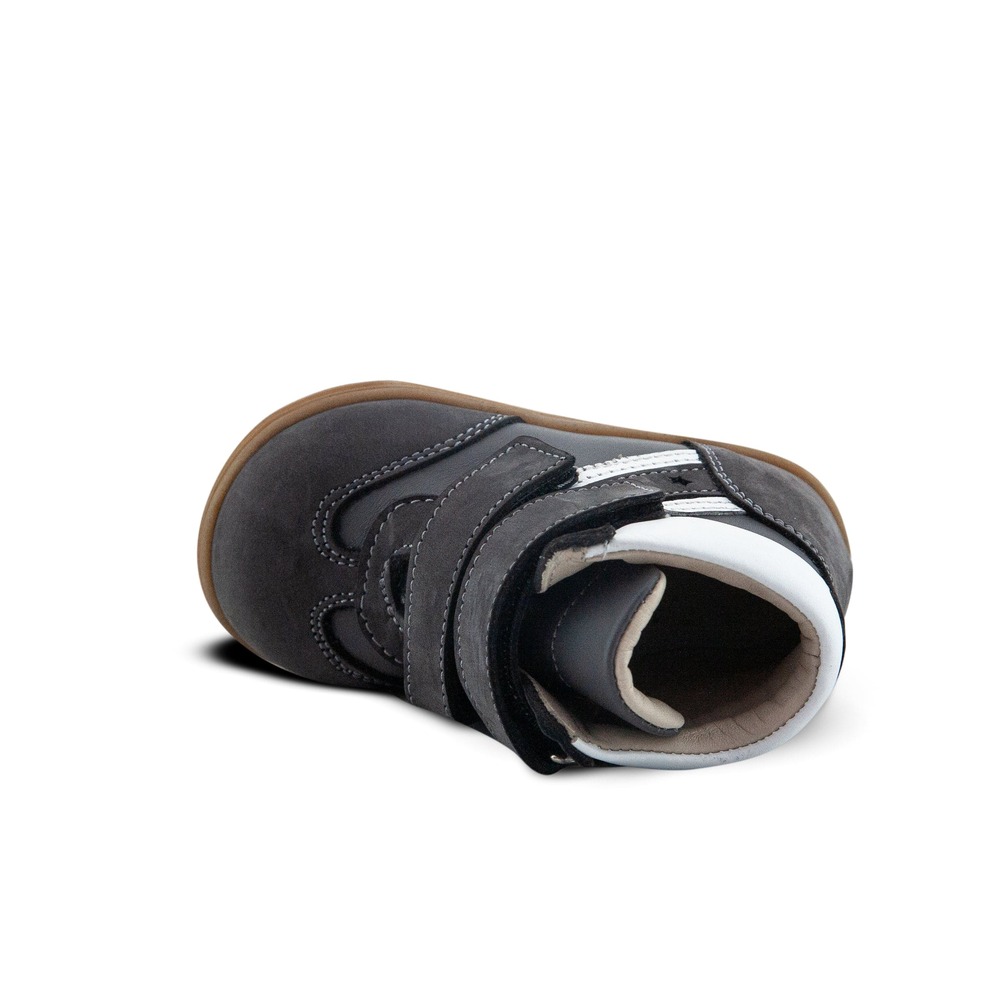
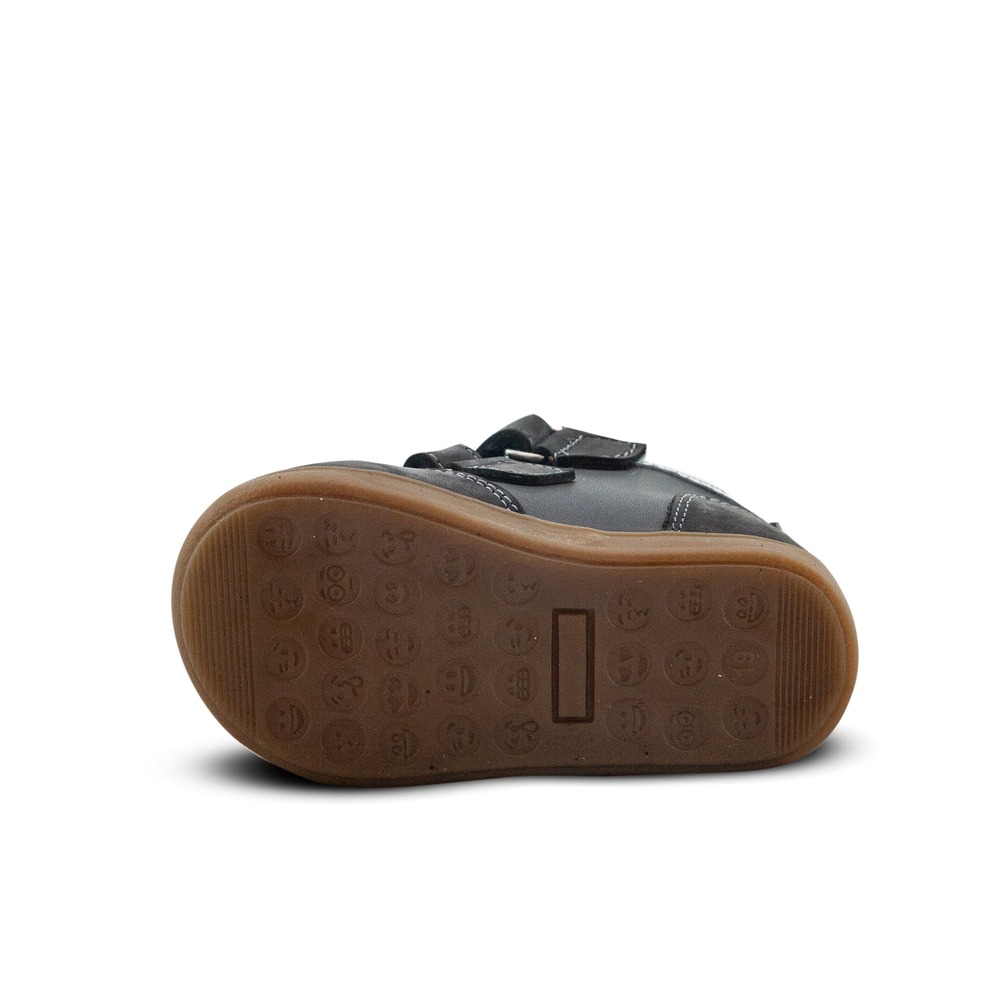
Silas Mateo Sneakers
Built tough for outdoor adventures.
Type
Sneakers
Material
Nubuck Leather
Sizes
18–30 (EU) | 2–11.5 (UK)
Benefits for kids needing hard-bottom shoes
- High-top sneaker protects ankles during outdoor play
- Two Velcro straps adjust separately for a perfect fit
- Fully covered design shields from sticks and gravel
- Cushioned soles handle bumpy sidewalks and paths
Why they're a top choice
The Silas Mateo is your outdoor shoe, park paths, neighborhood walks, and anywhere with uneven ground. The fully covered design means sticks and gravel can't poke through, and the high-top protects ankles from scrapes.
Two straps make it easy to get on quickly when you've got an impatient baby, and they adjust for thicker socks when it's cooler outside.
4
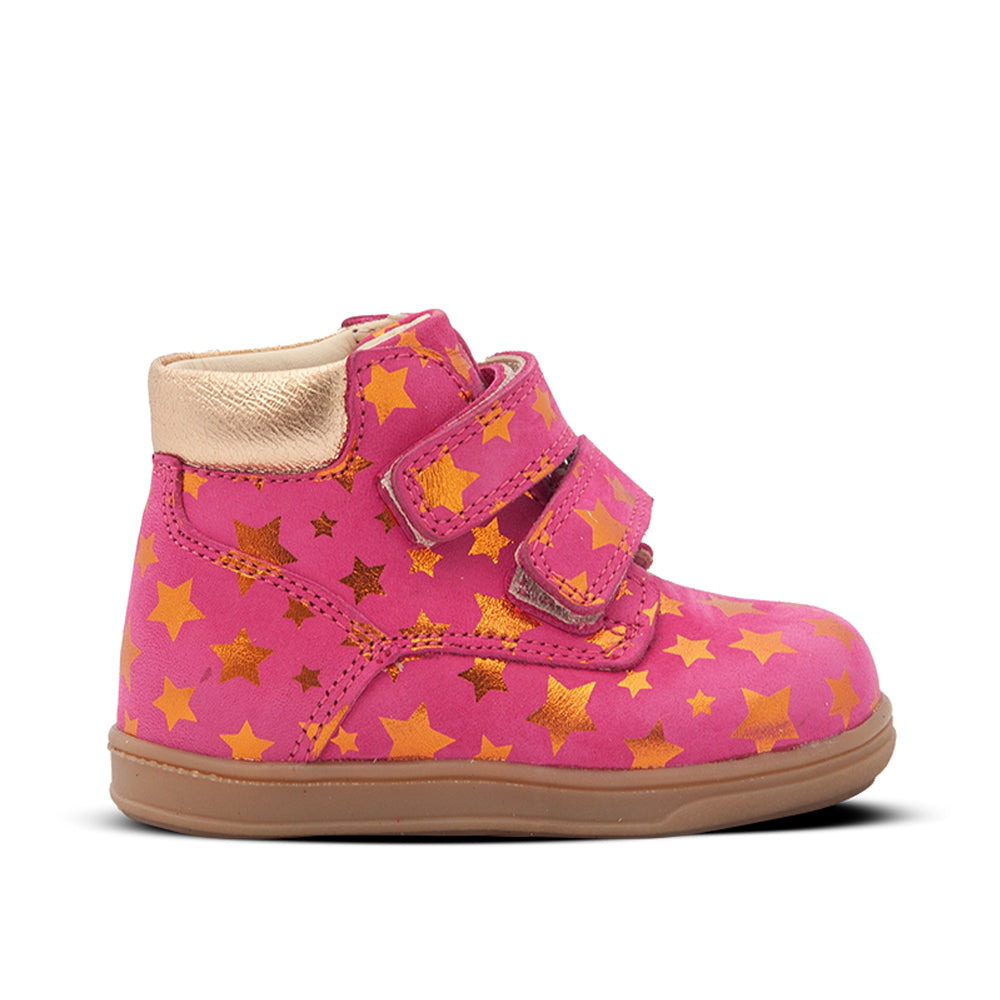
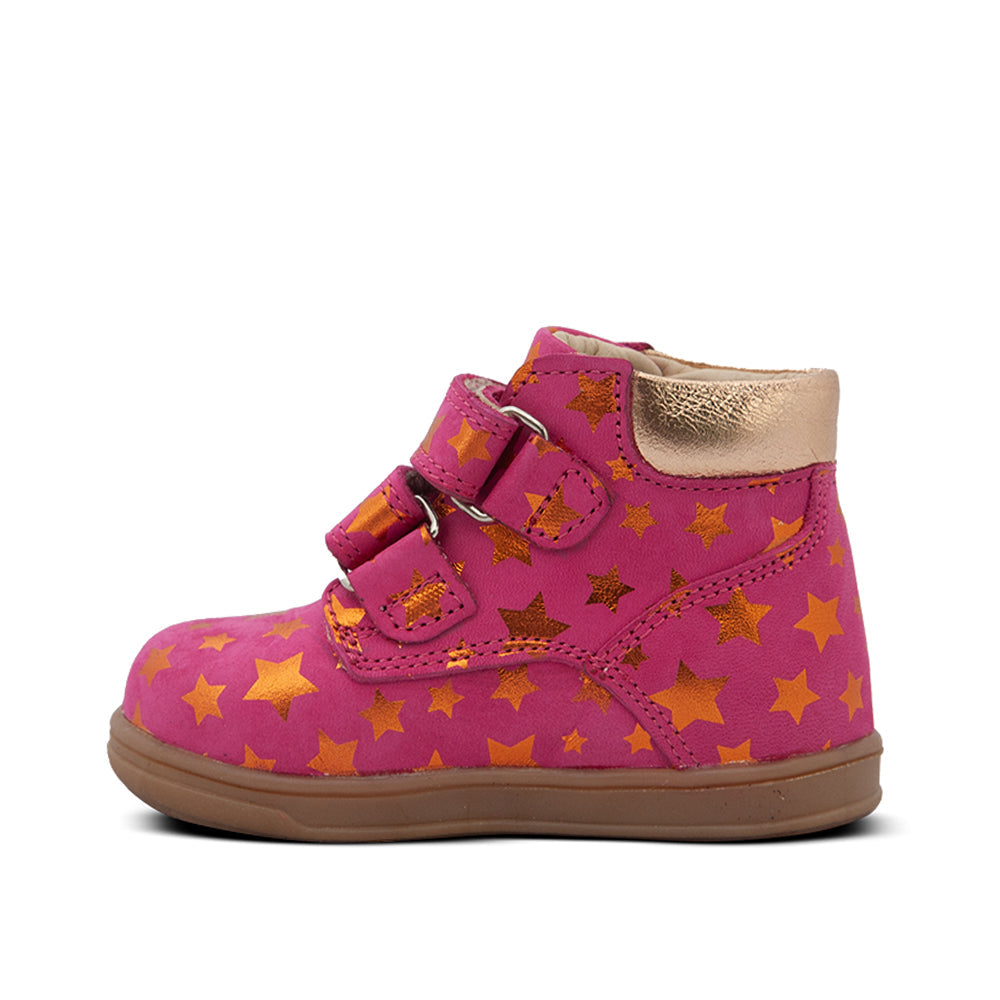
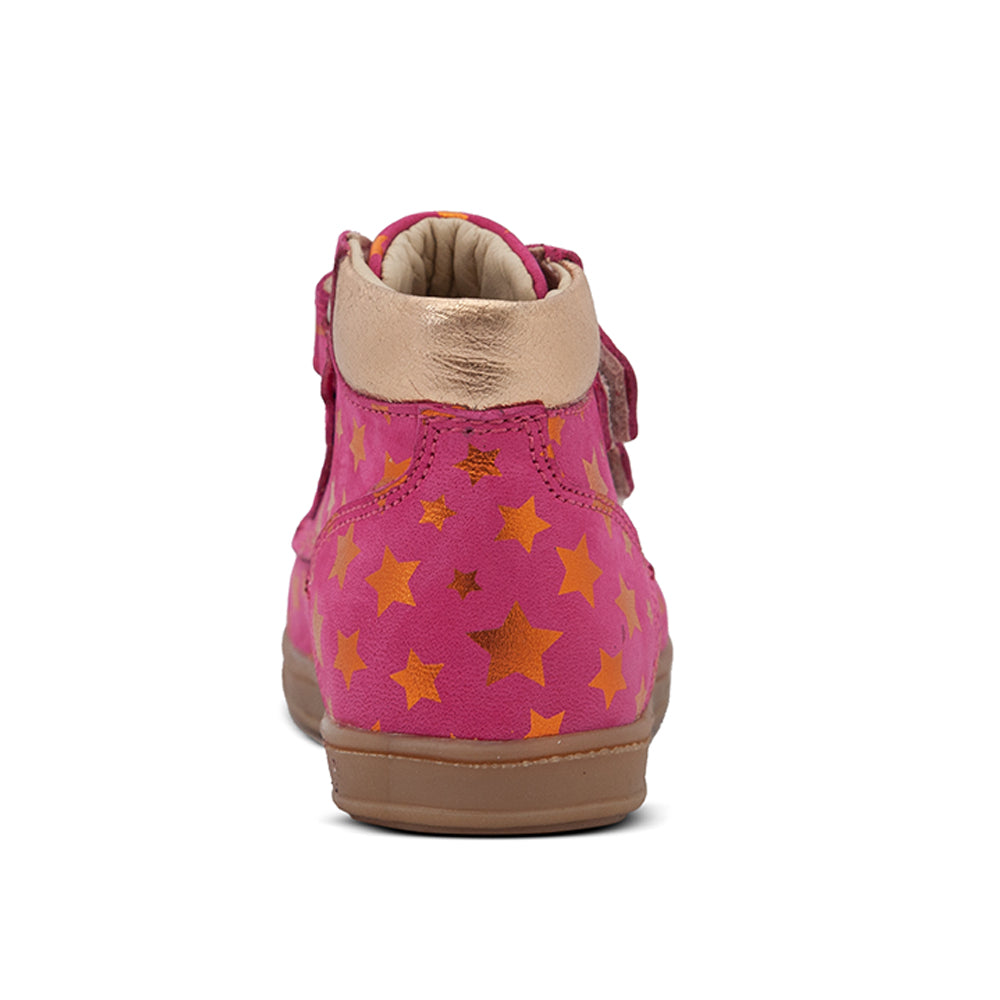
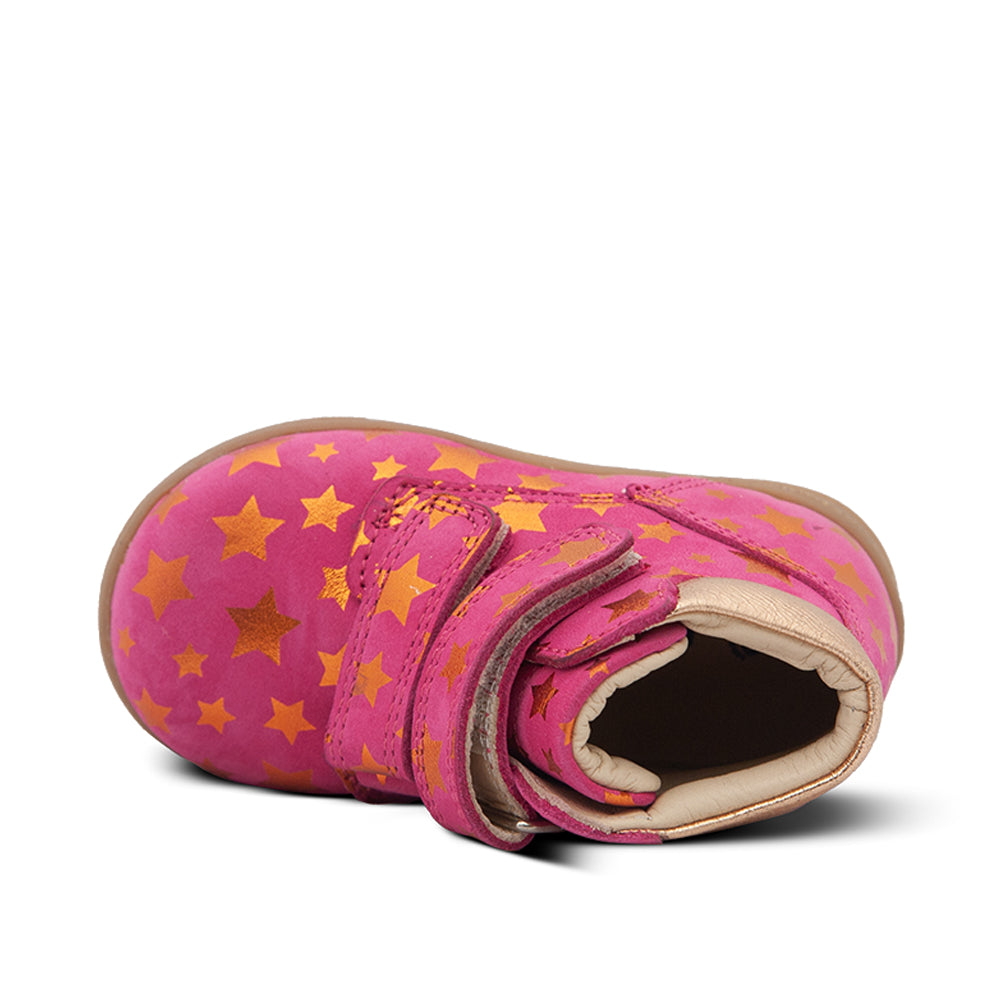
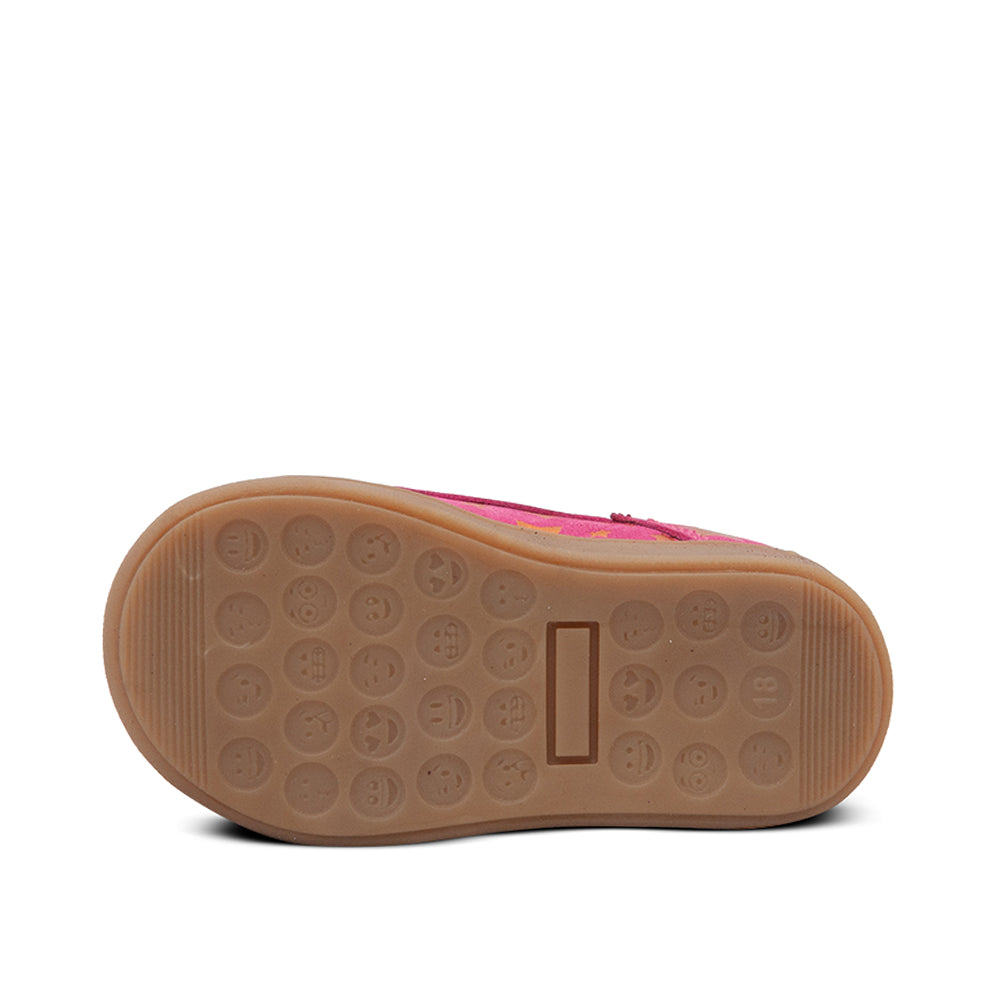
Blushful Betty Sneakers
Support that doesn't look medical.
Type
Sneakers
Material
Premium Leather
Sizes
18–30 (EU) | 2–11.5 (UK)
Benefits for kids needing hard-bottom shoes
- Pretty blush color girls actually want to wear
- Insole comes out if you need custom ones later
- High-top support with two velcro straps
- Looks good for parties and photos, not just therapy
Why they're a top choice
The Blushful Betty solves the problem of finding supportive shoes that don't scream "medical equipment." The soft pink color and clean design mean your daughter will feel confident wearing them instead of fighting you every morning.
That removable insole is handy if your doctor recommends custom orthotics down the road.
5
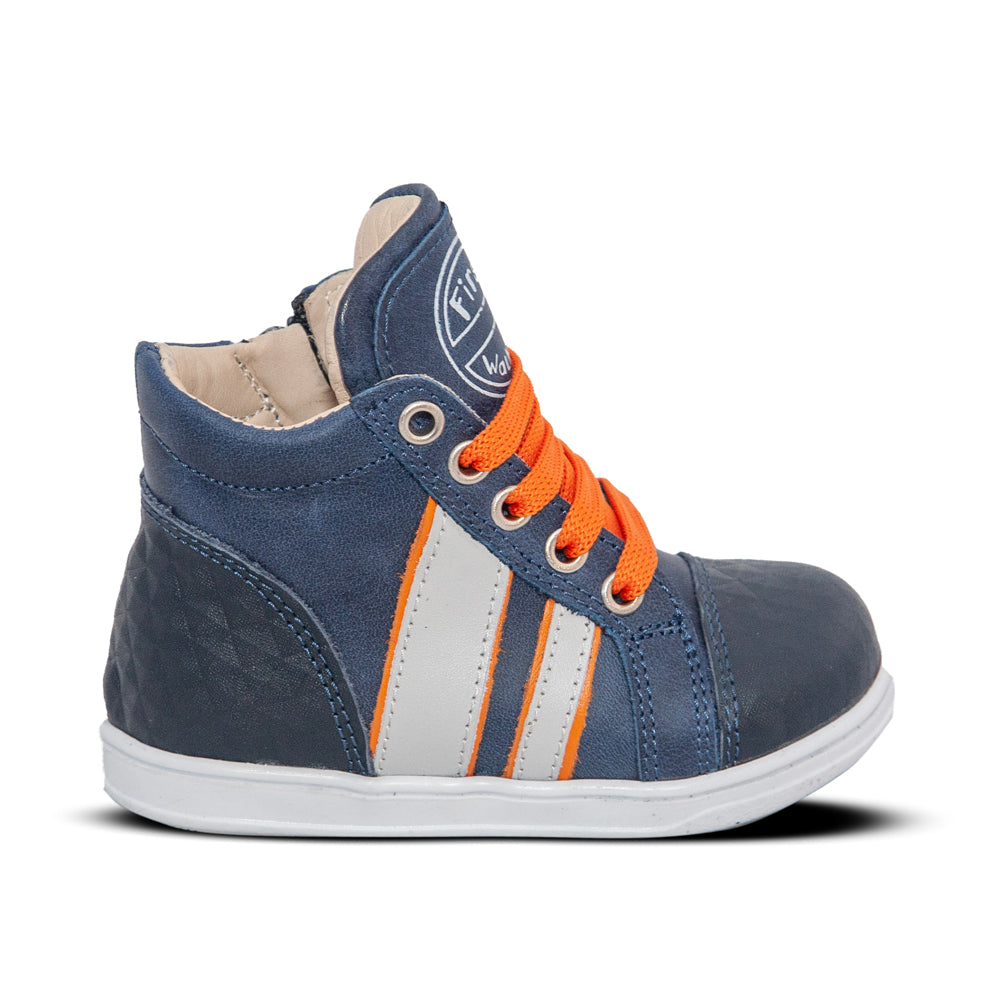
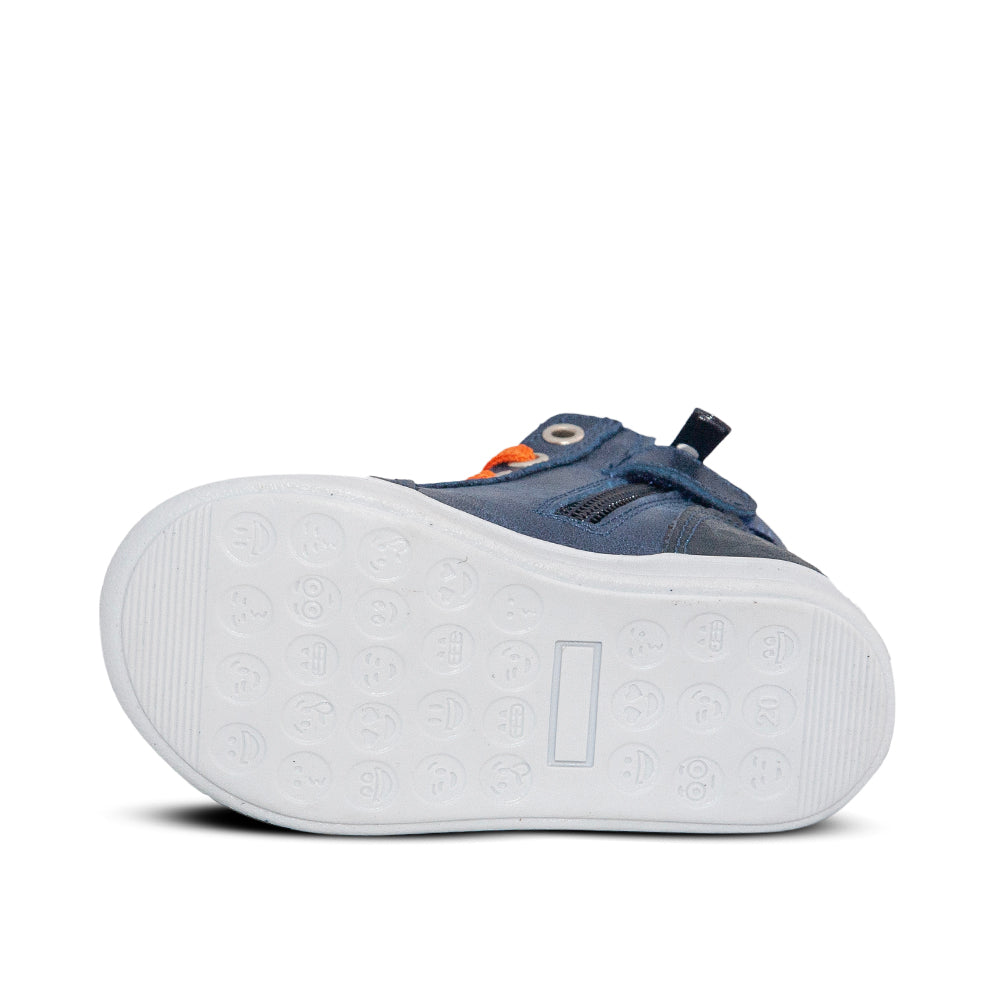
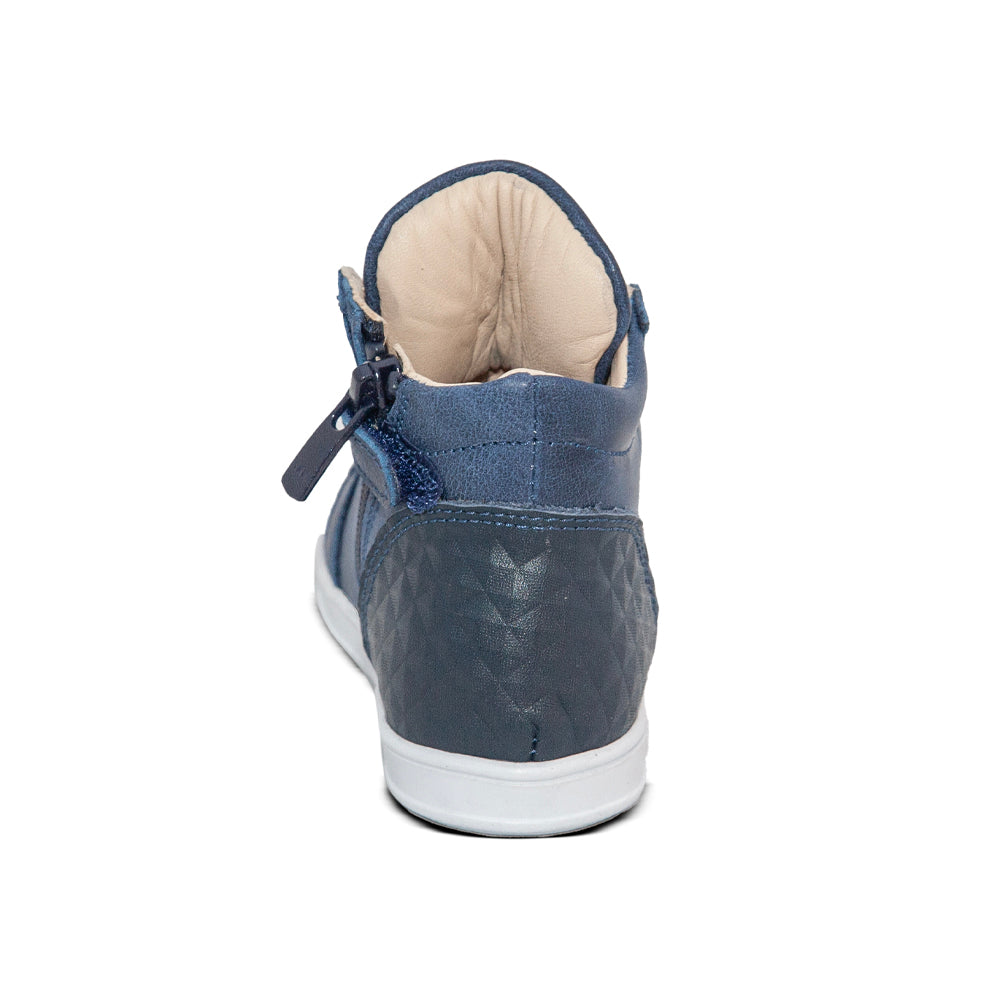
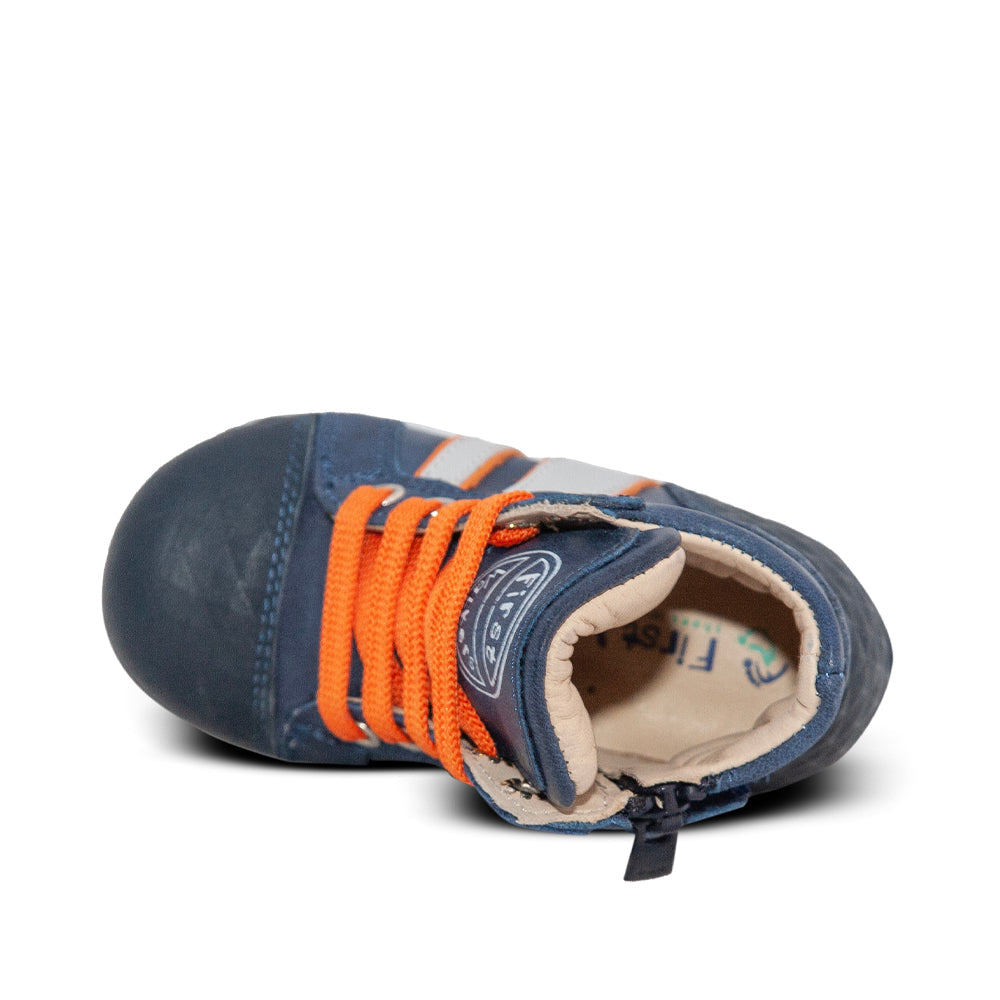
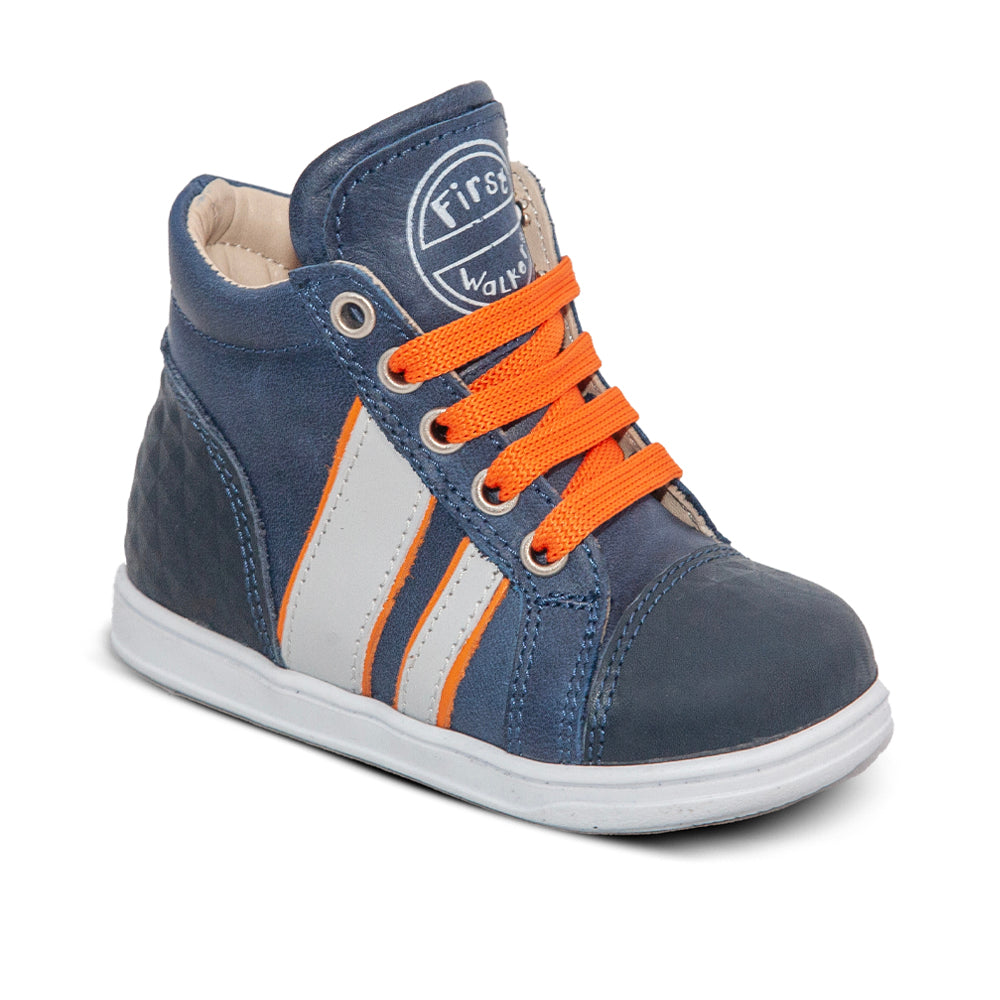
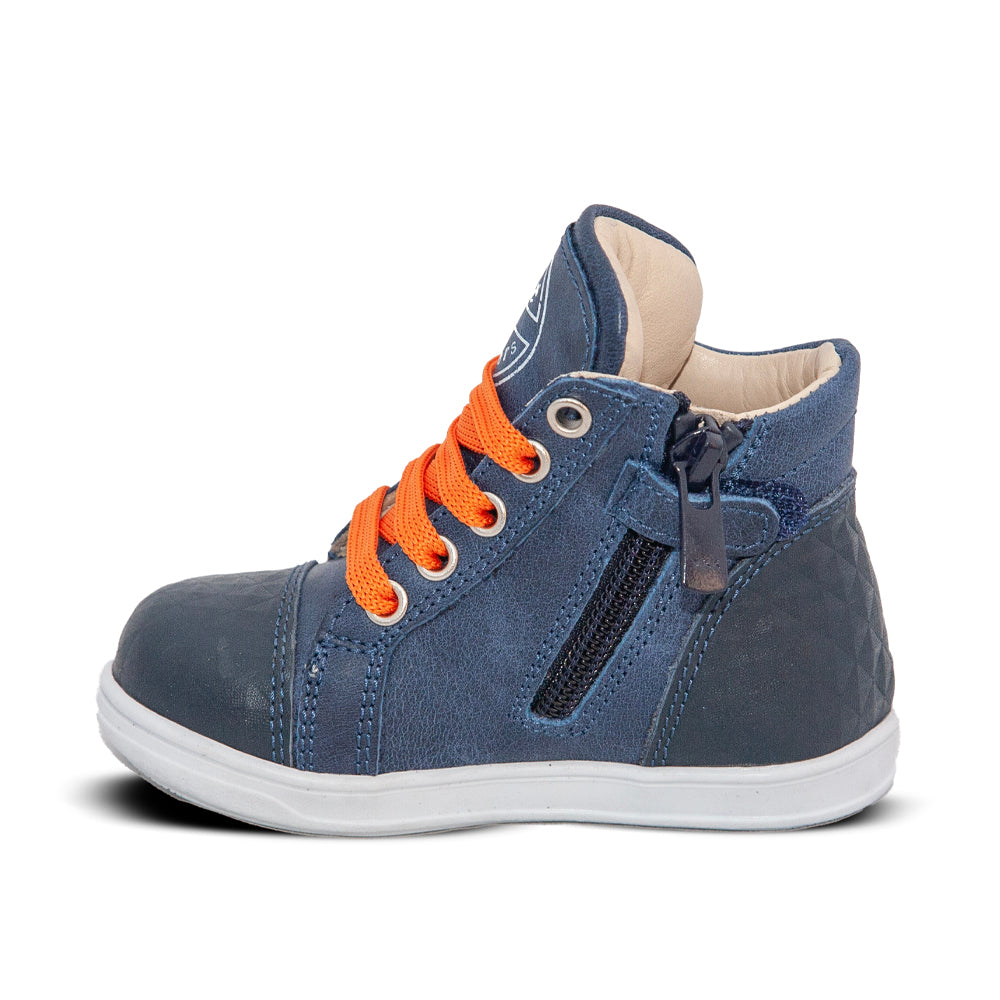
Groovy Stephen Sneakers
An athletic style that boys think looks cool.
Type
Sneakers
Material
Leather
Sizes
18–30 (EU) | 2–11.5 (UK)
Benefits for kids needing hard-bottom shoes
- Laces let you get the fit just right, zipper makes daily use easy
- High-top sneaker wraps ankles in supportive leather
- Navy blue with bright orange laces looks sporty, not medical
- Side zipper means no wrestling with laces every single time
Why they're a top choice
The Groovy Stephen gives you the best of both worlds: laces for getting the perfect fit, then a side zipper so you don't have to mess with laces every day.
The sporty look appeals to boys who resist anything that looks like "special" shoes. Tough leather construction survives playground slides and climbing adventures.
6
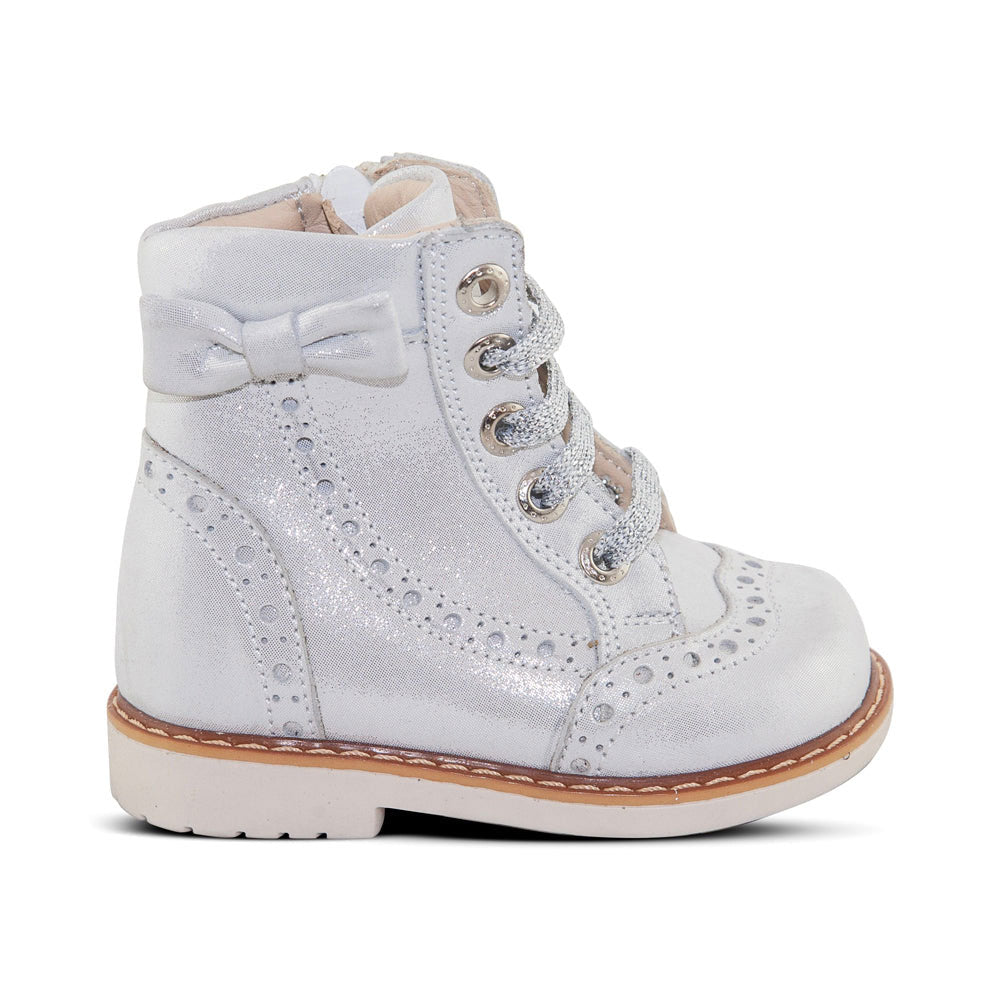
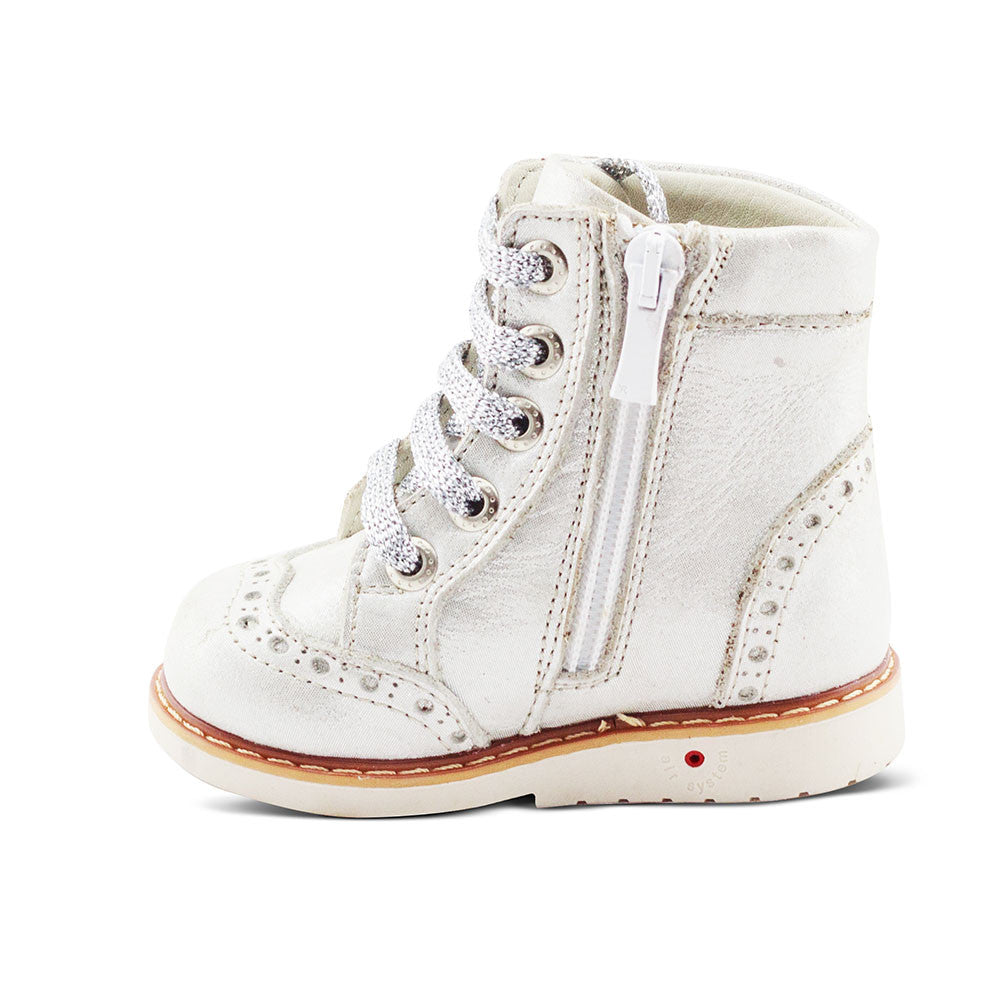
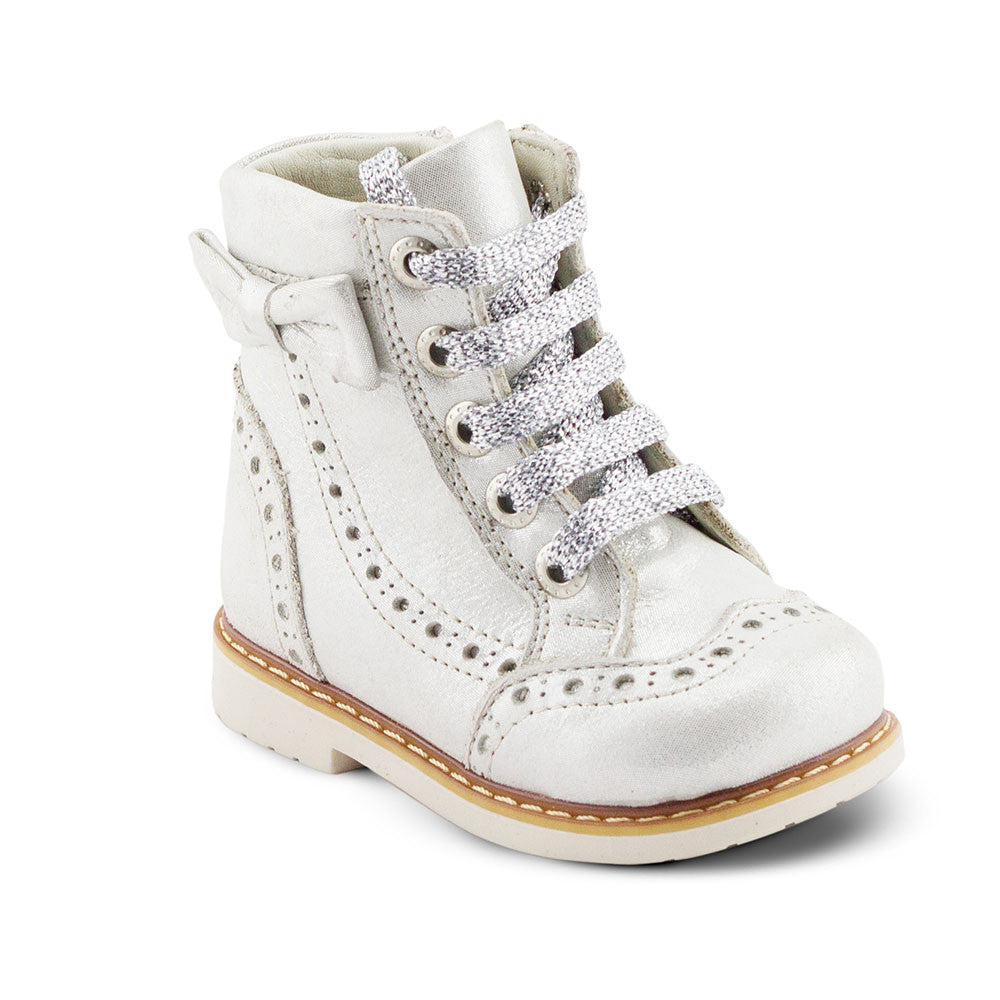
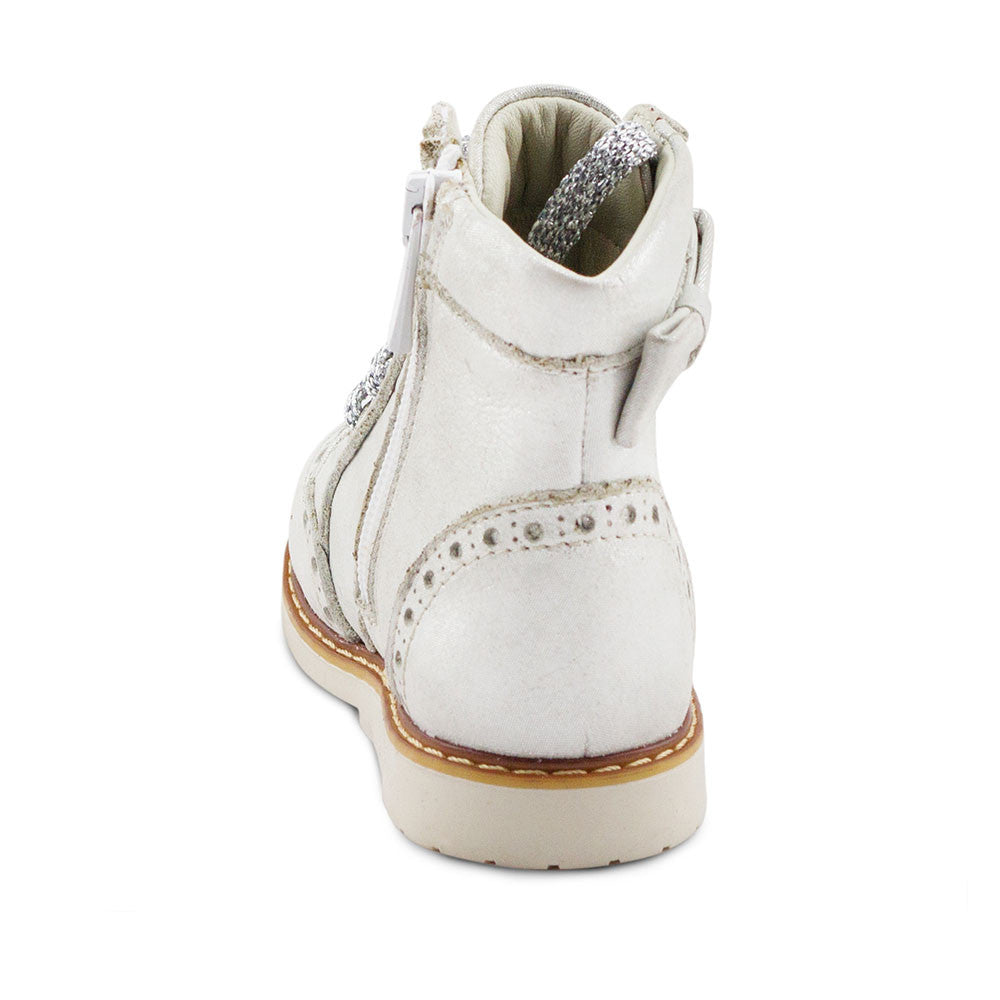
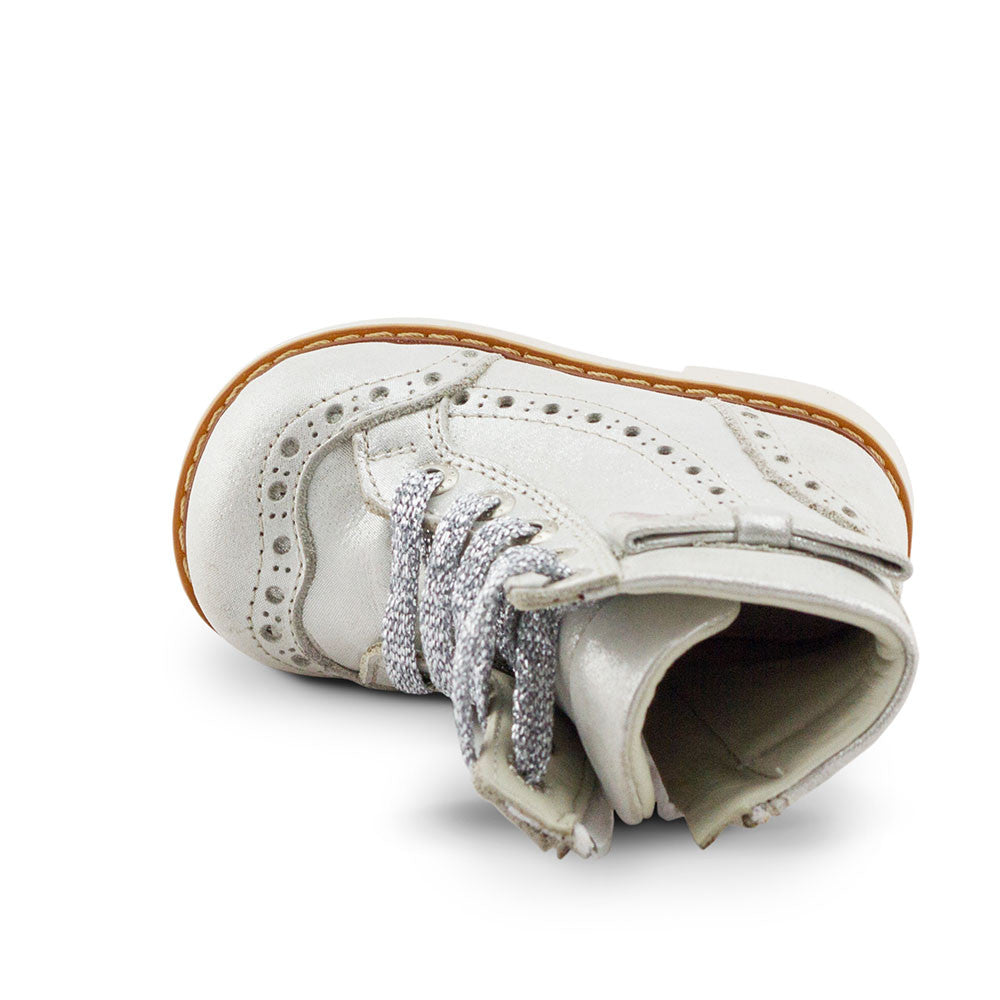
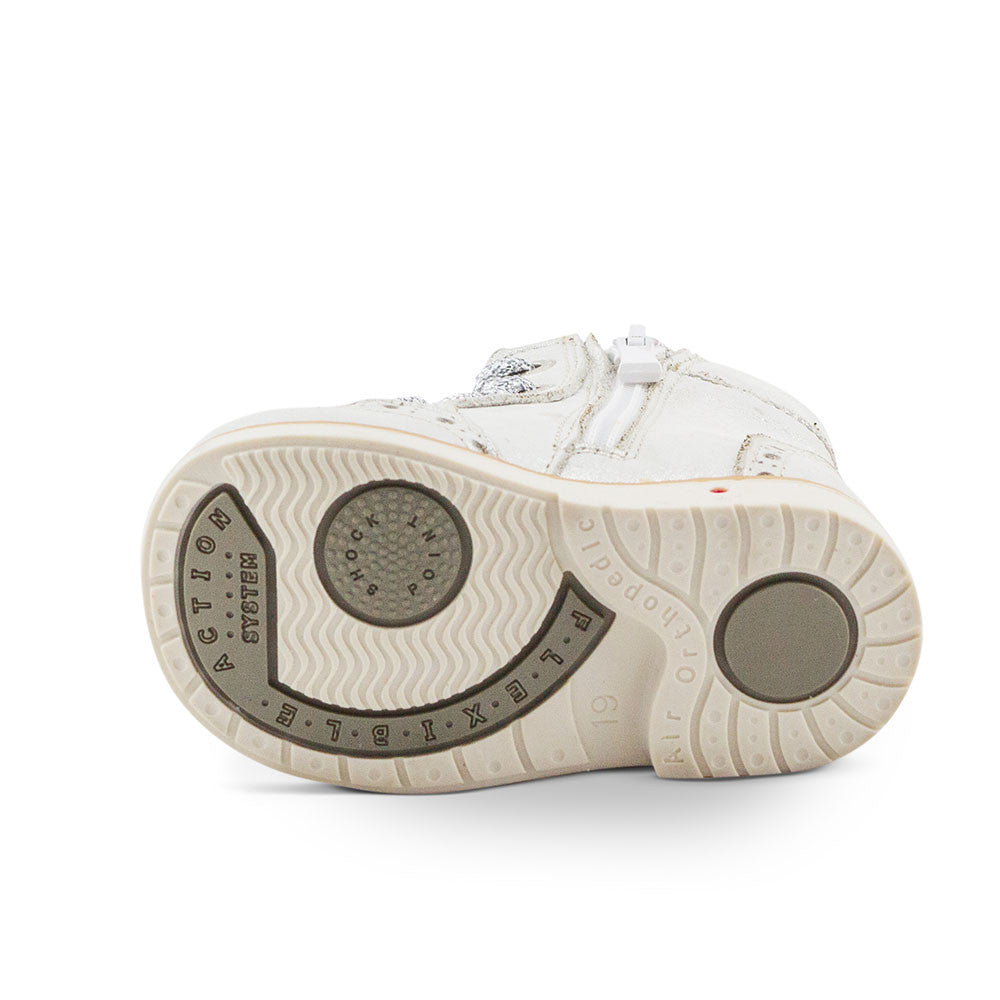
Pearly Sheila Boots
Winter warmth with serious stability.
Type
Boots
Material
Leather
Sizes
18–30 (EU) | 2–11.5 (UK)
Benefits for kids needing hard-bottom shoes
- Boot style keeps little feet warm in cold weather
- Extra room in the tongue area fits over AFO braces
- Special heel design for better balance on slippery surfaces
- Pretty silver color with bows for holiday photos
Why they're a top choice
The Pearly Sheila handles cold weather when your baby needs both warmth and stability. The boot keeps feet insulated against cold ground while maintaining grip on potentially icy surfaces.
If your baby uses AFO braces, the extended tongue has extra room to fit over them comfortably. The silver sparkle makes it dressy enough for holiday gatherings.
7
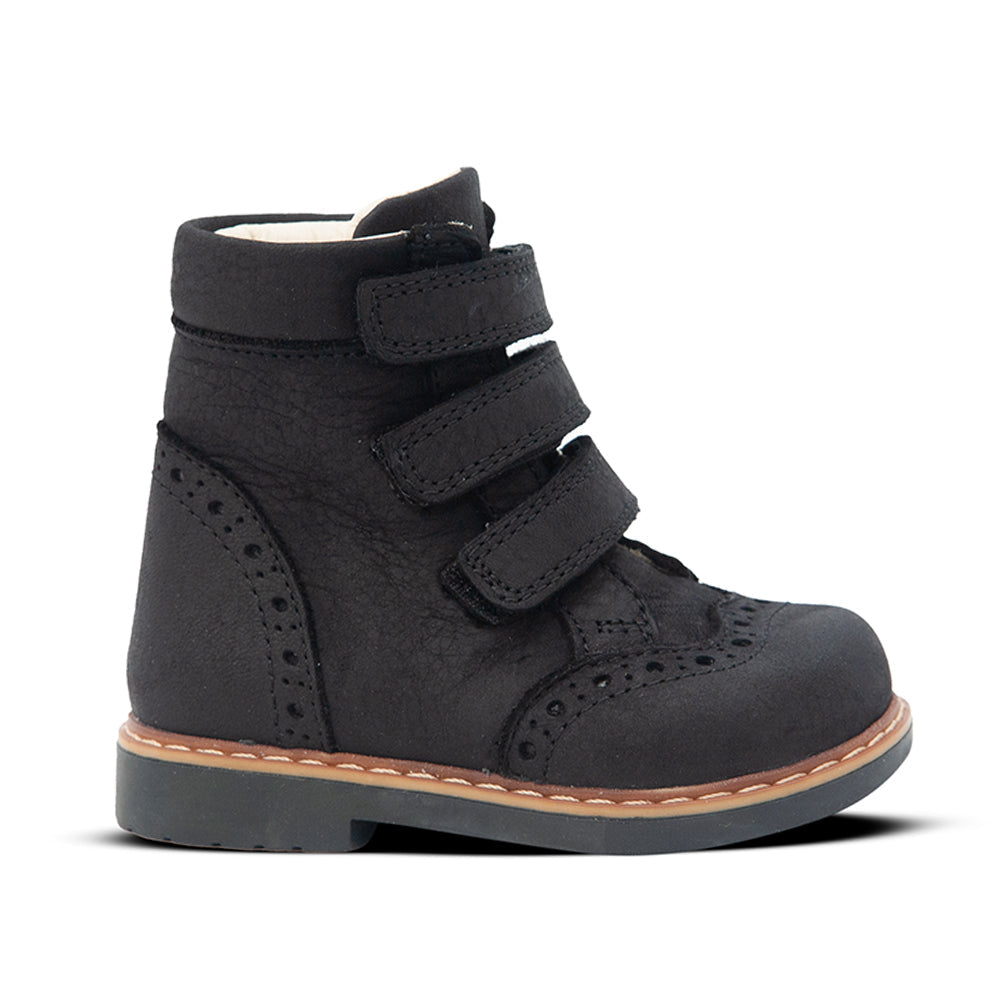
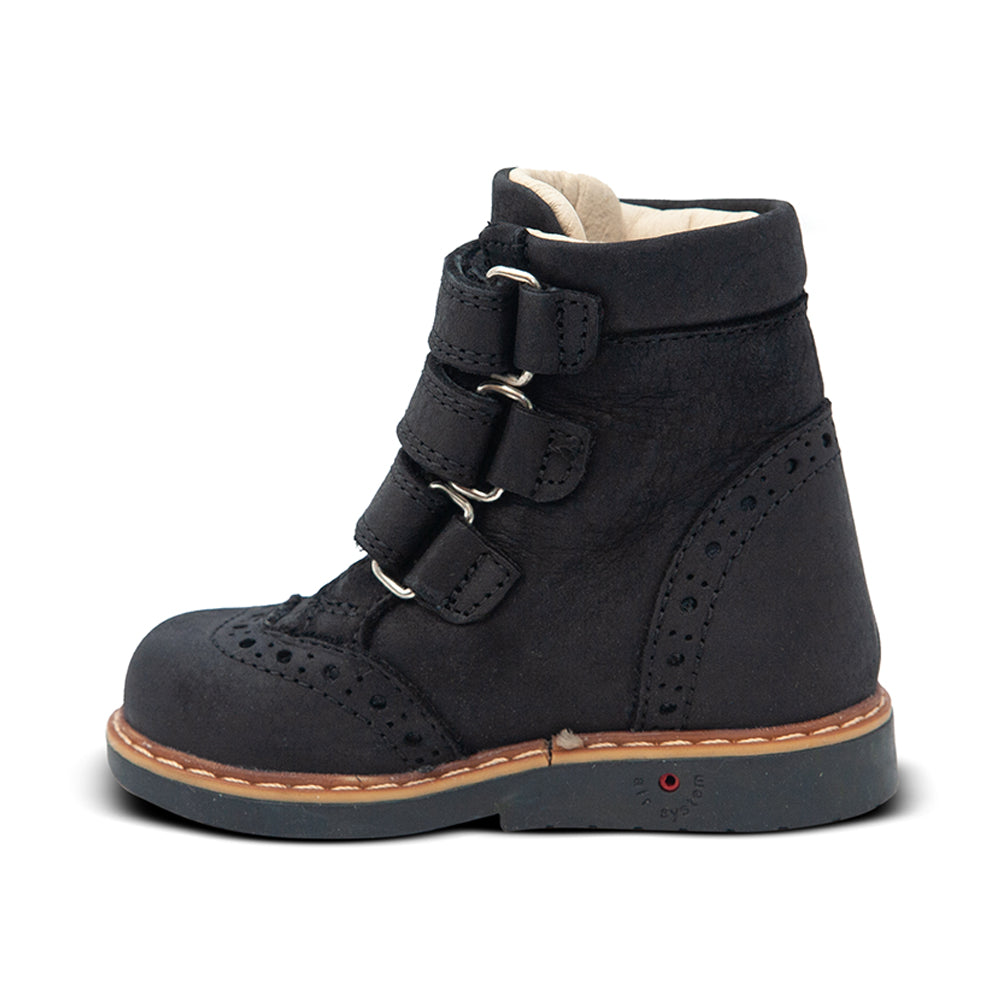
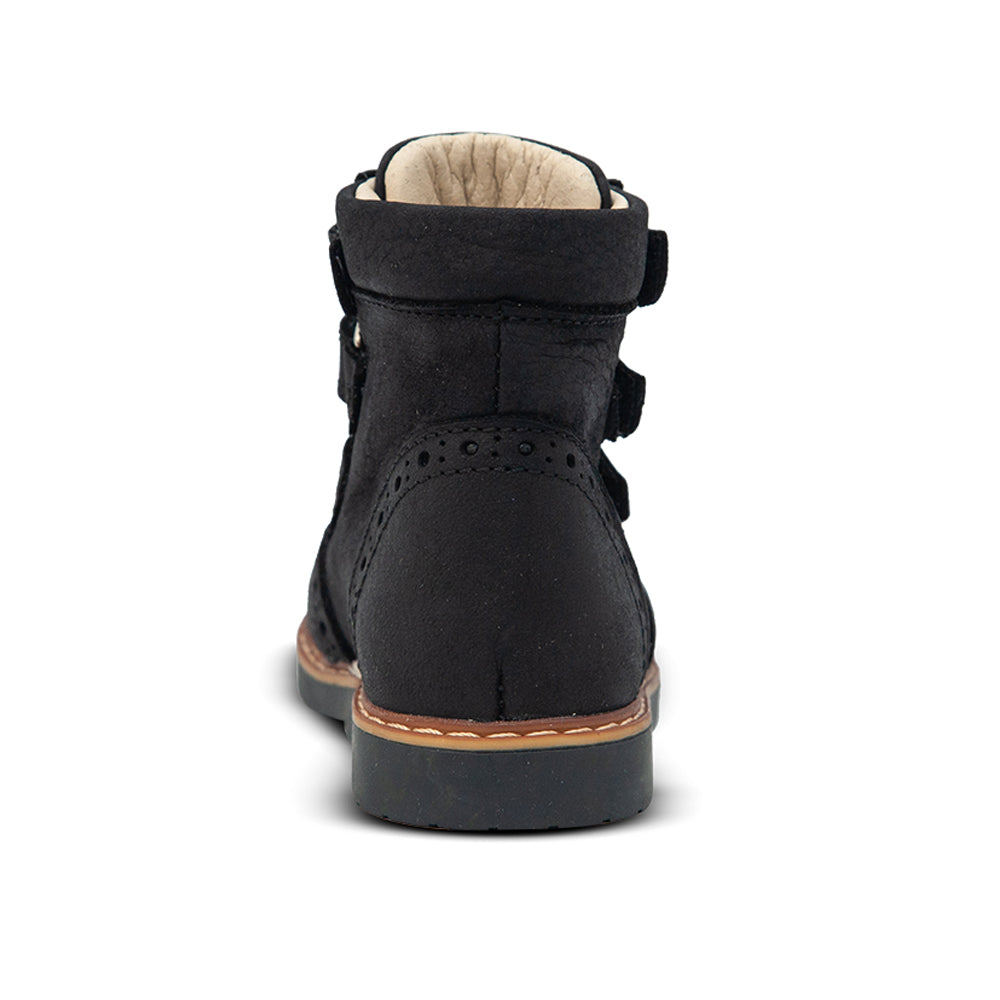
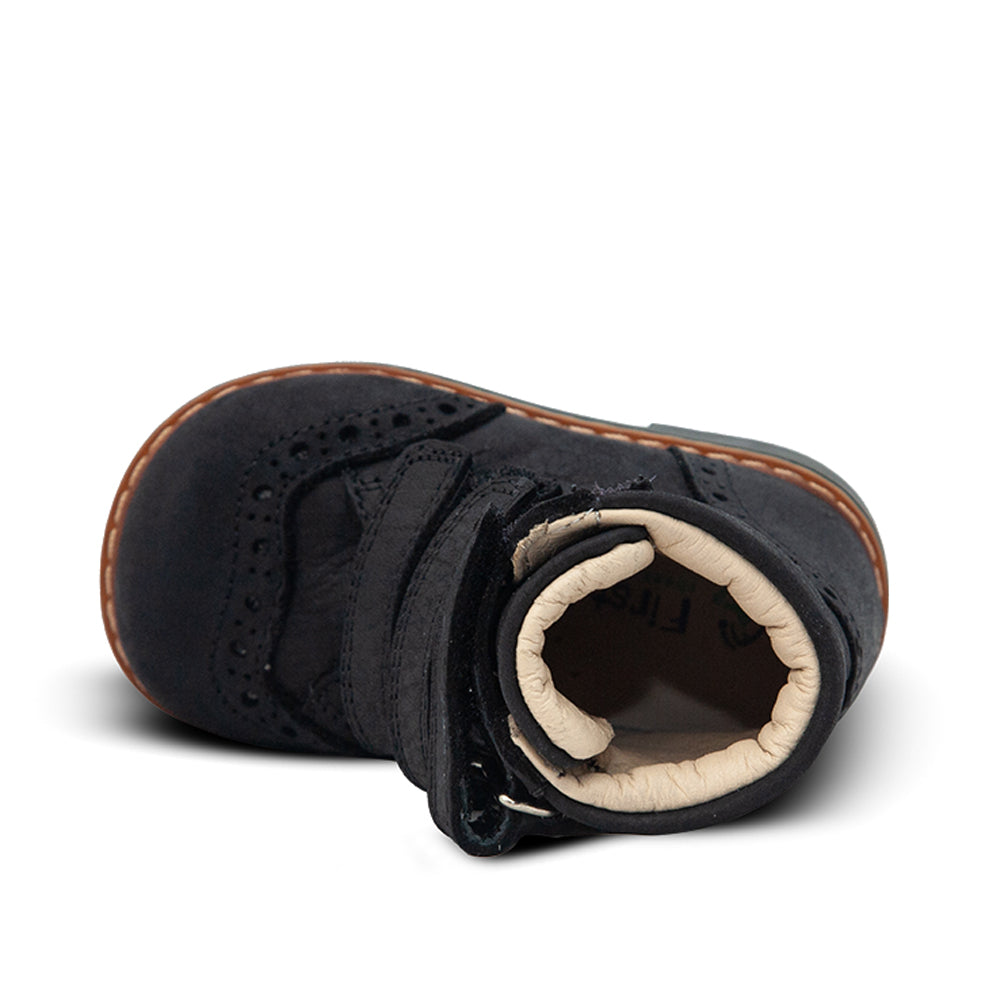
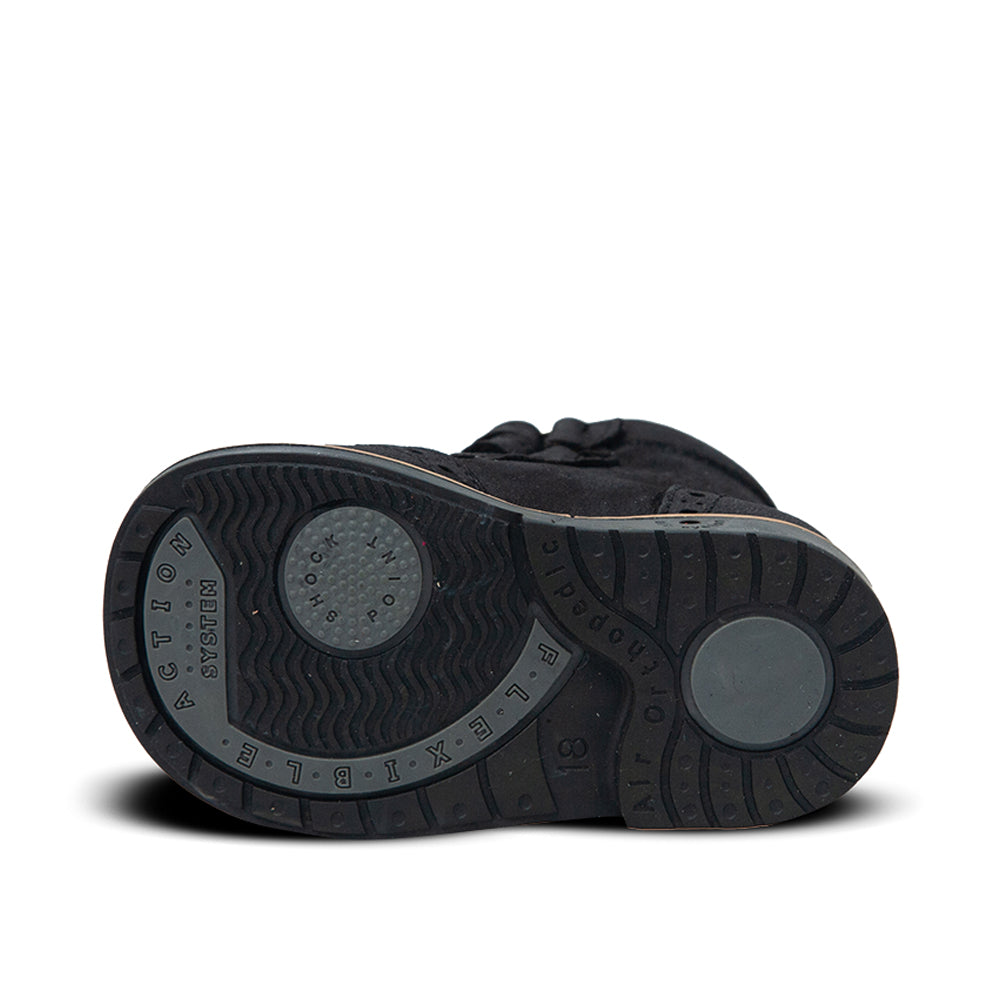
Dacota Trinket Boots
Extra-high protection for wet and muddy days.
Type
Boots
Material
Leather
Sizes
18–30 (EU) | 2–11.5 (UK)
Benefits for kids needing hard-bottom shoes
- Best shoe for ankle support
- Really firm heel keeps everything locked in position
- Three velcro straps adjust all the way up
- Extra height keeps splashes and wet grass away from feet
Why they're a top choice
The Dacota Trinket rises higher than other options, protecting more of your baby's foot and ankle from wet conditions. Perfect for rainy day walks, dewy morning grass, and those in-between seasons when puddles appear everywhere.
Three straps spread all the way up so you can adjust the fit at multiple points.
8
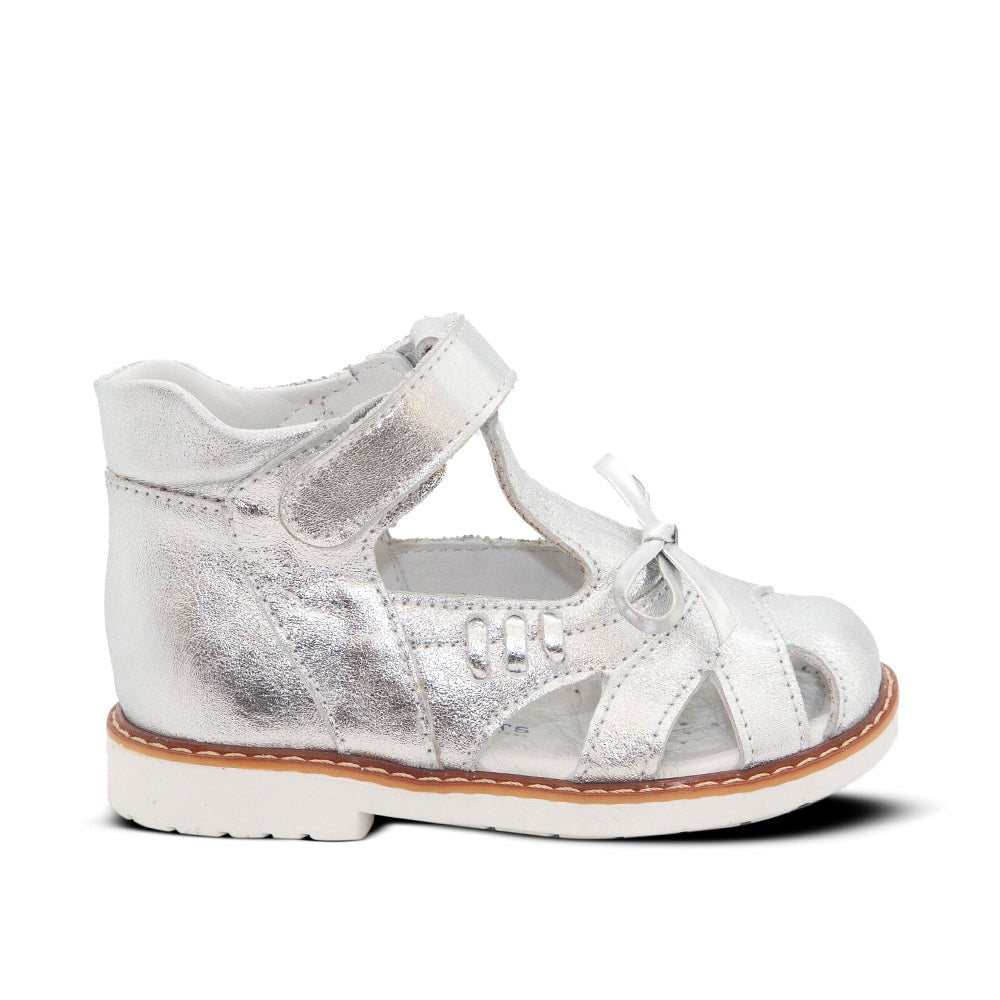
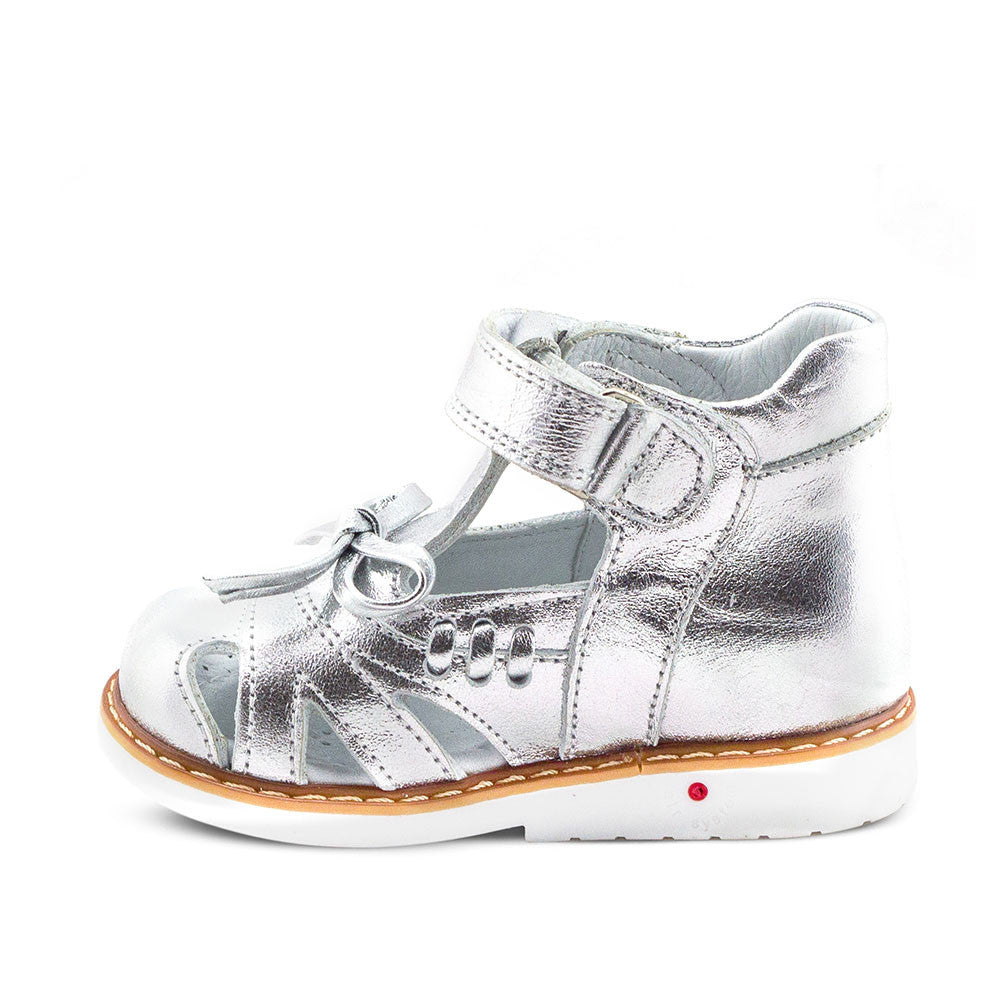
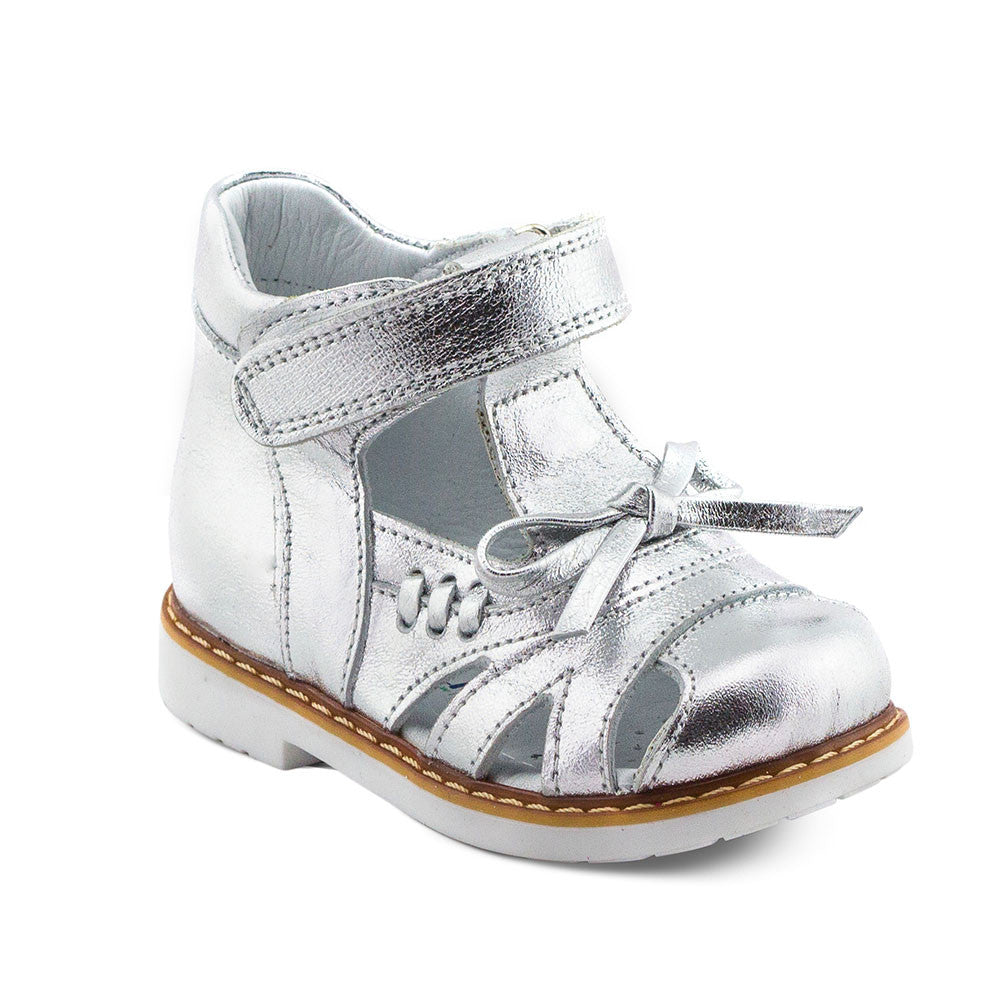
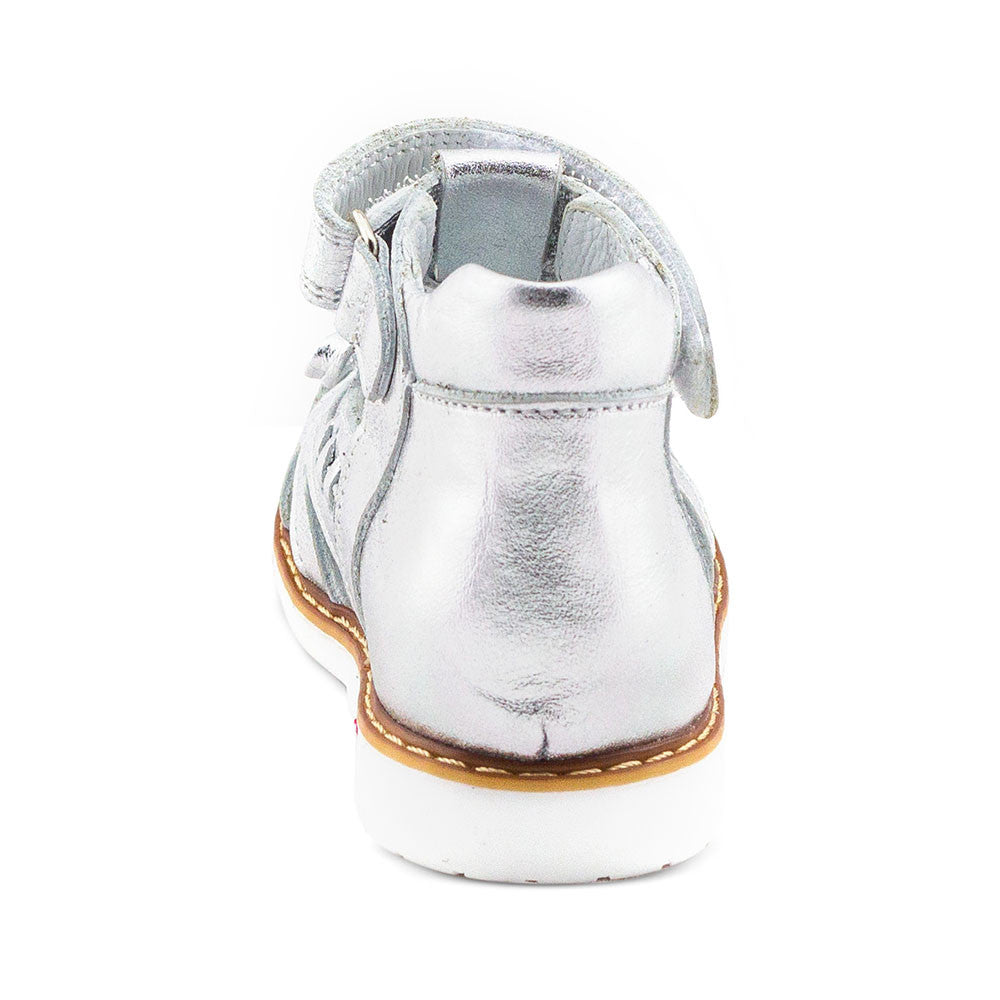
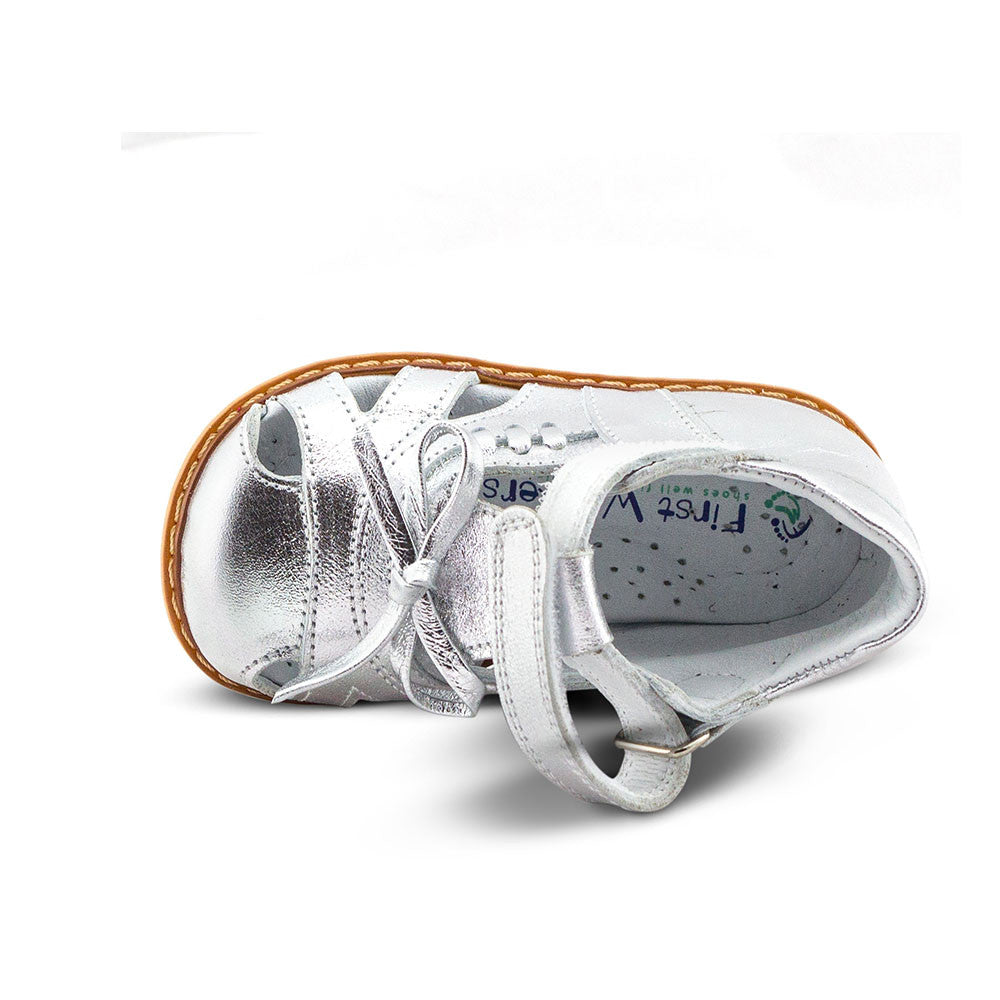
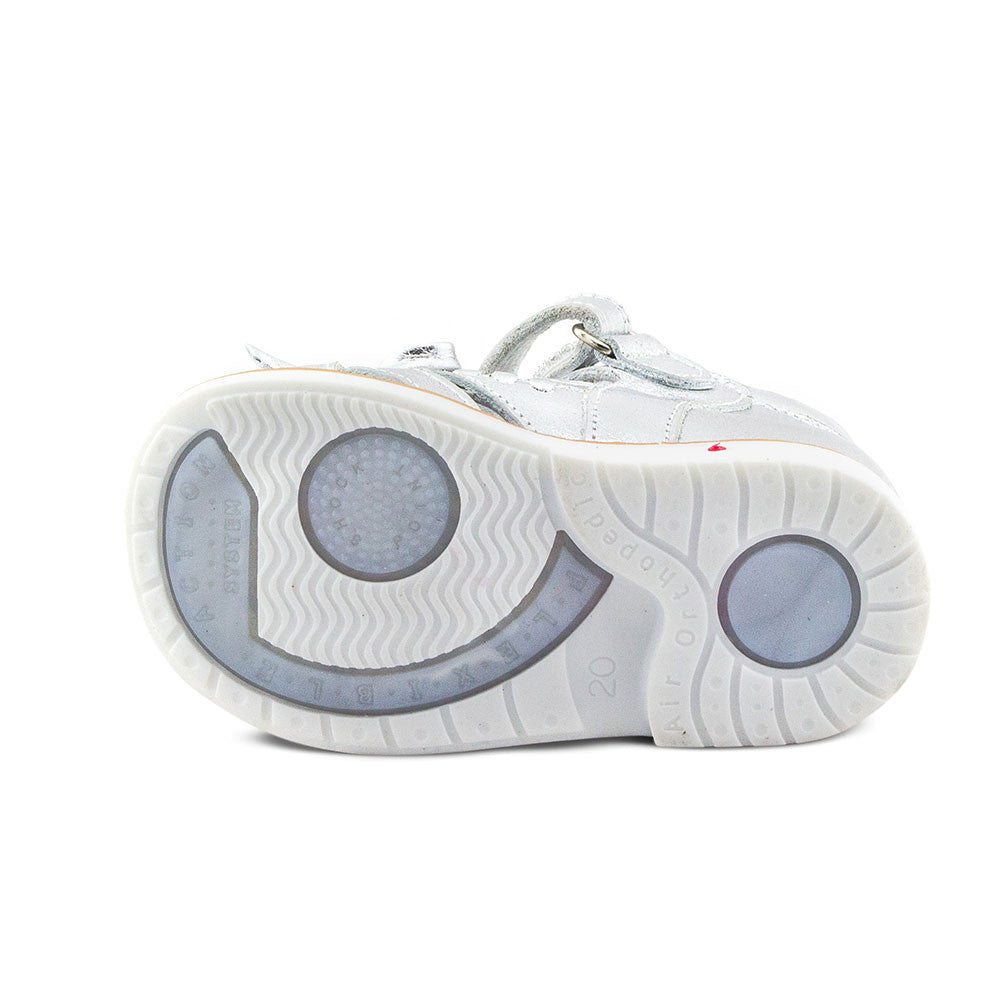
Silvery Ellie Sandals
Summer support without the sweat.
Type
Sandals
Material
Leather
Sizes
18–30 (EU) | 2–11.5 (UK)
Benefits for kids needing hard-bottom shoes
- Open sandal design lets air flow all around the feet
- Wide front gives toes plenty of spreading room
- Mary Jane style with one easy Velcro strap
- Shiny silver with a bow looks cute for summer parties
Why they're a top choice
The Silvery Ellie keeps feet cool during summer heat when regular enclosed shoes become unbearable. The open design means constant airflow while still providing the hard-sole support your baby needs.
One Velcro strap makes it the fastest shoe to get on, which is important when your baby is hot and cranky and refusing to cooperate.
9
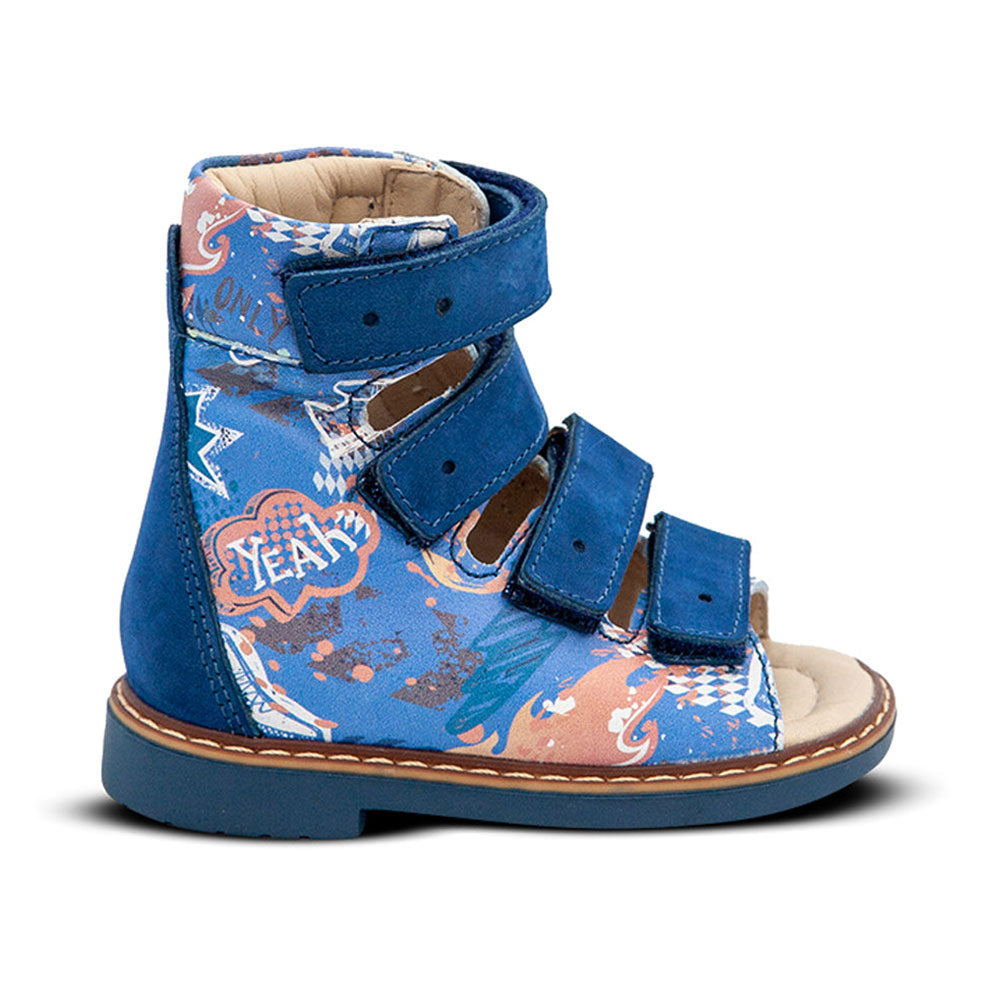
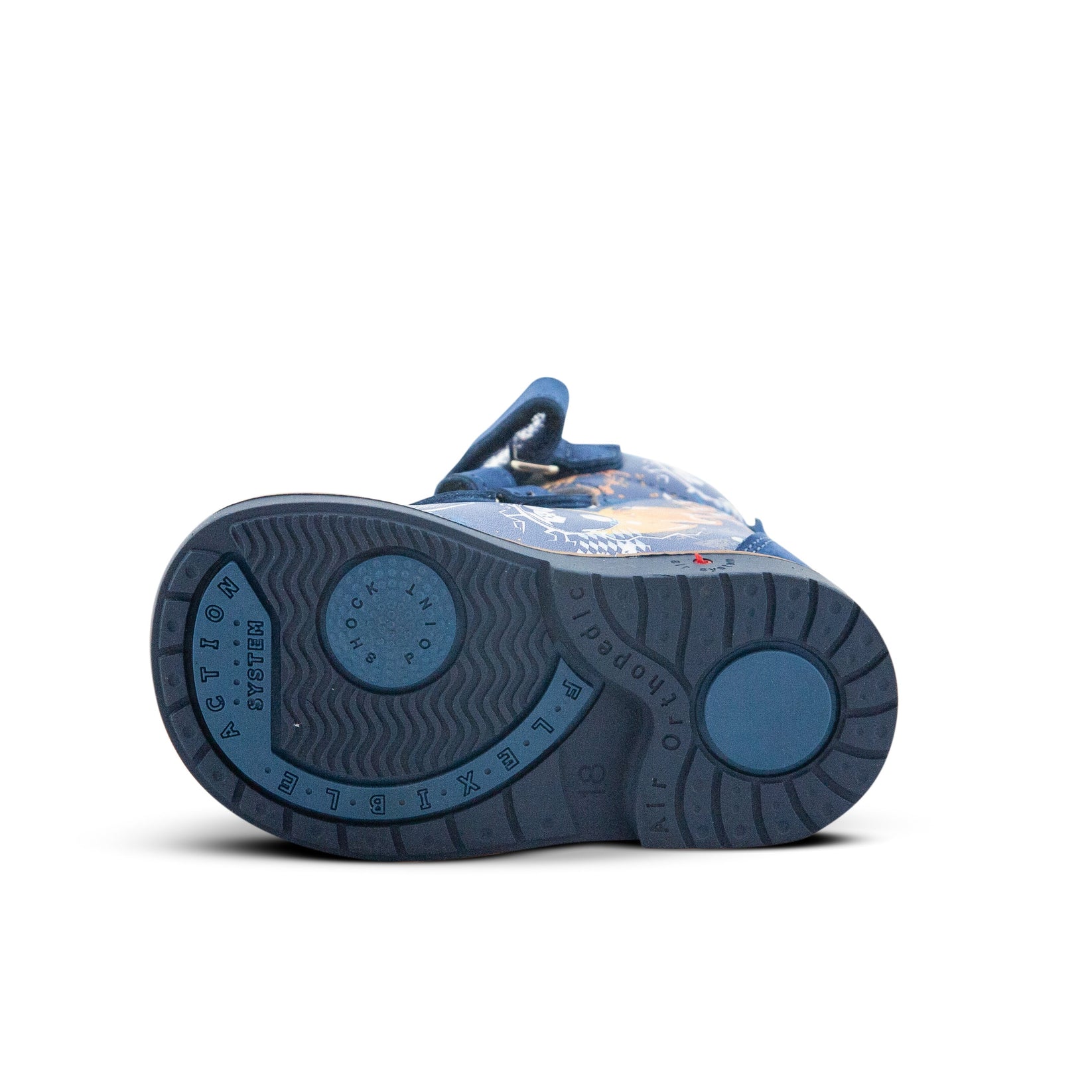
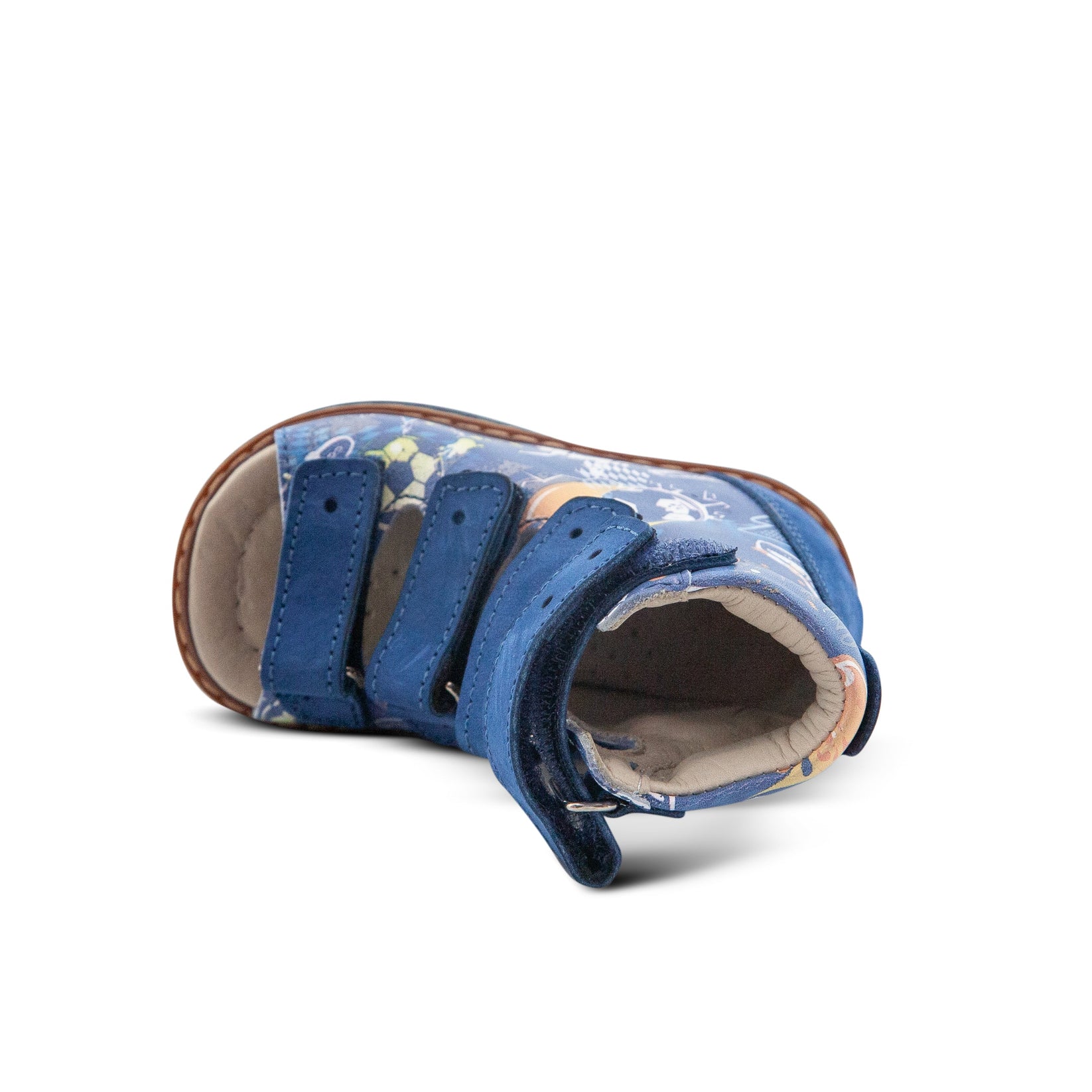
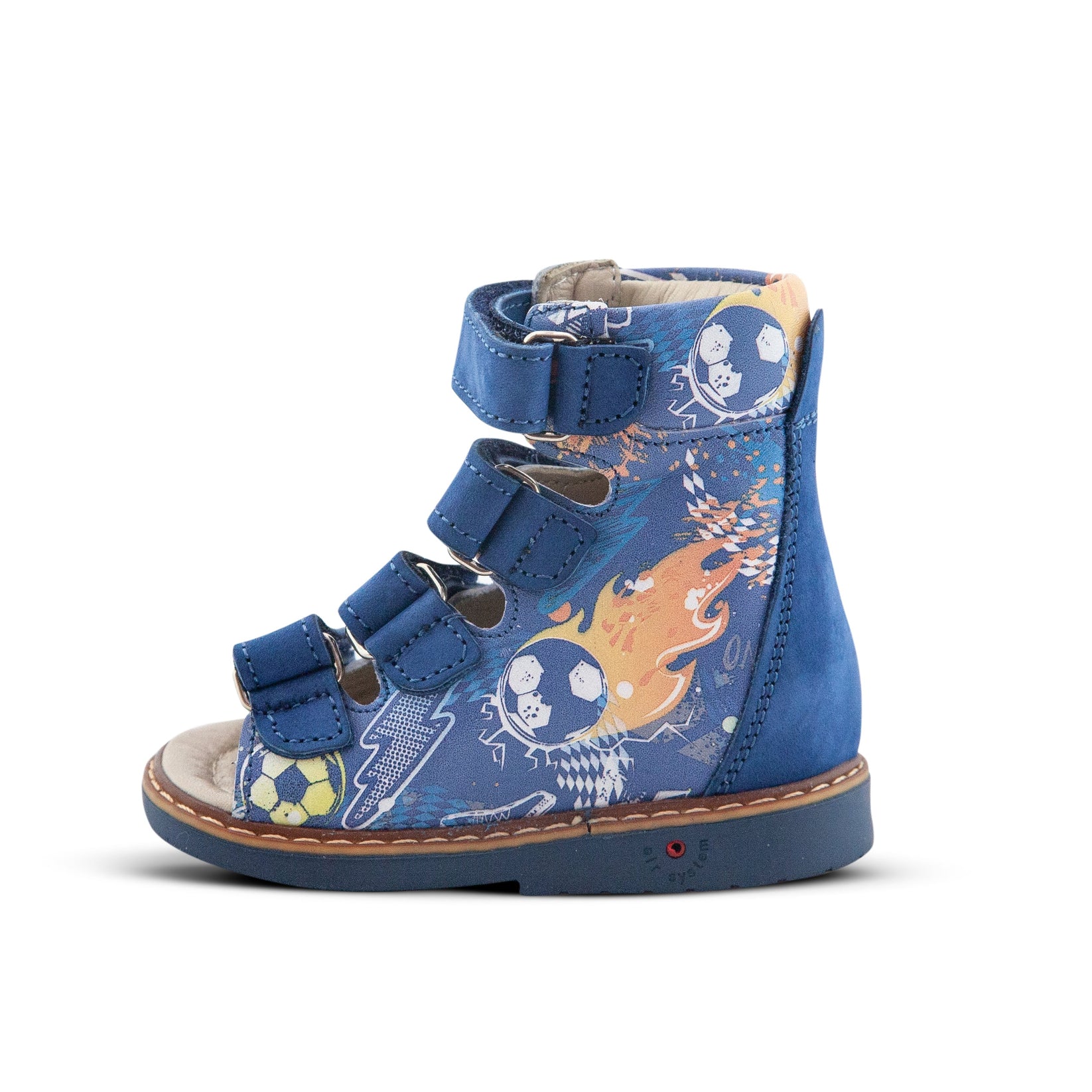
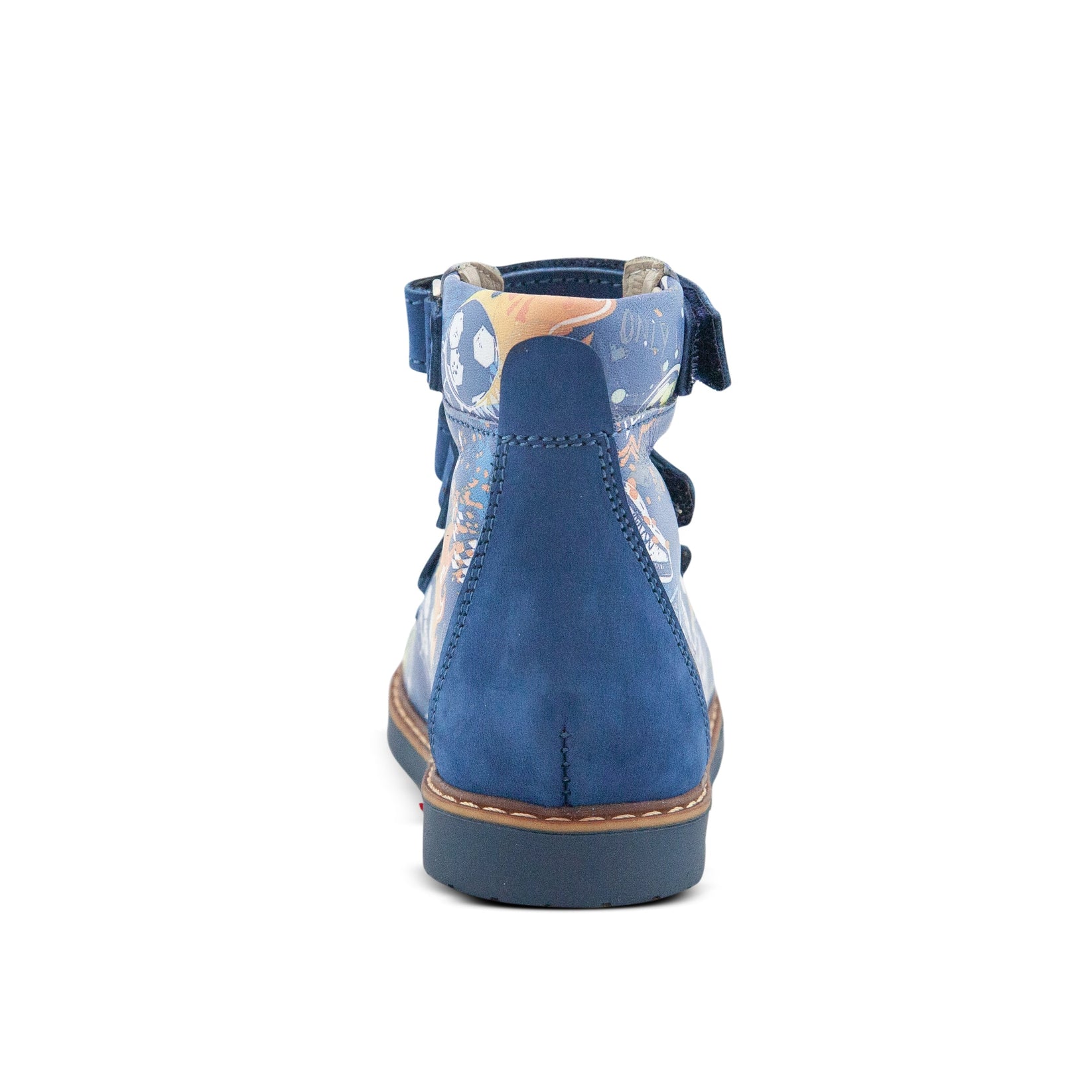
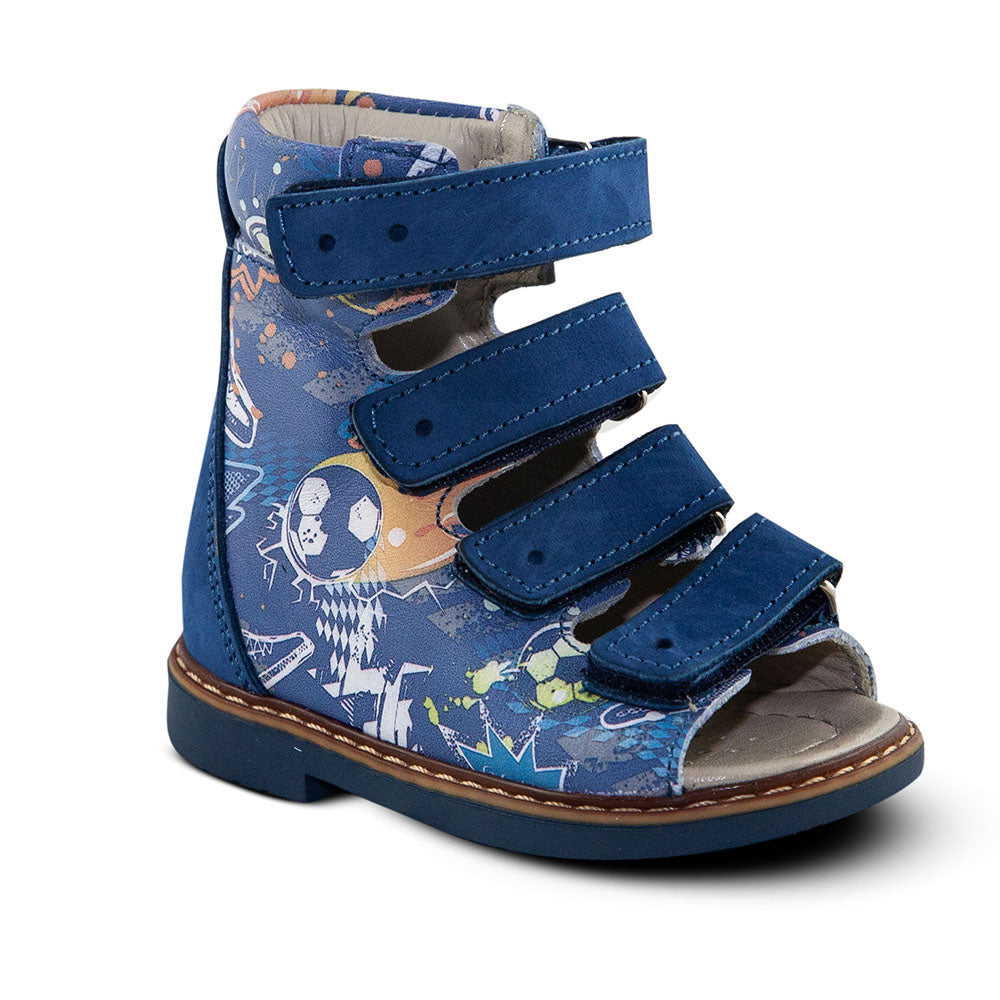
Athletic Axl Sandals
Four straps lock narrow feet securely.
Type
Sandals
Material
Leather
Sizes
18–30 (EU) | 2–11.5 (UK)
Benefits for kids needing hard-bottom shoes
- Four separate velcro straps (most here) for precision fit
- High-top design helps with stability
- Open-toe sandal balances breathability with ankle support
- Navy color looks athletic, not medical
Why they're a top choice
The Athletic Axl features four independent straps—more than any other shoe here. This matters hugely for narrow-footed babies whose feet slide around in standard shoes.
Each strap locks a different area, so nothing shifts during walking, running, or quick direction changes. Great for active babies with narrow feet who need a secure fit during energetic play.
10
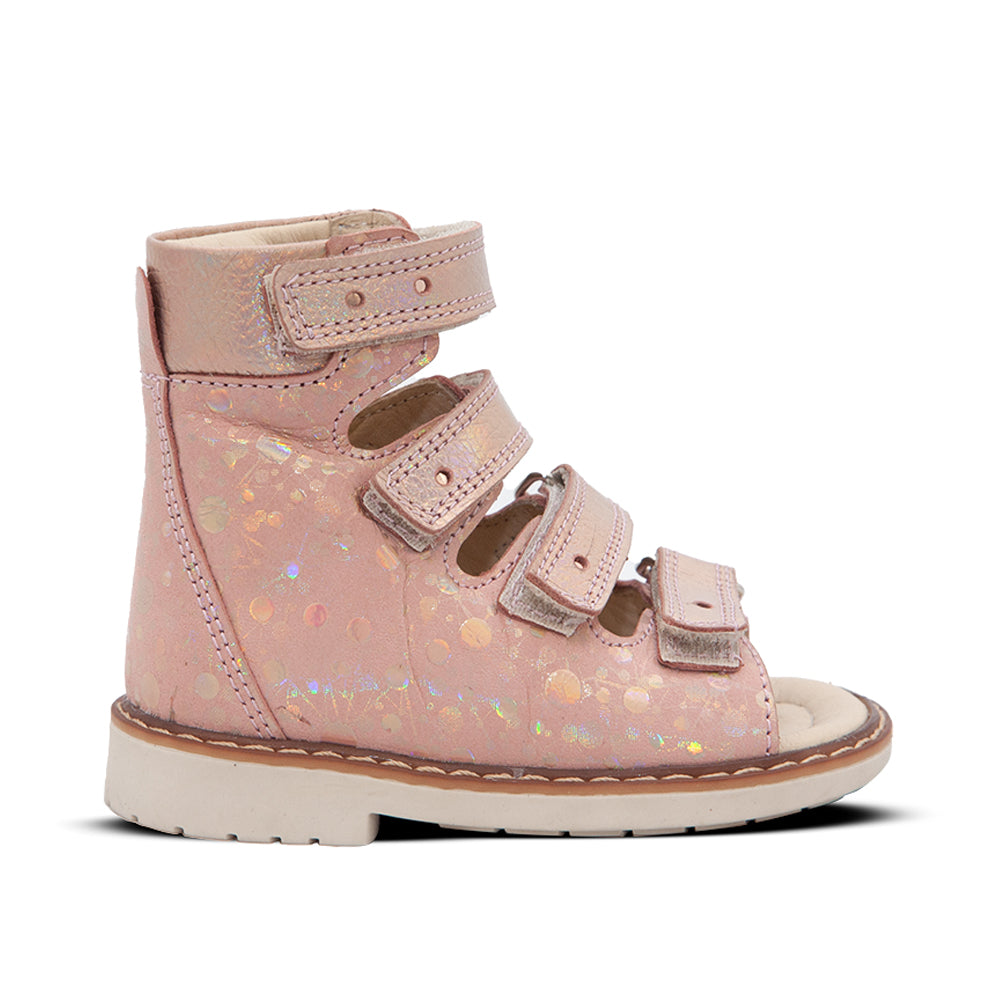
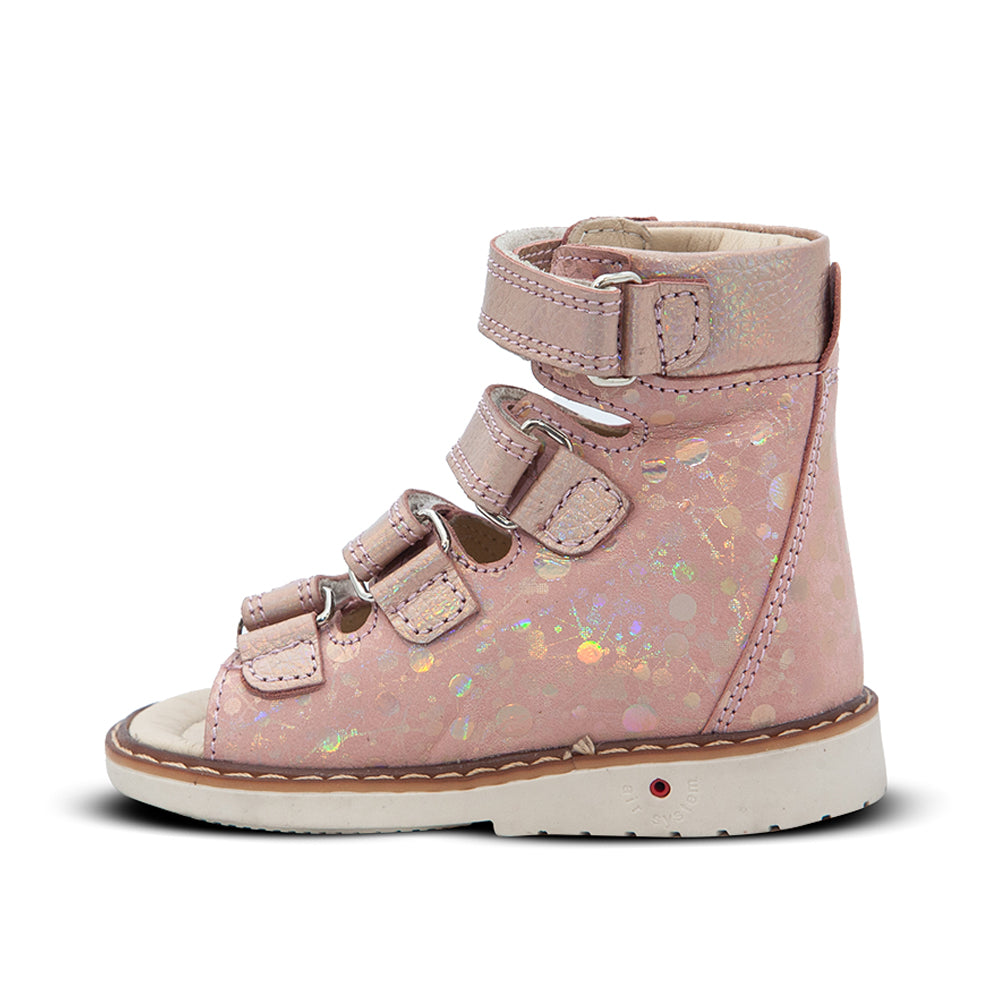
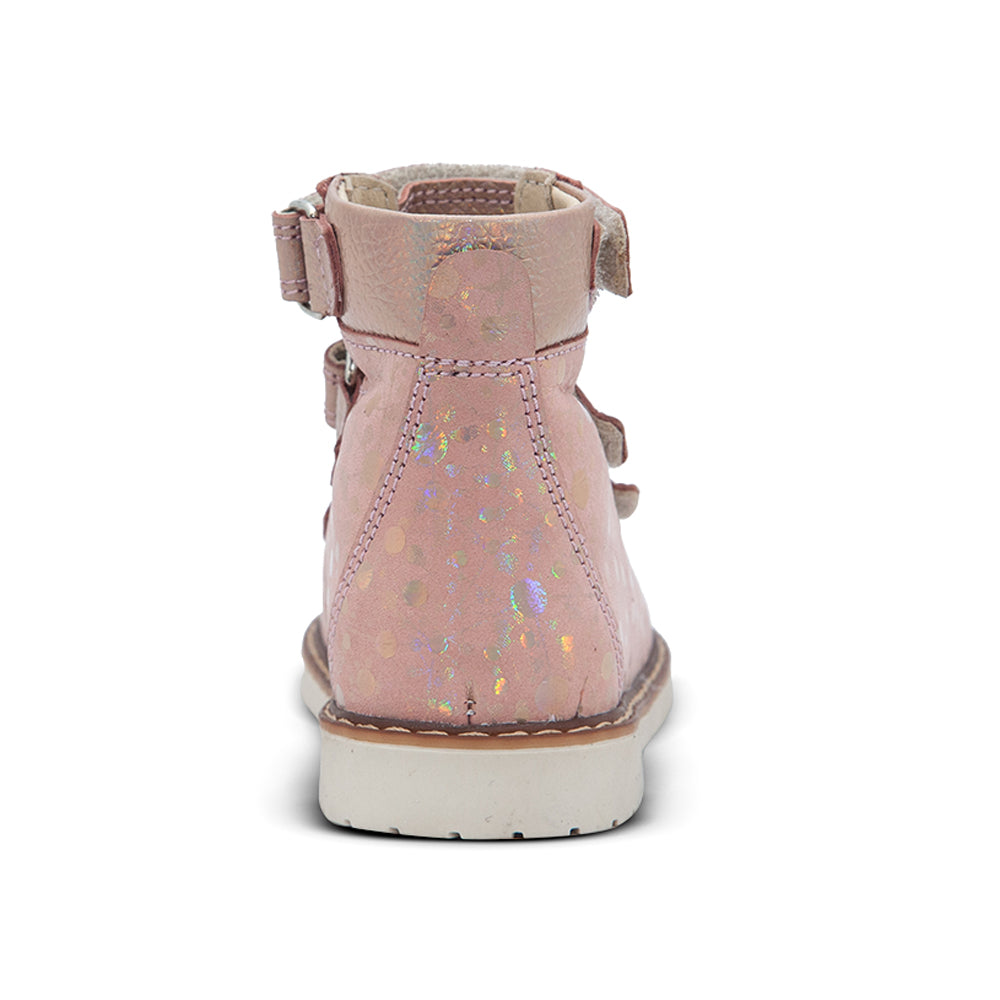
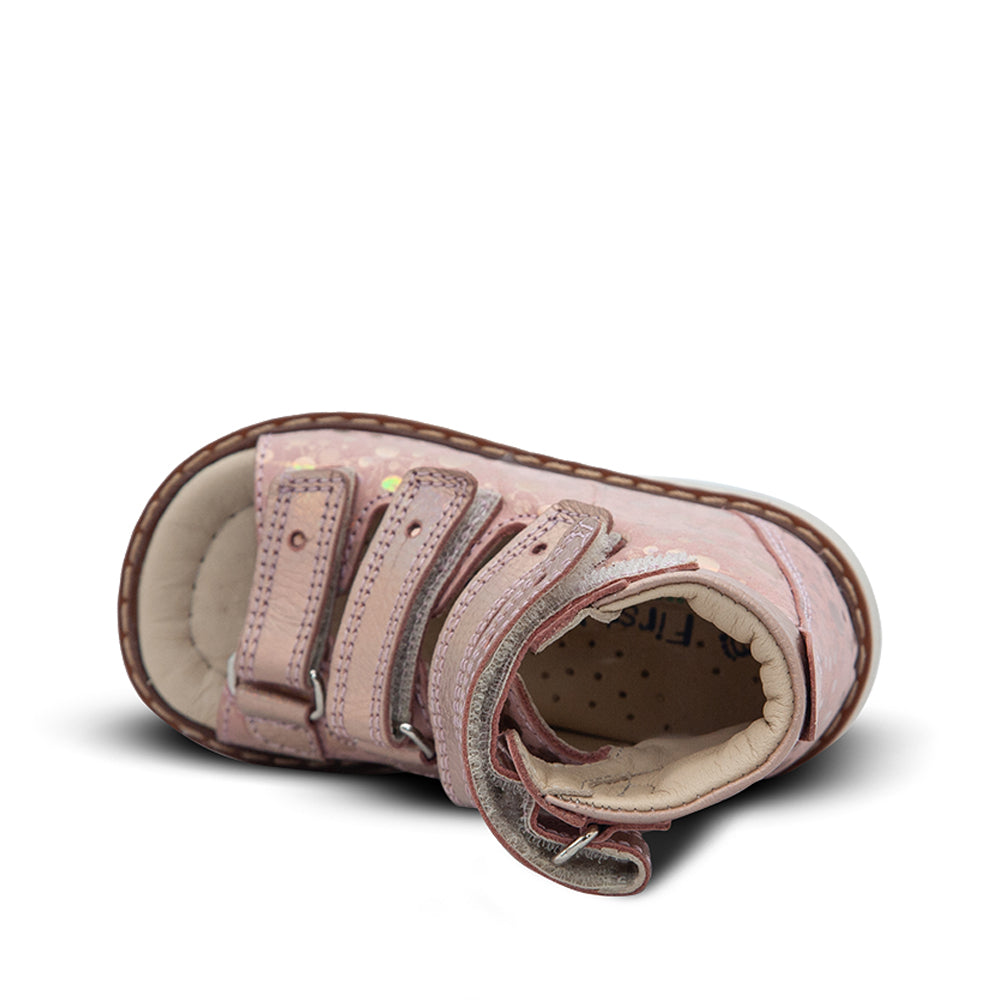
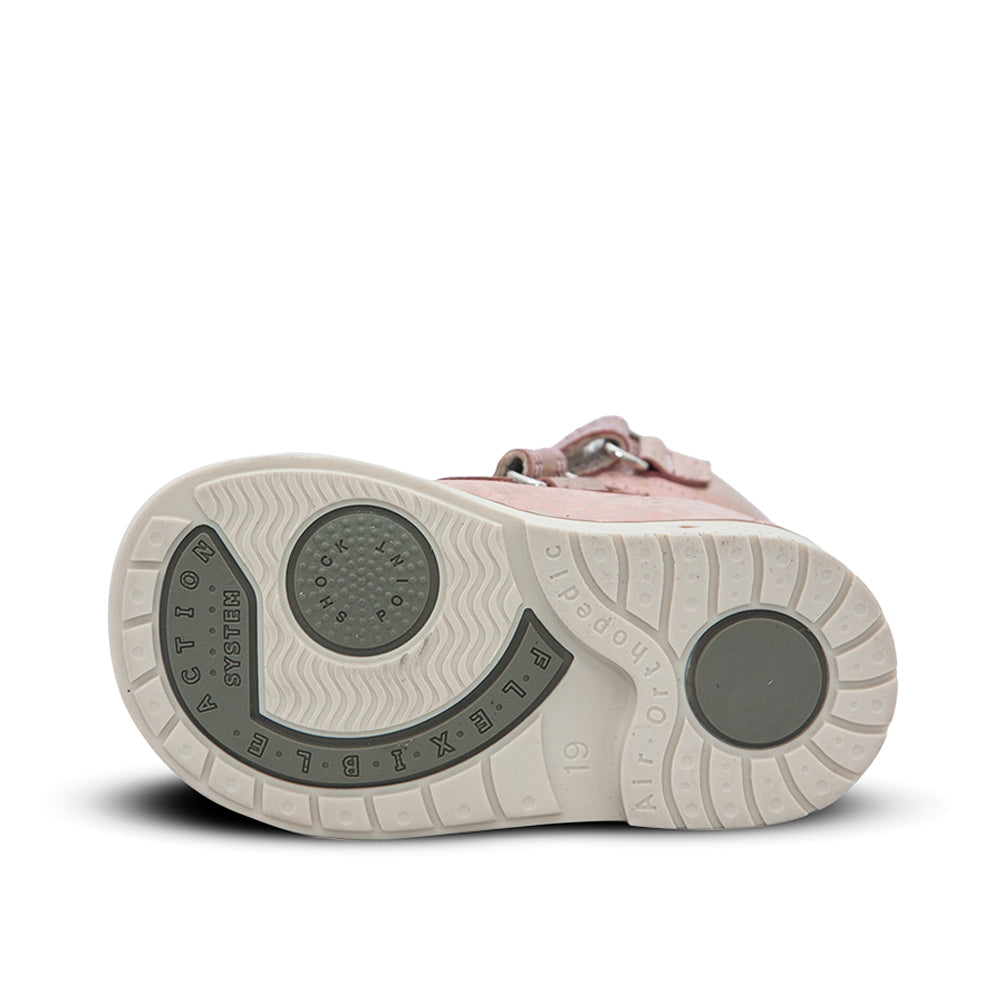
Alva Gigi Sandals
Comfortable fit for wide little feet
Type
Sandals
Material
Leather
Sizes
18–30 (EU) | 2–11.5 (UK)
Benefits for kids needing hard-bottom shoes
- Four Velcro straps adjust to wider foot shapes
- Design actually lets feet spread naturally instead of squeezing
- High-top helps with ankle stability
- Breathable leather doesn't trap heat despite more foot contact
Why they're a top choice
The Alva Gigi addresses wide feet specifically—instead of forcing them into narrow spaces, the design accommodates natural width. Four straps adjust to fit throughout the day as feet swell with activity or slim down in the morning.
Perfect for babies with wide feet who also need structural support, giving them room to be comfortable while staying stable.
Keep Your Baby's Feet Comfortable
Hard-bottom baby shoes aren't for everyone; most babies do better in soft, flexible shoes. But babies with hypermobility, joint instability, or who spend lots of time on rough terrain genuinely benefit from the structure and protection hard soles provide.
The Dandy Dominic offers solid everyday stability for babies who need hard soles, while the Miki Angela provides specialized grip for slippery indoor floors. Both give necessary structure without being too heavy or restrictive.
Support Your Baby's Feet
Explore our collection of supportive footwear designed for little feet.
References
1. Footwear for children. (1998). Paediatrics & Child Health, 3(5), 373. https://doi.org/10.1093/pch/3.5.373
2. Williams, C., Kolic, J., Wu, W., & Paterson, K. (2021). Soft soled footwear has limited impact on toddler gait. PLoS ONE, 16(5), e0251175. https://doi.org/10.1371/journal.pone.0251175
FAQs
When should babies start wearing hard-bottom shoes?
When they've been walking independently for 2-3 months with steady heel-to-toe steps and can change direction without wobbling. Or earlier if they have diagnosed hypermobility or your therapist recommends structural support.
Are hard-bottom shoes bad for babies?
Not bad, just unnecessary for most babies. Typically developing babies benefit more from soft, flexible shoes that let them feel the ground. Hard soles are helpful for babies with specific stability issues but can slow foot muscle development if used when not needed.
Can babies with flat feet wear hard-bottom shoes?
Flat feet are completely normal in babies—arches develop naturally over time. Unless your pediatrician diagnoses a specific problem, soft flexible shoes (or barefoot time) usually support arch development better than hard soles with built-in arches.
How long should babies wear hard-bottom shoes each day?
Even babies who need hard-bottom shoes benefit from barefoot time on safe indoor surfaces—aim for at least 30 minutes daily. This lets foot muscles work and develop naturally between periods of structured support.
What's the difference between hard-bottom shoes and orthopedic shoes?
Hard-bottom just means the sole is firm. Orthopedic shoes have extra features like special heel designs, arch support, and reinforced backs that address specific balance or stability issues. Many hard-bottom shoes include these orthopedic features.