10 Best Spina Bifida Occulta Shoes for Baby Comfort & Support
Babies with spina bifida occulta need specialized footwear that accommodates weak muscle tone, balance challenges, and often AFO braces. These 10 expert-approved shoes provide the adjustability, support, and comfort your child needs for healthy development.




Updated December 4, 2025

AI Summary


If your child was diagnosed with Spina Bifida Occulta and your pediatrician mentioned something about watching your baby's feet and muscle tone, it's normal to feel overwhelmed. Regular baby shoes don't seem right, but you're not sure what makes a shoe "right" for your child's specific needs.
Finding shoes for babies with spina bifida occulta feels complicated because it is. Your child needs more than cute footwear. They need shoes that support weak muscle tone, accommodate balance challenges, work with AFO braces if needed, and actually stay comfortable all day long.
This guide shows you exactly which spina bifida shoes deliver on all those requirements.

Browse orthopedic shoes designed for growing feet
Our shoe collection is meant for kids aged 0-7 years old
Our Picks for the 10 Best Spina Bifida Shoes for Babies
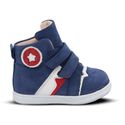
Cap Levi Sneakers
Dual Velcro straps with extended ankle and arch support.
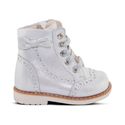
Pearly Sheila Boots
Thomas heel and AFO-friendly design in silver leather.
Johnny Rigel Sneakers
Triple Velcro with removable insole and reinforced construction.
Show more
What is Spina Bifida Occulta in Babies
Spina Bifida Occulta is the mildest form of spinal birth defects, affecting about 12% of babies [1]. Unlike the more visible forms of spina bifida, SBO involves incomplete vertebral closure without exposed spinal tissue. Most babies with spina bifida occulta show no symptoms at all.
But 15 to 20% do develop complications that affect their feet and legs. You might notice your baby has weaker muscle tone in their lower body, takes longer to hit walking milestones, or has slight balance issues. Some children develop foot abnormalities like high arches or turned-in feet.
The key difference from severe spina bifida is subtlety. Your child's cognitive development stays completely normal. The challenges center on muscle strength, coordination, and sometimes sensation in the feet. That's why the right shoes matter so much for babies with spina bifida.
What Makes Shoes Different for Spina Bifida Babies
Regular baby shoes don't account for hypotonia, which is the medical term for decreased muscle tone. When your baby's foot muscles are weaker than typical, their feet need extra support to develop properly. Standard shoes often lack the structured heel counters and arch support that spina bifida feet need.
Many children with SBO also use AFO braces. These ankle-foot orthoses provide stability, but they take up significant space inside shoes. You can't just grab any pair off the shelf. Shoes for AFOs need extra depth, wider openings, and specific design features that work with the brace instead of fighting against it.
Sensation changes also matter. Some babies with spina bifida occulta have slightly reduced feeling in their feet. They won't always tell you when a shoe rubs wrong or creates a pressure spot.
Shoes for kids with sensory issues, like those with seamless interiors and breathable materials, prevent problems before they start.
Key Features of Spina Bifida Shoes for Babies
Adjustable Closure Systems for Spina Bifida Feet
Shoes with multiple Velcro straps or combination closures give you precise control over fit. Your baby's feet might swell throughout the day, or you might need to accommodate an AFO brace.
Adjustability means you can modify tension without compromising stability. Look for at least two independent adjustment points on any shoe you're considering for your child.
Structured Heel Counters with Flexibility for Balance Support
The back of the shoe needs to be firm enough to prevent excessive pronation, which is common when muscle tone is low. But it can't be so rigid that it restricts natural ankle movement.
Your baby needs that ankle mobility to develop balance reactions. Semi-rigid heel counters offer the sweet spot between support and movement for children with spina bifida.
Extra Depth Toe Boxes for Spina Bifida Baby Comfort
Cramped toes create problems for any child, but especially for babies with reduced sensation or foot deformities. Extra depth prevents crowding and allows natural toe movement, which is essential for balance development.
Deep toe boxes also accommodate any swelling or foot shape irregularities that can occur with neurological conditions.
Removable Footbeds for Custom Orthotics
Many children with SBO eventually need custom orthotics as they grow. Shoes with removable insoles let you swap in prescribed inserts without losing proper fit.
Even if your baby doesn't need orthotics now, this feature provides flexibility for the future. It also makes cleaning easier and extends the shoe's useful life.
10 Best Spina Bifida Occulta Shoes for Babies
1

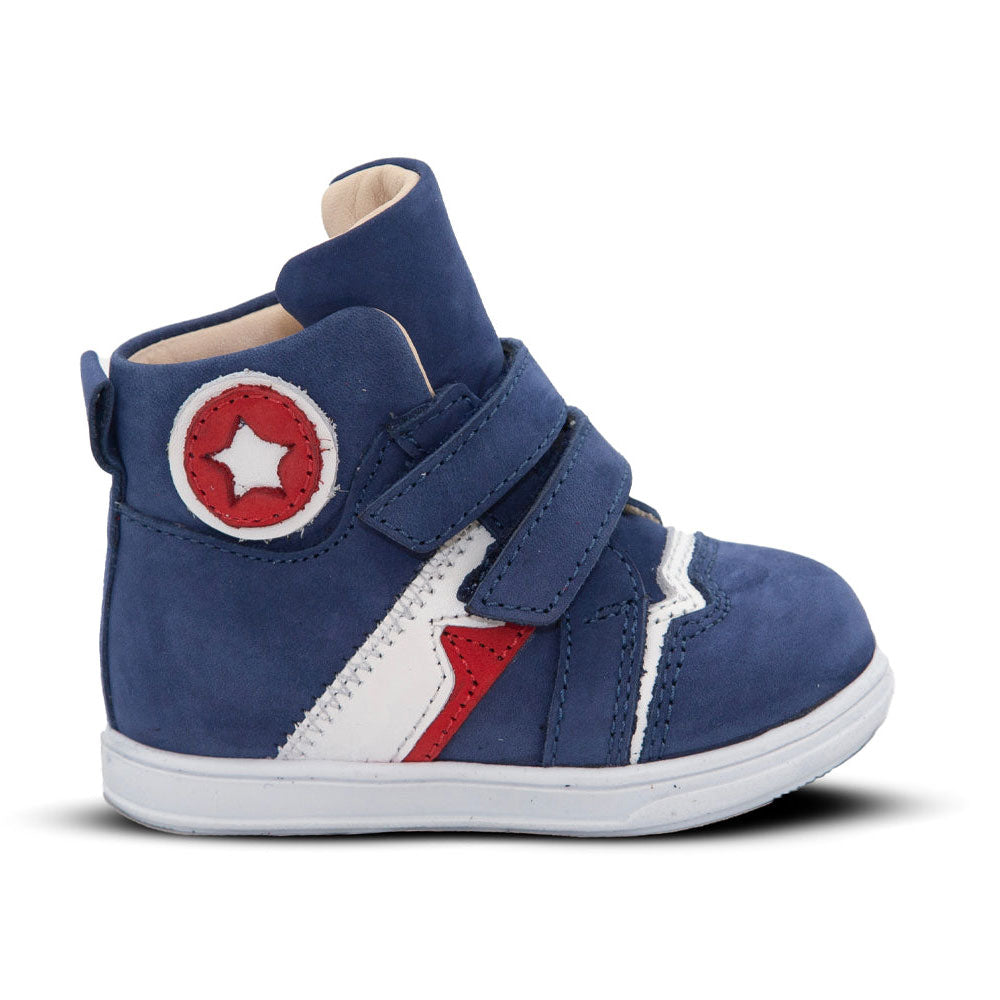
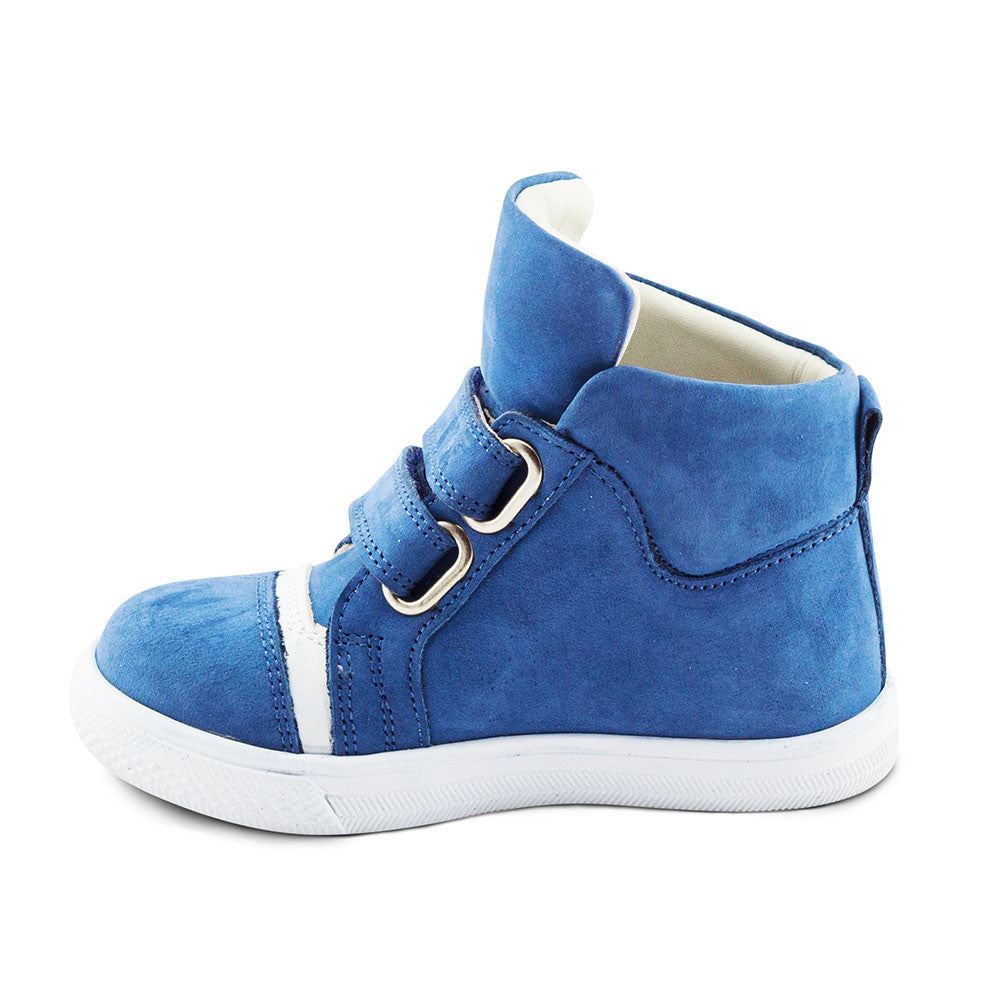
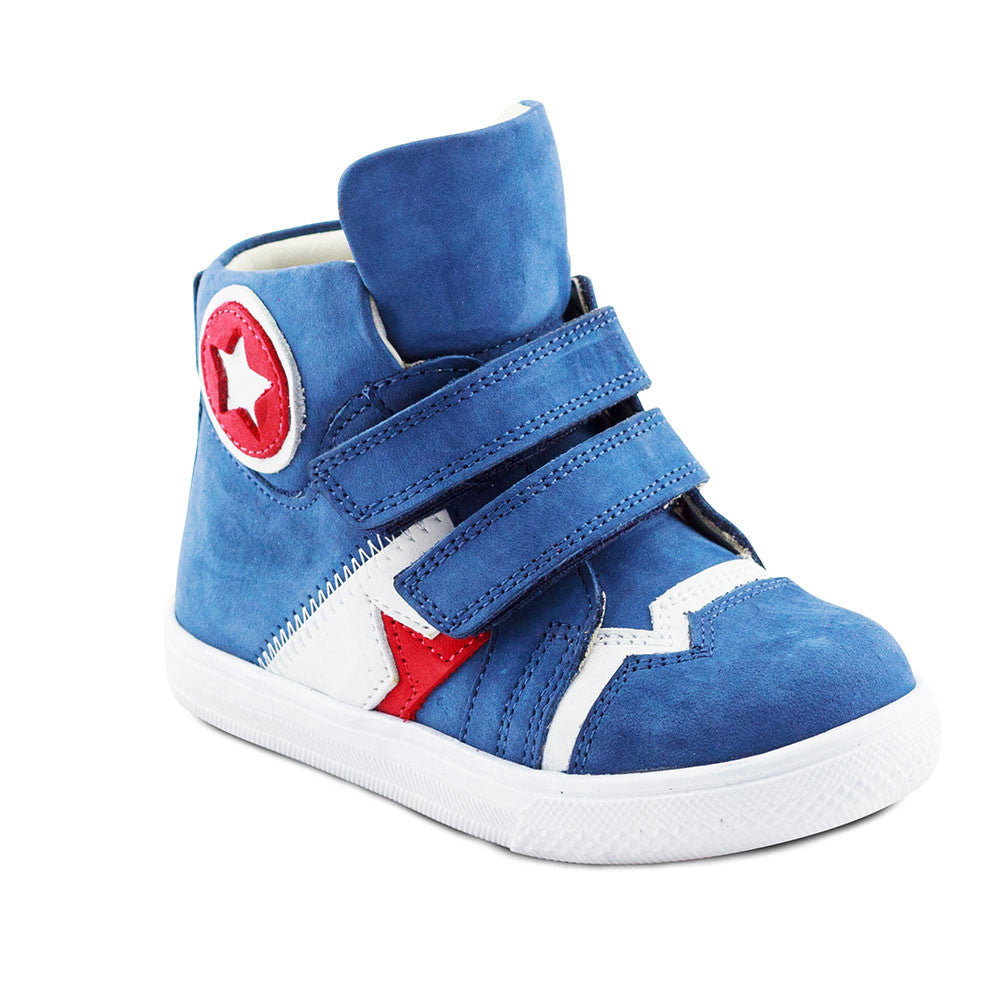
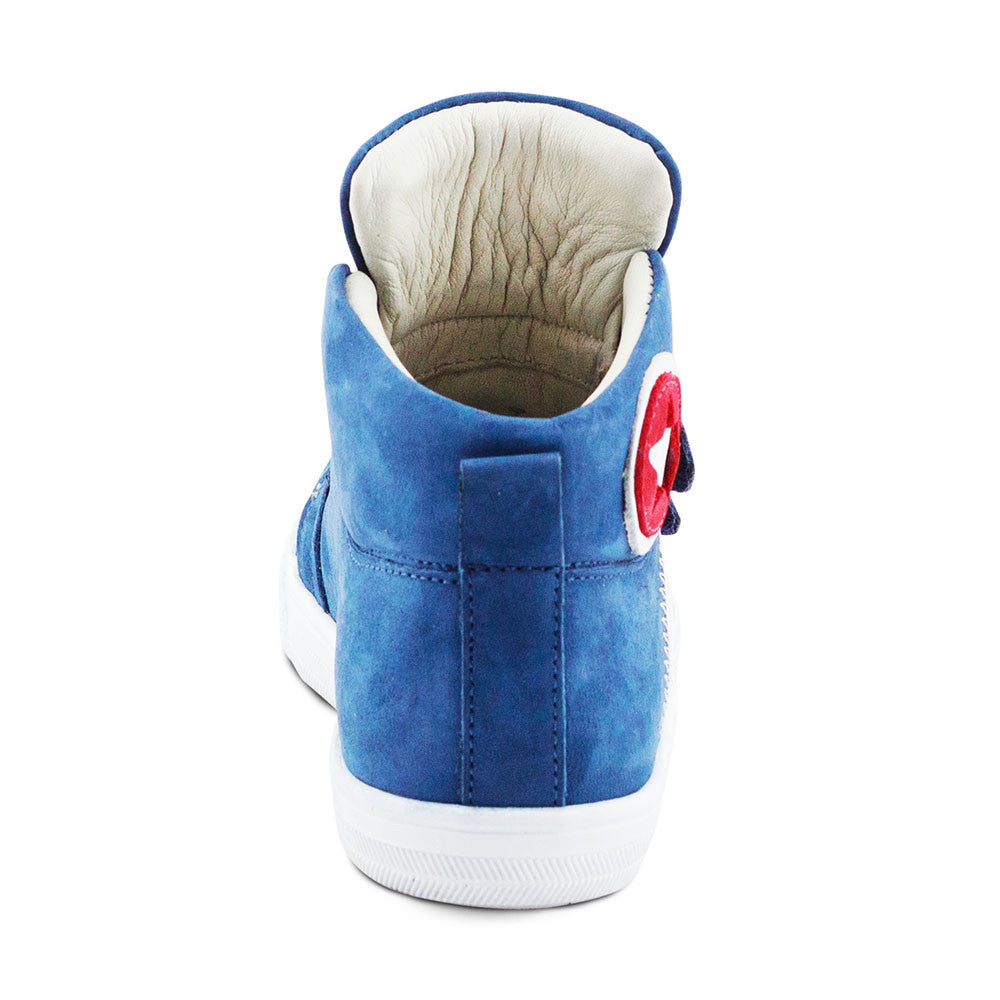
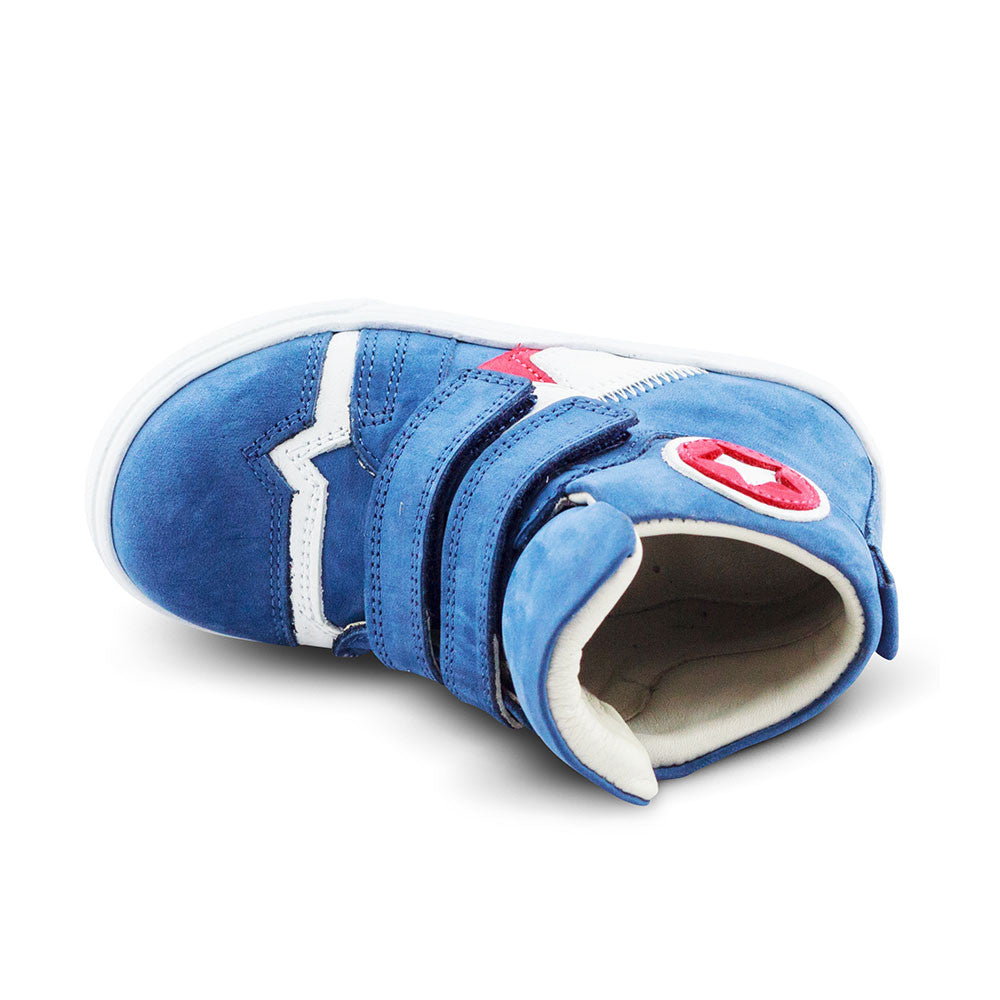
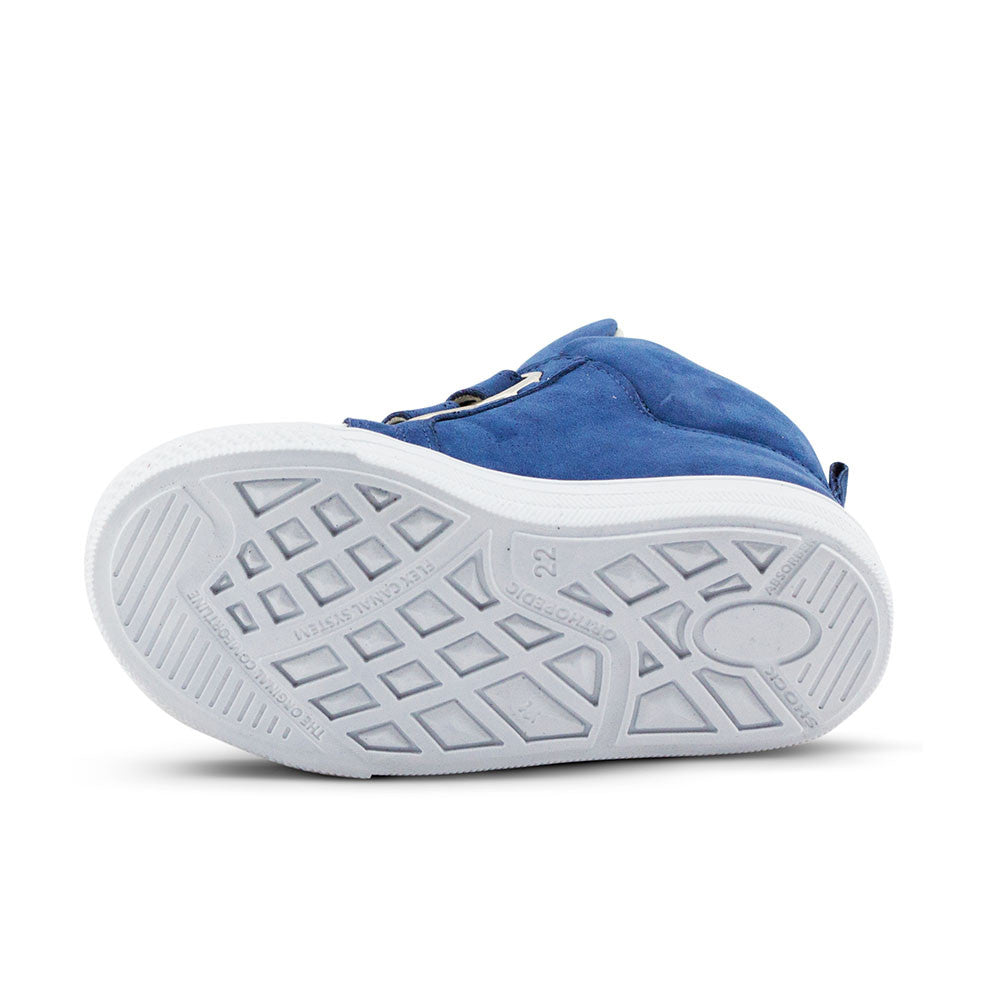
Cap Levi Sneakers
All-day comfort with medical-grade support features.
Type
Sneakers
Material
Nubuck Leather
Sizes
18–30 (EU) | 2–11.5 (UK)
Benefits for babies with spina bifida occulta
- Dual velcro straps adjust independently for a custom fit around weak ankles
- Extended ankle support compensates for balance and proprioception challenges
- A high built-in arch prevents progressive flatfoot in children with low muscle tone
- Shock-absorbent thermoplastic outsoles reduce impact stress on developing joints
- Anti-bacterial insoles address hygiene concerns in children with reduced sensation
Why they're a top choice
The Cap Levi sneakers handle the everyday demands parents face with children who have spina bifida occulta. The dual velcro system makes morning routines faster while ensuring your child's foot stays securely positioned all day. Extended ankle support addresses those subtle balance issues without making your baby feel restricted or uncomfortable during play.
What sets this shoe apart for spina bifida babies is how it combines support with wearability. The nubuck leather construction withstands the irregular wear patterns that come with atypical gait, while the high arch support actively works against the flatfoot tendencies common in hypotonic conditions. The Cap Levi transitions seamlessly from daycare to playground to therapy appointments, making it the reliable everyday option parents need when managing complex medical requirements.
2
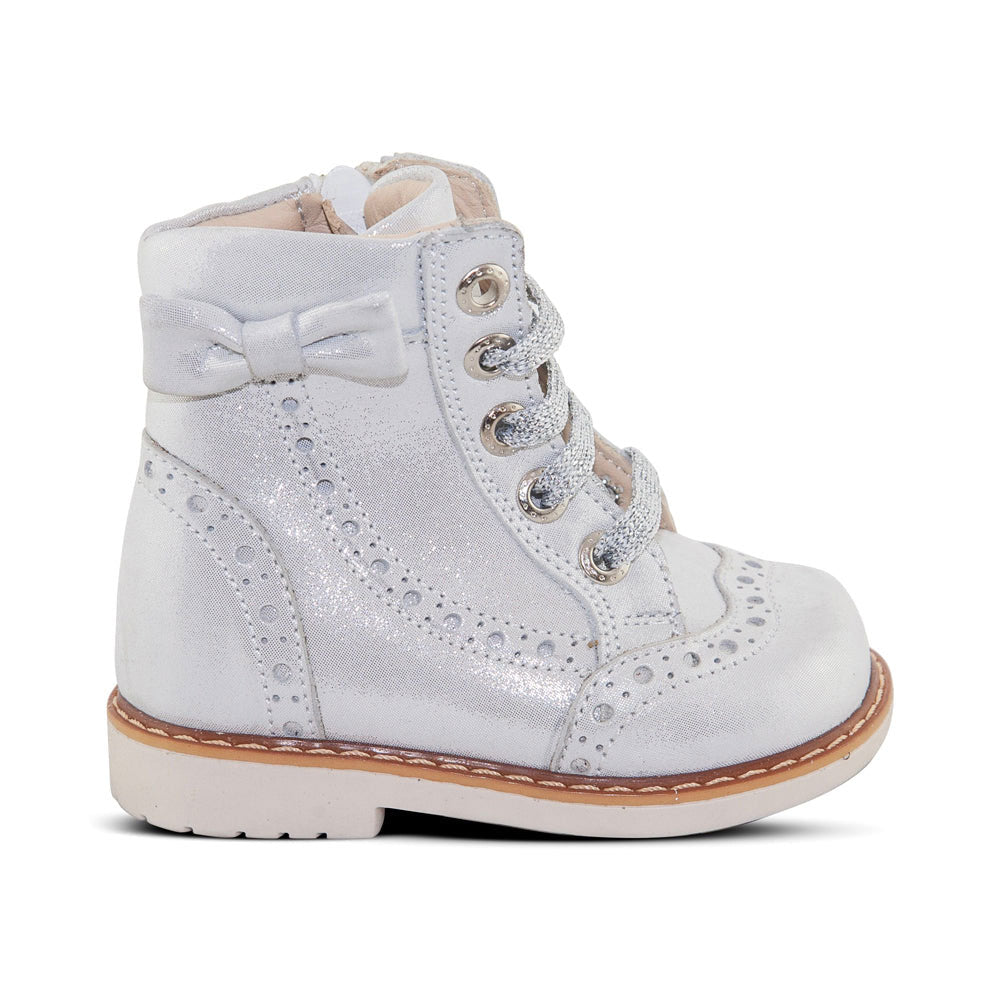
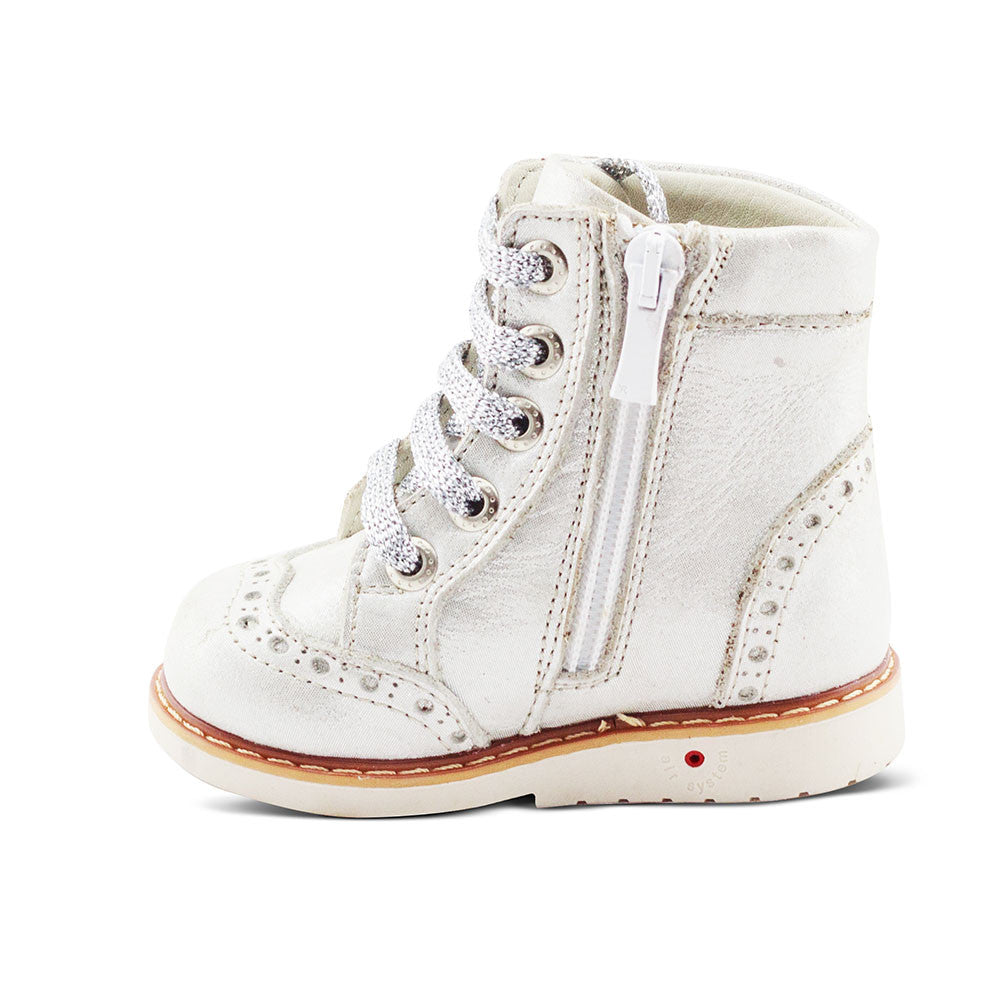
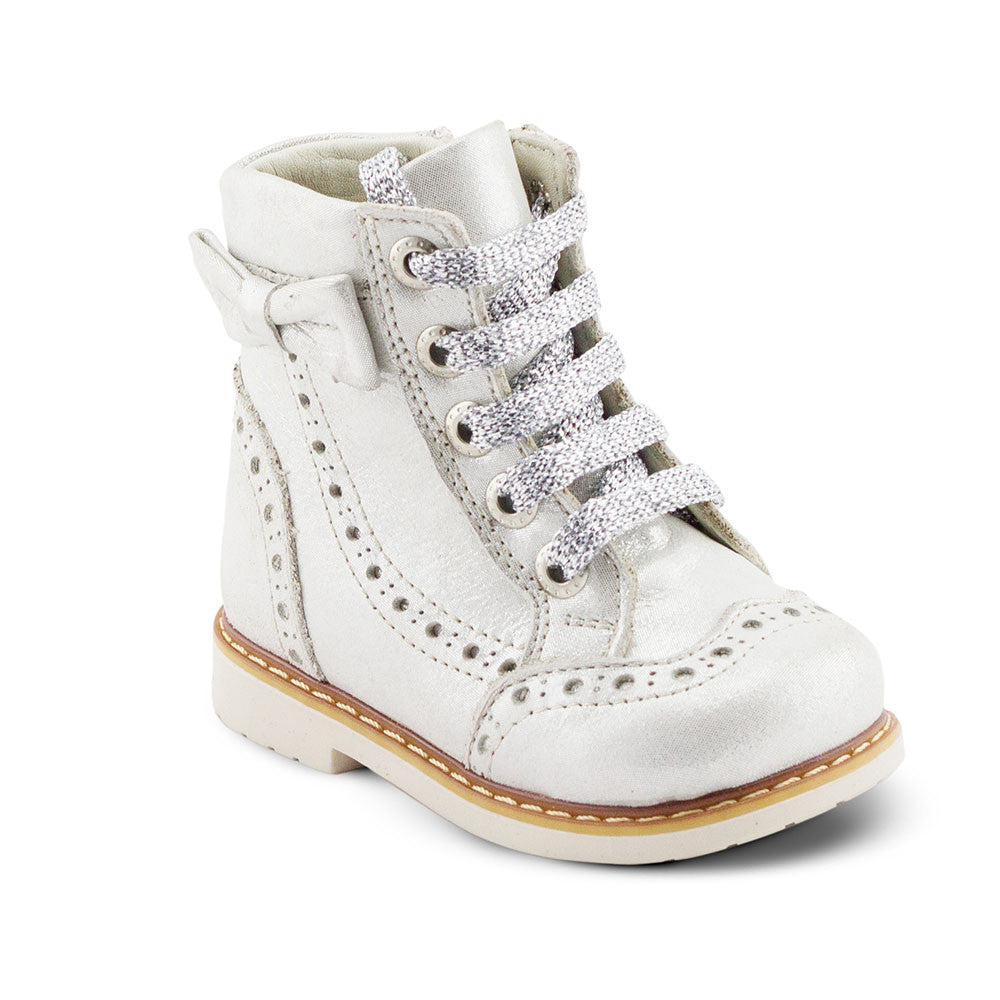
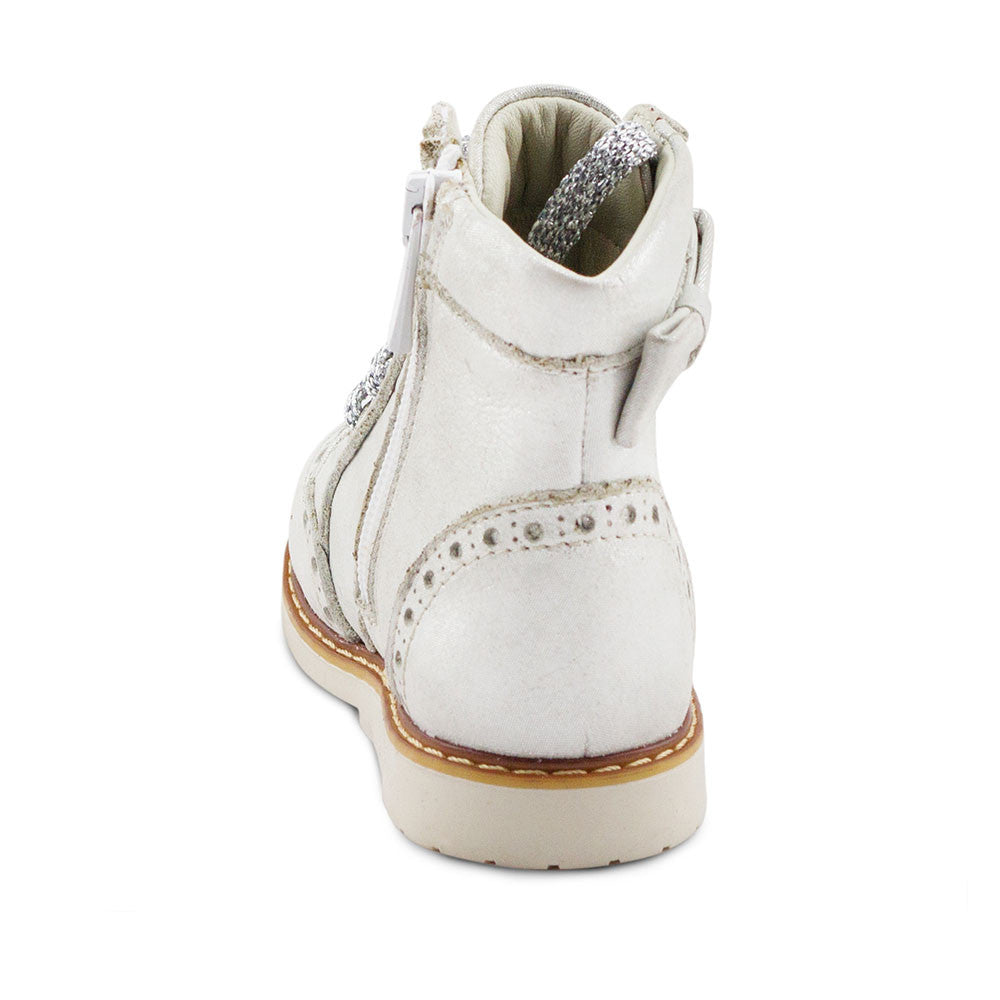
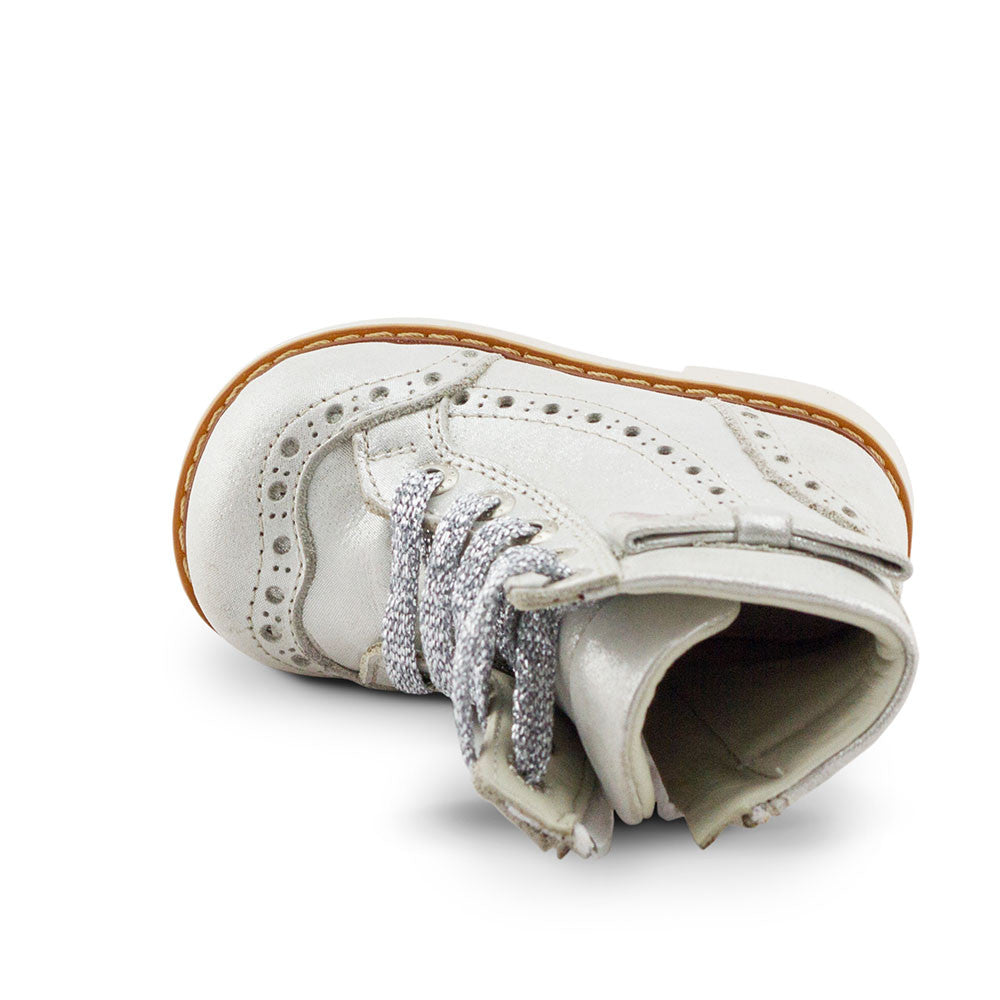
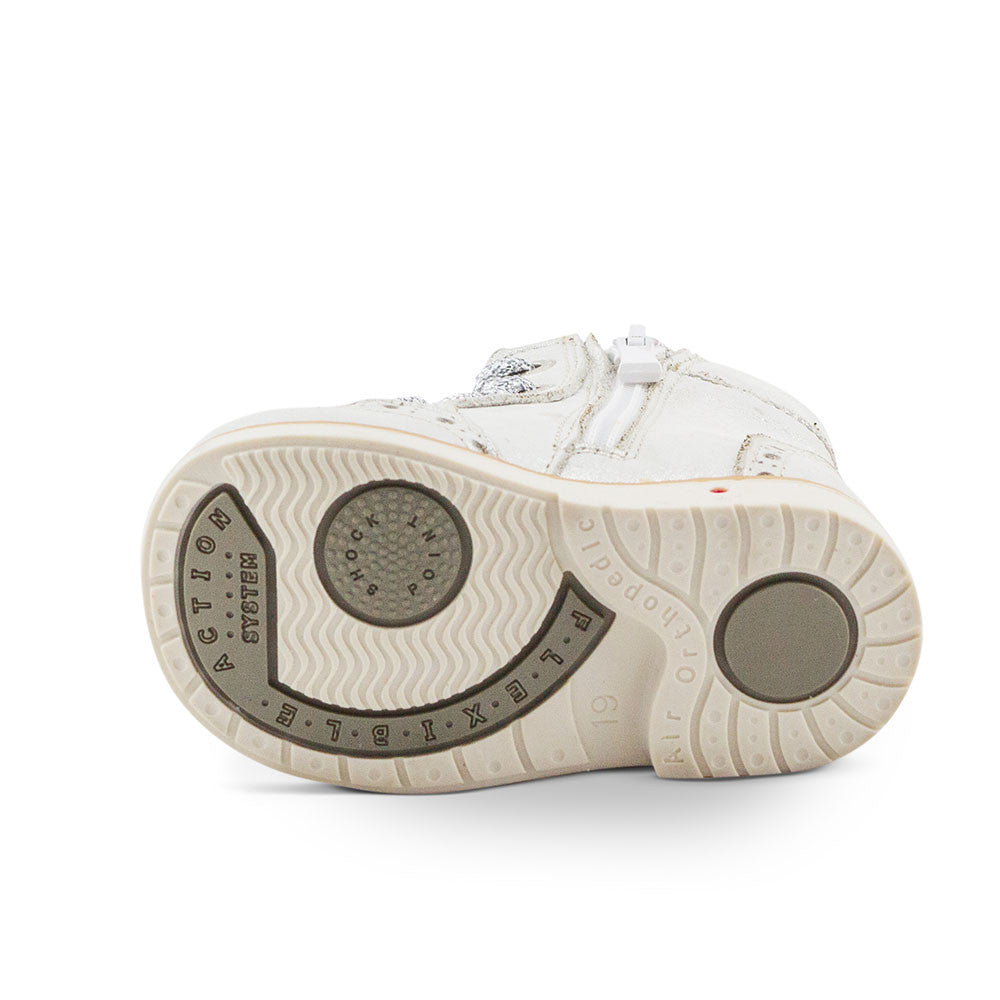
Pearly Sheila Boots
Therapeutic function meets special occasion style.
Type
Boots
Material
Leather
Sizes
18–30 (EU) | 2–11.5 (UK)
Benefits for babies with spina bifida occulta
- The extended tongue design eliminates AFO hardware pressure points
- The Thomas heel modification provides targeted medial arch support for pronation
- Air valves combat moisture buildup that leads to skin problems
- Combined zipper and lacing closure ensures secure AFO positioning
- Silver leather with decorative bows maintains a formal aesthetic appeal
Why they're a top choice
The Pearly Shiela solves a problem many parents don't anticipate until they face it: finding formal footwear that doesn't sacrifice your child's medical needs. Special occasions matter, and your daughter deserves to feel dressed up while maintaining the foot support her spina bifida requires.
The Thomas heel modification specifically addresses the inward rolling tendency that happens when muscle tone is reduced. Combined with the AFO-accommodating tongue design, this shoe works therapeutically even during extended family gatherings or holiday events. The Pearly Shiela proves that shoes for spina bifida babies don't have to look clinical or obviously medical, giving your child confidence during social situations while protecting her developing feet.
3
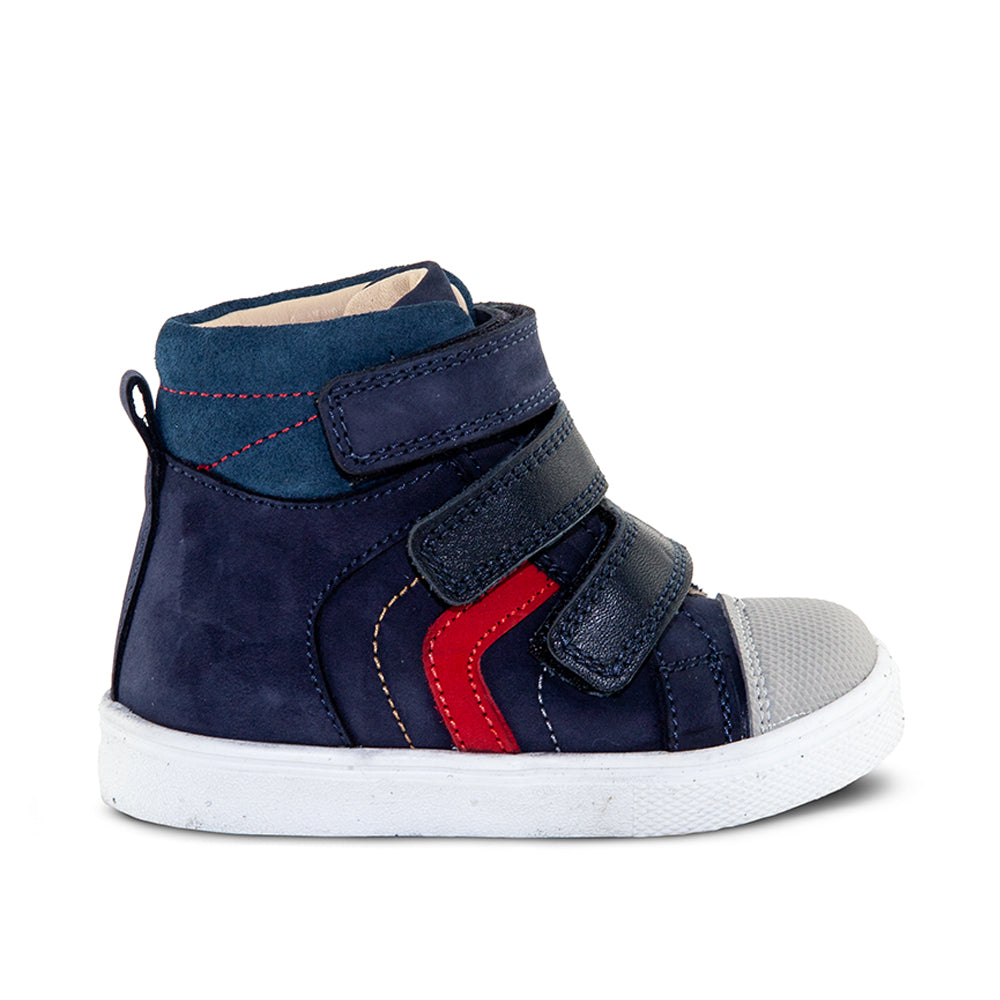
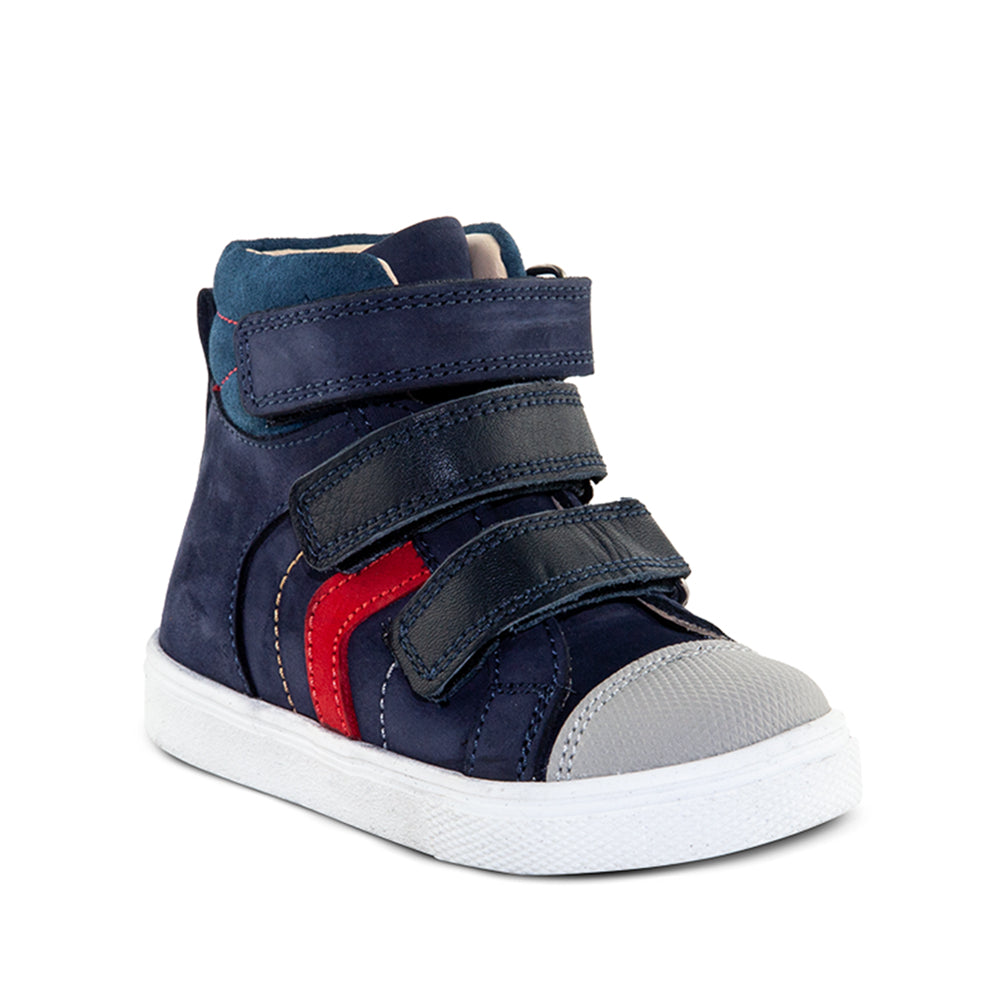
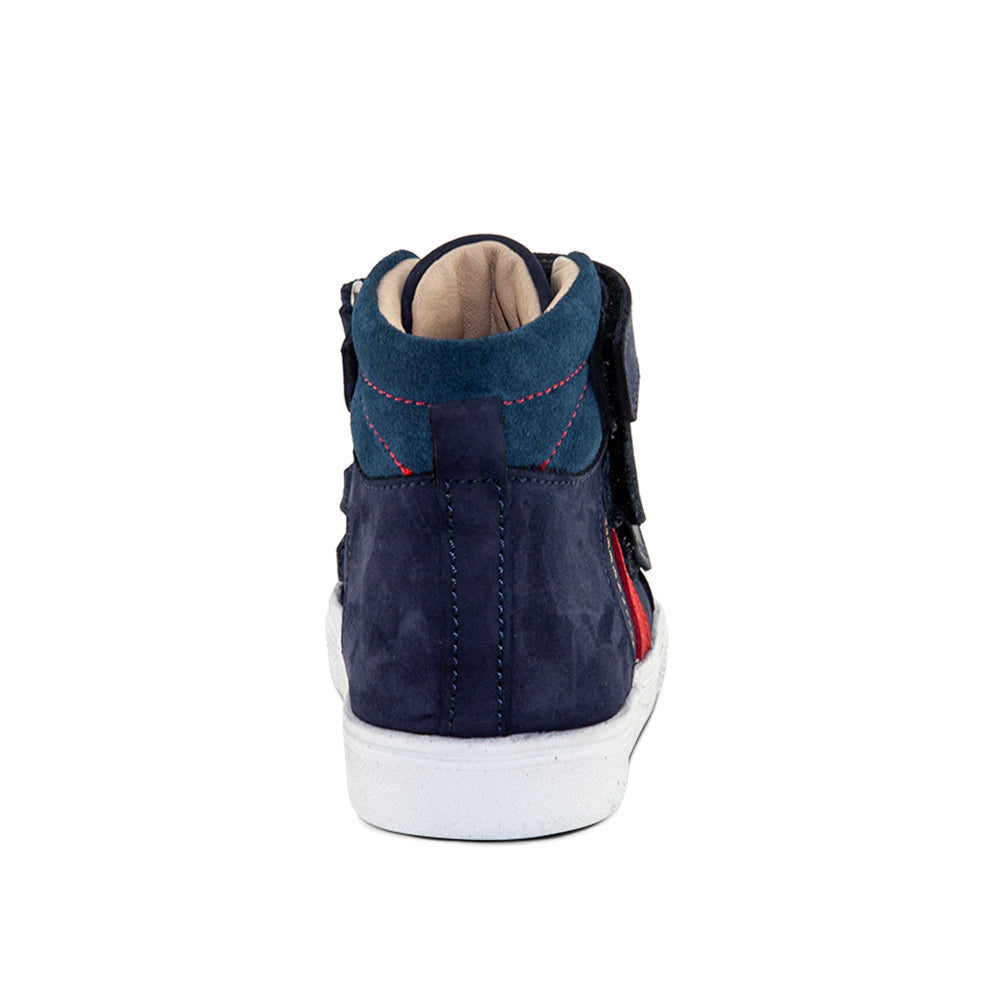
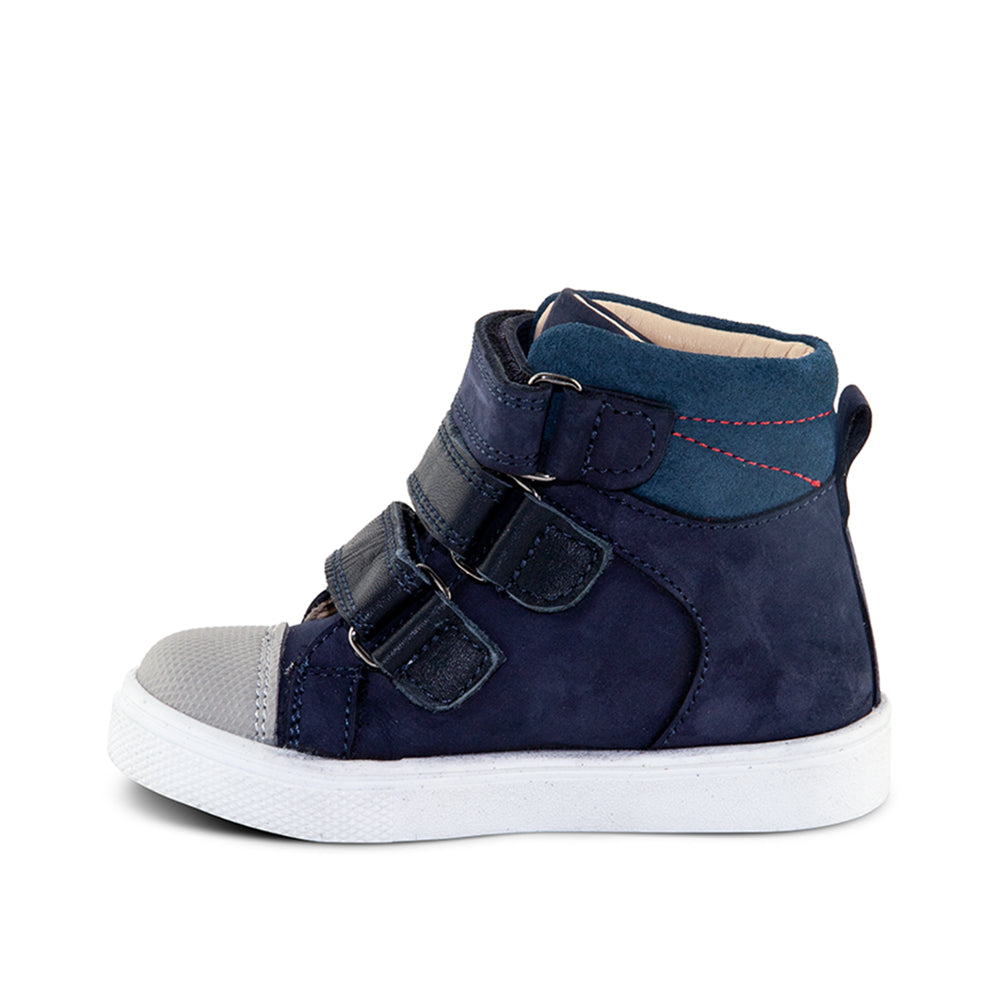
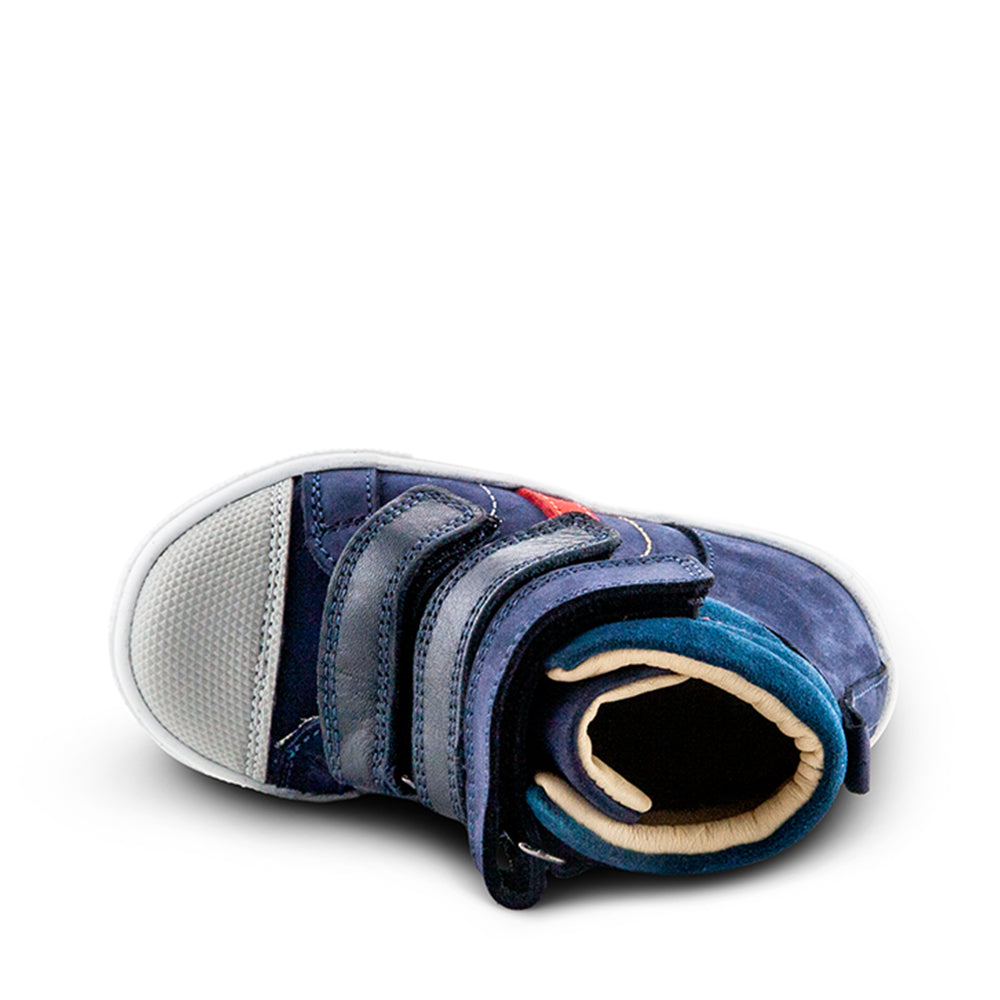
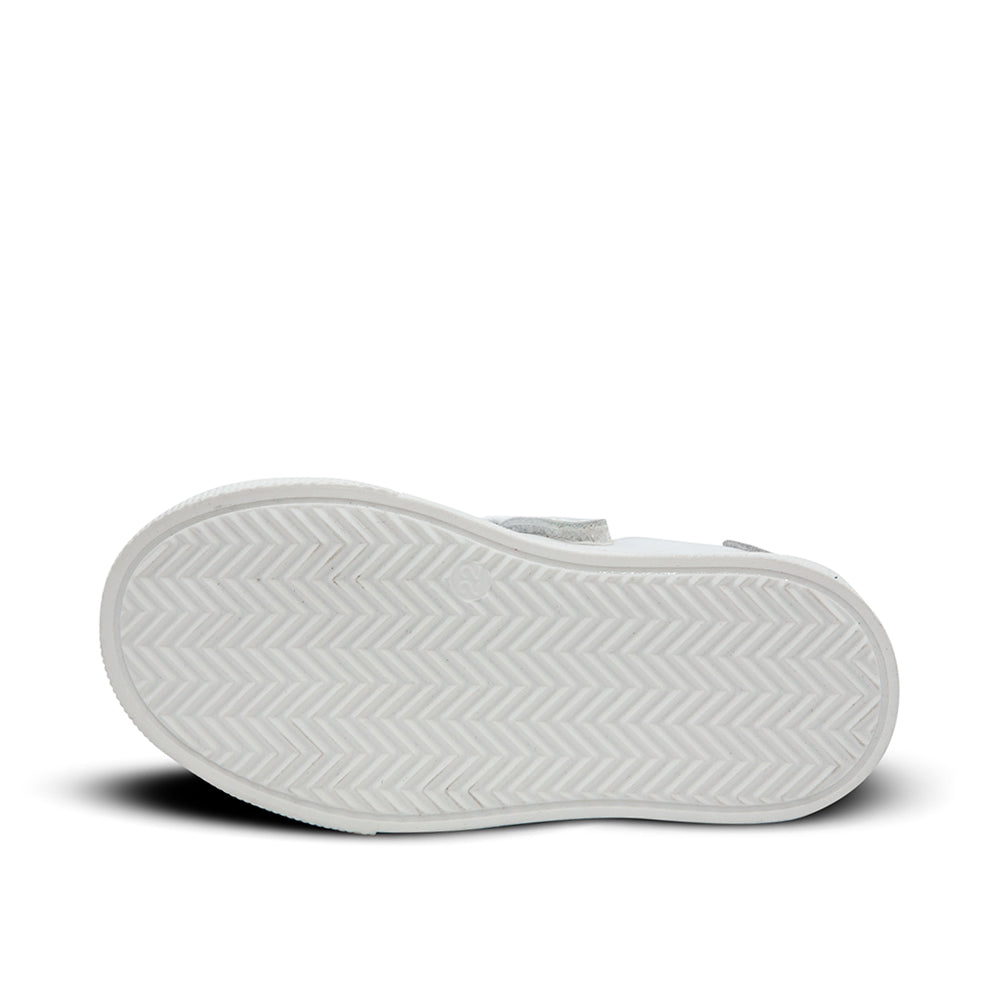
Johnny Rigel Sneakers
Built to withstand active play and atypical gait patterns.
Type
Sneakers
Material
Leather + Nubuck Leather
Sizes
18–30 (EU) | 2–11.5 (UK)
Benefits for babies with spina bifida occulta
- The extended tongue design eliminates AFO hardware pressure points
- The Thomas heel modification provides targeted medial arch support for pronation
- Air valves combat moisture buildup that leads to skin problems
- Combined zipper and lacing closure ensures secure AFO positioning
- Silver leather with decorative bows maintains a formal aesthetic appeal
Why they're a top choice
The Johnny Rigel is engineered for boys who play hard despite their spina bifida challenges. The triple Velcro strap system gives you multiple adjustment points, crucial when your child's feet swell during active play or when accommodating AFO braces that shift throughout the day.
Durability becomes critical when your child's gait puts unusual stress on footwear. The reinforced construction and anti-scratch toe cap mean this shoe survives rough playground conditions and physical therapy sessions without falling apart. The Johnny Rigel removes one worry from your plate: you won't be replacing shoes every few weeks because they can't handle the demands of a child with spina bifida feet learning to navigate their environment confidently.
4
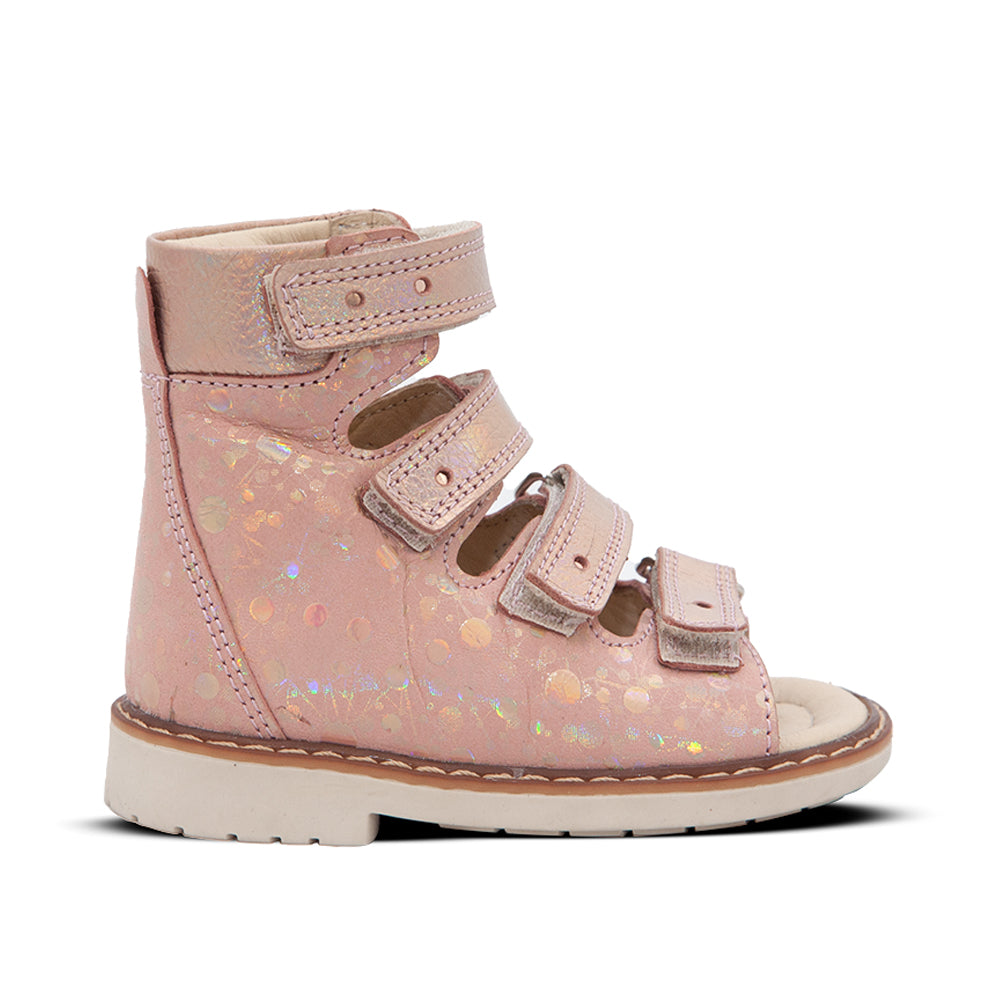
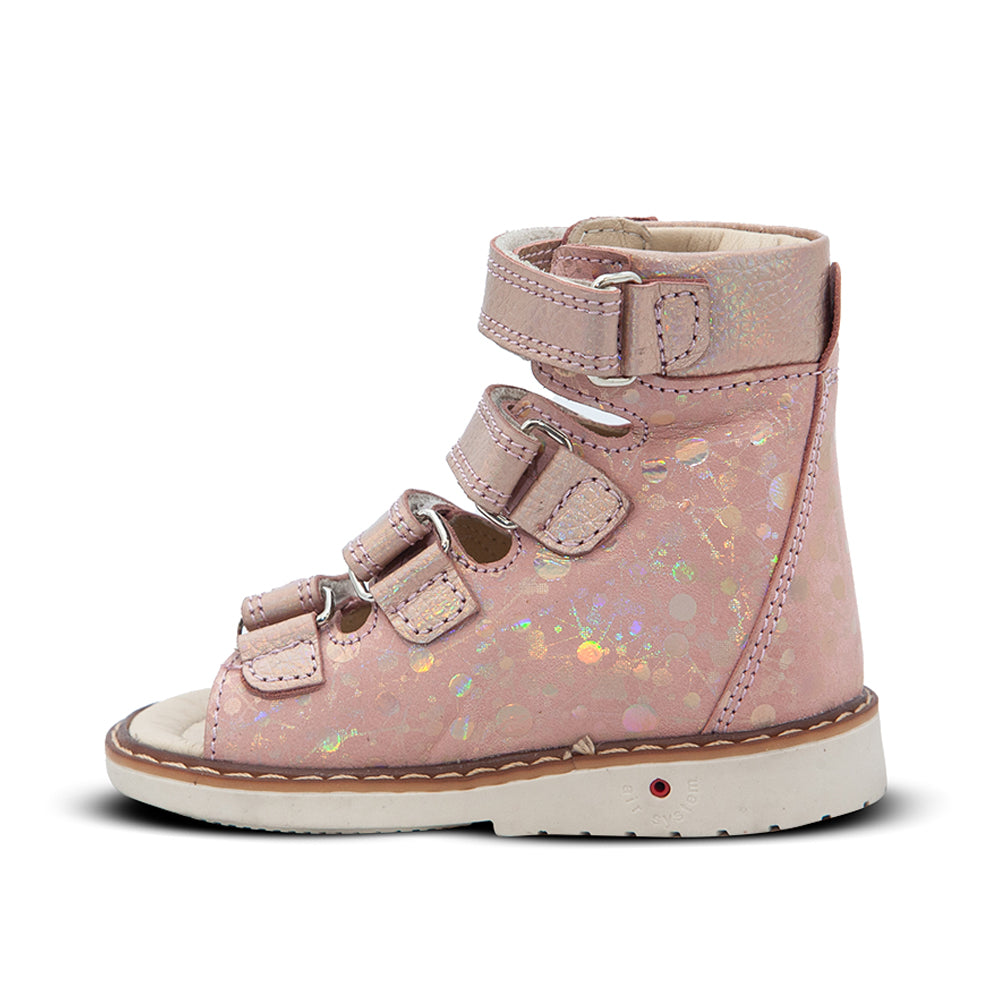
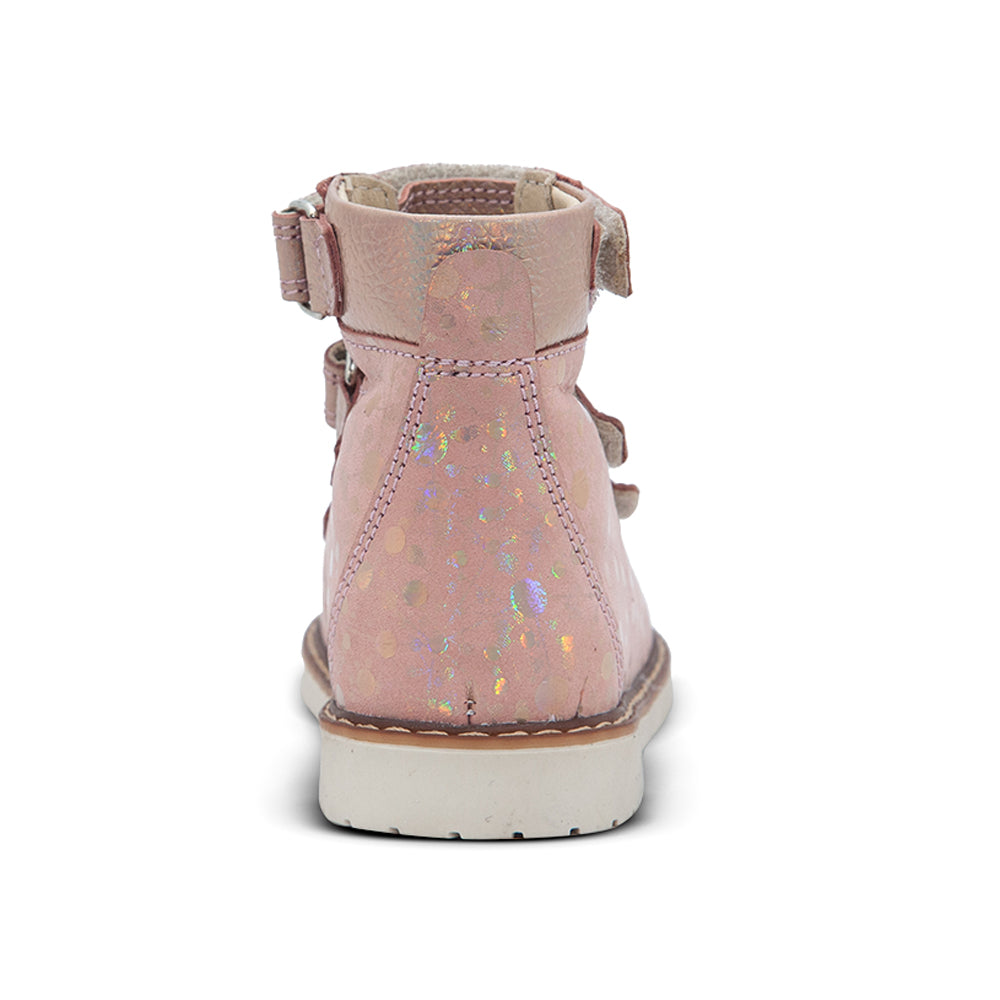
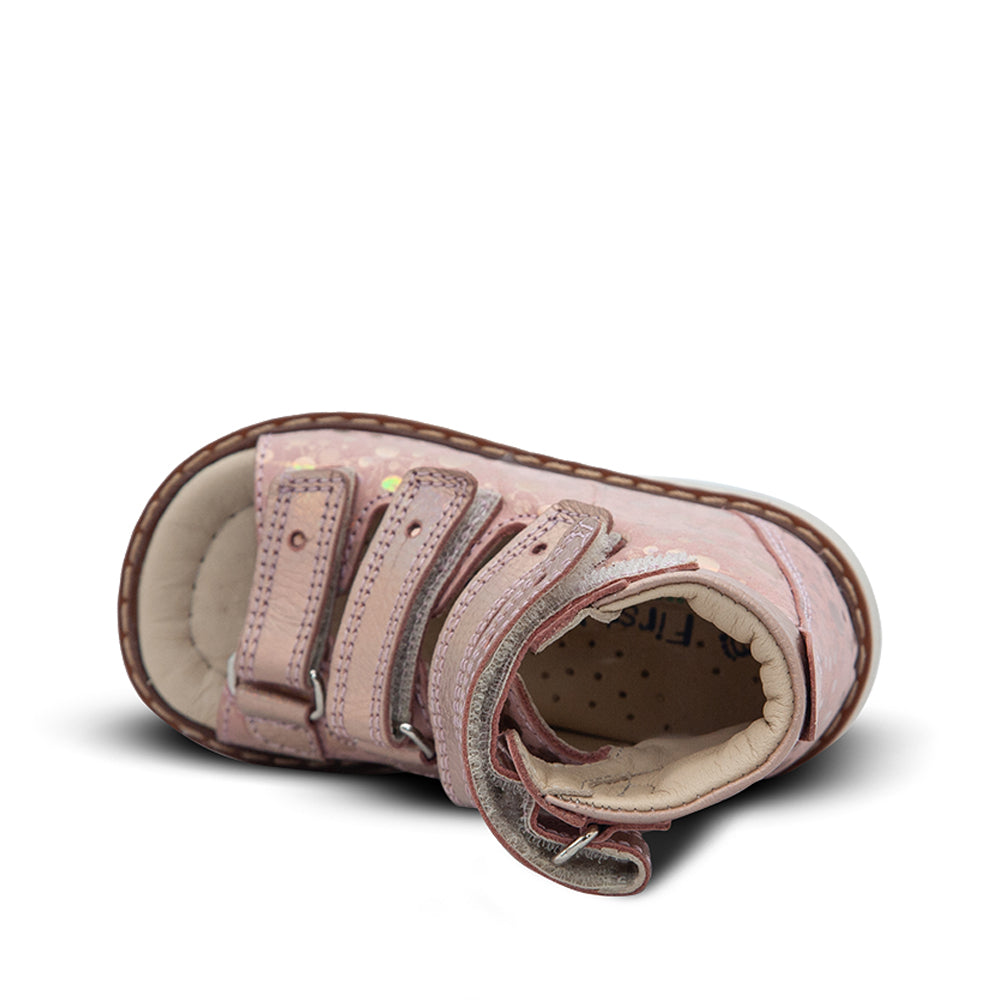
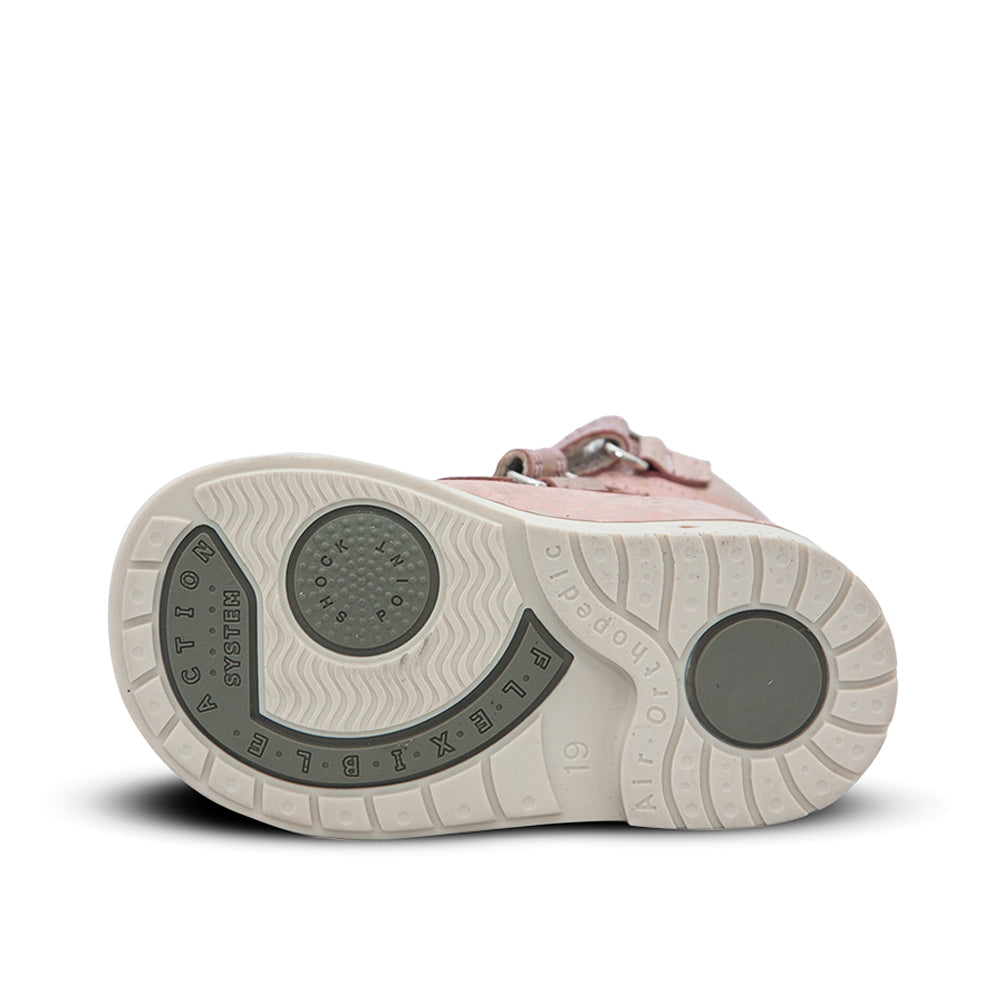
Alva Gigi Sandals
Maximum accommodation for bulky orthotic equipment
Type
Sandals
Material
Leather
Sizes
18–30 (EU) | 2–11.5 (UK)
Benefits for babies with spina bifida occulta
- Four independent velcro straps create customizable pressure distribution
- Open sandal construction eliminates volume constraints for AFO hardware
- Thomas heel delivers medial arch support despite an open design
- Air valve technology prevents moisture accumulation around braces
- The high-top structure maintains alignment while allowing visual skin monitoring
Why they're a top choice
The Alva Gigi addresses the single biggest frustration parents face when their spina bifida baby needs AFO braces: finding shoes that actually fit over the bulky equipment. The four-strap system and open construction provide clearance that closed shoes simply can't match, while still delivering the ankle support your child needs.
Visual access matters more than many parents realize initially. The open sandal design lets you quickly check for pressure spots or skin irritation without removing shoes and braces multiple times daily. The Alva Gigi performs especially well during warm weather when enclosed shoes would trap heat and moisture around AFO equipment, creating conditions for skin breakdown in children who may not feel early warning signs due to altered sensation.
5
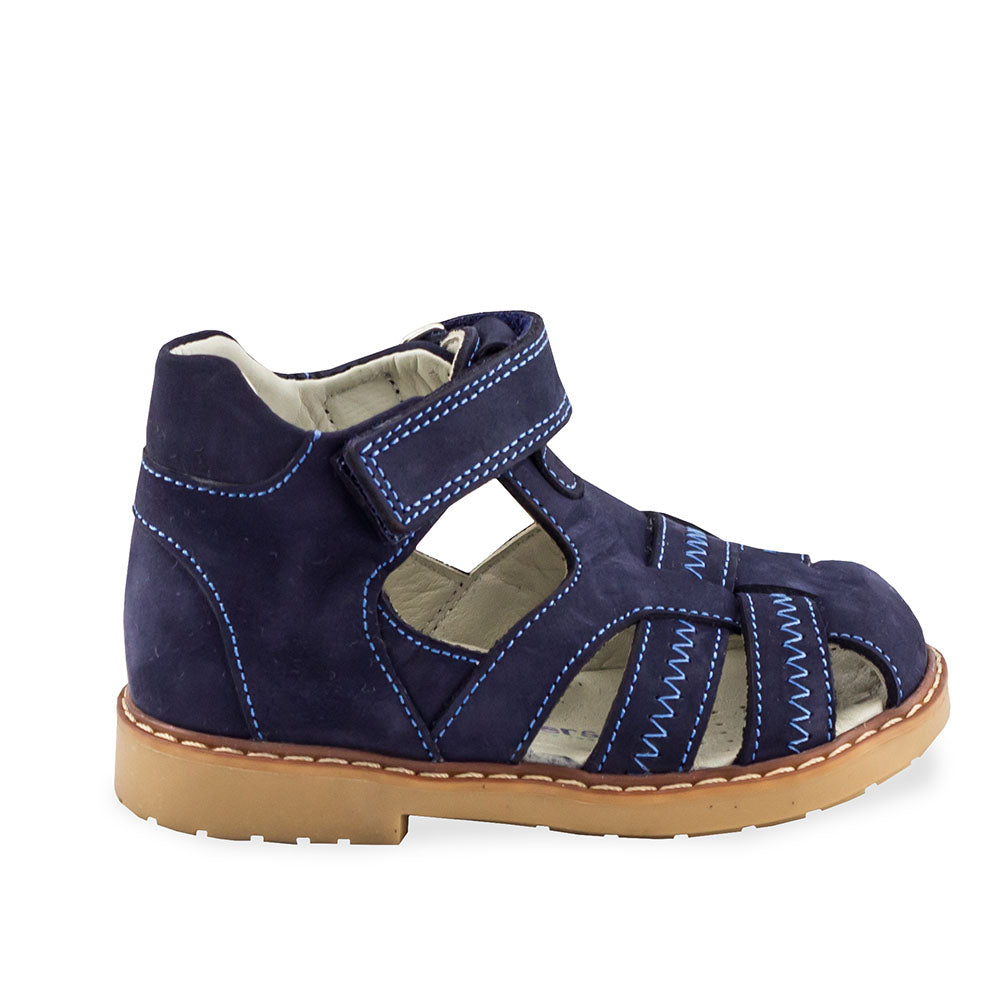
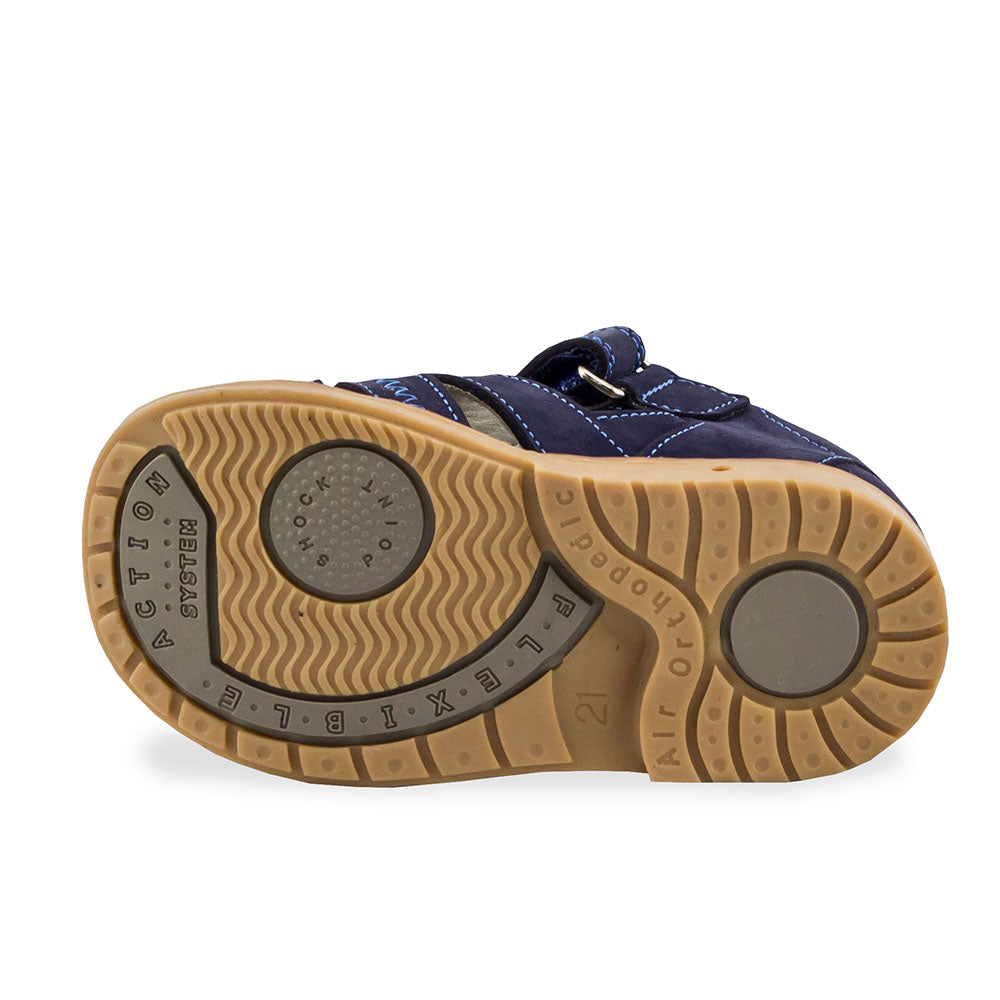
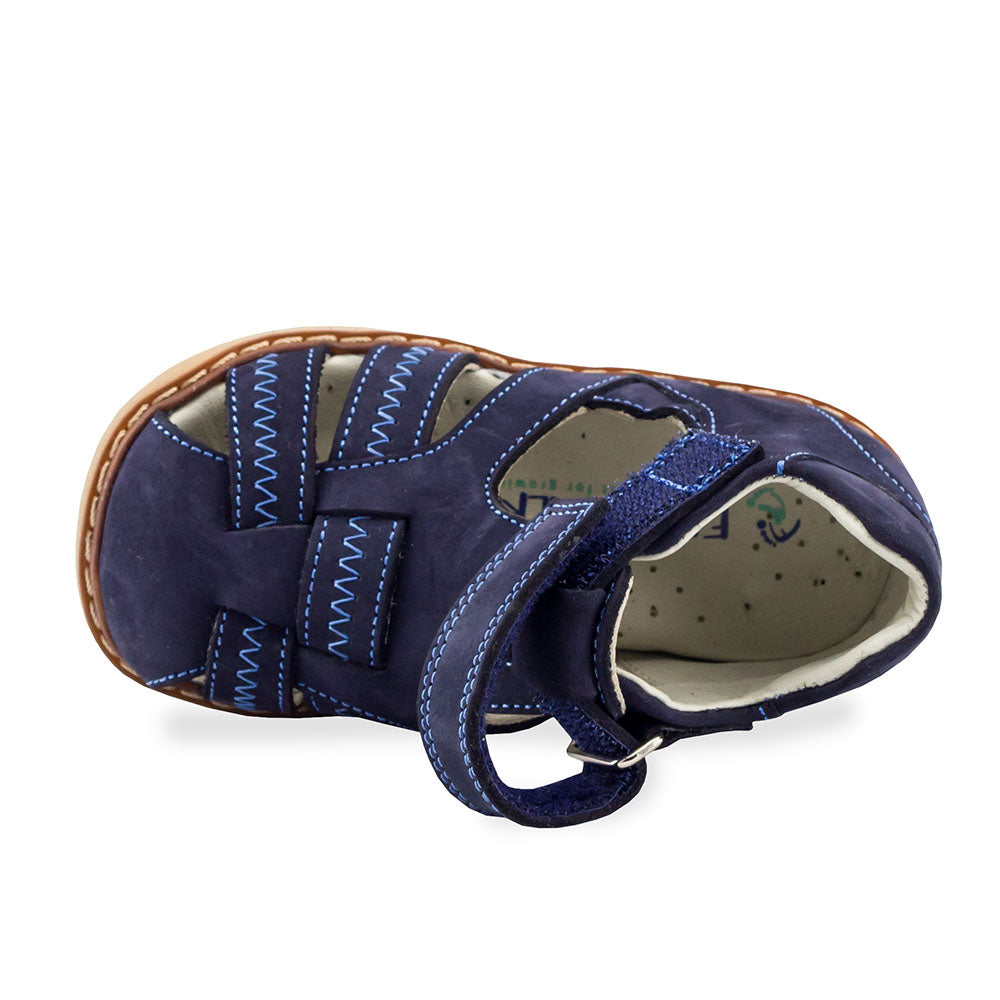
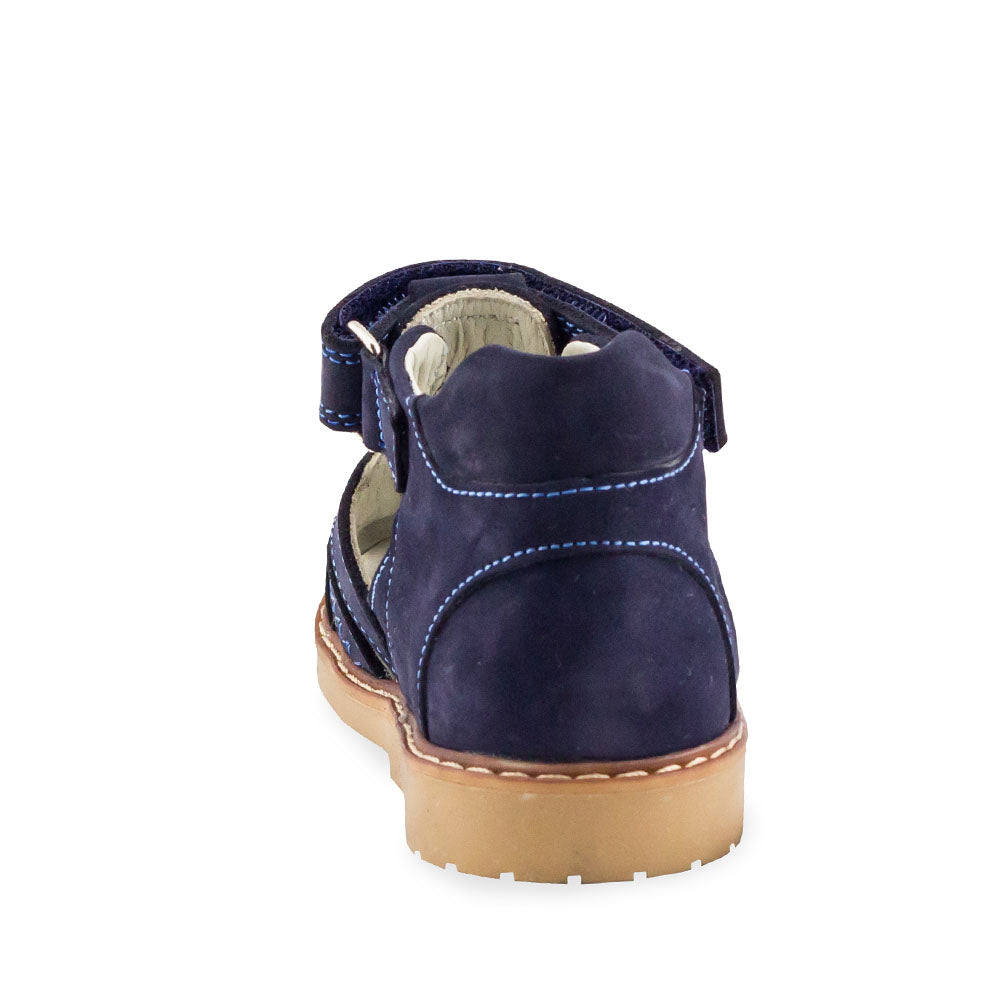
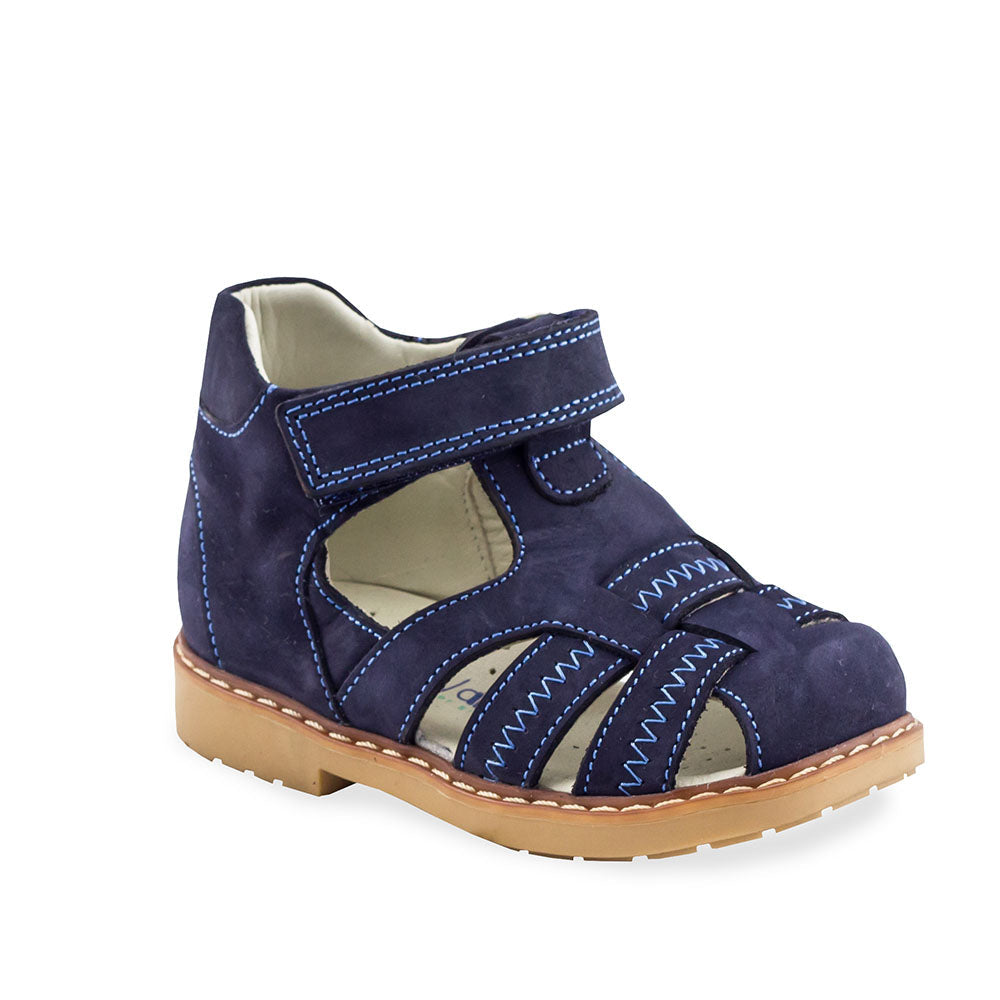
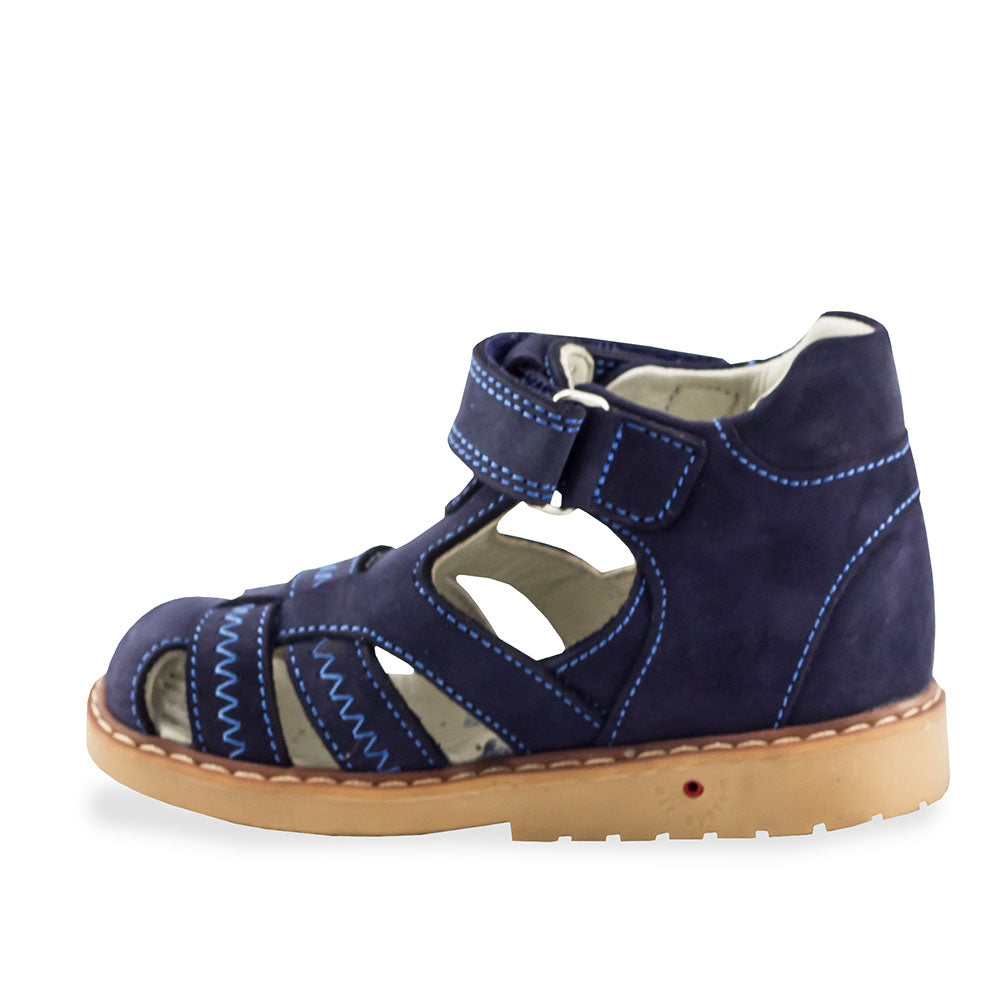
Dandy Dominic Sandals
Protection without restricting natural movement progression.
Type
Sandals
Material
Nubuck Leather
Sizes
18–30 (EU) | 2–11.5 (UK)
Benefits for babies with spina bifida occulta
- Low-cut profile preserves ankle mobility during transitional movement phases
- The closed-toe design shields vulnerable digits during floor contact activities
- The Thomas heel modification supports proper arch development during crawling
- Air valve moisture management prevents skin issues during extended floor time
- Flexible construction accommodates varied foot positions during motor learning
Why they're a top choice
The Dandy Dominic recognizes that babies with spina bifida occulta often spend more time in crawling and cruising phases than typical children. This shoe protects feet during those extended transitional periods without inhibiting the natural movement patterns your baby needs to develop strength and coordination.
The low-cut design is intentional. Your baby needs ankle mobility to develop balance reactions and righting responses. The Dandy Dominic provides targeted forefoot and toe protection while keeping the ankle free to move naturally. This matters tremendously for children with spina bifida who may already be working harder to achieve motor milestones and don't need footwear adding unnecessary restrictions to their movement learning process.
6
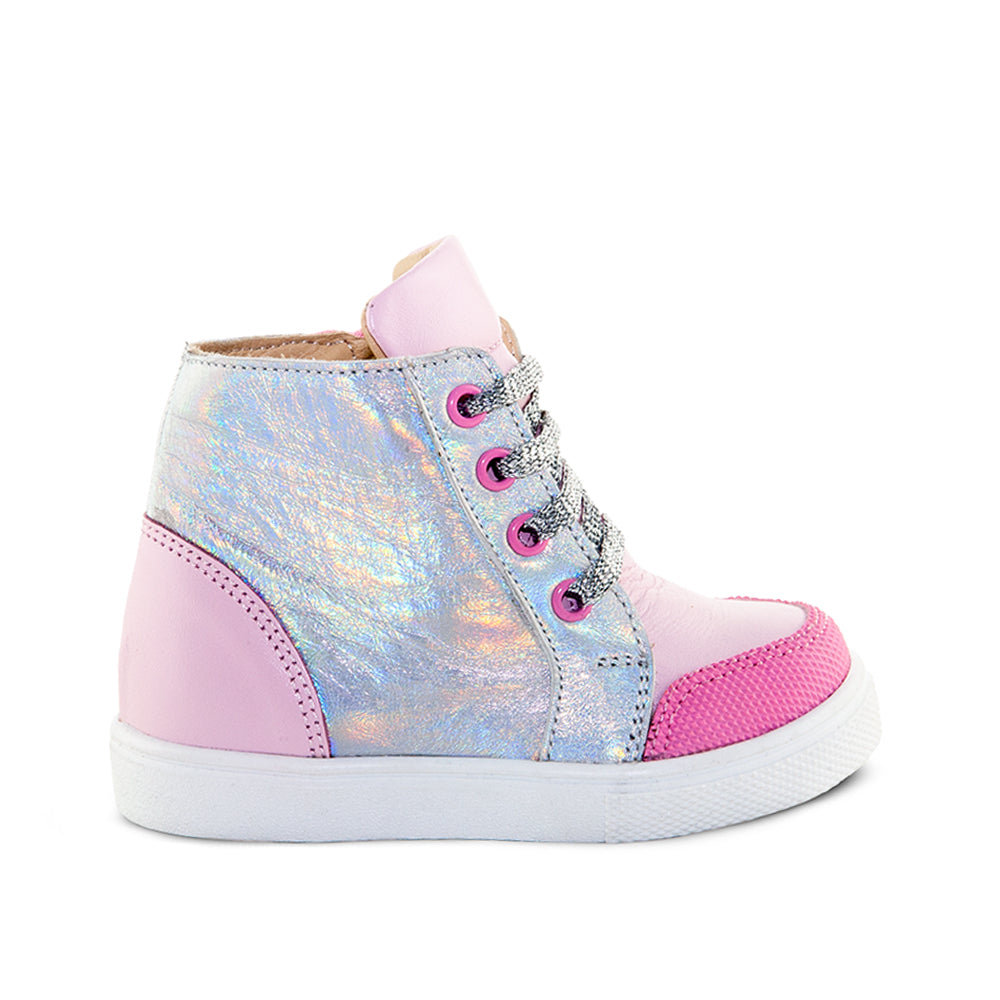
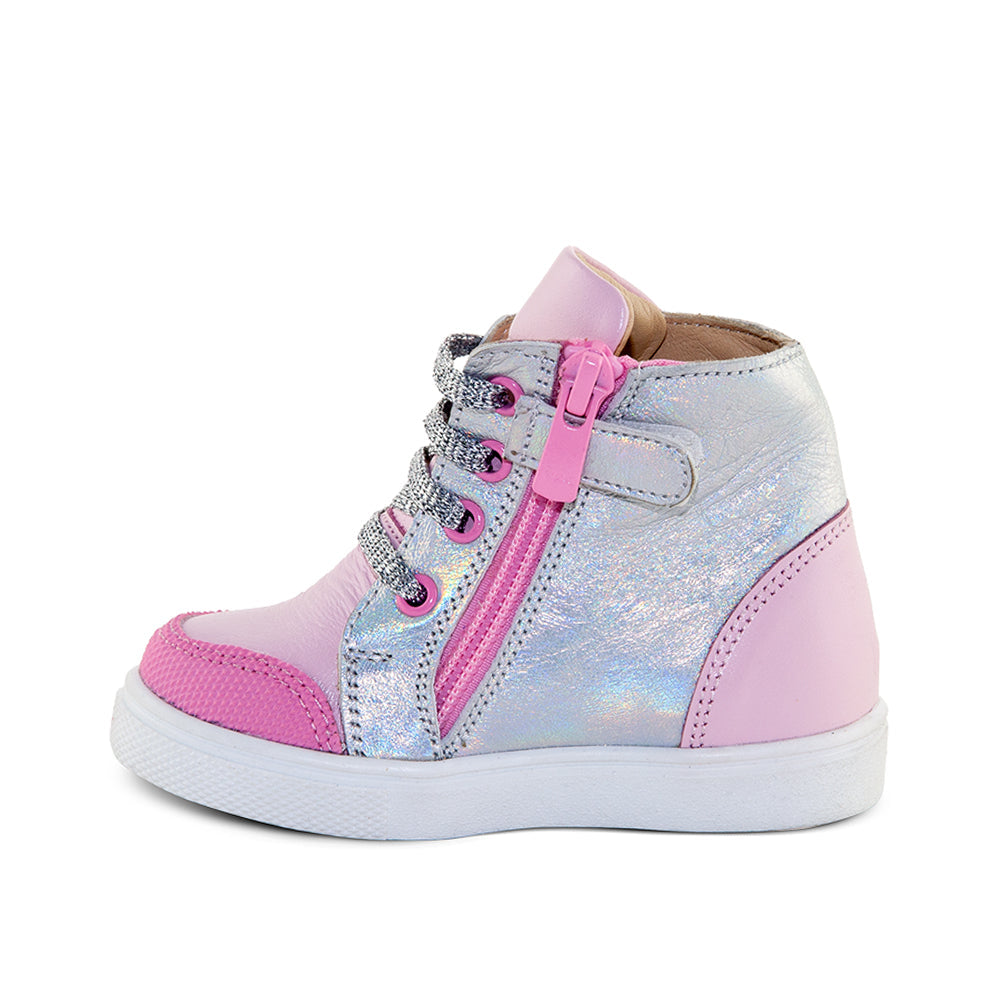
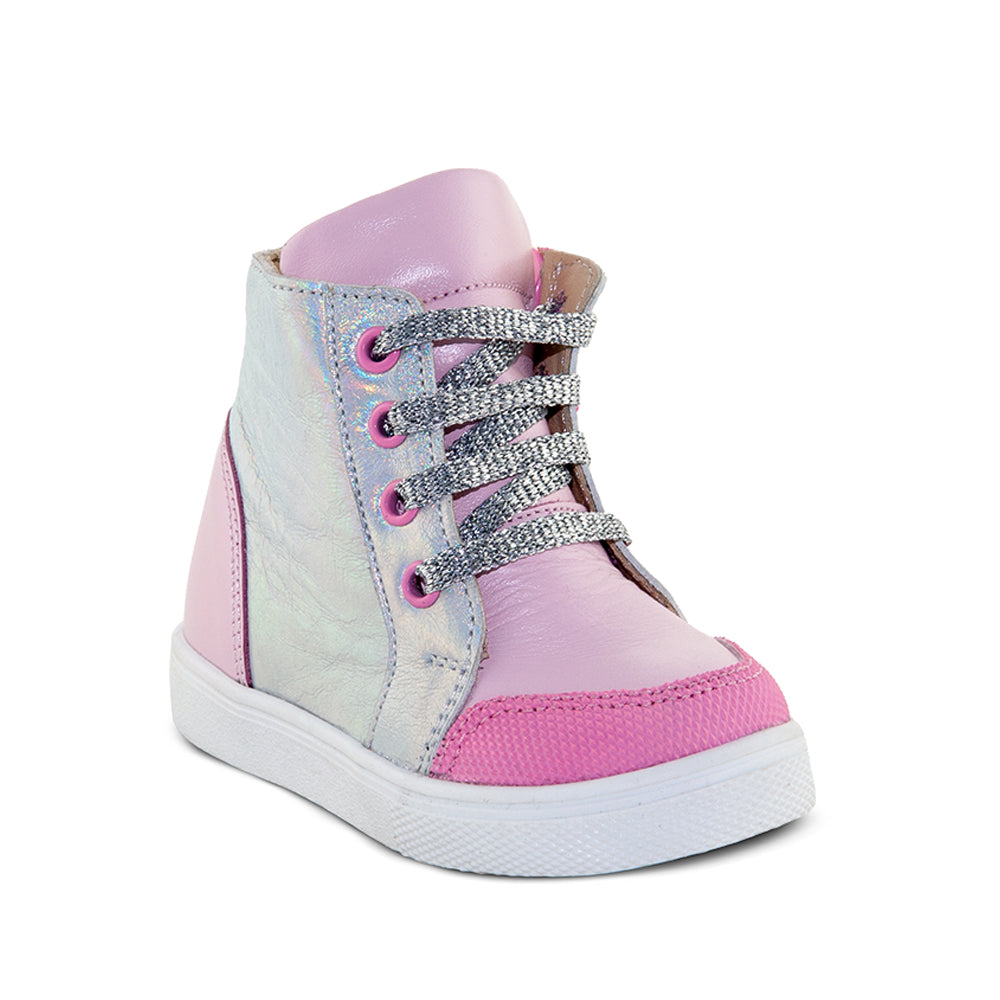
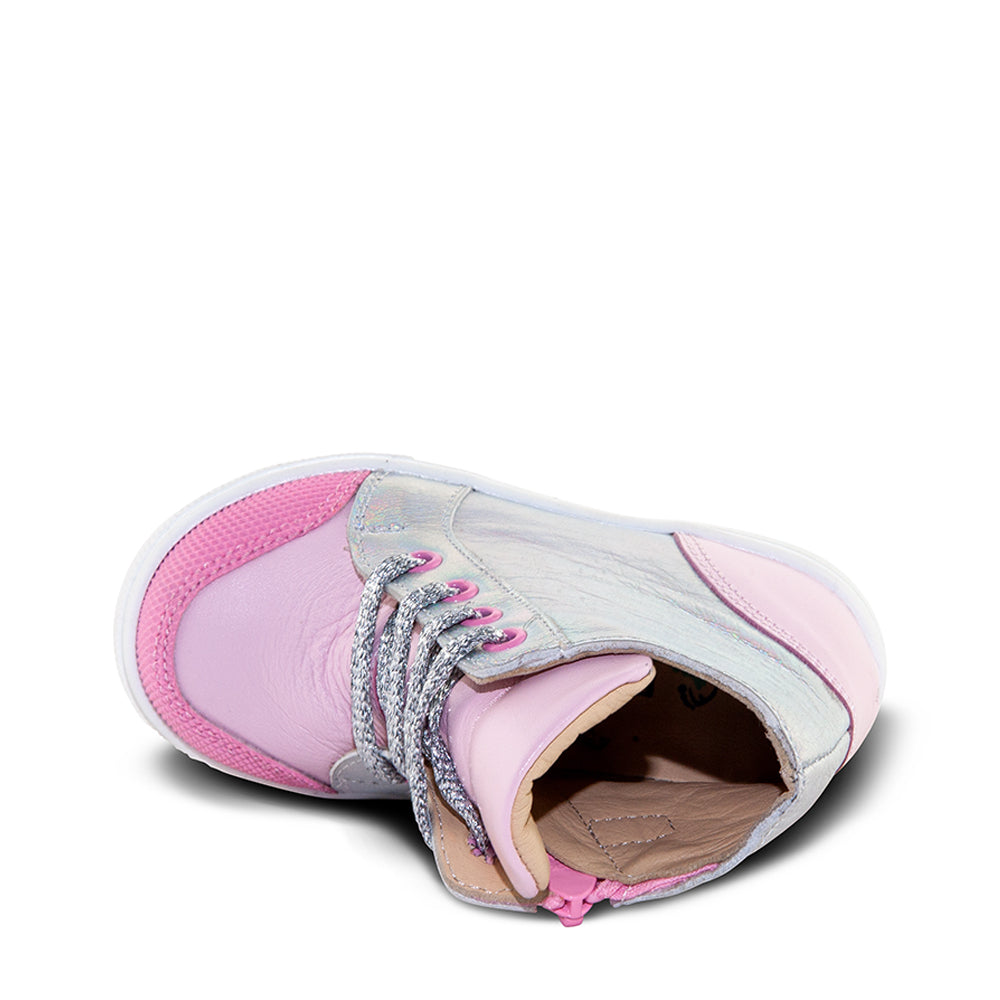
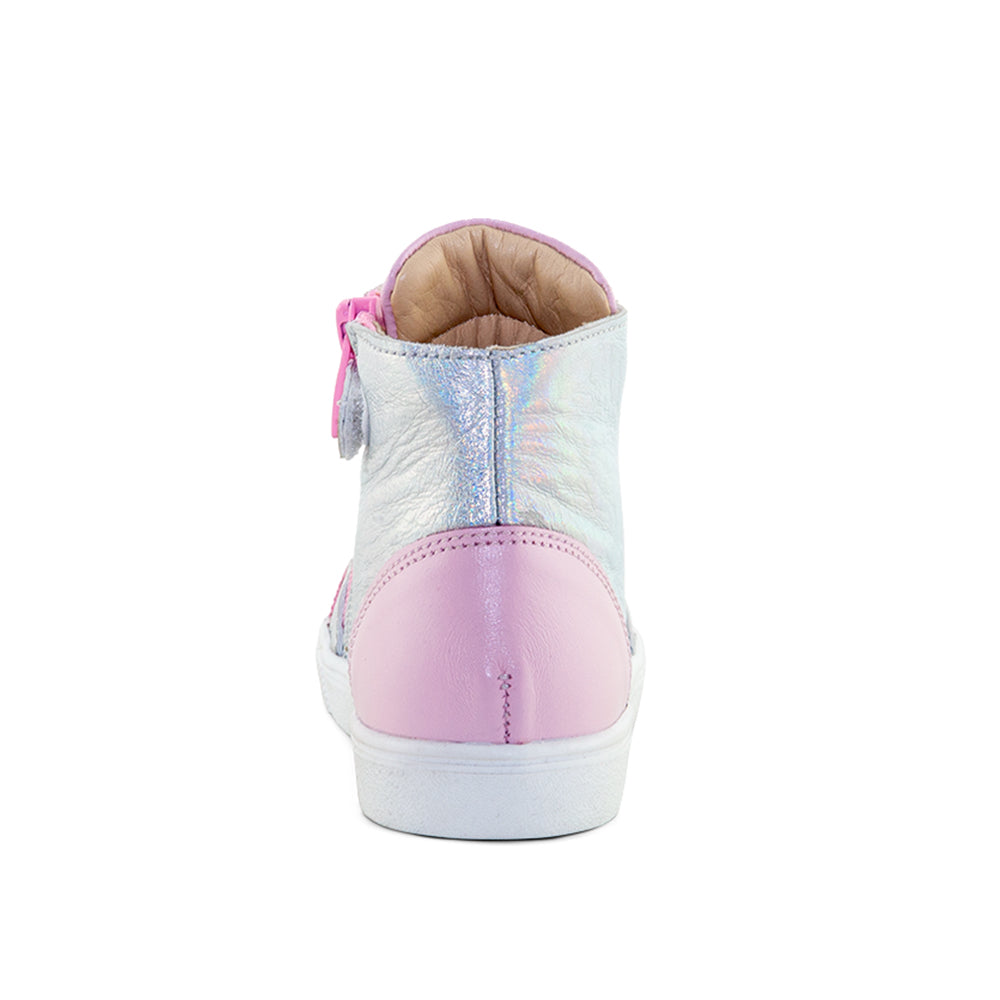
Iris Charm Sneakers
Maximum stability for delayed walking milestones.
Type
Sneakers
Material
Leather
Sizes
18–30 (EU) | 2–11.5 (UK)
Benefits for babies with spina bifida occulta
- The combined lacing and zipper system delivers precise medial-lateral control
- Removable insole accommodates progression to custom orthotic interventions
- Extended ankle support provides proprioceptive feedback compensation
- Shock-absorbent outsole reduces impact during frequent early walking falls
- Anti-scratch toe protection addresses increased friction during gait development
Why they're a top choice
The Iris Charm is specifically designed for that critical period when your baby with spina bifida finally starts walking independently. The dual closure system ensures consistent positioning during repetitive therapy sessions and home practice, while the side zipper makes application quick during busy appointment schedules.
First steps come later for many children with spina bifida occulta, and they need extra support to build confidence during this vulnerable learning phase. The Iris Charm provides maximum structural stability without feeling restrictive or heavy. The shock-absorbent sole reduces the impact stress from falls that naturally happen more frequently when balance systems are still developing. This shoe supports the extended practice time your child needs to master independent walking safely.
7
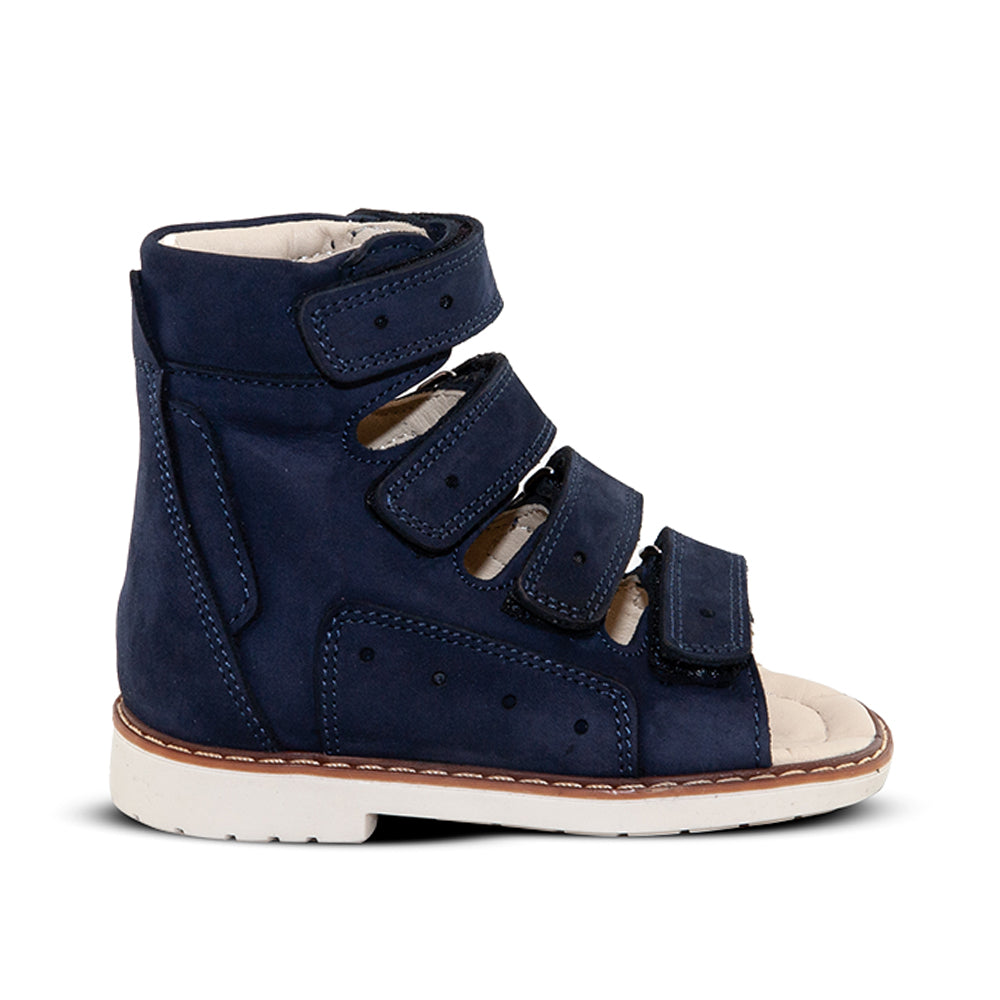
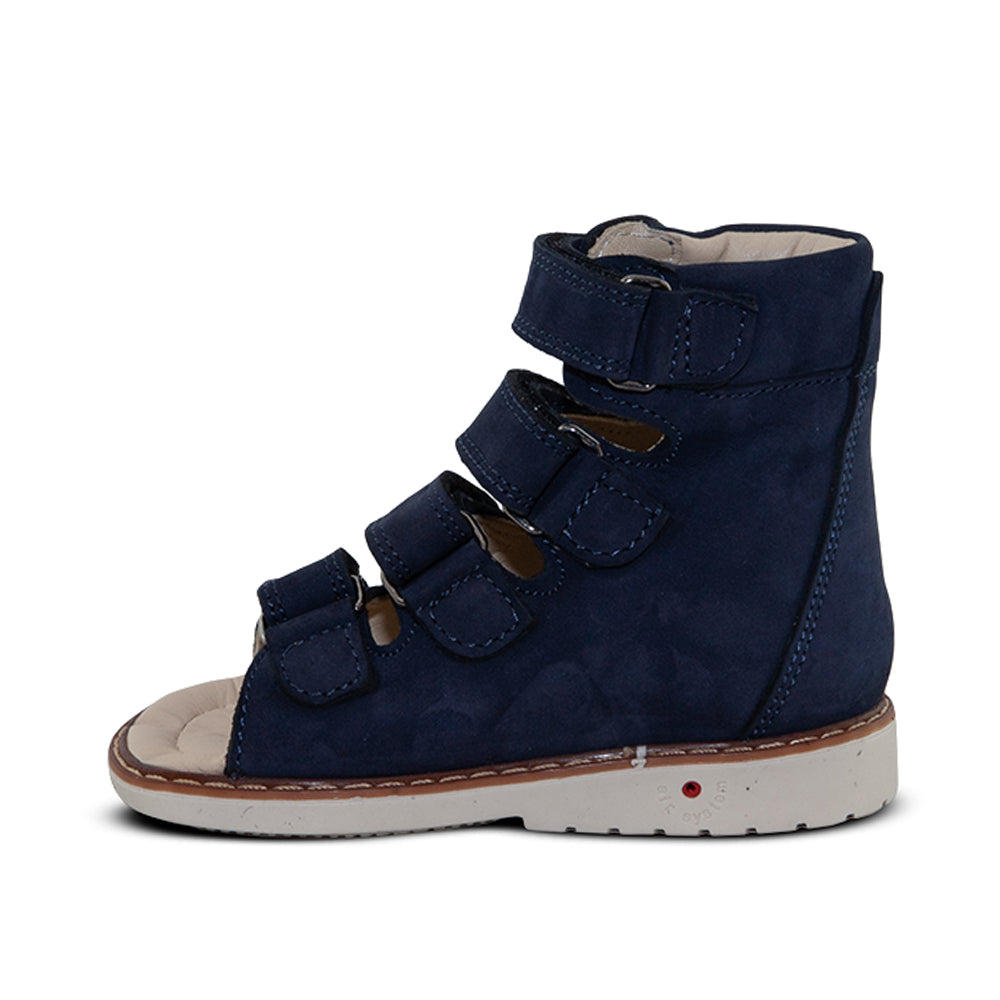
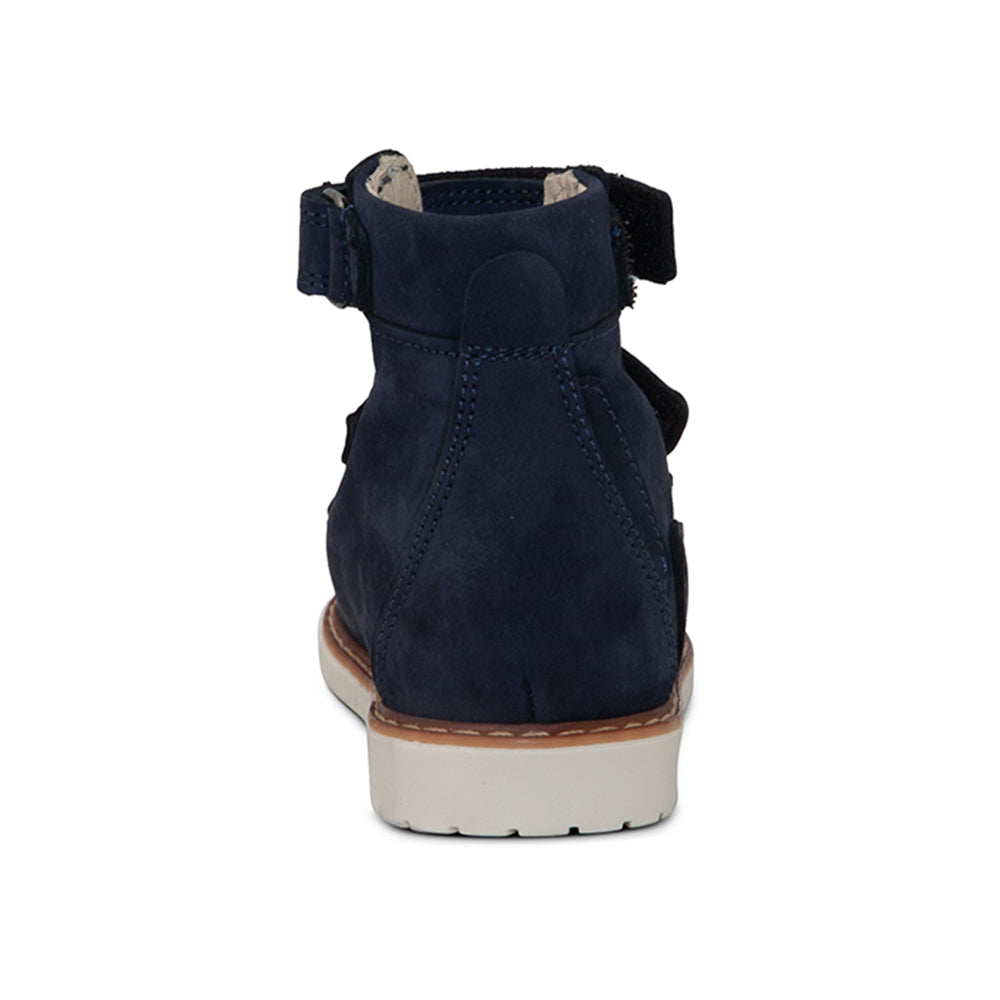
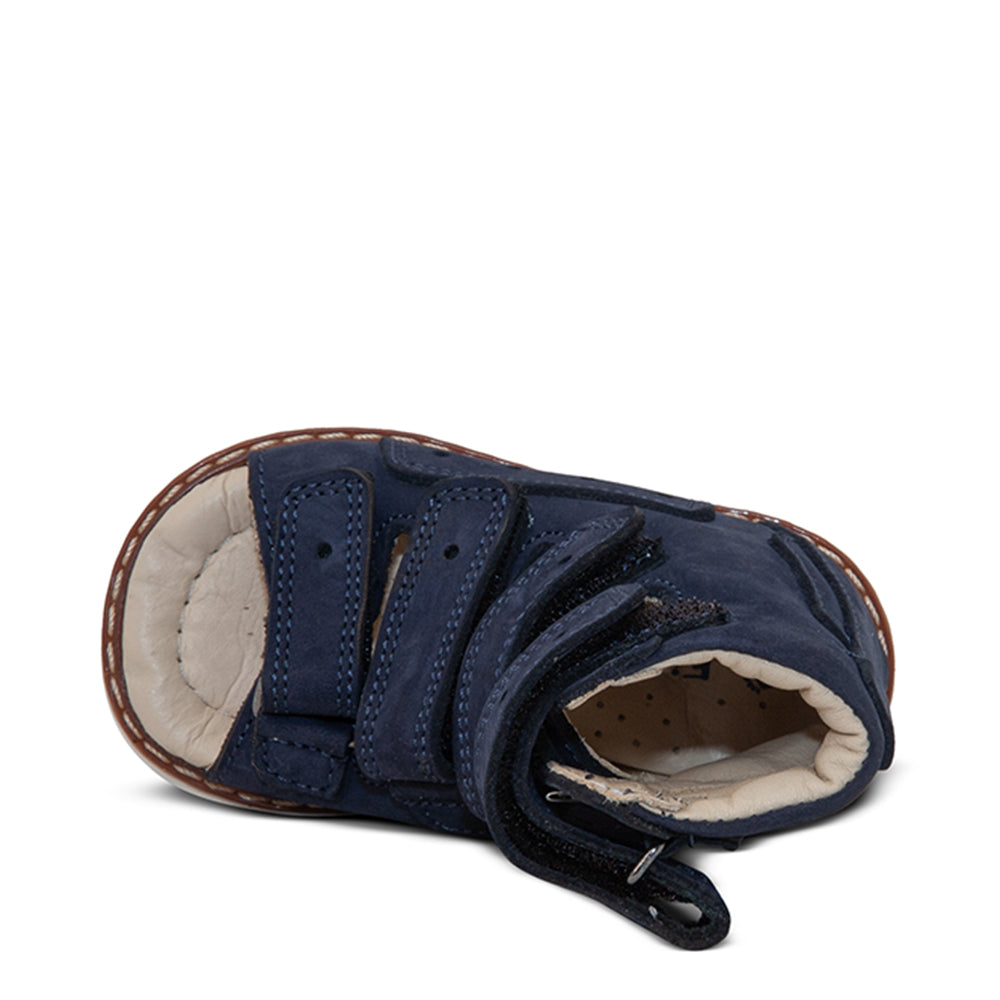
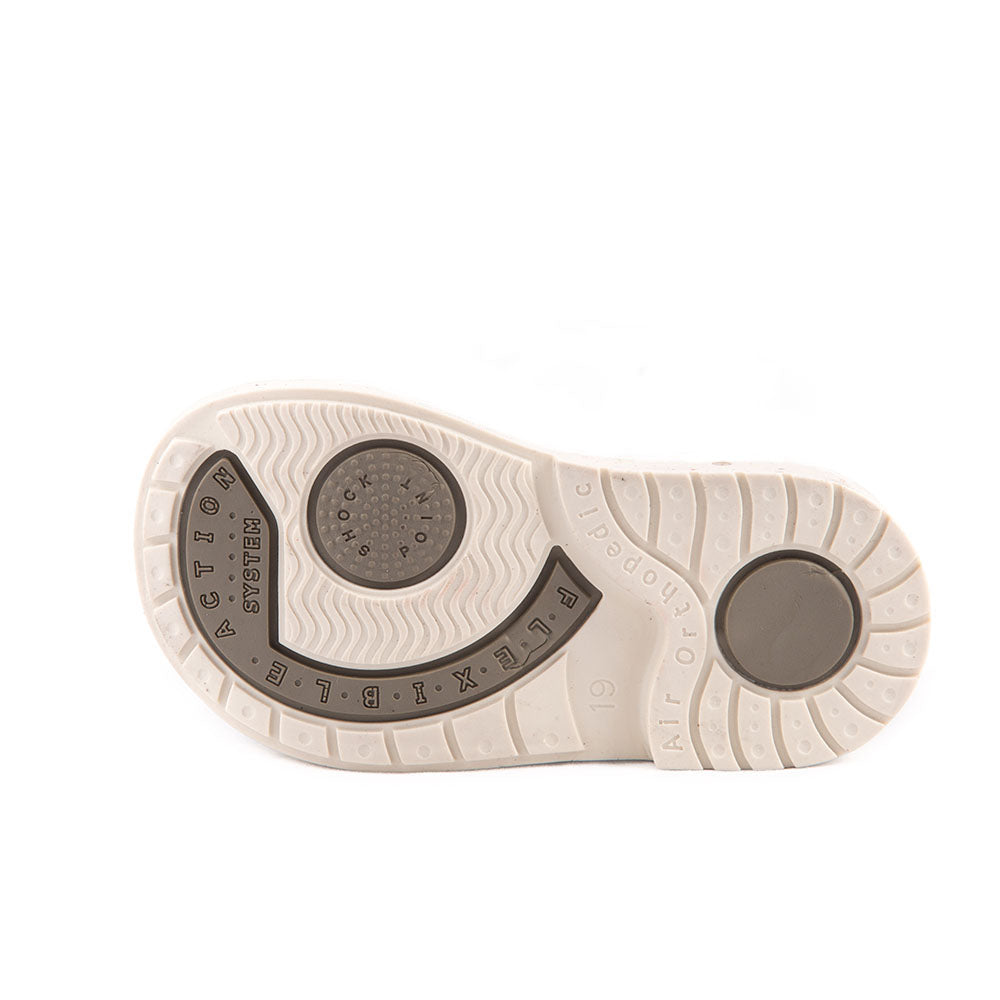
Neptune Evelyn Sandals
Superior traction for balance-challenged toddlers.
Type
Sandals
Material
Nubuck Leather
Sizes
18–30 (EU) | 2–11.5 (UK)
Benefits for babies with spina bifida occulta
- Four-strap configuration distributes pressure evenly across sensitive feet
- The open sandal design allows continuous visual skin integrity monitoring
- Thomas heel technology controls pronation without restricting dorsiflexion
- Shock-absorbent thermoplastic sole provides superior grip on smooth surfaces
- Extended ankle support compensates for postural muscle weakness
Why they're a top choice
The Neptune Evelyn tackles a specific but serious concern: preventing falls on smooth indoor surfaces when your child already has balance vulnerabilities from spina bifida. The thermoplastic sole creates exceptional traction on hardwood floors, tile, and other slick surfaces common in homes, daycare centers, and therapy clinics.
The four-strap system distributes pressure strategically, preventing concentration points that could cause skin damage in children with diminished protective sensation. The open construction keeps feet cool during active indoor play while the extended ankle support provides stability during the frequent balance corrections children with spina bifida make instinctively. The Neptune Evelyn reduces fall risk without making your child feel restricted or uncomfortable during the indoor play that occupies so much of their day.
8
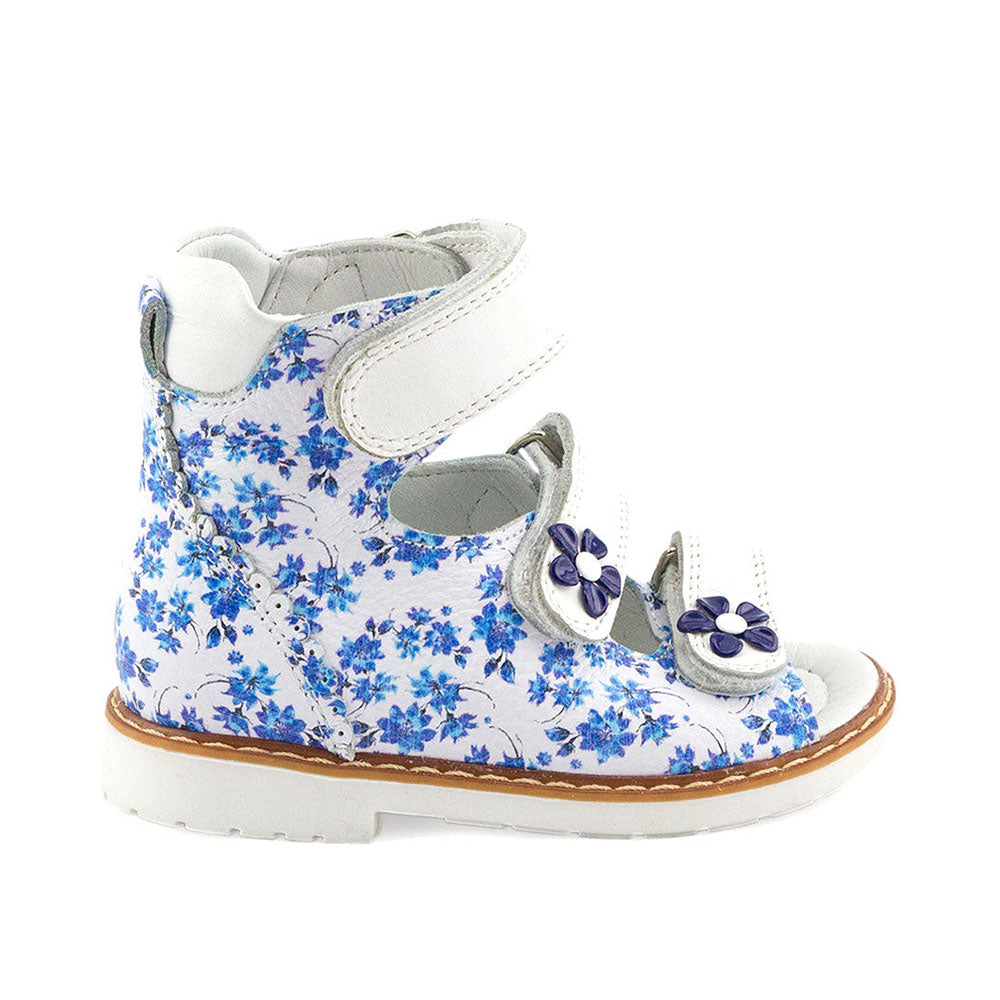
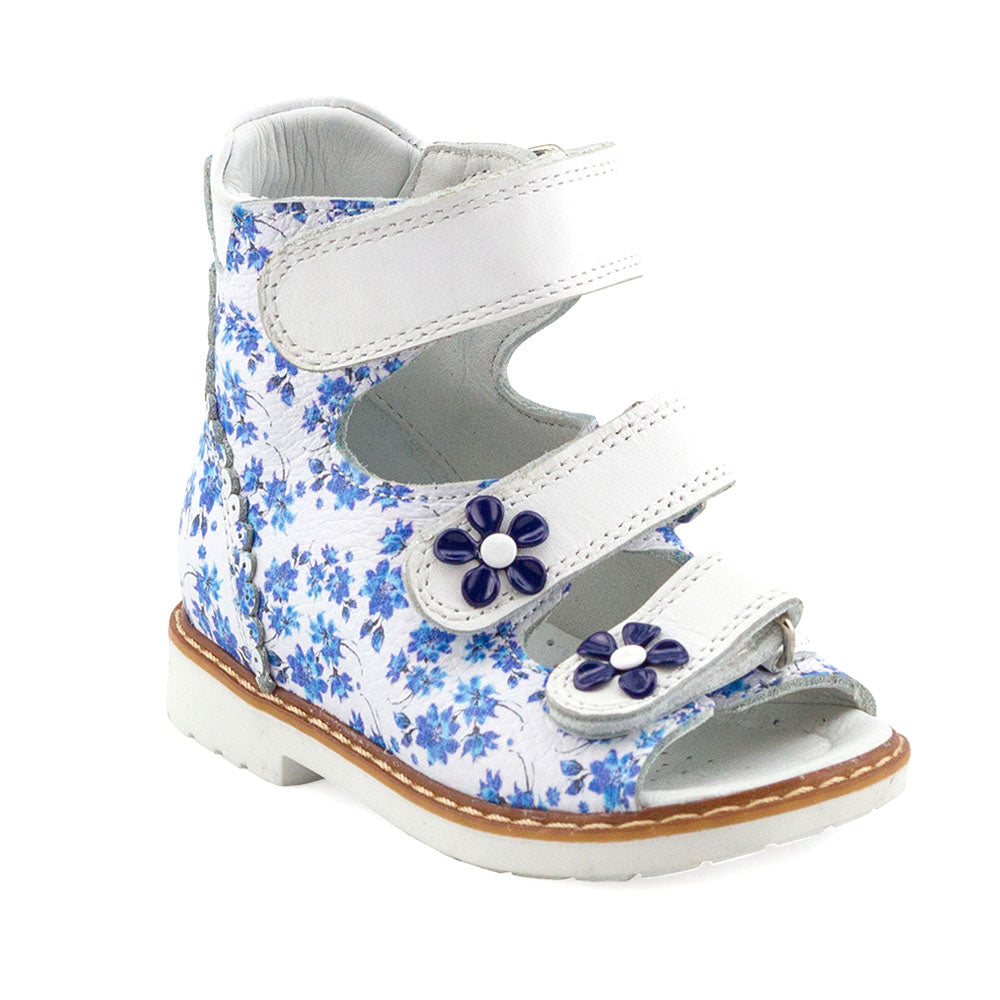
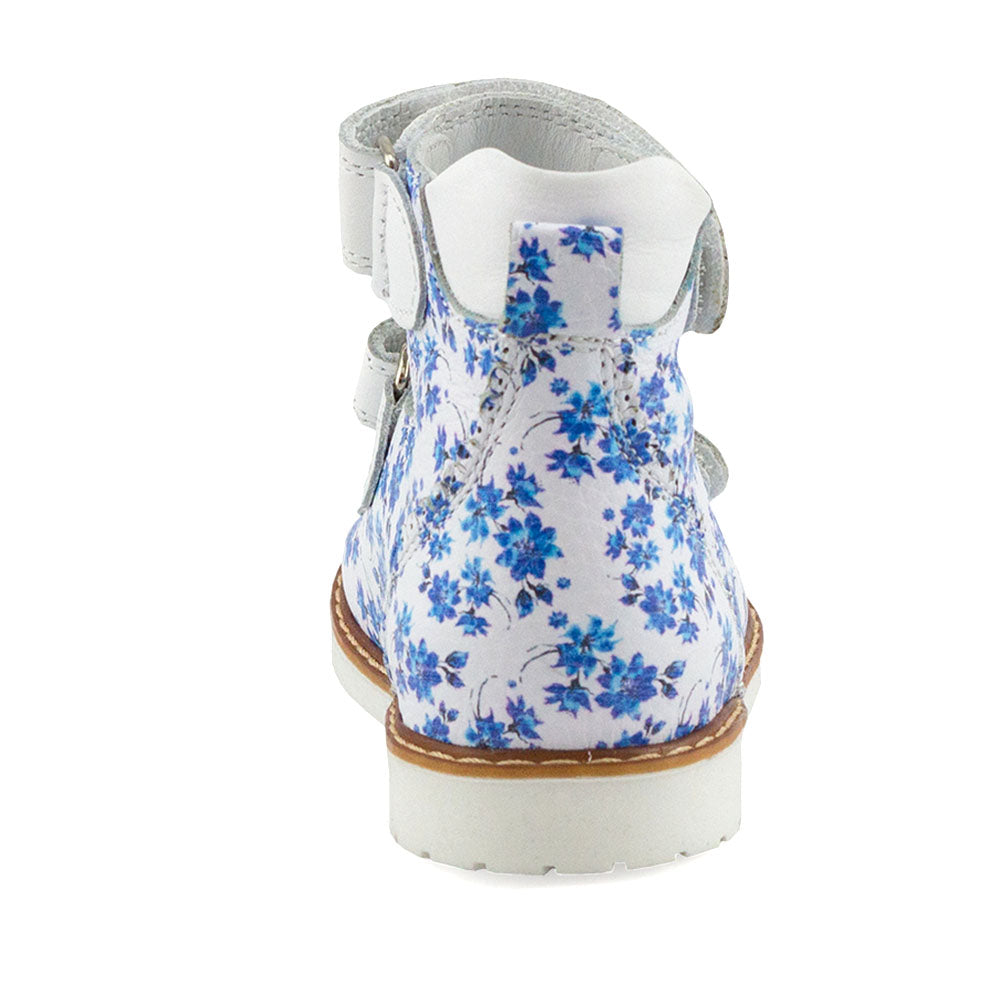
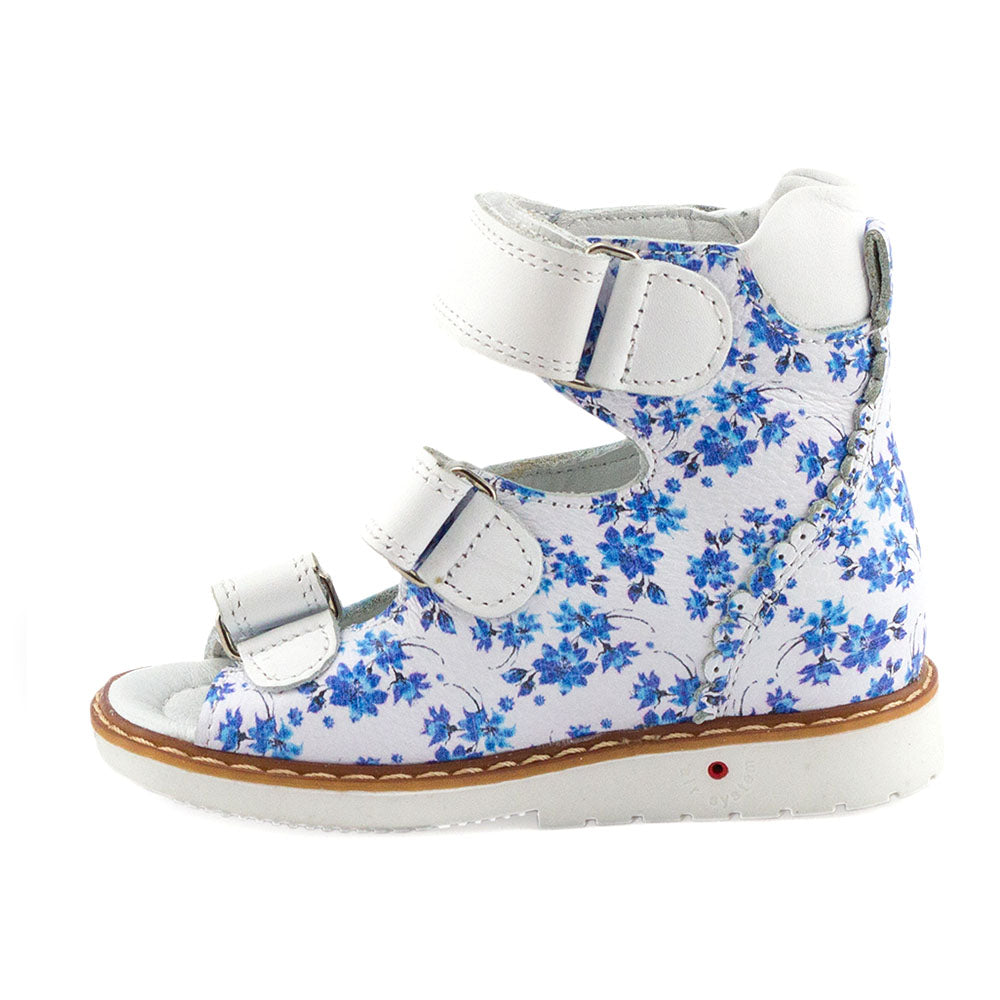
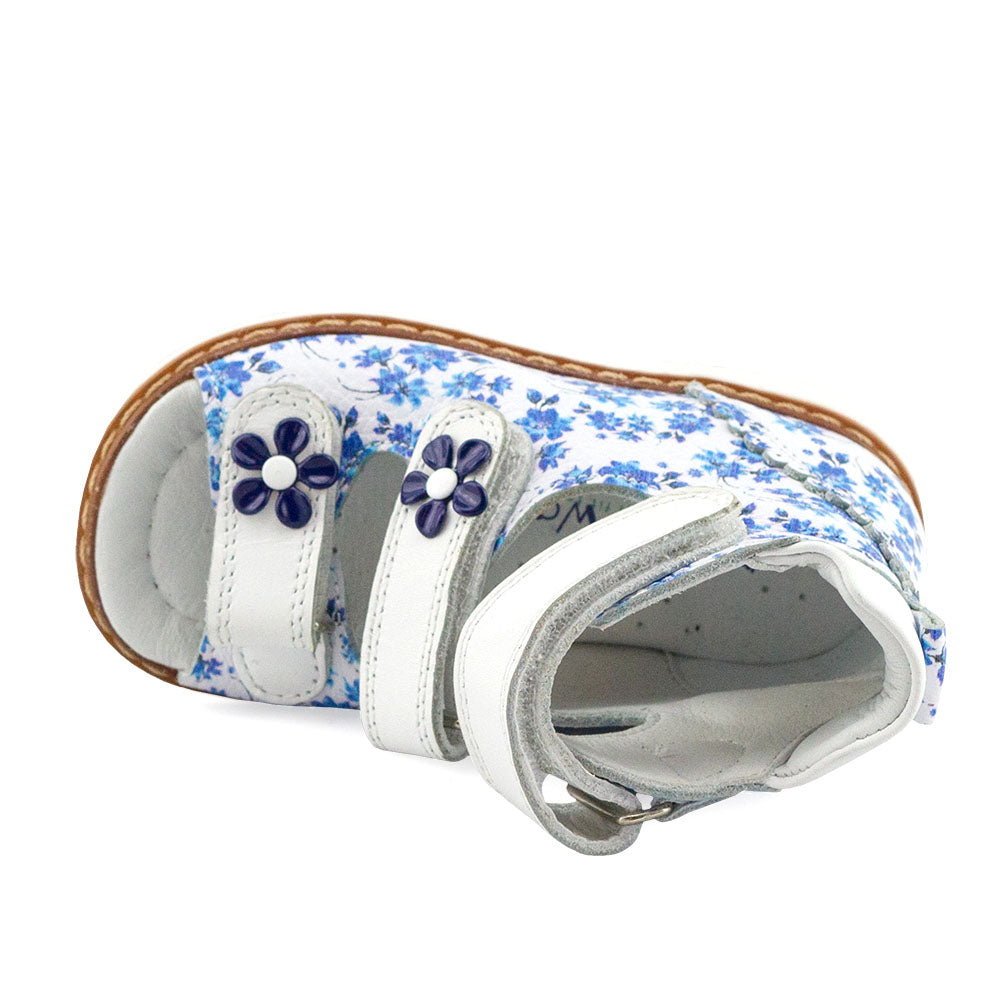
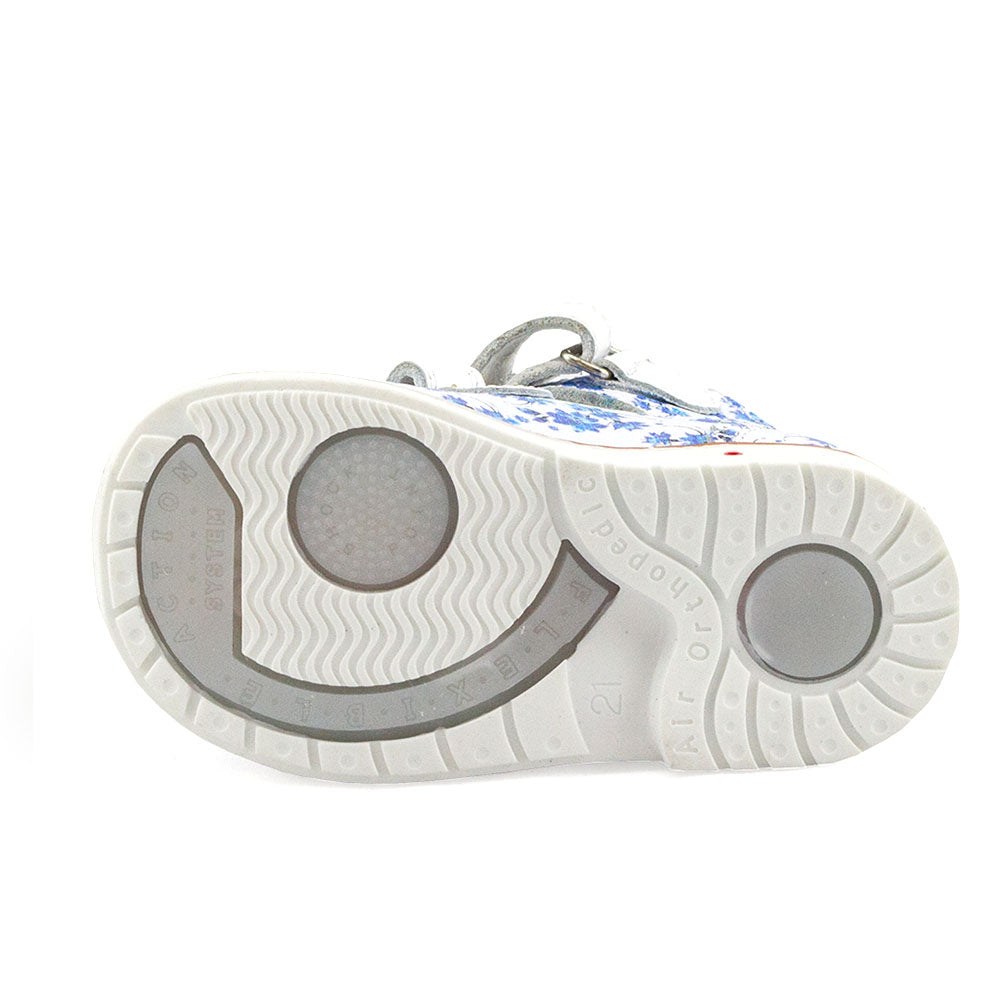
Arianna Florets Sandals
Maximum airflow with therapeutic support features.
Type
Sandals
Material
Leather
Sizes
18–30 (EU) | 2–11.5 (UK)
Benefits for babies with spina bifida occulta
- The three-strap system balances secure positioning with heat dissipation
- Extensive cutout design maximizes airflow while maintaining structure
- Air valve technology actively removes moisture trapped by AFO equipment
- Thomas' heel provides stability without creating enclosed heat traps
- Extended ankle support compensates for proprioceptive deficits in an open design
Why they're a top choice
The Arianna Florets solves the summer dilemma parents face when their spina bifida baby needs continuous foot support but enclosed shoes become unbearably hot. The extensive cutout design creates airflow that prevents overheating during outdoor play and warm weather therapy sessions.
Heat management matters more for children with neurological conditions because temperature regulation can be compromised. The Arianna Florets prevent the dangerous heat accumulation that occurs when AFO braces restrict natural ventilation. The vibrant floral pattern makes this shoe appealing to young children, encouraging cooperation during daily application. This shoe proves that spina bifida shoes can be both medically functional and seasonally appropriate without sacrificing either therapeutic value or comfort.
9
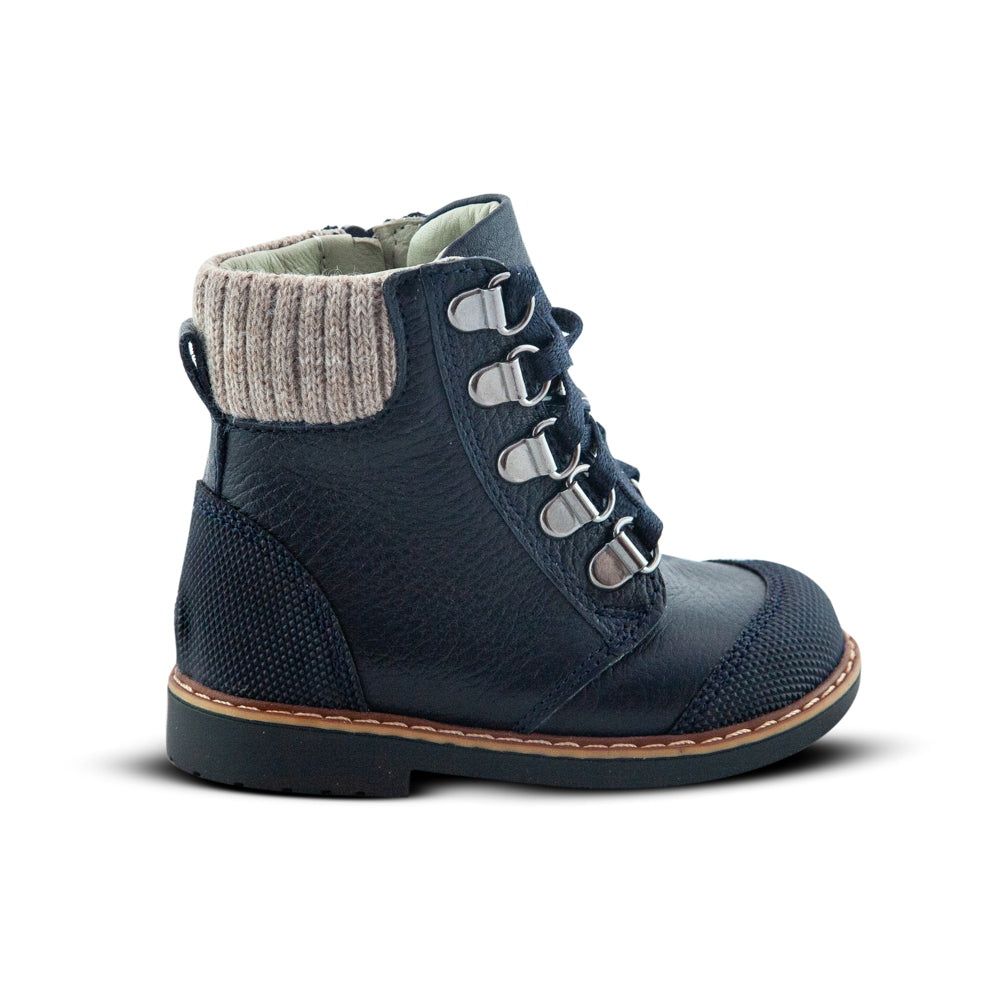
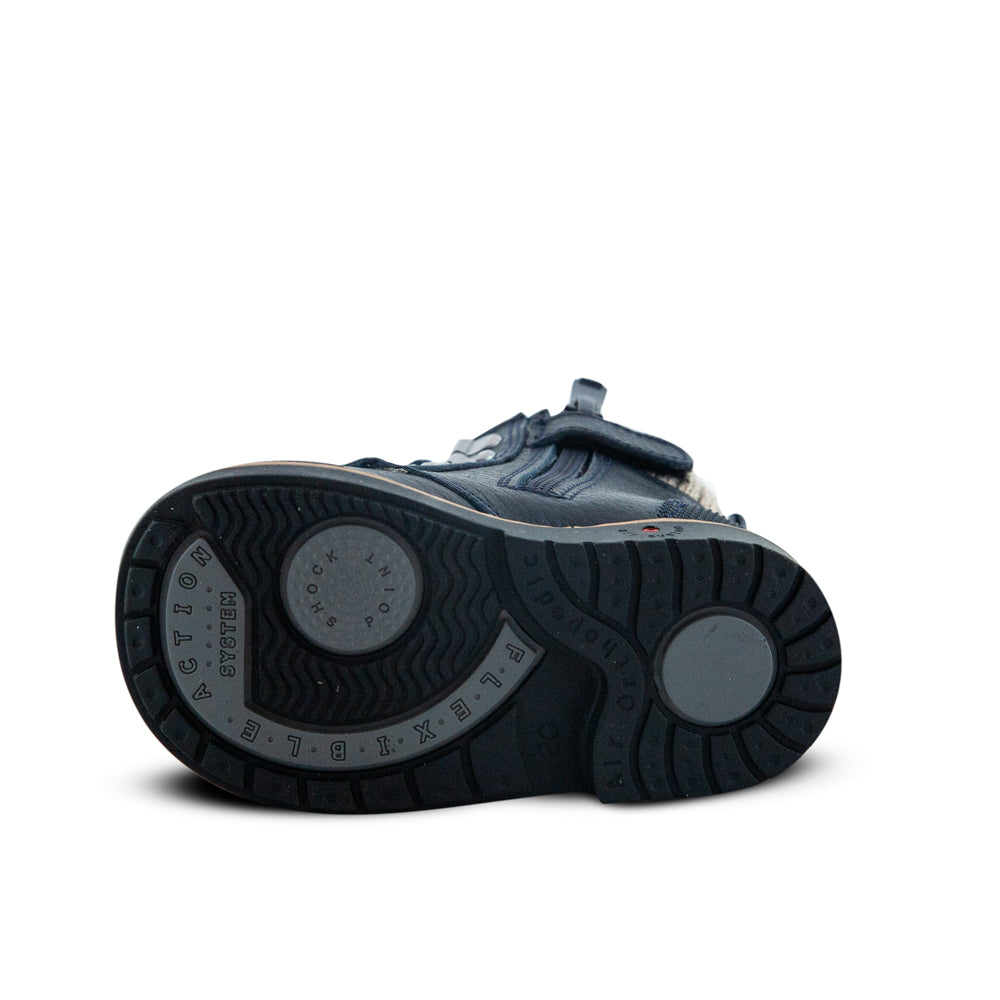
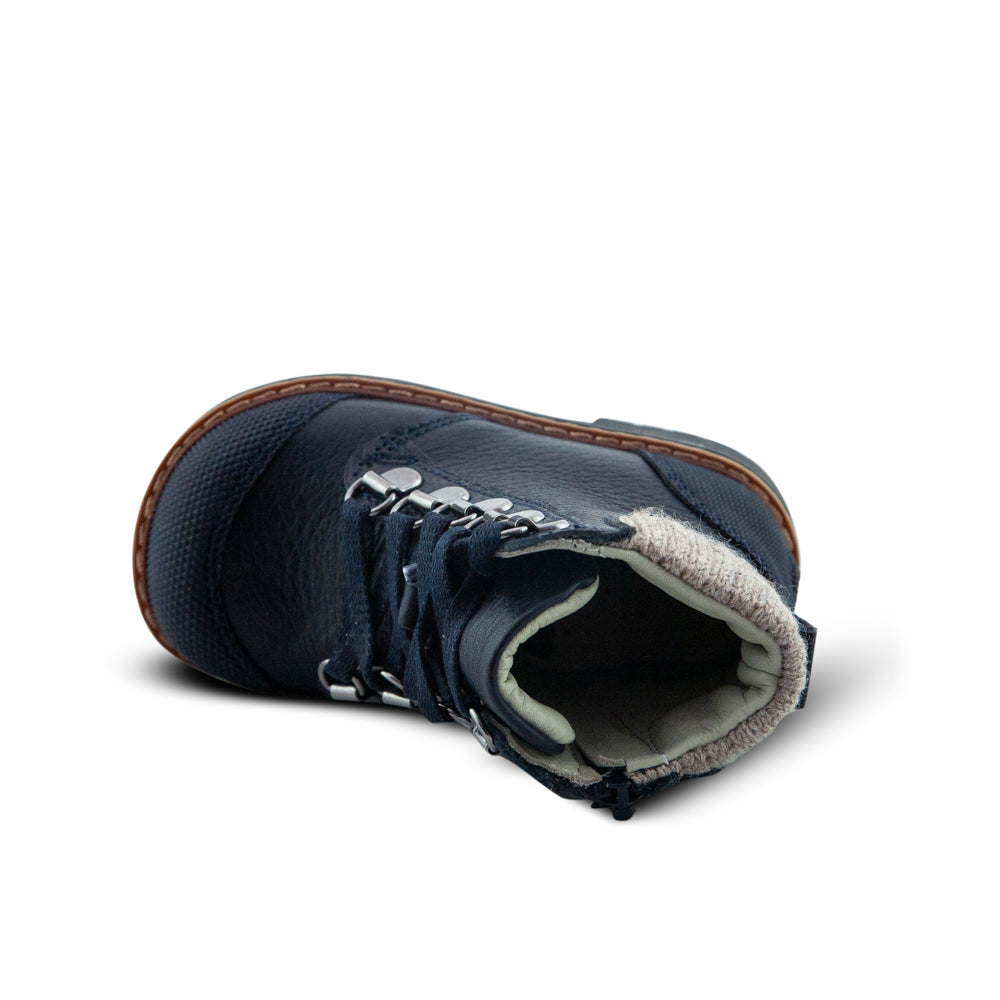
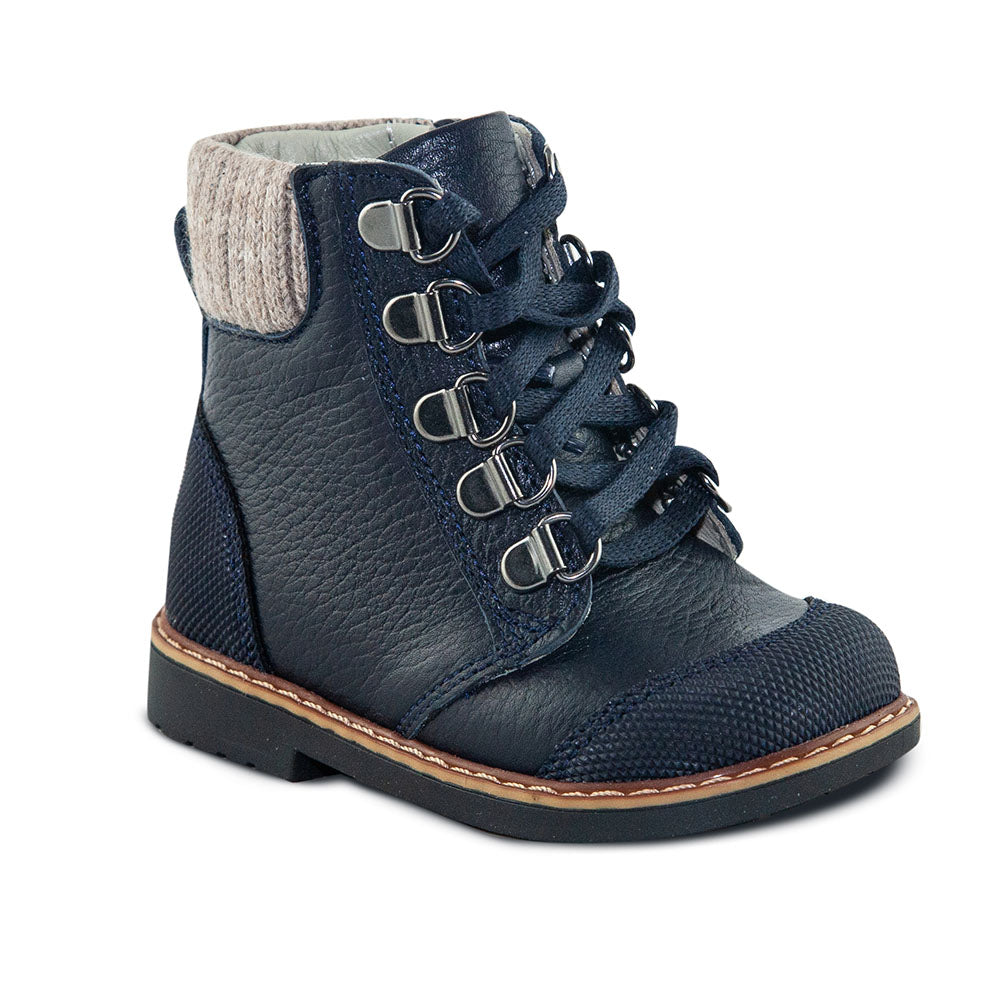
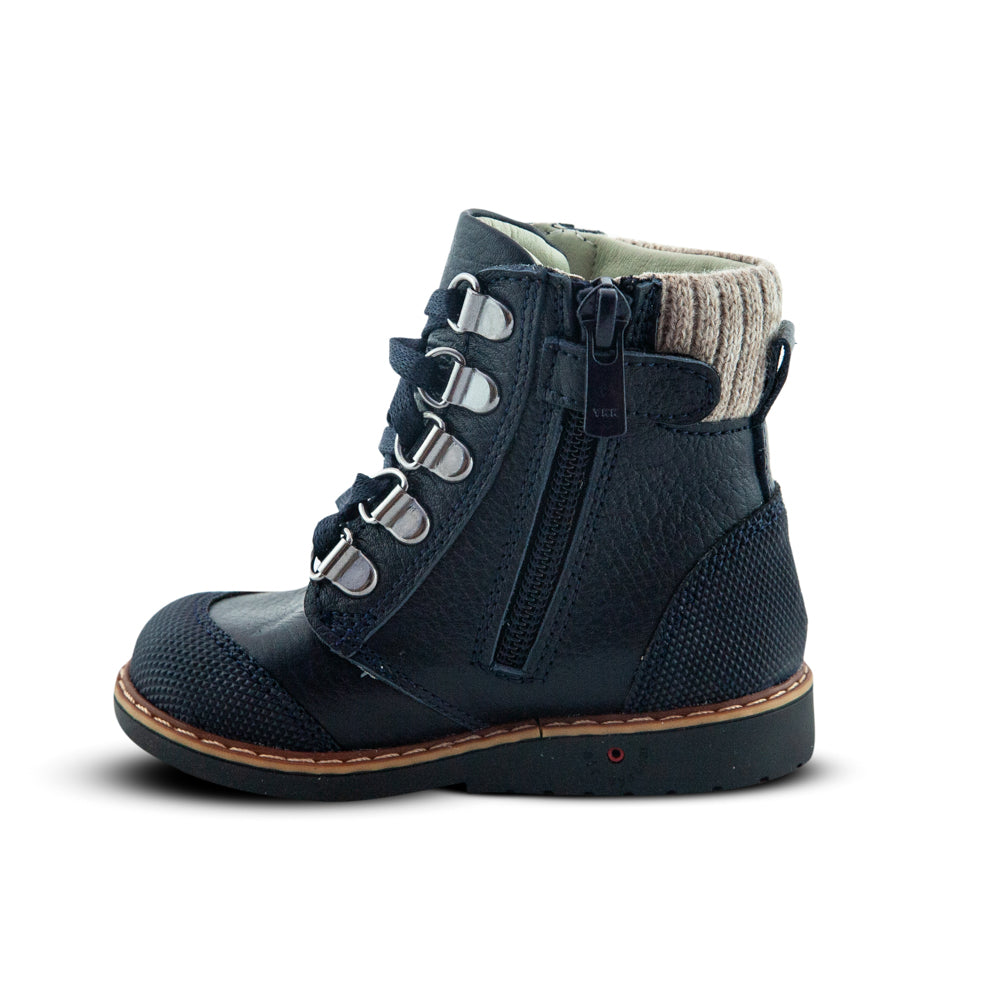
Supreme Josh Boots
Thermal protection for compromised circulation.
Type
Boots
Material
Leather
Sizes
18–30 (EU) | 2–11.5 (UK)
Benefits for babies with spina bifida occulta
- A soft knitted ankle collar insulates while preventing AFO chafing
- The extended tongue accommodates bulky orthotic hardware without pressure points
- The dual closure system ensures secure AFO positioning in challenging weather
- Full leather construction provides thermal properties for circulation challenges
- Anti-scratch toe protection prevents damage during cold-weather gait changes
Why they're a top choice
The Supreme Josh addresses a critical but often overlooked issue: children with spina bifida can have compromised peripheral circulation, making cold weather especially challenging for their feet. The insulated boot construction maintains warmth during winter outdoor activities that are essential for continued motor development.
Cold temperatures can increase muscle stiffness in children who already have hypotonia, making movement even more difficult. The Supreme Josh prevents this problem while accommodating AFO equipment that itself can feel cold against the skin. The unisex navy design works for both boys and girls, simplifying purchasing decisions for families managing multiple children. This shoe ensures your child with spina bifida continues participating in seasonal outdoor activities rather than staying inside all winter.
10
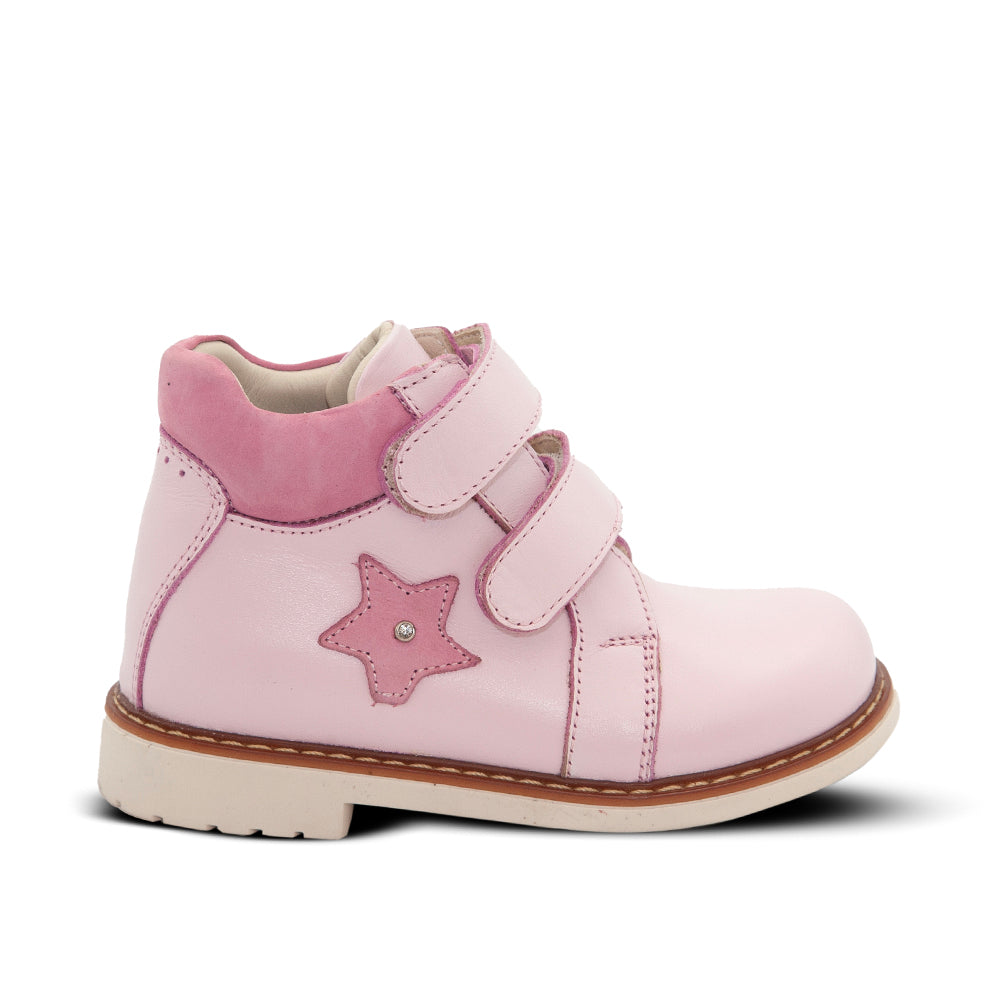
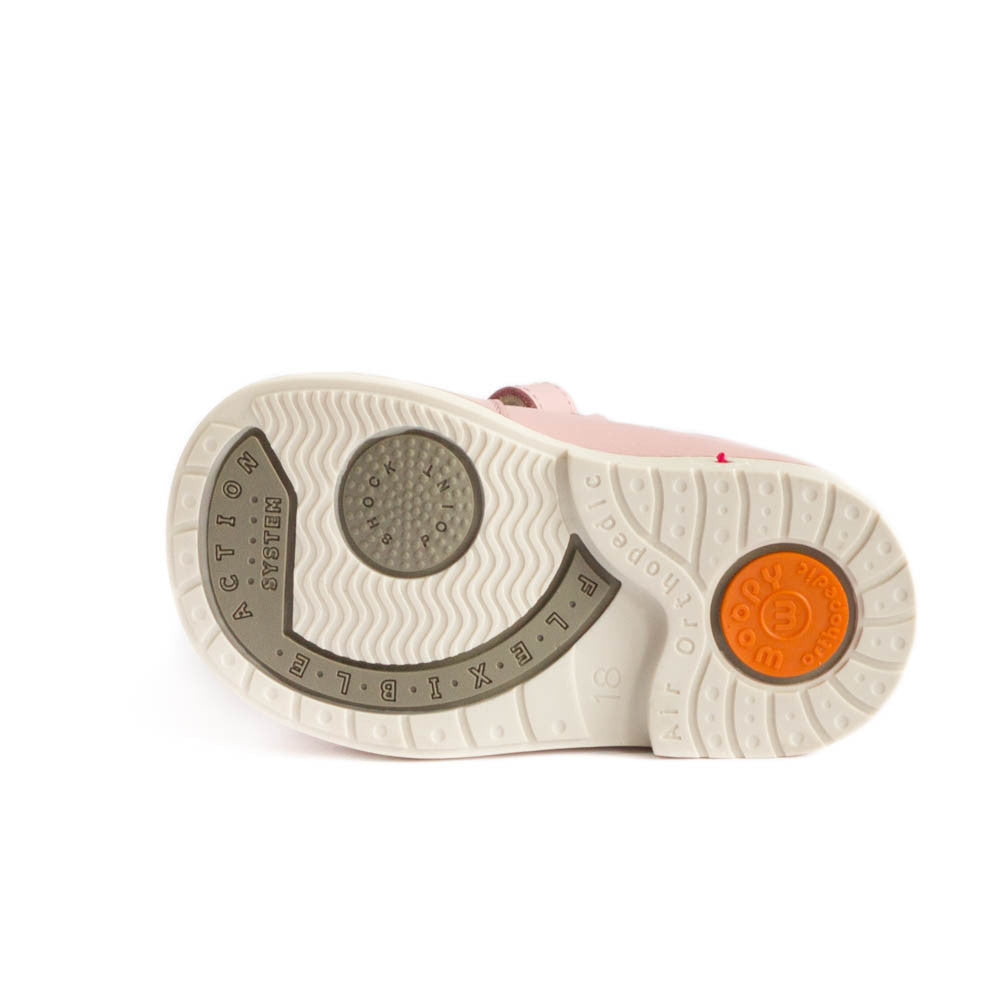
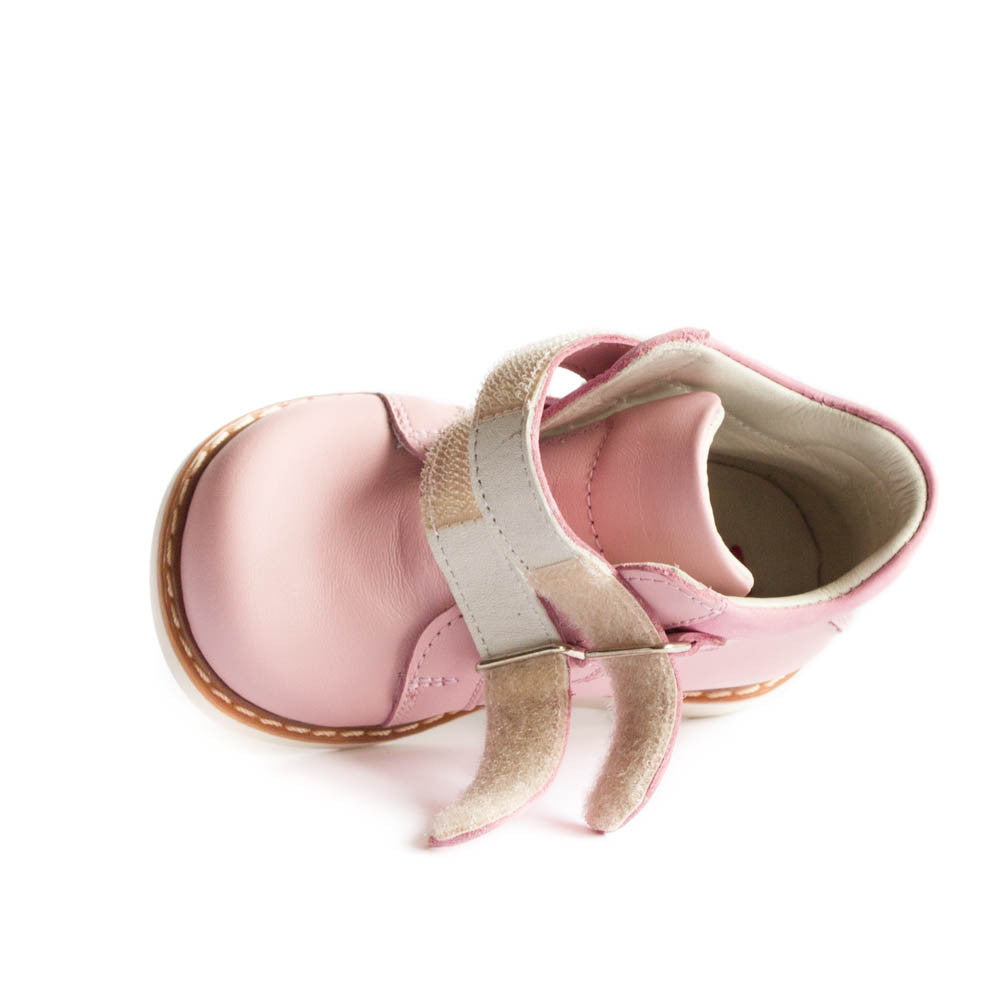
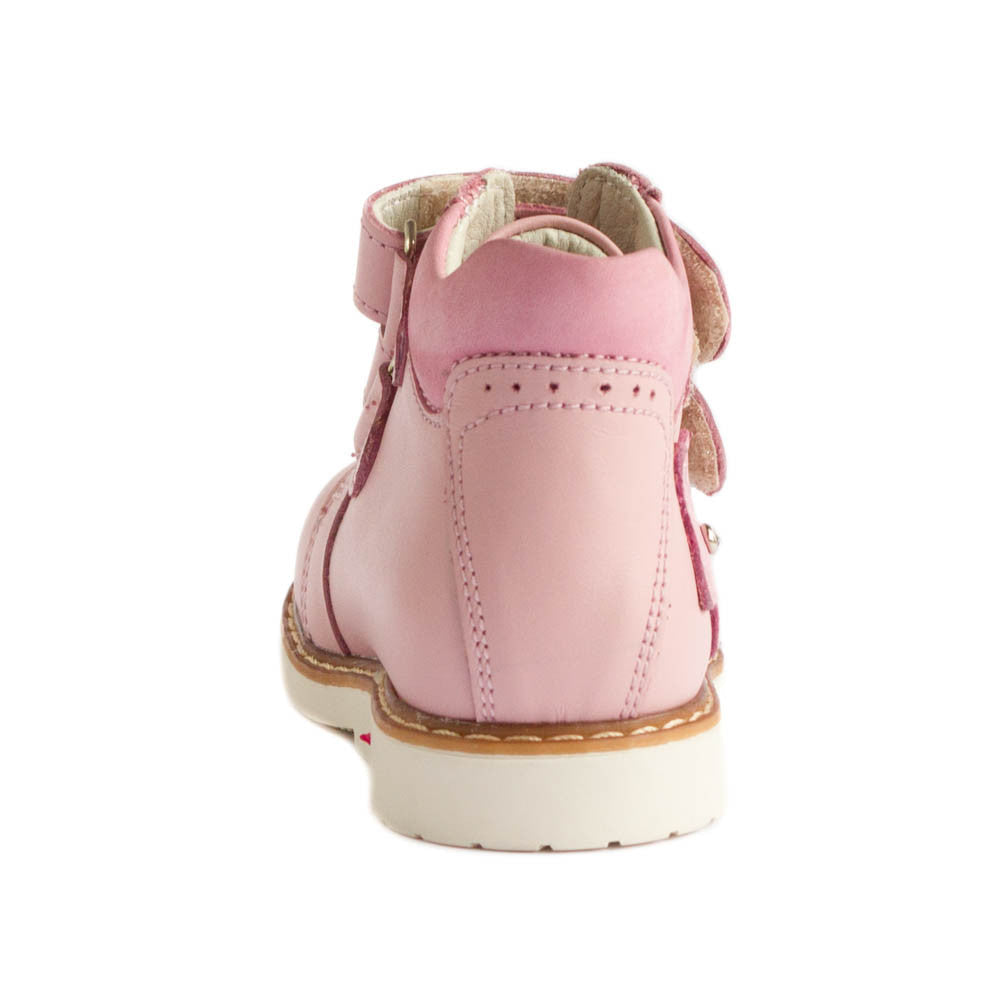
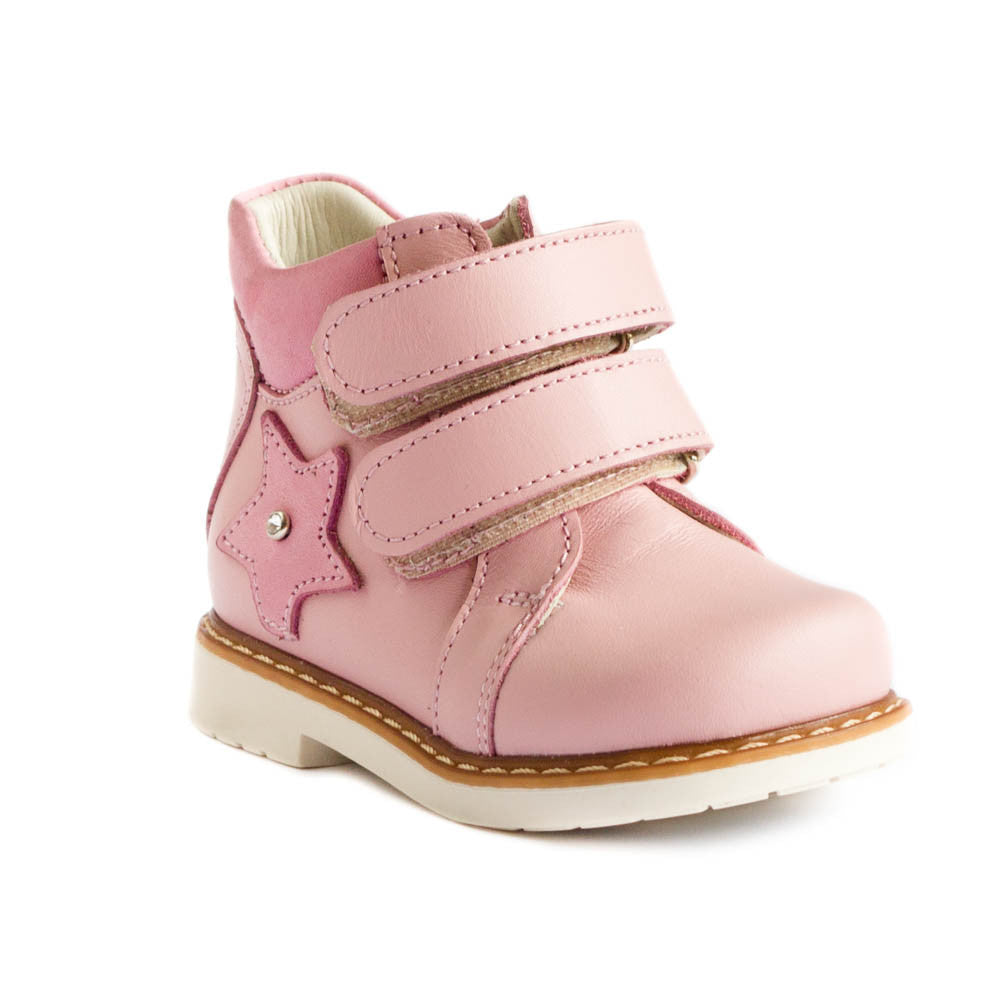
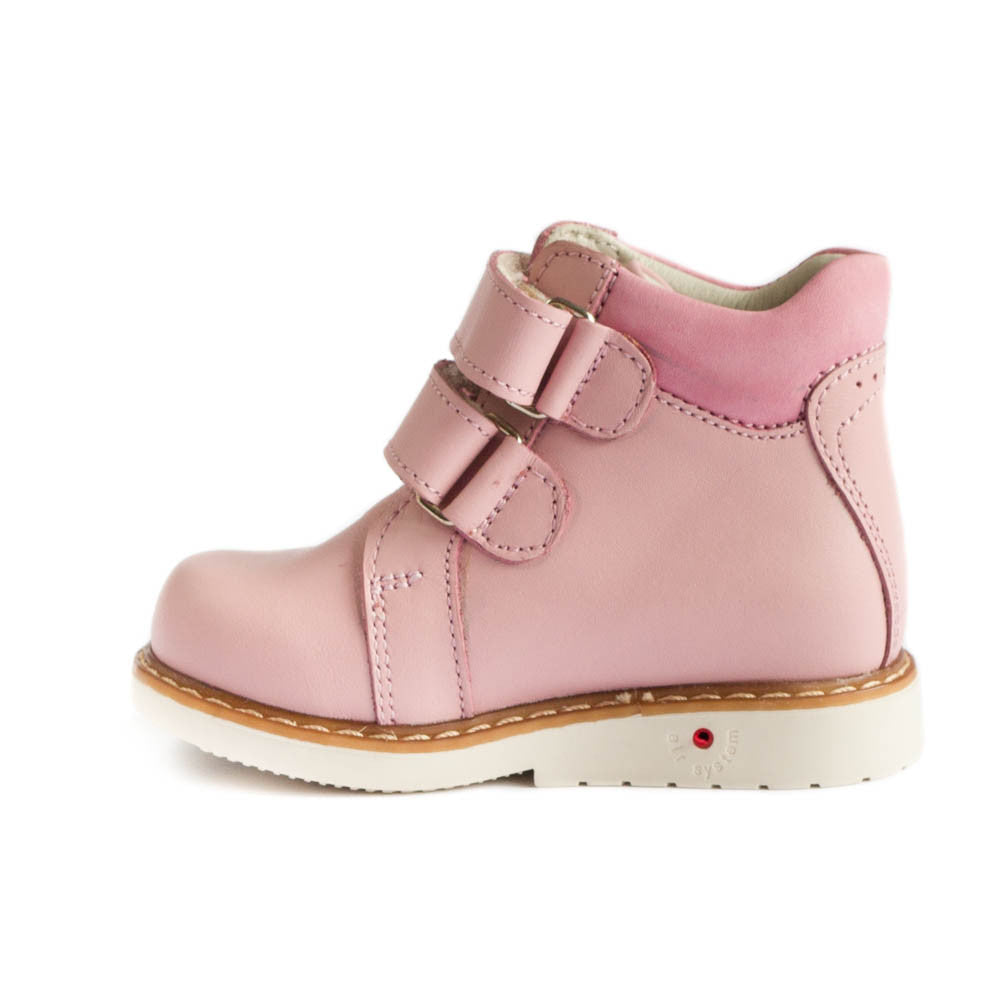
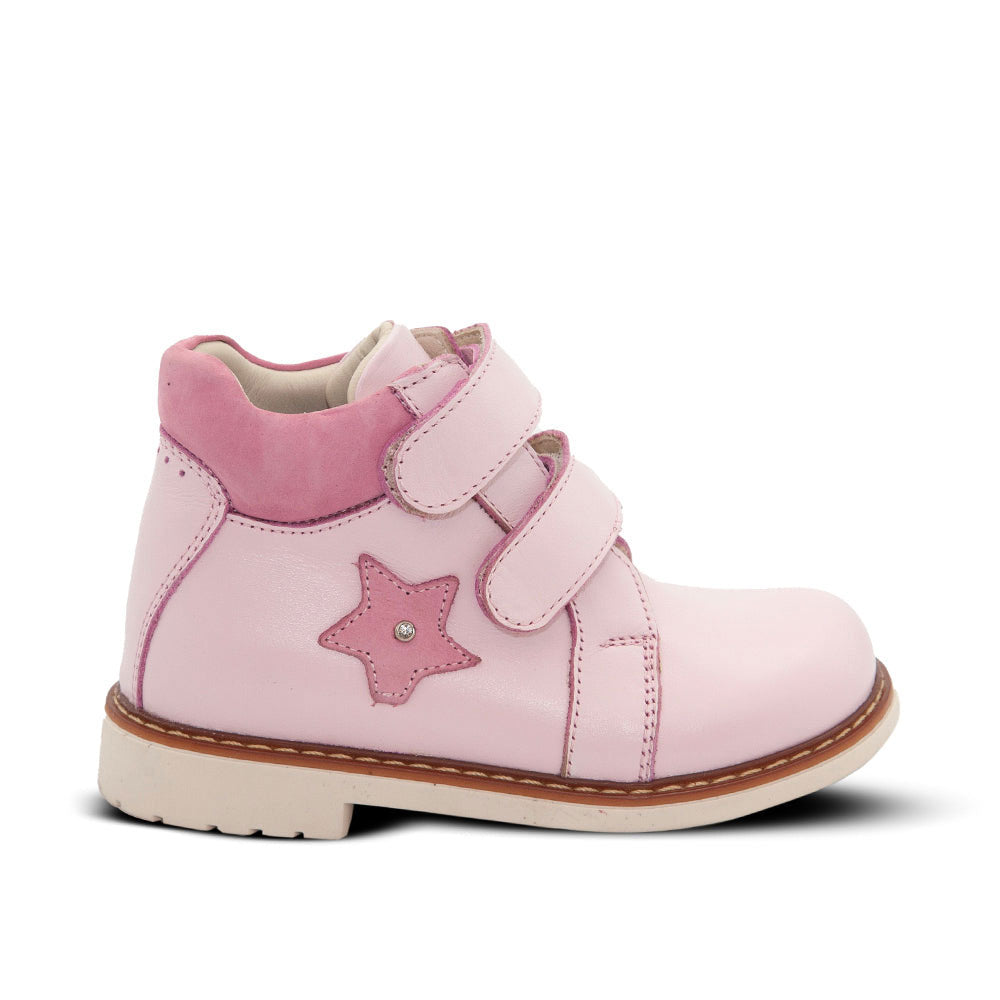
Petit Coralie Boots
Active moisture management prevents skin breakdown.
Type
Boots
Material
Leather
Sizes
18–30 (EU) | 2–11.5 (UK)
Benefits for babies with spina bifida occulta
- Strategic air valve placement targets high-humidity zones around AFOs
- Dual velcro enables micro-adjustments for moisture-related foot swelling
- Anti-bacterial insole technology addresses increased infection risk
- The closed boot design protects, while the internal system prevents accumulation
- Thomas heel modification provides arch control without trapping perspiration
Why they're a top choice
The Petit Coralie specifically targets a problem that intensifies when AFO braces restrict natural ventilation: excessive foot moisture that can lead to skin breakdown in children with reduced sensation. The strategic air valve placement creates active moisture evacuation rather than passive ventilation.
Moisture management becomes critical during intensive physical therapy sessions where exertion combines with orthotic use to create challenging humidity conditions. The anti-bacterial insole addresses the infection risk that increases when moisture meets reduced protective sensation. These boots extend the time your child can comfortably wear shoes and AFOs without requiring frequent changes, streamlining daily care routines while protecting skin health in vulnerable areas.
Support Your Child's Feet With Orthopaedic Shoes
Finding shoes for babies with spina bifida occulta doesn't have to be overwhelming. You need footwear that supports weak muscle tone, accommodates AFO braces if needed, and prevents skin problems while your child develops motor skills. The right shoes work with your baby's body, not against it.
The Cap Levi provides reliable everyday support across all your daily activities, while the Alva Gigi gives you the extra room you need when AFO equipment is part of your routine. Start with these options and adjust as your child grows.
Support Your Baby's Feet
Browse our collection of orthopedic footwear designed specifically for children with special needs.
References
1. About spina bifida. (2025, January 2). Spina Bifida. https://www.cdc.gov/spina-bifida/about/index.html
FAQs
Do all babies with spina bifida occulta need special shoes?
No. Most babies with SBO show no symptoms and can wear regular shoes. Special shoes are only necessary if your child has muscle weakness, balance issues, foot deformities, or uses AFO braces.
How do I know if my baby's shoes fit properly with AFO braces?
The shoe should be 1-2 sizes larger than normal, with the AFO sitting directly against the sole. Your baby's foot shouldn't slide around inside the AFO, and the heel height should match the AFO's built-in pitch.
Can my baby go barefoot sometimes, or do they always need supportive shoes?
Barefoot time at home is beneficial for foot development, even with spina bifida occulta. Save supportive shoes for outdoor activities and situations where your child needs protection and stability.
How often should I replace my baby's spina bifida shoes?
Check fit monthly by measuring both feet. Replace shoes every 6 months or when you notice tightness, rather than waiting for obvious signs. Children with SBO can have unpredictable growth patterns.
Will my child always need special shoes as they grow?
It depends on symptom progression. Some children transition to regular supportive shoes, while others need ongoing orthopedic footwear. Regular assessments with your pediatric physical therapist will guide long-term needs.