10 Best Shoes for Kids With Flat Feet: Arch Support That Matters
Flat feet create stability challenges during daily activities. The right shoes with firm heel counters, structured arch support, and stable midsoles help kids move comfortably without pain or fatigue.




Published December 27, 2025
AI Summary


Have you noticed your child's feet looking completely flat when they stand? Or, maybe they complain about tired legs after playground time, or you've seen their ankles roll inward with every step. Now you may wonder if the right shoes could actually help, or if this is just something they'll grow out of.
Flat feet create real functional challenges. Research shows kids with symptomatic flat feet experience reduced physical activity, increased pain, and altered movement patterns compared to their peers [1]. The good news is that the right shoes genuinely make a difference.
Our Picks for the 10 Best Shoes for Kids With Flat Feet
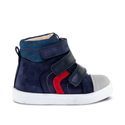
Johnny Rigel Sneakers
Triple Velcro with high arch support and removable insoles.
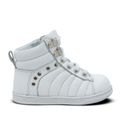
Billy Smooth Sneakers
Lace-plus-zipper with extended ankle support for all-day wear.
Cap Levi Sneakers
Nubuck construction with dynamic stability for active play.
Show more
How Flat Feet Affect Kids During Daily Activities
Flat feet create measurable challenges during everyday movement. Research shows children with symptomatic flat feet demonstrate reduced physical activity levels and altered biomechanics compared to kids with typical arches. About 35% of affected children report severe symptoms that interfere with daily activities, while nearly half experience symptoms bad enough to prevent sports participation.
The challenges evolve as kids grow:
- Ages 2-6: Flat feet are extremely common (37-60% of kids)
- Ages 8-13: Prevalence drops significantly (4-19%) as arches naturally develop
- Beyond Age 10: Flat feet that persist face increased risk of rigidity and deformity
The key concern isn't flat feet themselves—it's whether they're causing pain, fatigue, or movement problems that limit what your child can comfortably do.
What Makes Shoes Actually Help Flat Feet
Firm Heel Counter Stops Ankle Rolling: Stabilizes the heel and limits inward ankle collapse (overpronation), keeping the heel bone properly aligned during weight-bearing
Structured Arch Support Addresses the Core Problem: Supports the medial arch to reduce pressure on the collapsed midfoot and improve weight distribution, easing strain during movement
Stable Midsole Resists Twisting: Limits excessive twisting between the forefoot and heel, helping maintain proper alignment and preventing compensatory stress on knees and hips
Thomas Heel Provides Extended Medial Support: Extends support along the inner heel to reinforce arch support, prevent medial collapse, and maintain alignment with each step
Shoe Features That Make Flat Feet Worse
Soft, Collapsible Heel Counters: Allow the heel to drift inward unchecked, leading to ongoing overpronation and the development of inefficient, compensatory walking patterns
Excessive Sole Flexibility: Soles that bend through the midfoot collapse under the arch, reducing push-off efficiency and triggering compensations at the knees and hips
Minimal Midsole Structure: Ultra-thin or barefoot-style soles lack space for proper support, increasing strain on an already weakened arch and reducing comfort and endurance
The 10 Best Shoes for Kids With Flat Feet
1

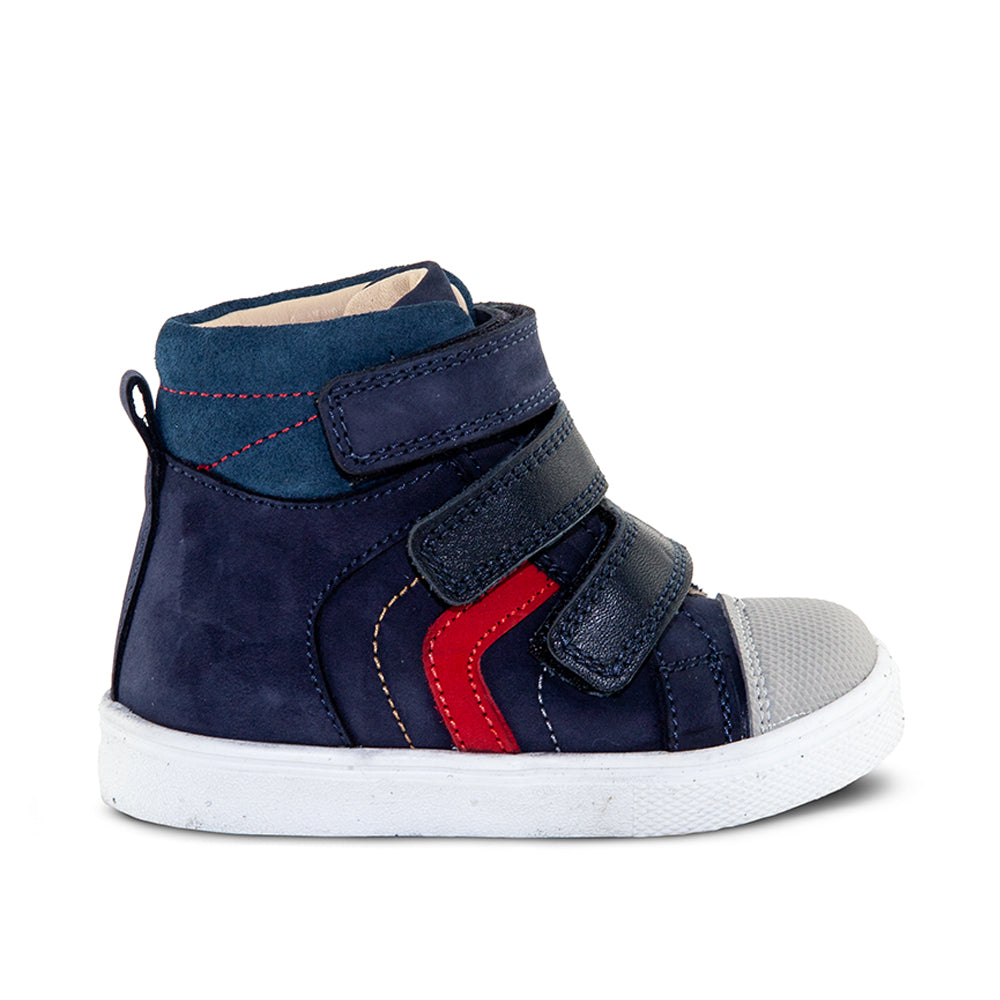
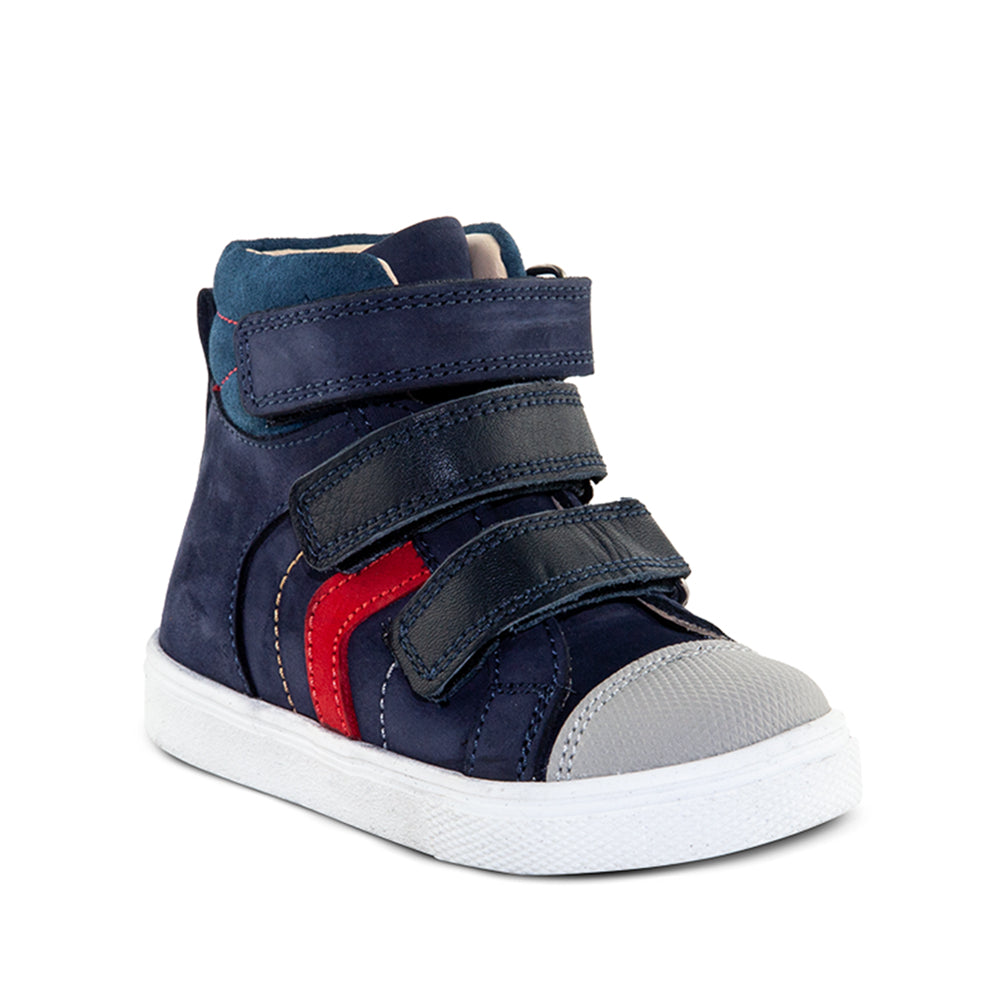
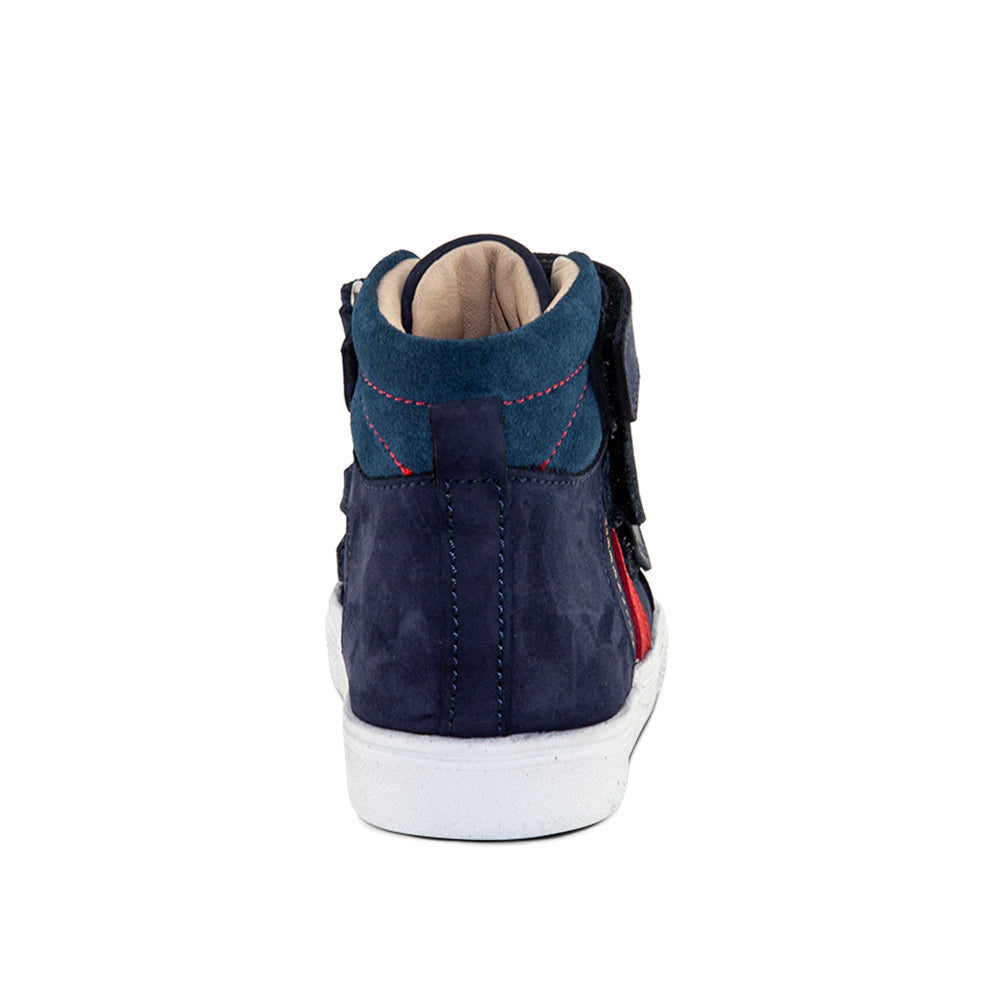
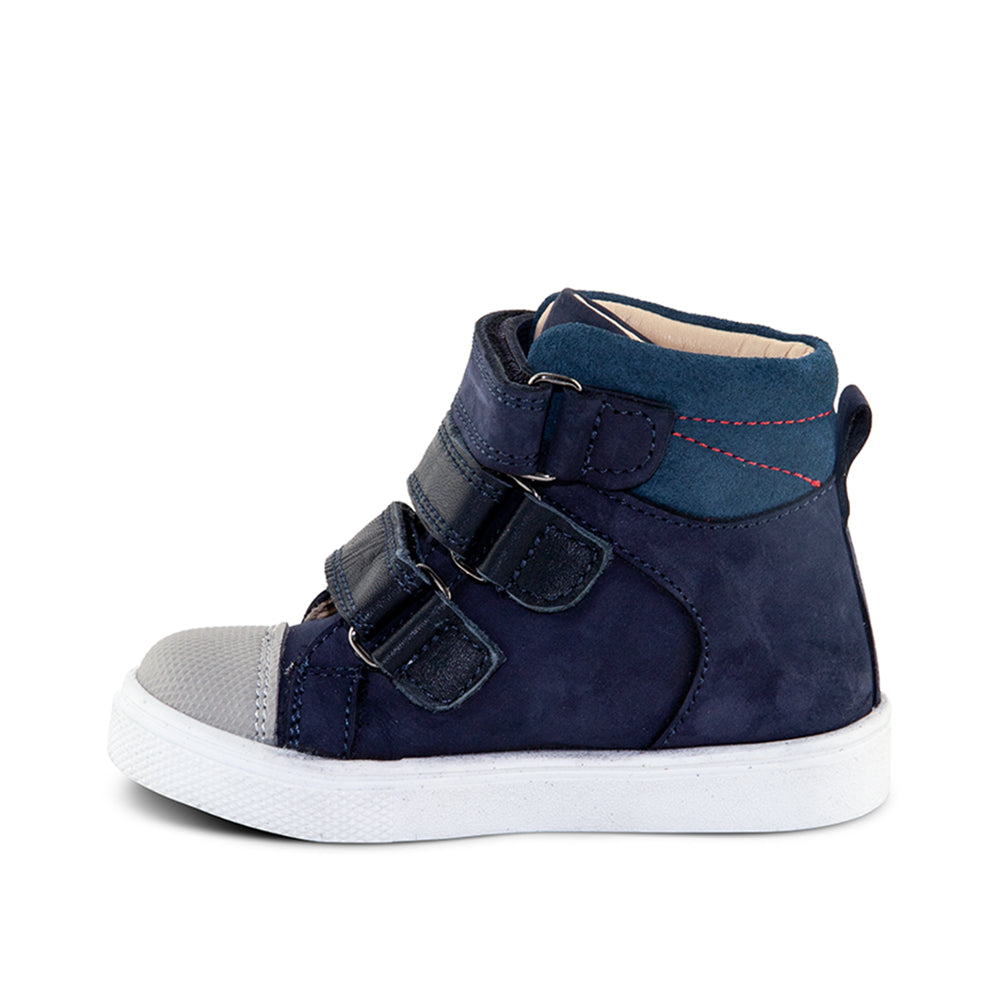
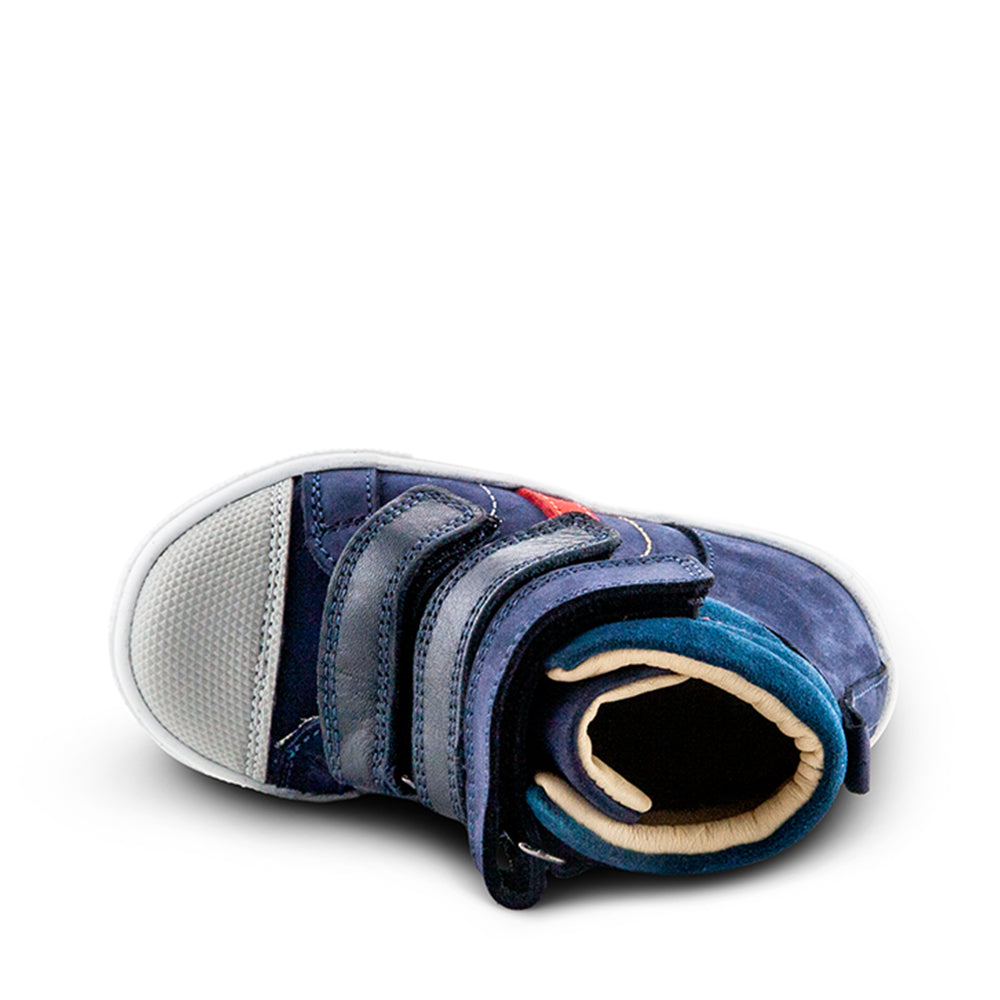
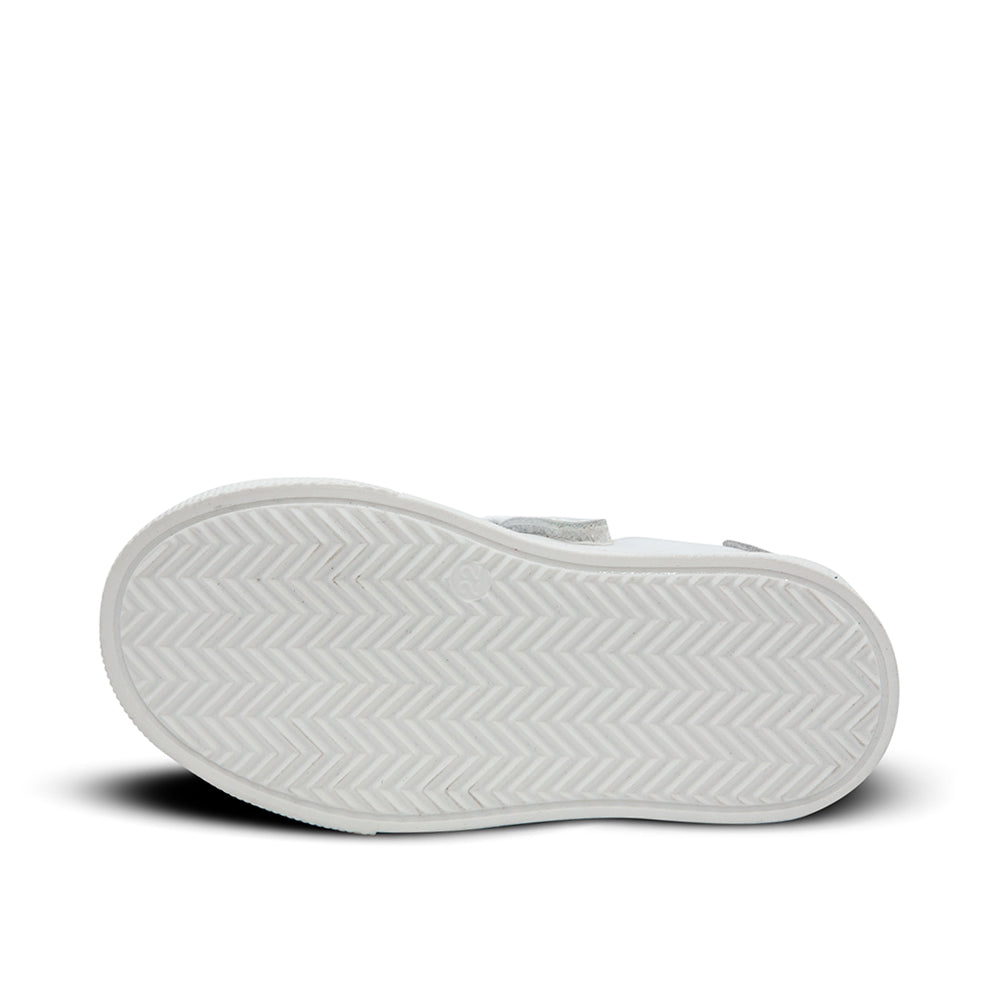
Johnny Rigel Sneakers
All-day support from daycare to playground.
Type
Sneakers
Material
Leather + Nubuck Leather
Sizes
18–30 (EU) | 2–11.5 (UK)
Benefits for kids with flat feet
- High built-in arch support addresses the collapsed midfoot directly
- An extended high-top stabilizes ankles and prevents excessive rolling
- Cushioned thermoplastic outsoles reduce impact through collapsed arches
- Removable insole accommodates custom orthotics if needed later
- Triple Velcro straps adjust independently for a secure fit
Why they're a top choice
The Johnny Rigel delivers comprehensive flat foot support through three integrated elements working together. The high arch support provides consistent upward pressure beneath the midfoot during weight-bearing, while the extended ankle design prevents that inward heel rolling you're seeing.
What makes this practical is the removable insole. If your child's podiatrist prescribes custom orthotics down the road, this sneaker accommodates them. It's adaptable as your child's needs evolve, making it a smart everyday choice that handles daycare, playground, and errands without requiring constant shoe changes.
2
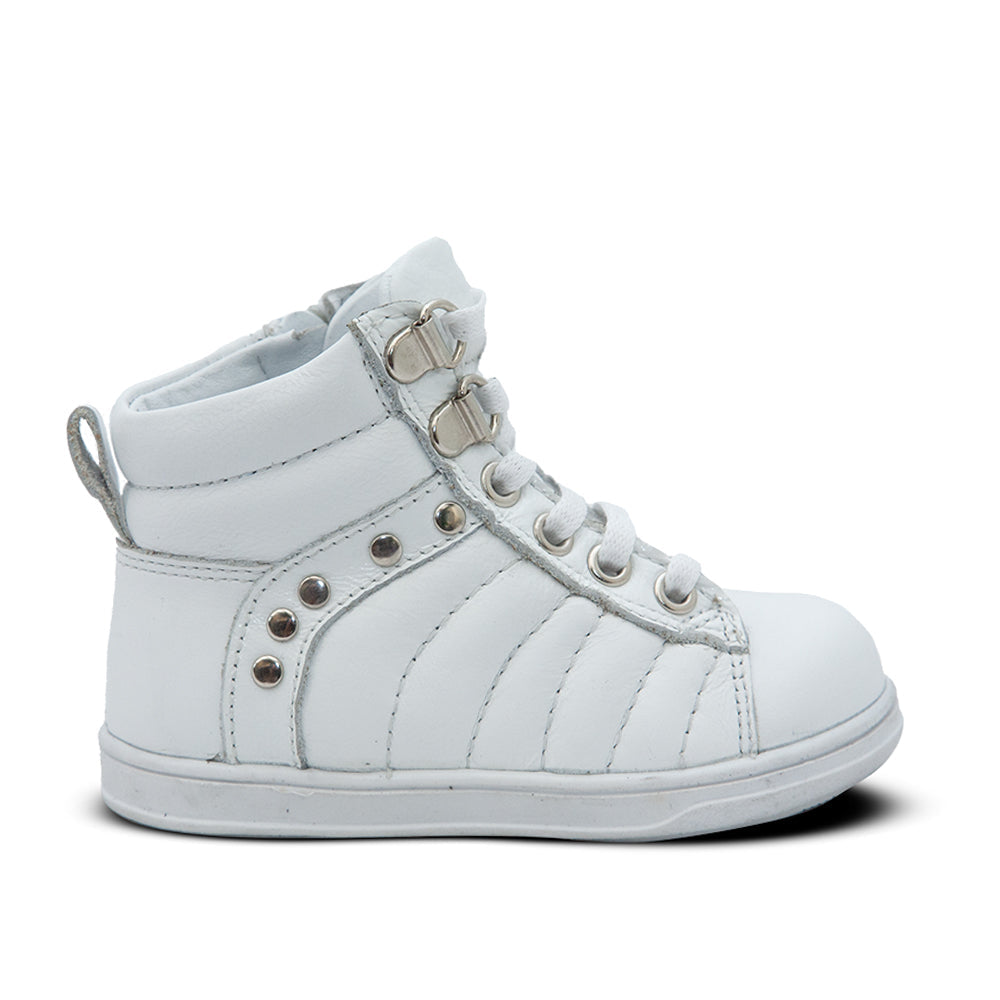
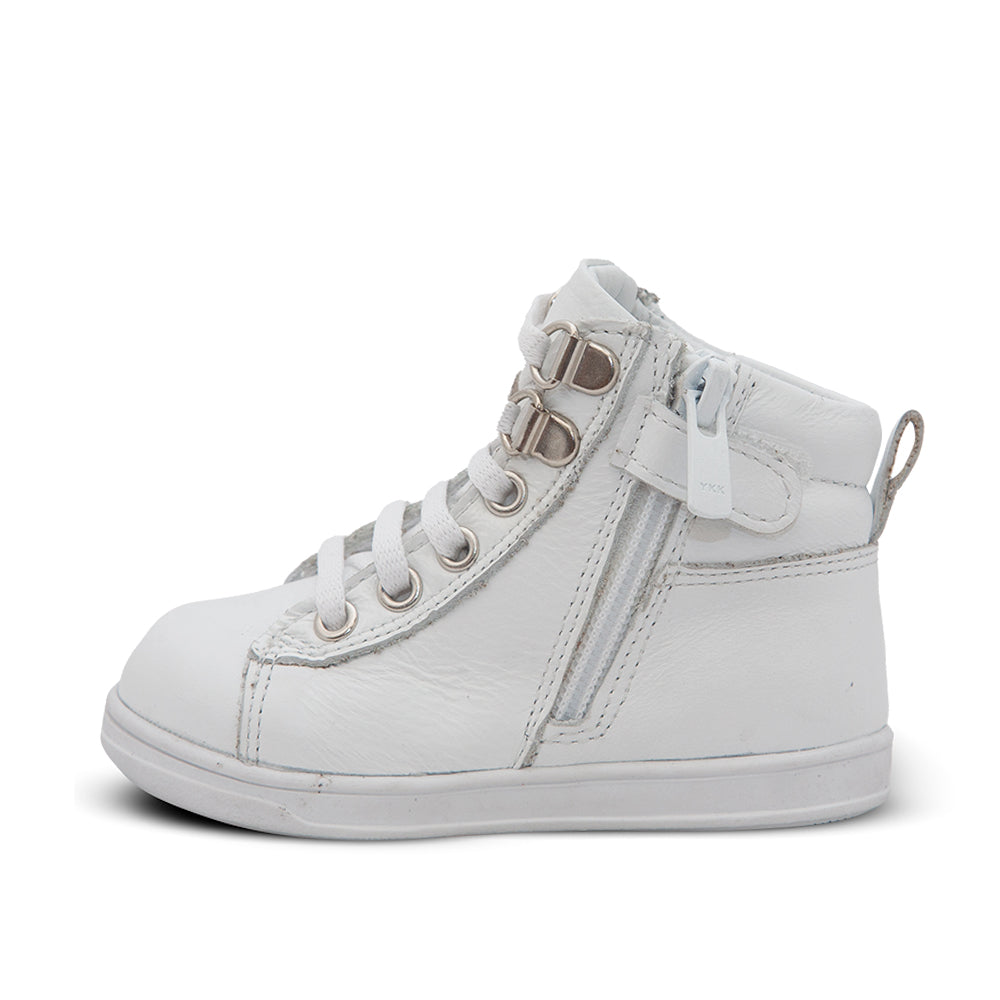
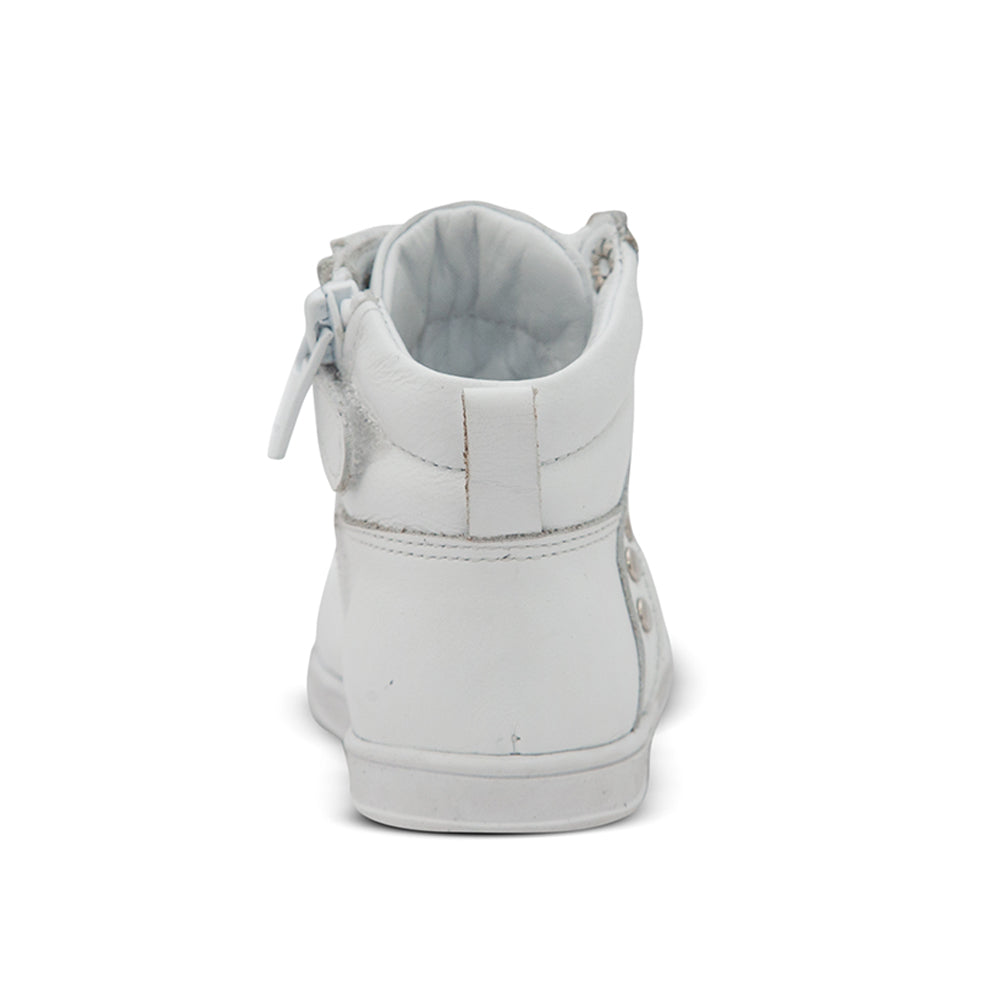
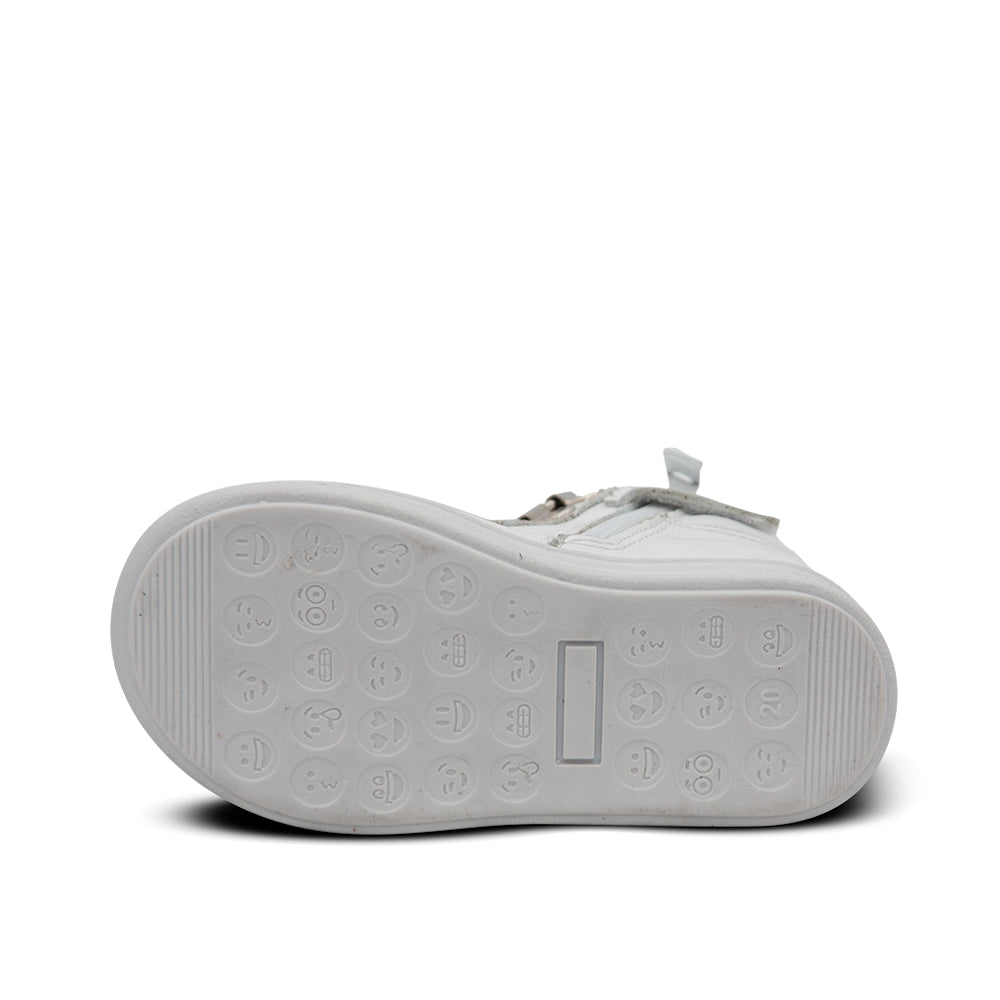
Billy Smooth Sneakers
School-appropriate style with orthopedic-grade support.
Type
Sneakers
Material
Leather
Sizes
18–30 (EU) | 2–11.5 (UK)
Benefits for kids with flat feet
- High arch support counters midfoot collapse during 6-8 hour school days
- Extended ankle support prevents pronation during sit-stand transitions
- Polished leather meets dress codes while delivering real support
- Cushioned outsoles protect joints on hard school floors
- Lace-plus-zipper for secure fit and quick changes
Why they're a top choice
The Billy Smooth combines maximum structural support with a refined look suitable for school uniforms. The high arch support works throughout extended classroom hours, while the extended ankle support prevents rolling during transitions from desk to playground.
That dual closure system solves a real school problem. Laces provide the secure, customizable fit flat feet require, while the side zipper enables rapid on-off during PE or bathroom breaks without re-tying. The polished leather appearance meets uniform requirements while delivering support that budget school shoes simply lack.
3
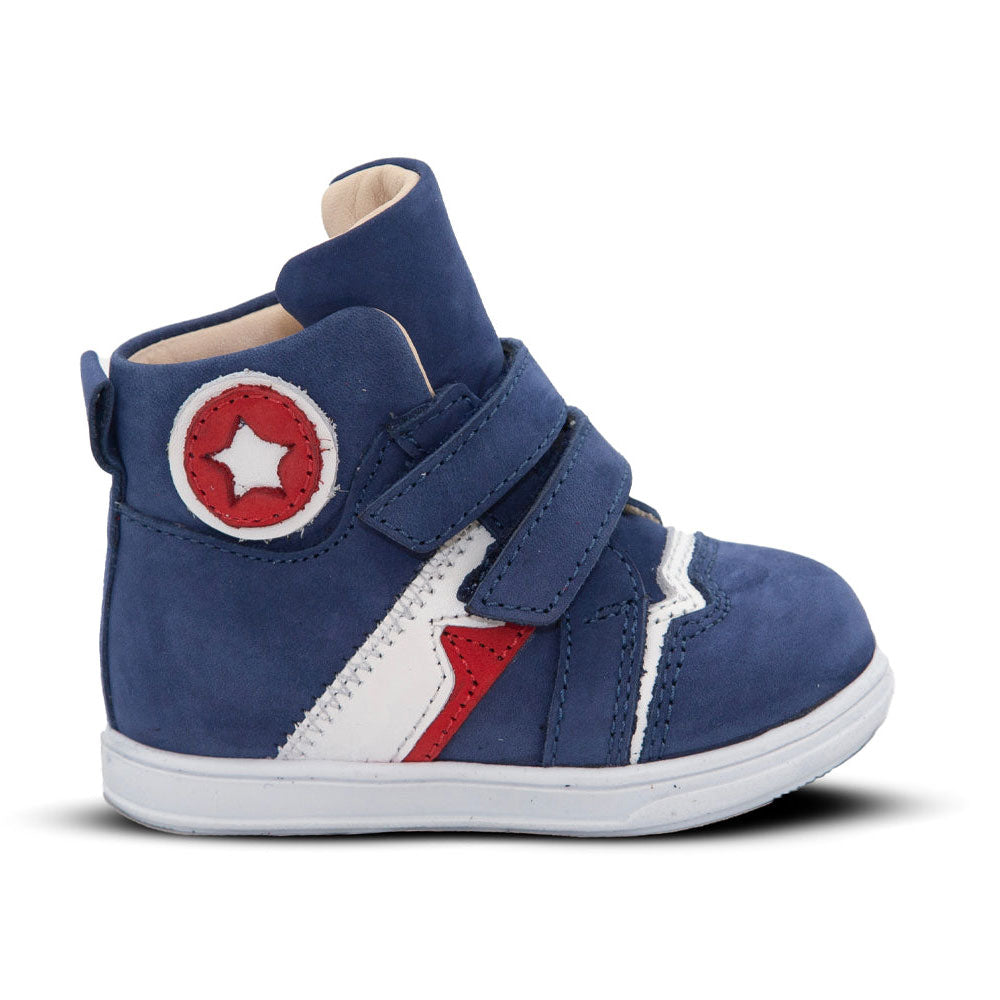
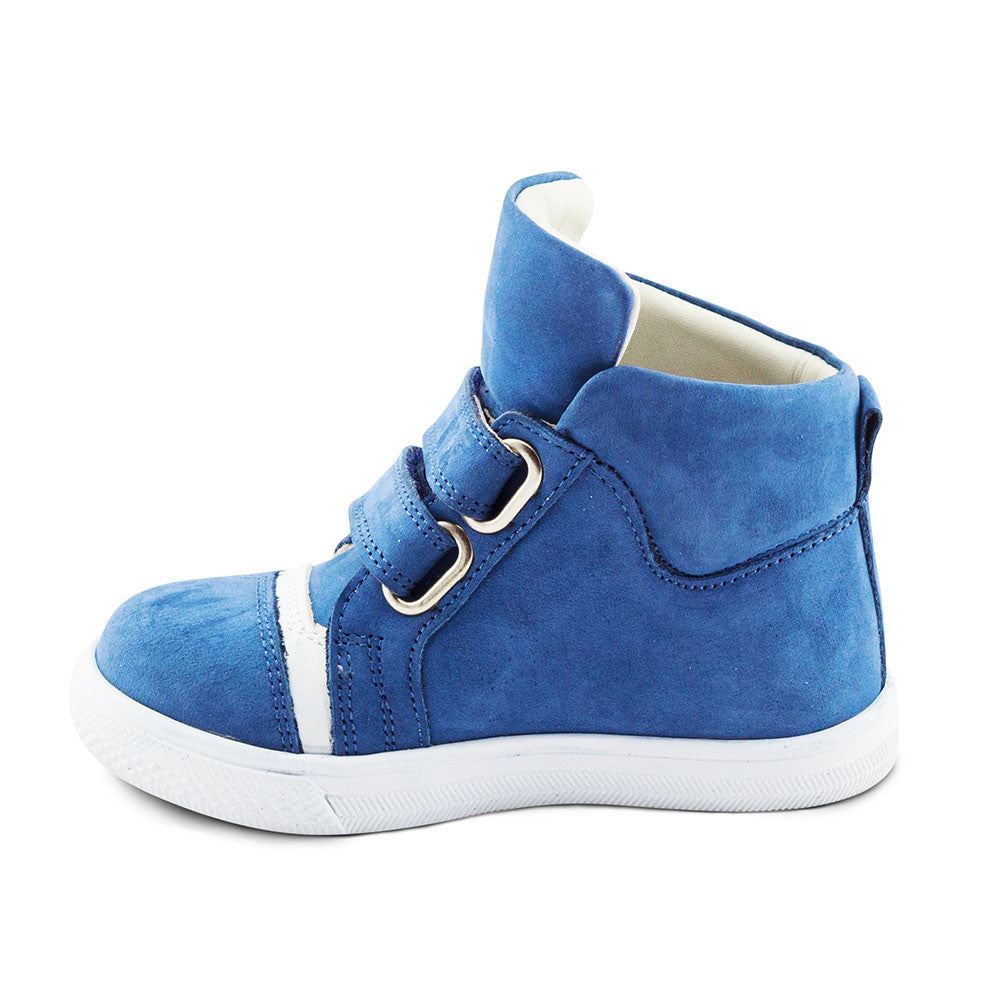
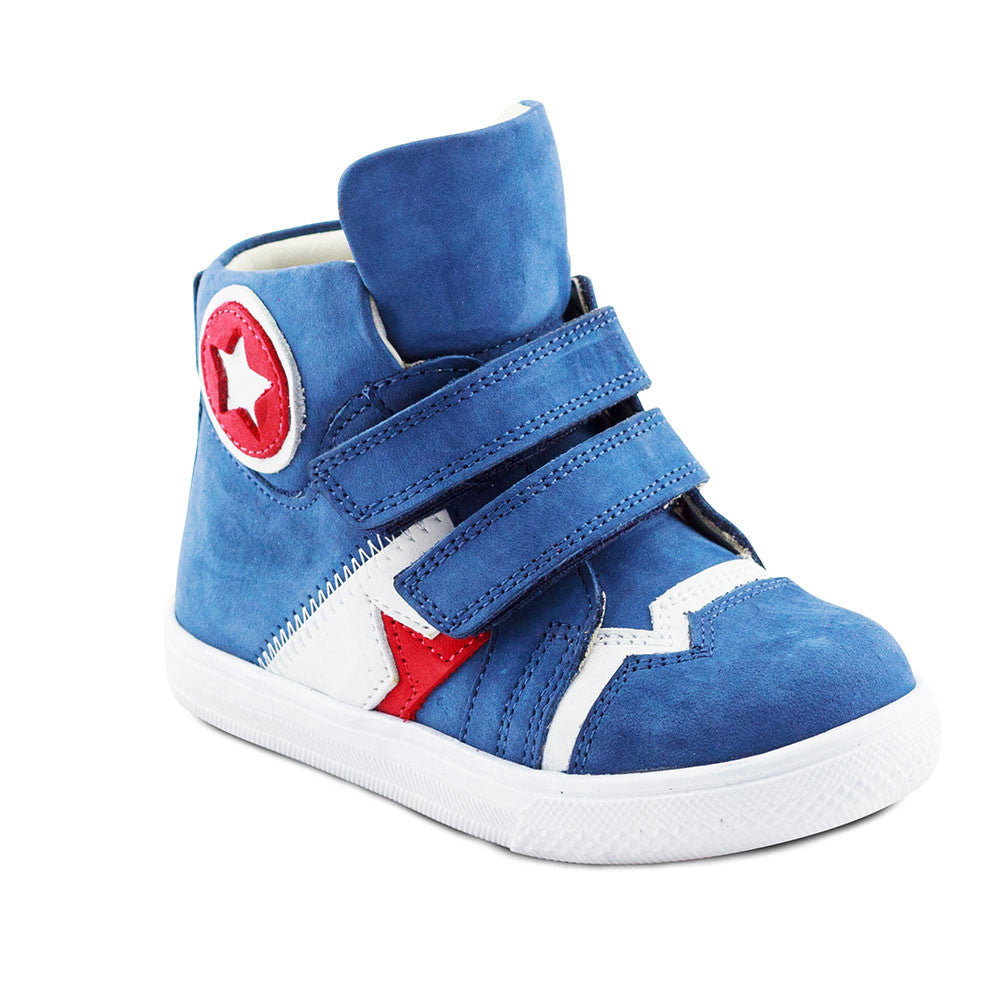
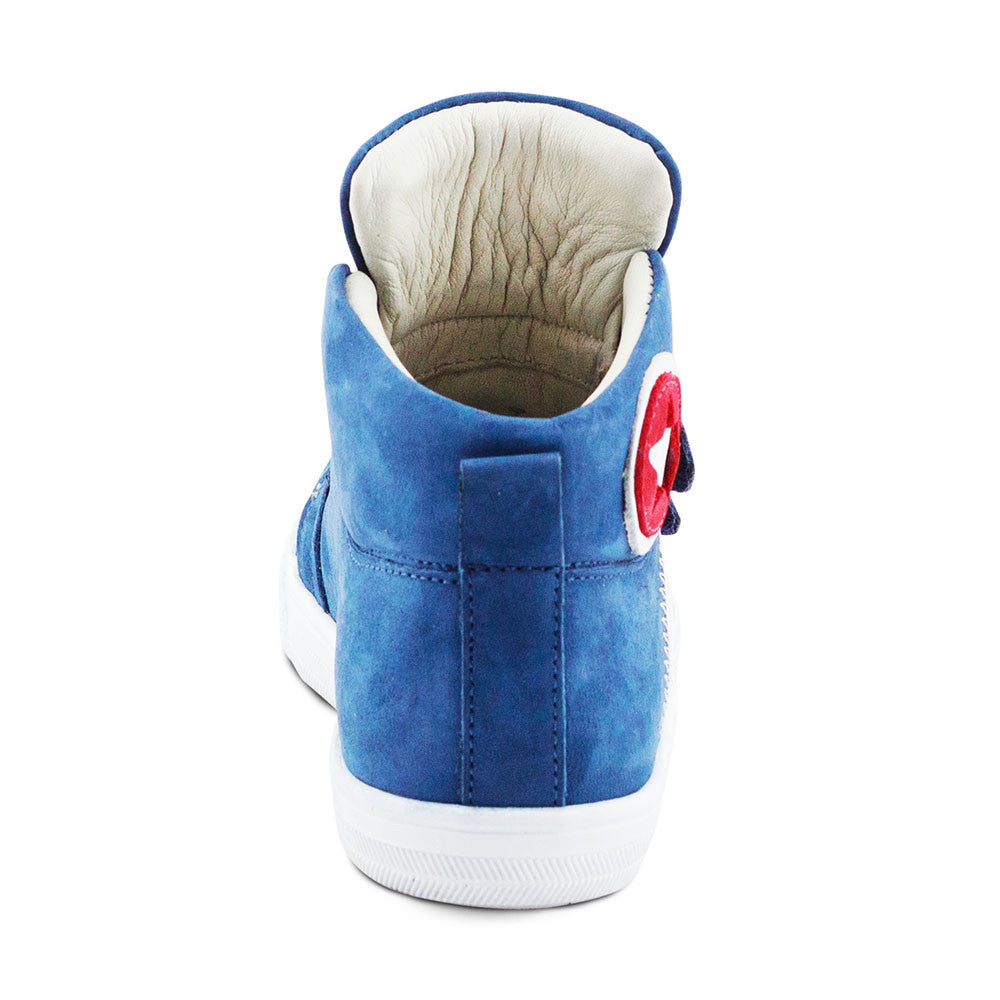
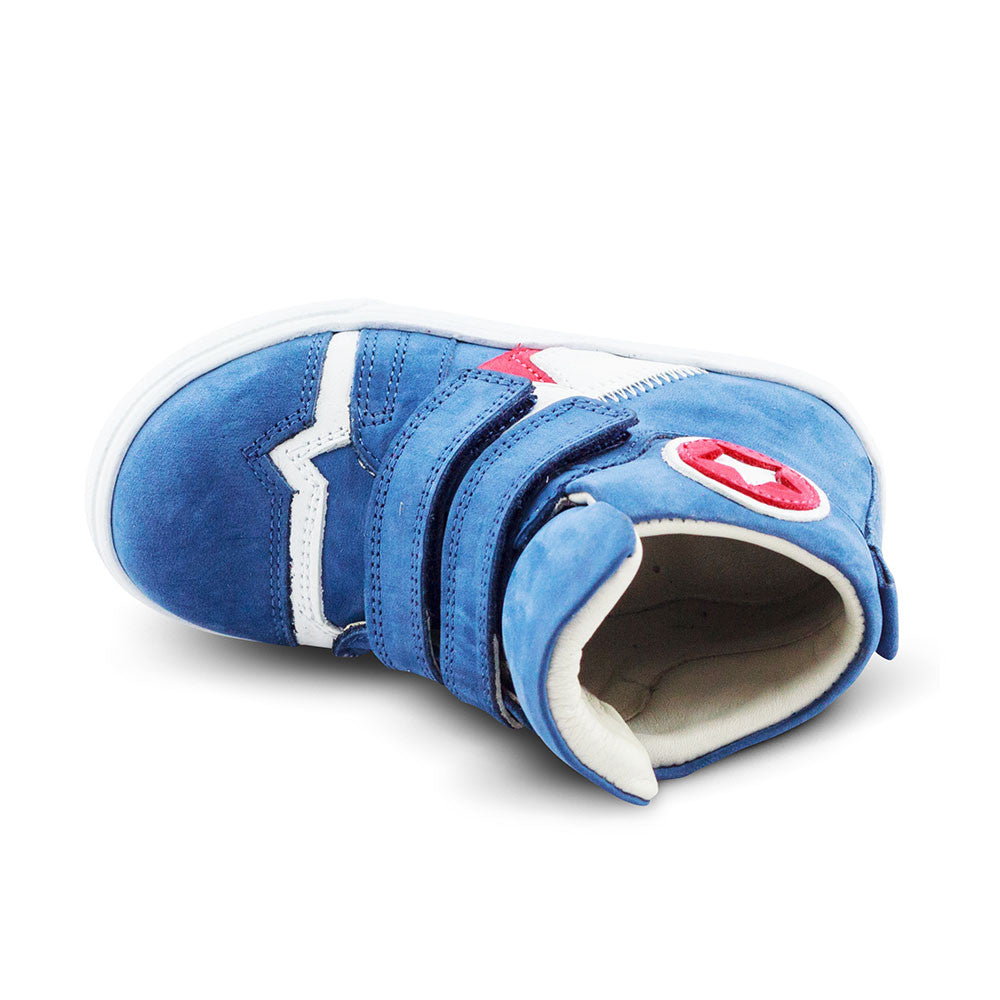
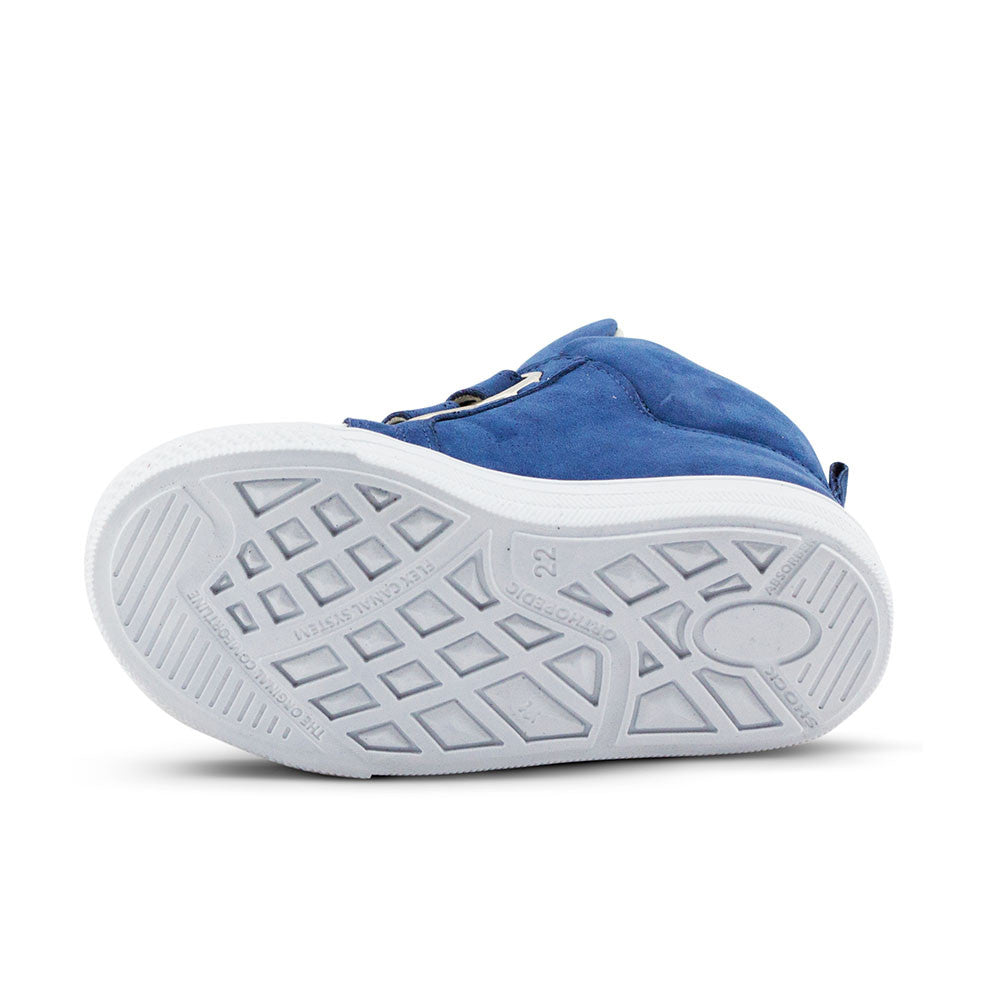
Cap Levi Sneakers
Dynamic stability for high-energy play.
Type
Sneakers
Material
Nubuck Leather
Sizes
18–30 (EU) | 2–11.5 (UK)
Benefits for kids with flat feet
- Rugged nubuck resists deformation during lateral movements
- High arch maintains midfoot integrity during jumping and landing
- Extended ankle support limits excessive motion during running
- Cushioned outsoles dampen impact during repetitive activities
- Dual Velcro enables mid-play adjustments
Why they're a top choice
The Cap Levi prioritizes stability during high-activity scenarios where flat-footed kids face the greatest injury risk. The nubuck construction provides a rugged yet flexible upper that maintains its shape during the rapid direction changes on playground equipment.
During climbing, jumping, and sudden turns, flat feet experience magnified instability—precisely when this shoe's stability architecture delivers maximum value. The rugged construction handles grass, gravel, and rubber surfacing without compromising support, giving parents confidence during weekend sports and active playdates.
4
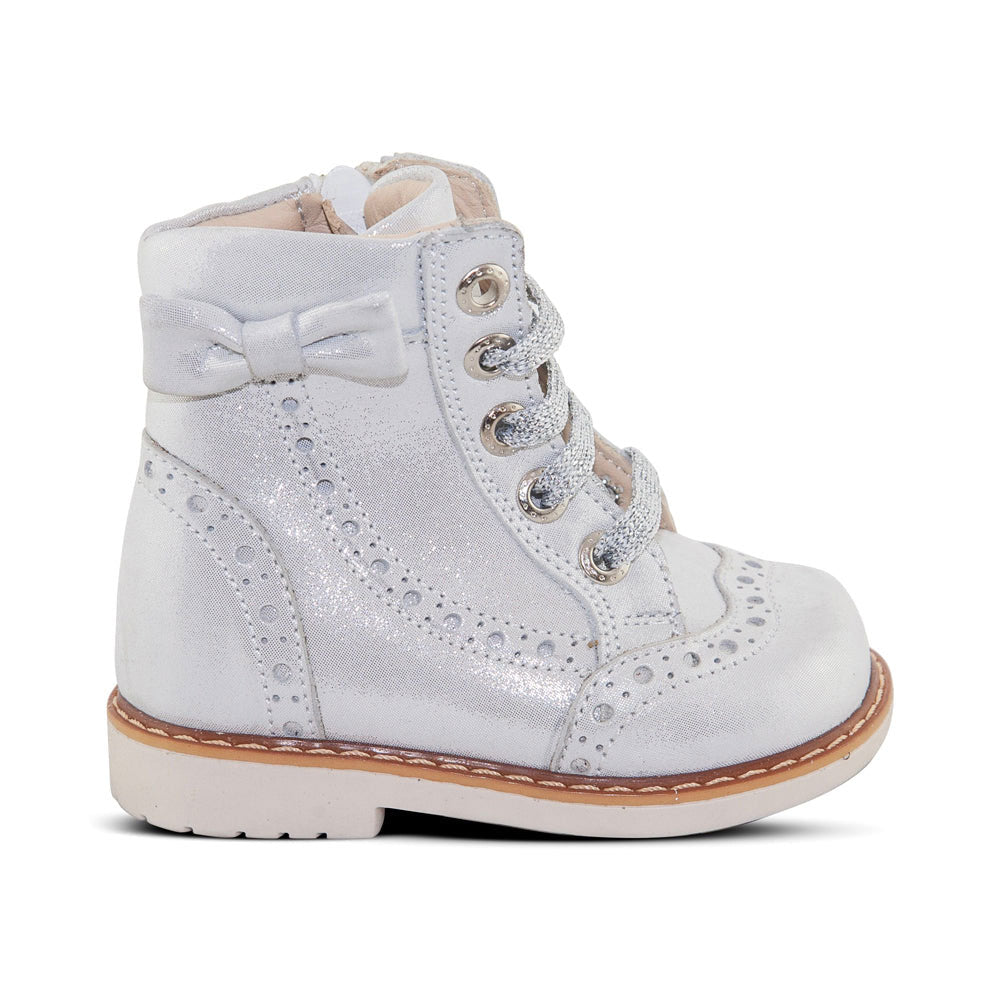
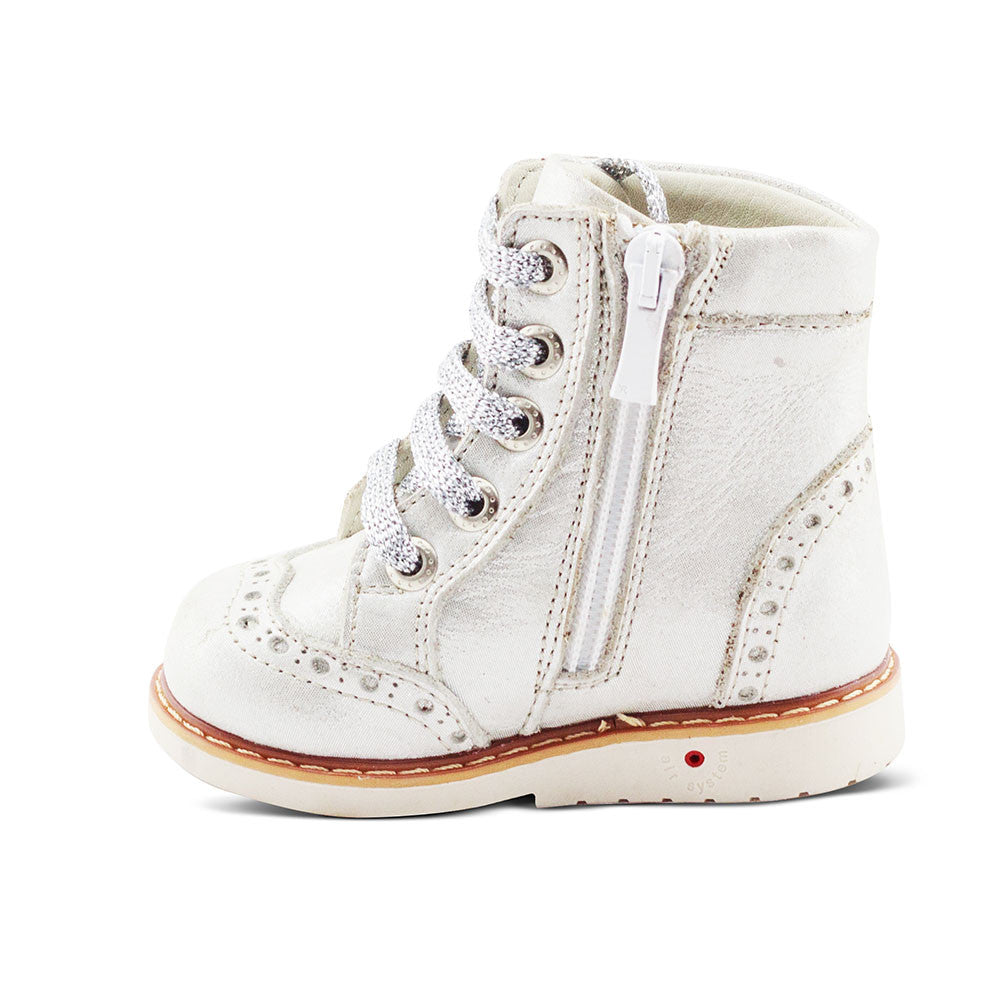
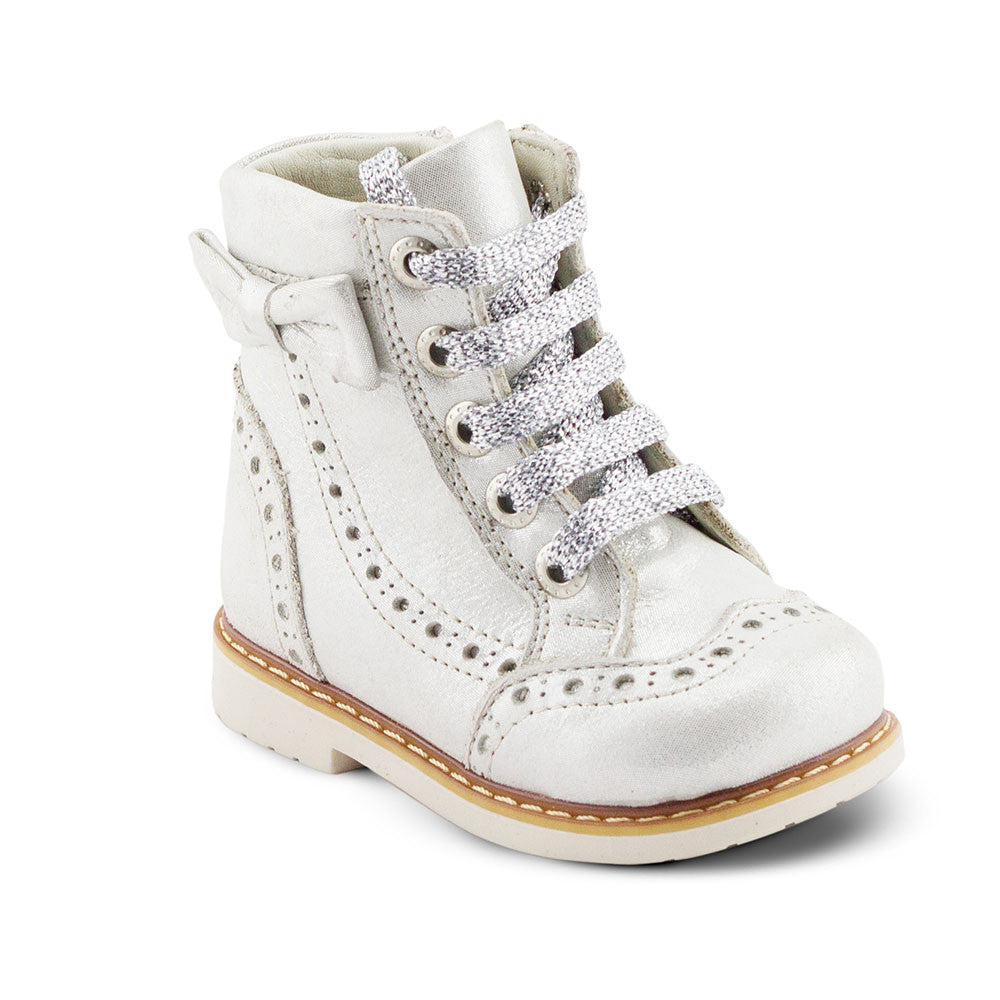
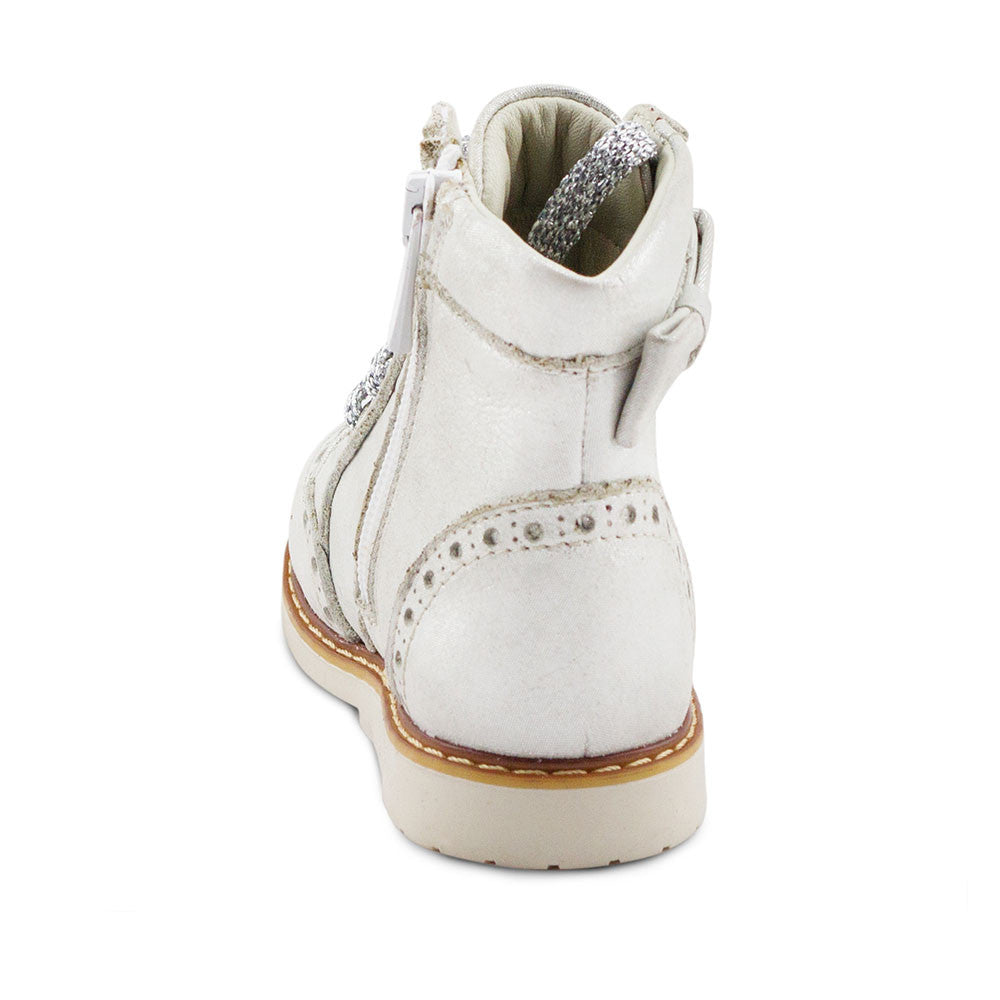
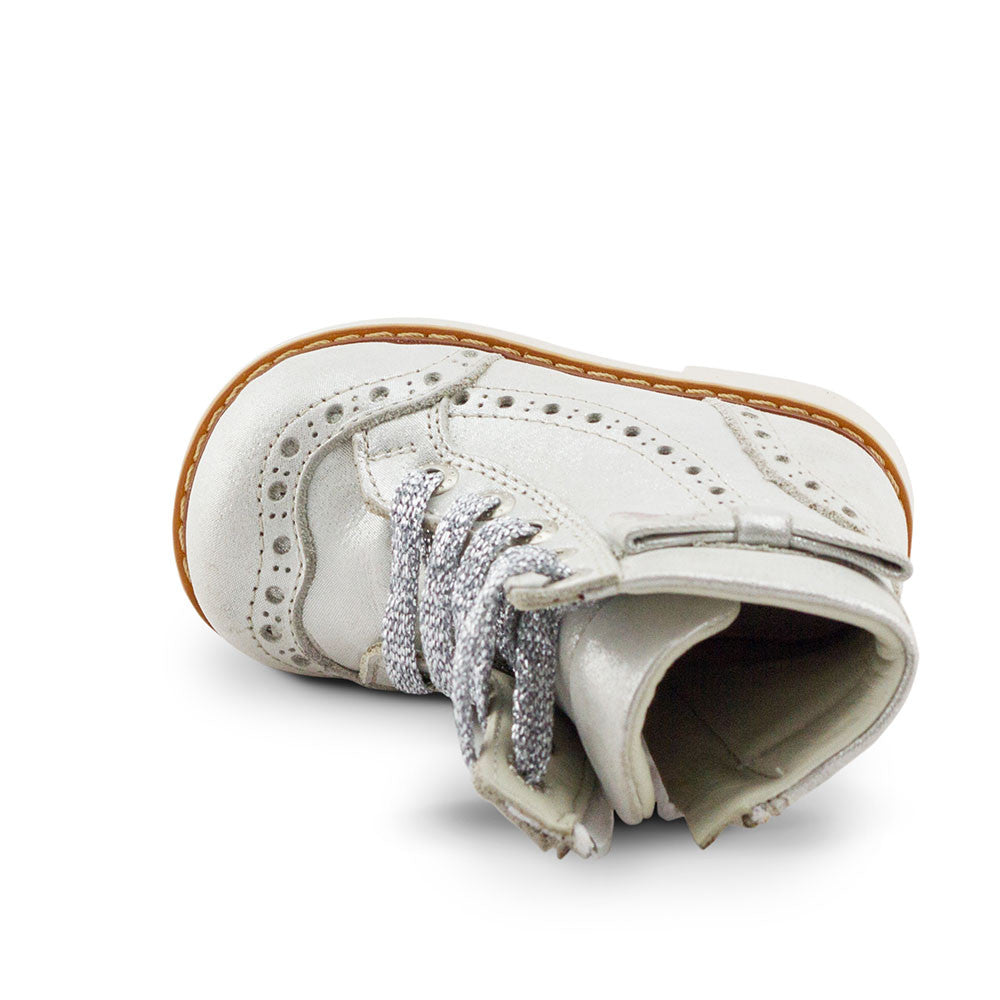
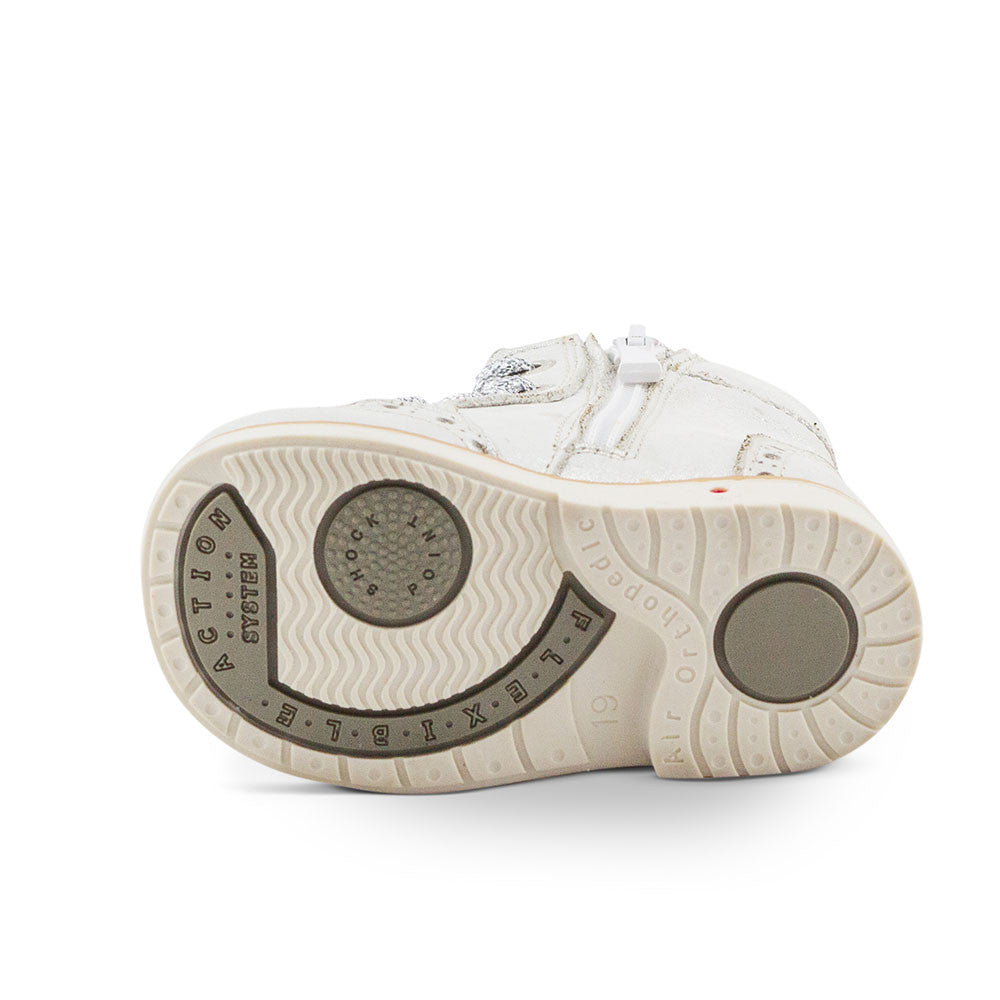
Pearly Sheila Boots
Winter warmth meets serious arch support.
Type
Boots
Material
Leather
Sizes
18–30 (EU) | 2–11.5 (UK)
Benefits for kids with flat feet
- Thomas heel extends medial support to prevent arch collapse at origin
- High arch support distributes pressure evenly across the foot
- Extended ankle support restricts excessive rolling in thick socks
- The extended tongue accommodates AFO braces if needed
- Air valves prevent internal moisture buildup
Why they're a top choice
The Pearly Sheila incorporates the Thomas heel—an orthopedic feature that extends the inside heel forward to provide targeted support where arch collapse begins. This works together with high arch support to distribute weight more evenly across your child's foot.
Cold weather typically means thicker socks that can compromise fit in standard shoes—this boot accommodates that reality while maintaining biomechanical support. The air valves address a common winter problem: perspiration trapped inside insulated boots, creating discomfort. Perfect for autumn and winter when your child needs coverage and warmth without sacrificing support.
5
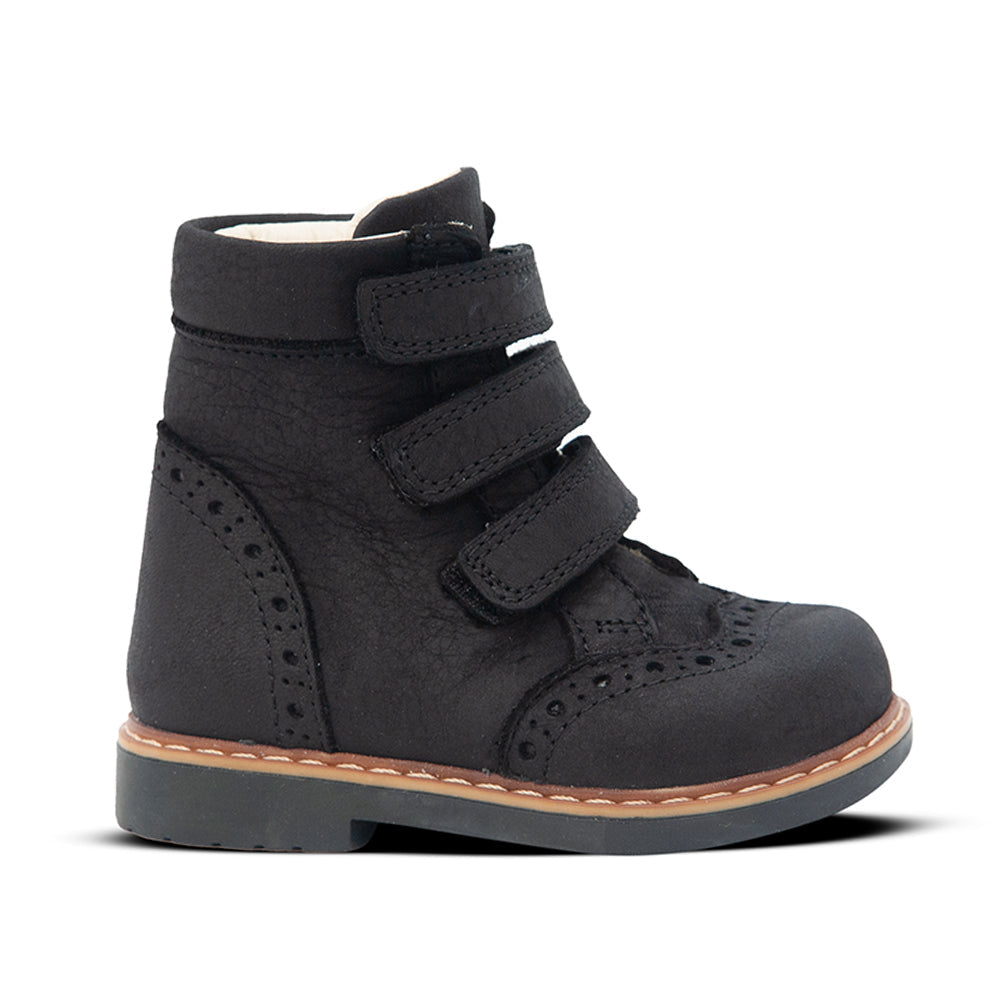
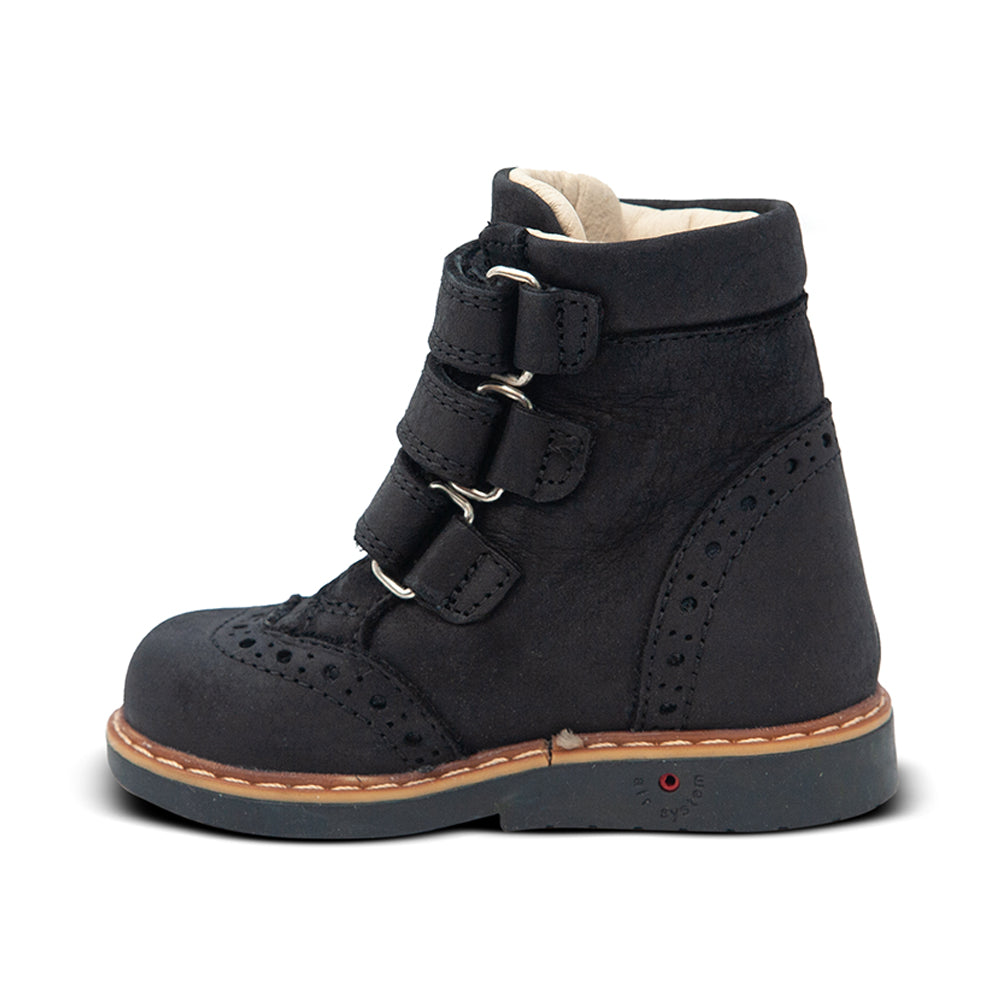
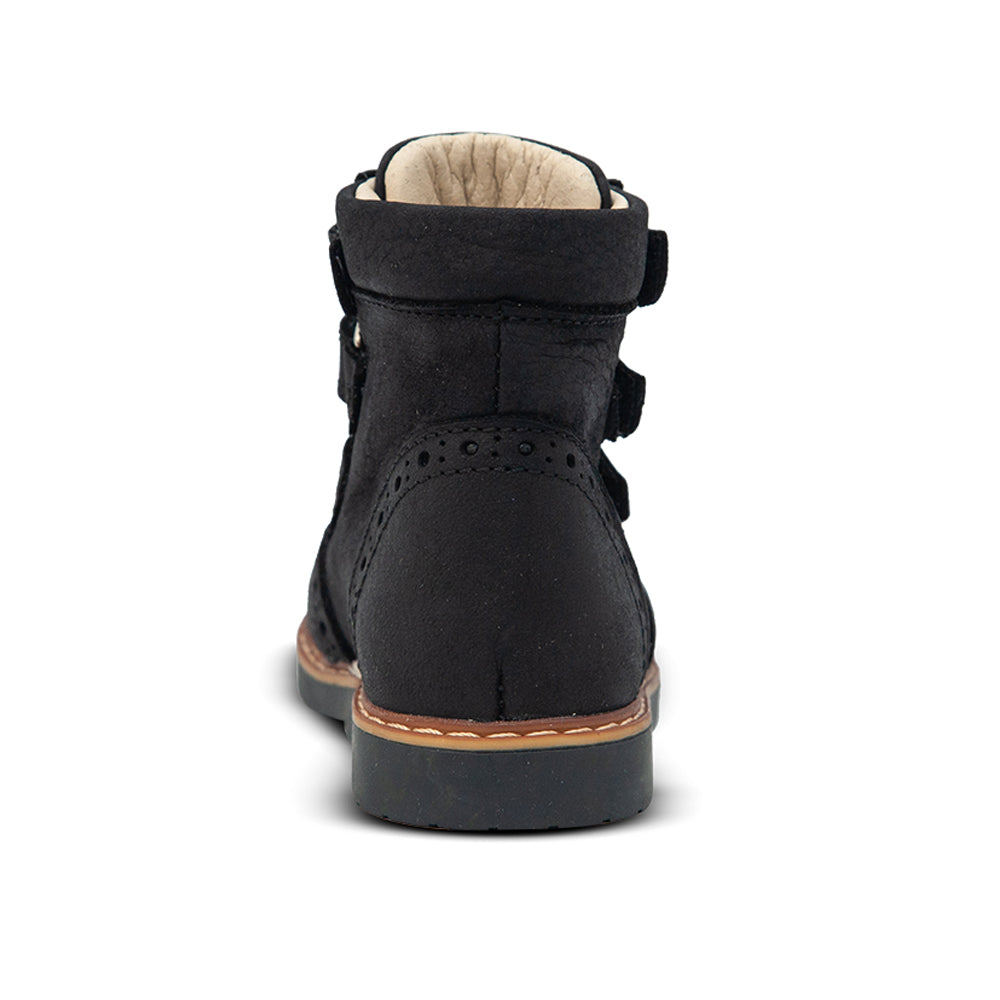
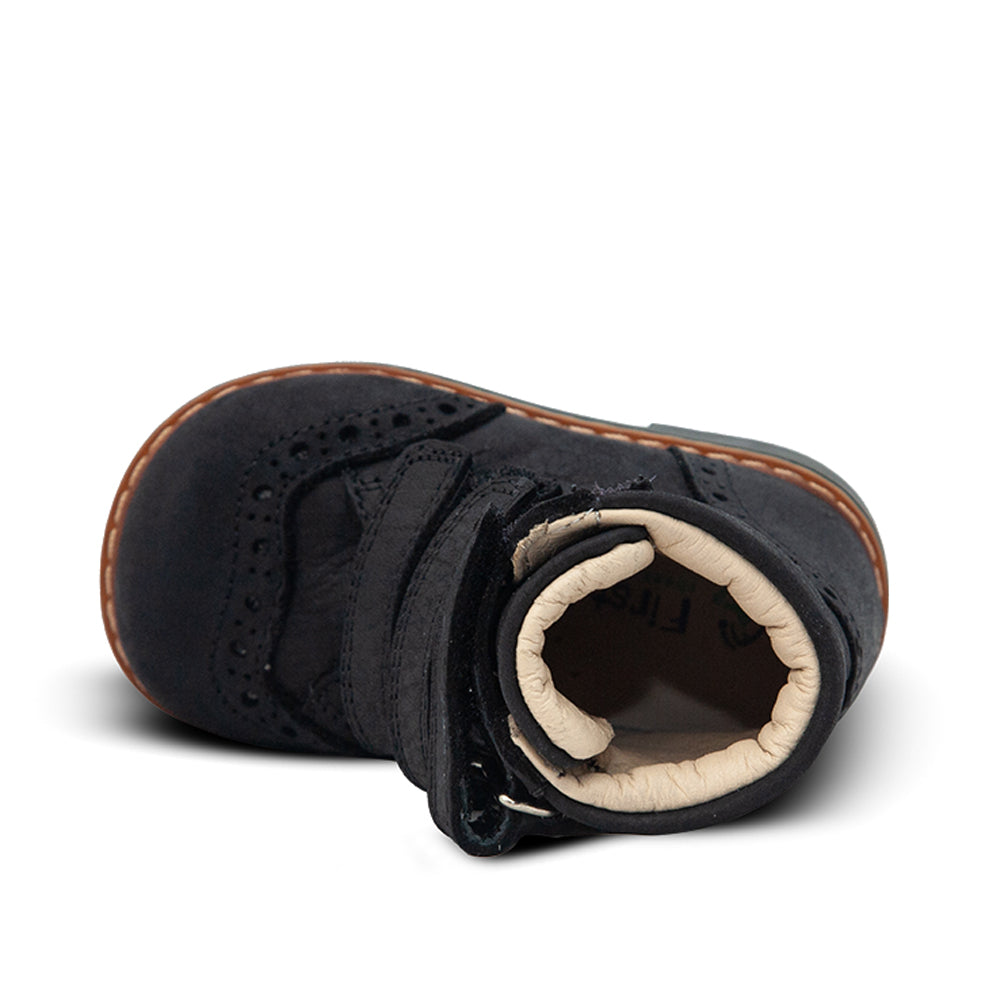
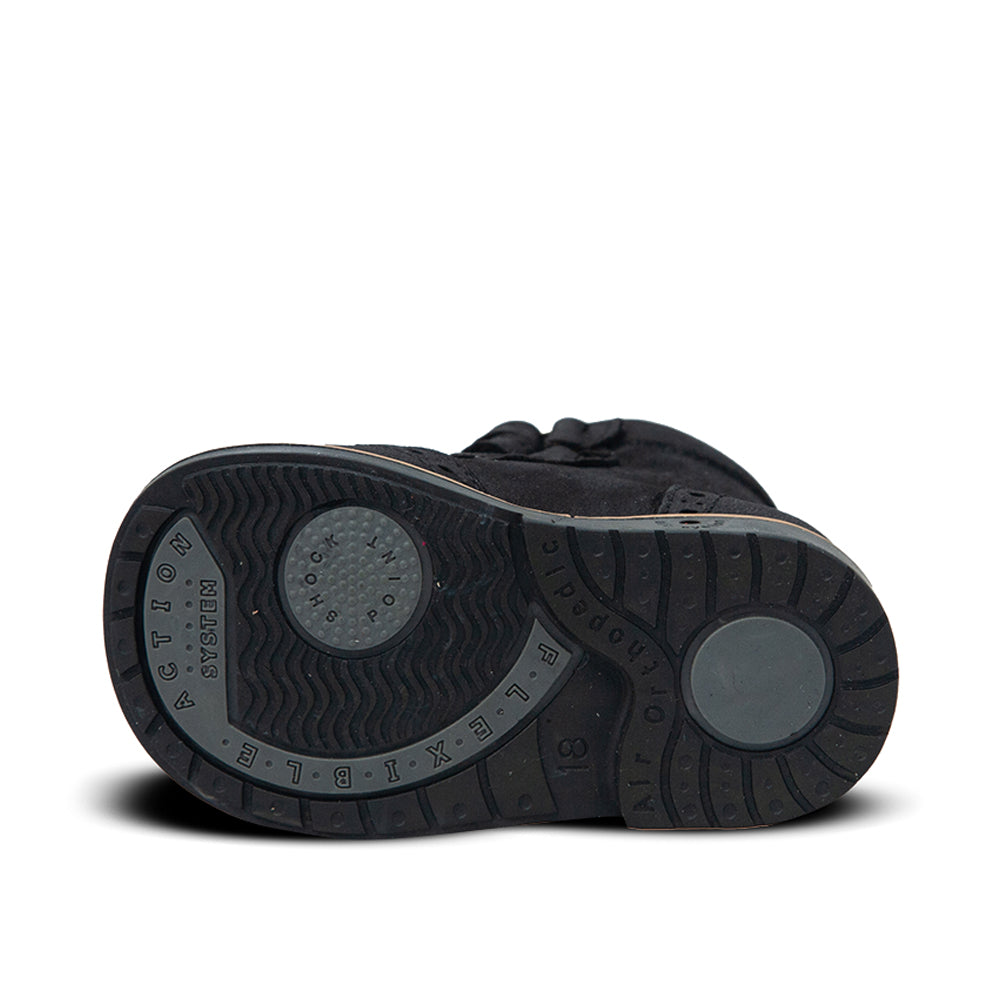
Dacota Trinket Boots
Maximum support for rainy day adventures.
Type
Boots
Material
Leather
Sizes
18–30 (EU) | 2–11.5 (UK)
Benefits for kids with flat feet
- Extra-high design provides maximum ankle joint control
- The very firm heel cup prevents inward rolling with greater rigidity
- Thomas' heel redistributes weight through the medial column
- High arch support is reinforced throughout the gait cycle
- Triple Velcro straps enable incremental tension adjustments
Why they're a top choice
The Dacota Trinket represents one of the most aggressive flat-foot interventions available. The extra-high design extends ankle support beyond standard models, providing maximum control over multiple ankle joints simultaneously.
That very firm heel cup prevents heel drift with greater rigidity than softer alternatives, physically restricting the inward rolling that defines overpronation. Perfect for rainy seasons and puddle-prone environments where wet surfaces increase slip risk and demand even greater ankle stability.
6
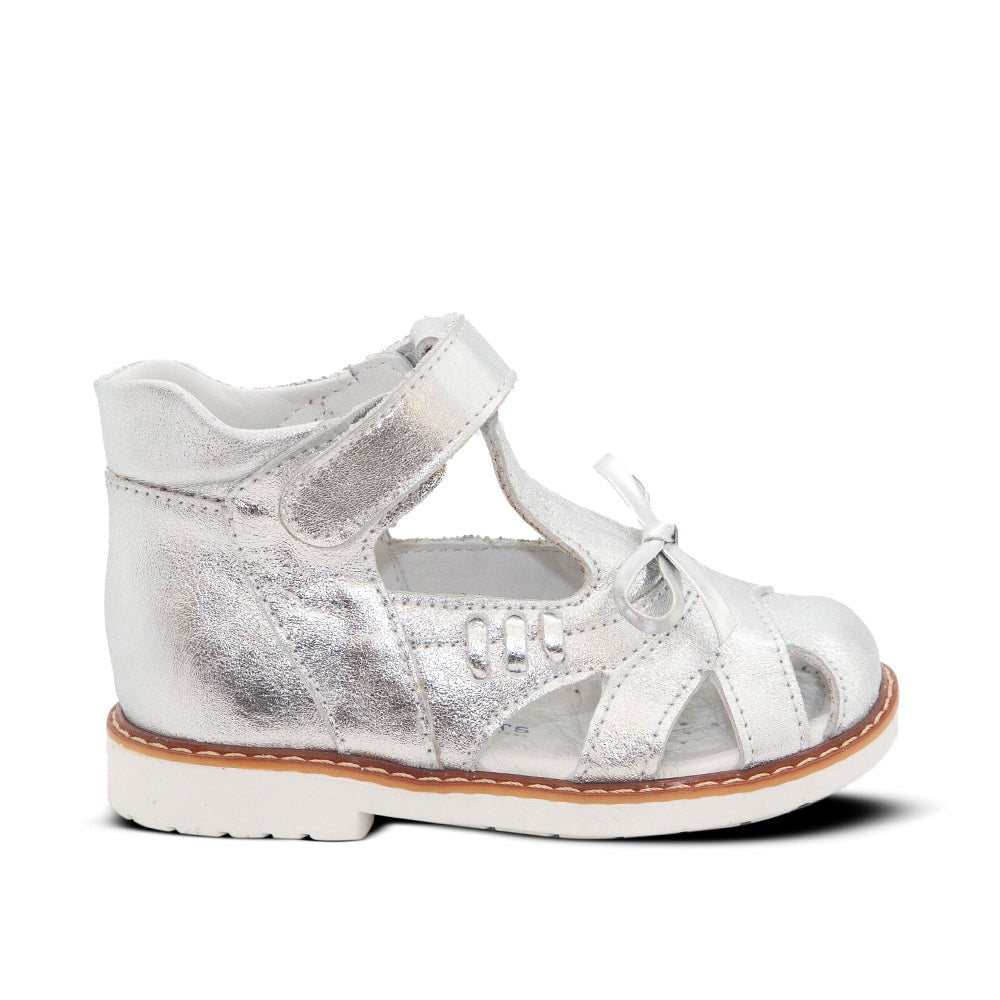
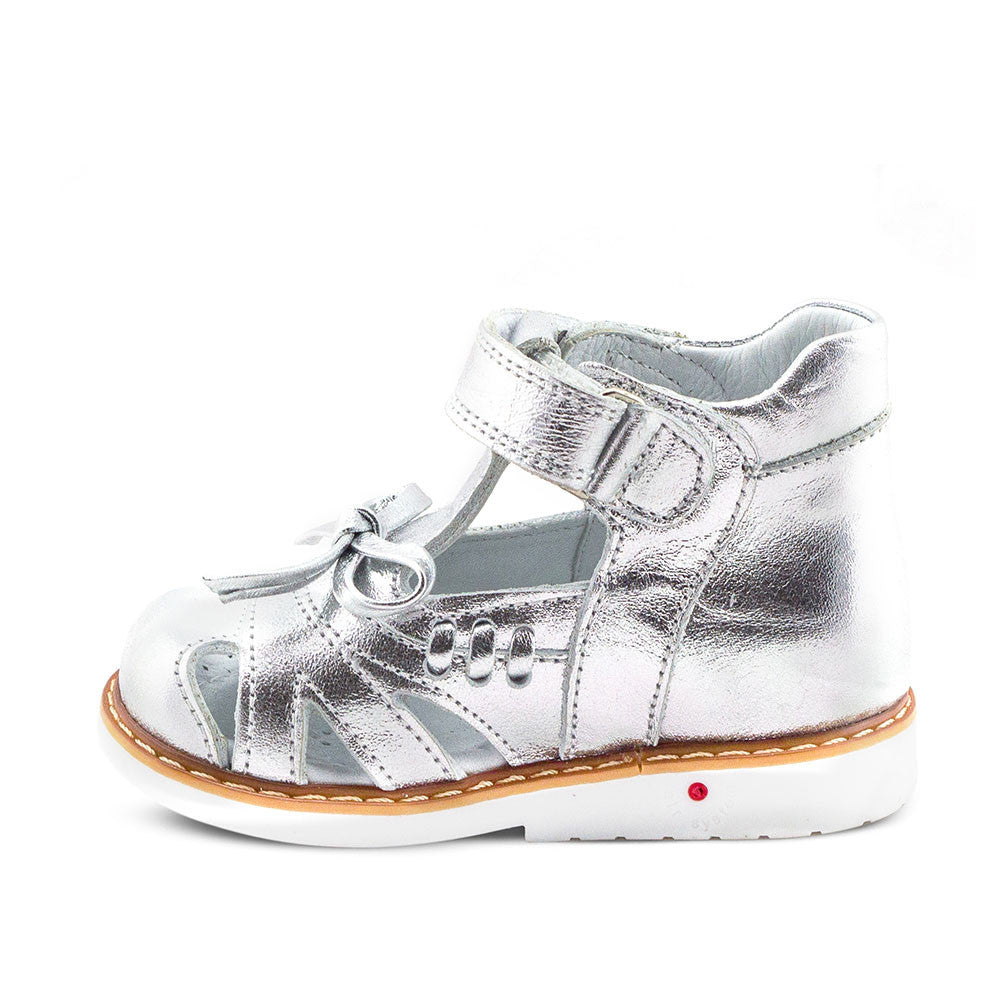
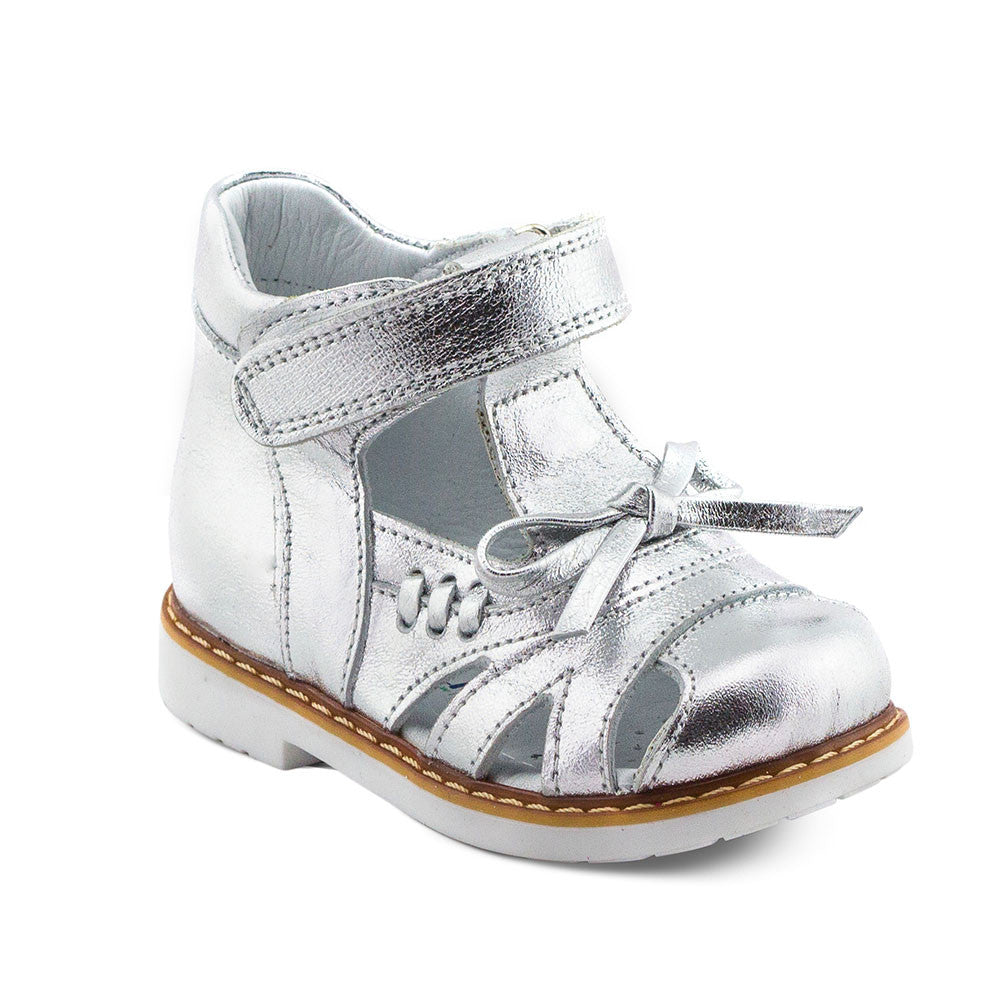
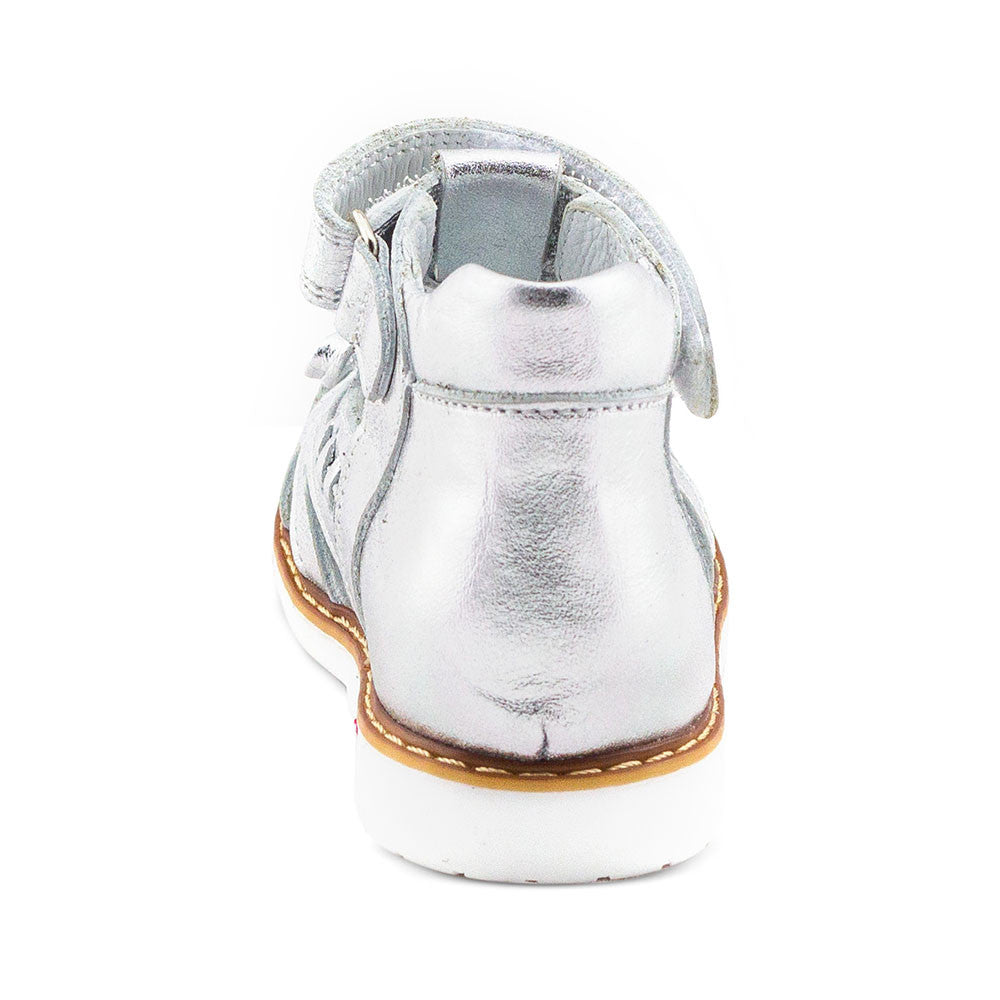
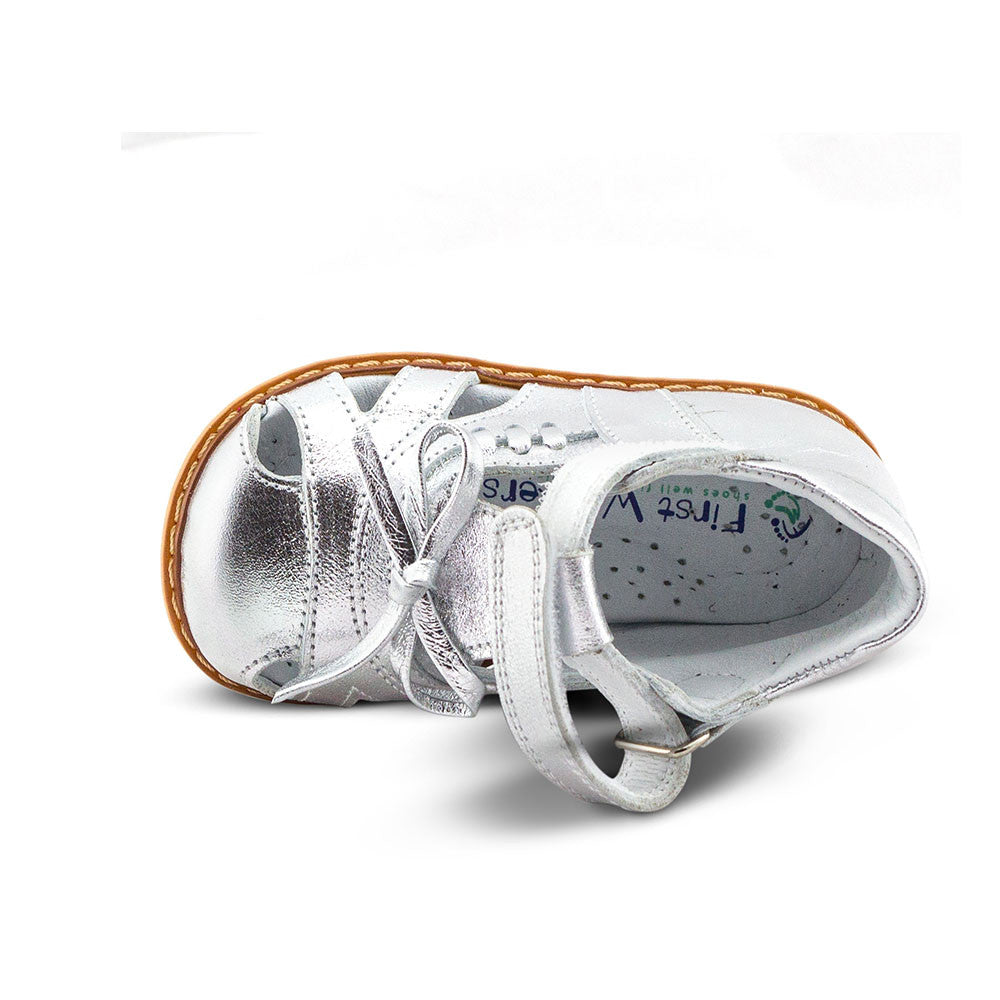
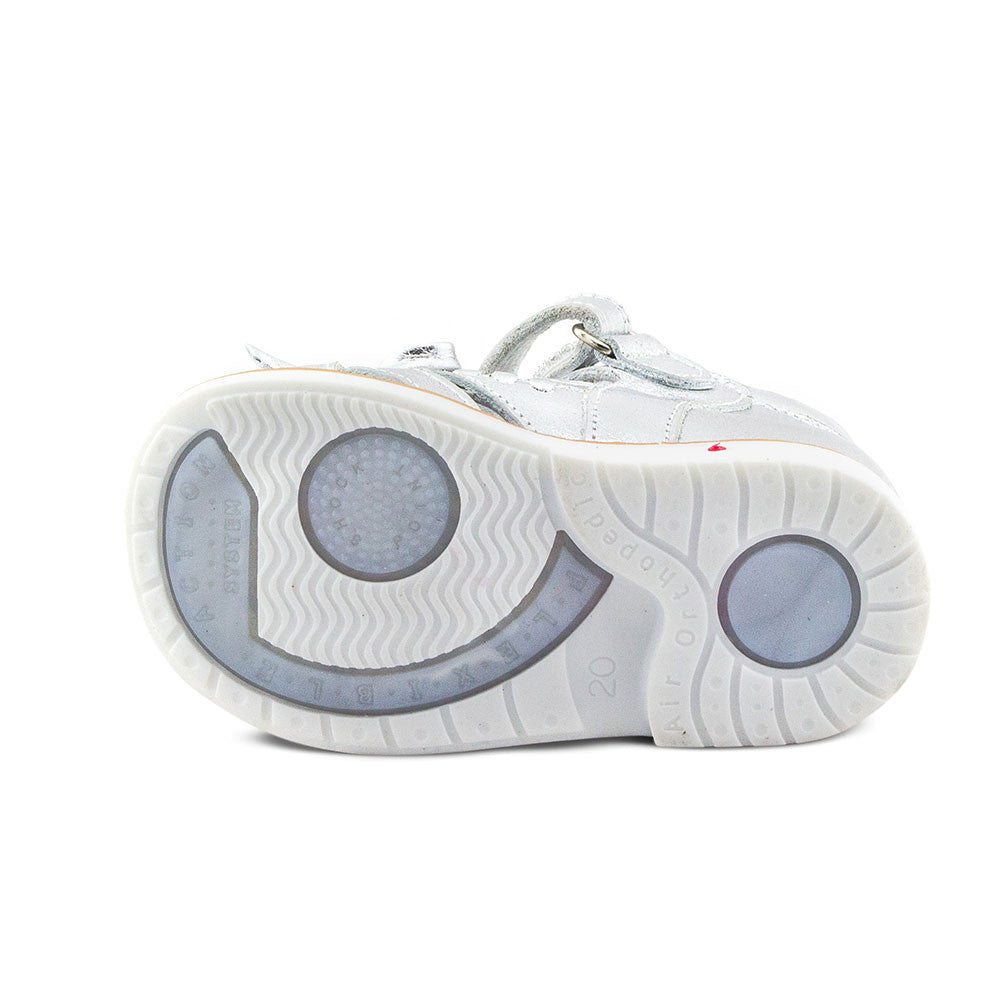
Silvery Ellie Sandals
Summer support without thermal overload.
Type
Sandals
Material
Leather
Sizes
18–30 (EU) | 2–11.5 (UK)
Benefits for kids with flat feet
- Thomas heel provides arch support at structural origin
- High arch maintains integrity despite open sandal construction
- Cushioned outsoles protect joints on hard summer surfaces
- Wide toe box permits natural forefoot spread for balance
- Single Velcro strap for quick on-off
Why they're a top choice
The Silvery Ellie proves open sandals don't have to sacrifice flat foot support. The Thomas heel—rarely found in kids' sandals—extends medial heel coverage to prevent arch collapse where it starts, while high arch support maintains integrity despite the open design.
Perfect for hot summer conditions where enclosed footwear creates unbearable heat that causes kids to resist wearing supportive shoes. The open construction permits maximum airflow while air valves supplement by expelling residual moisture. Beach vacations, summer daycare, and backyard play all benefit from breathability that determines whether your child actually keeps their shoes on.
7
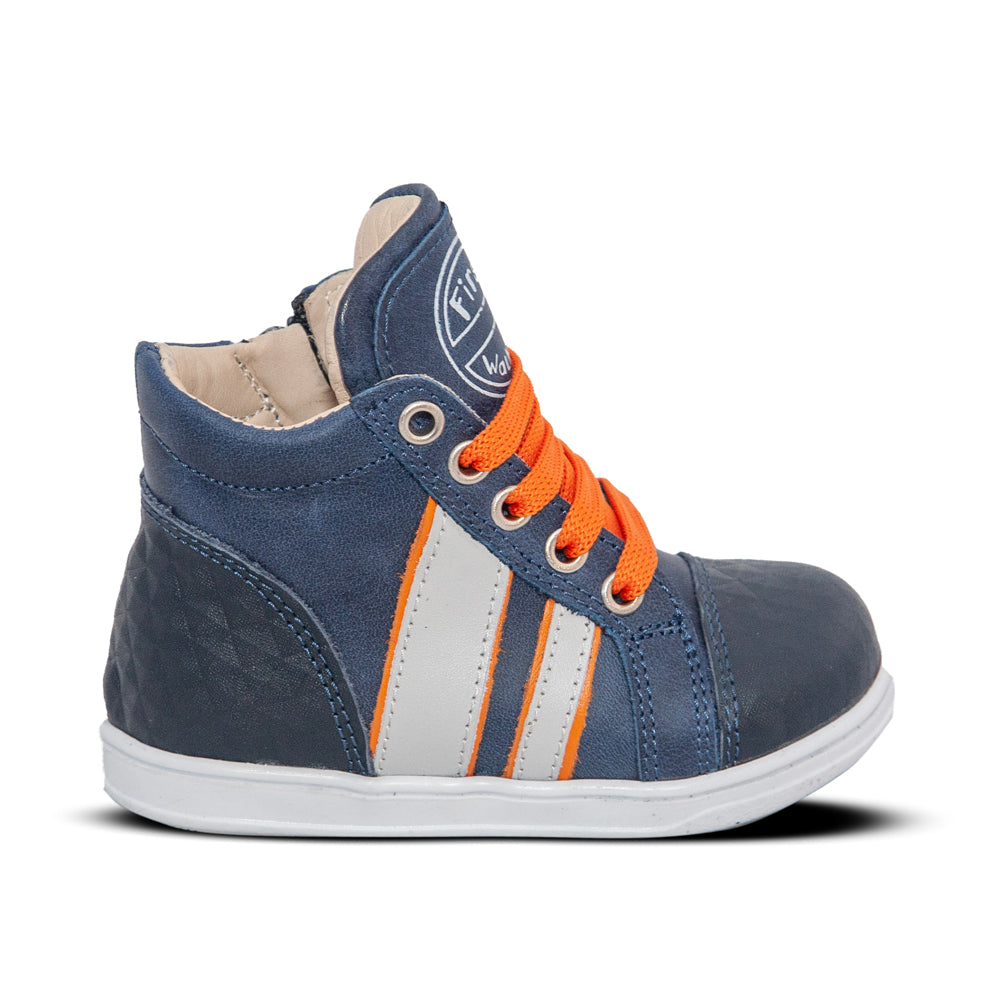
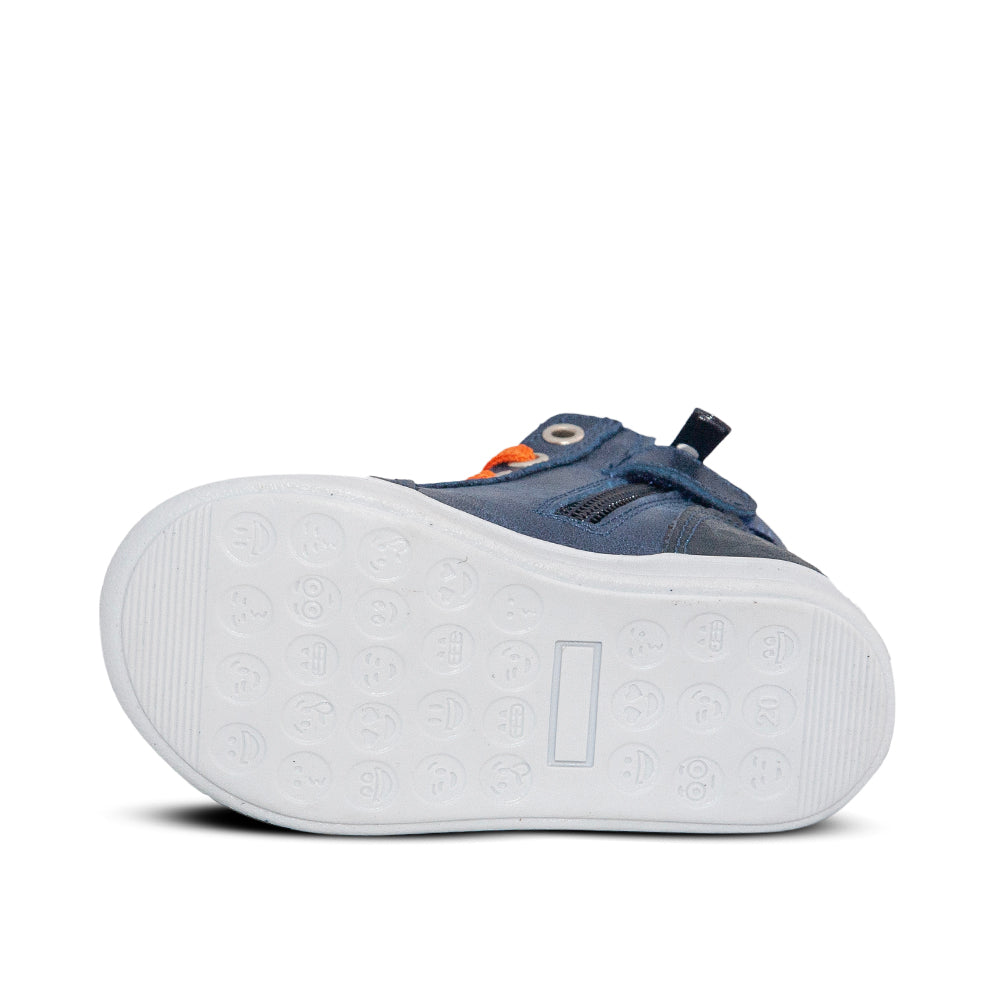
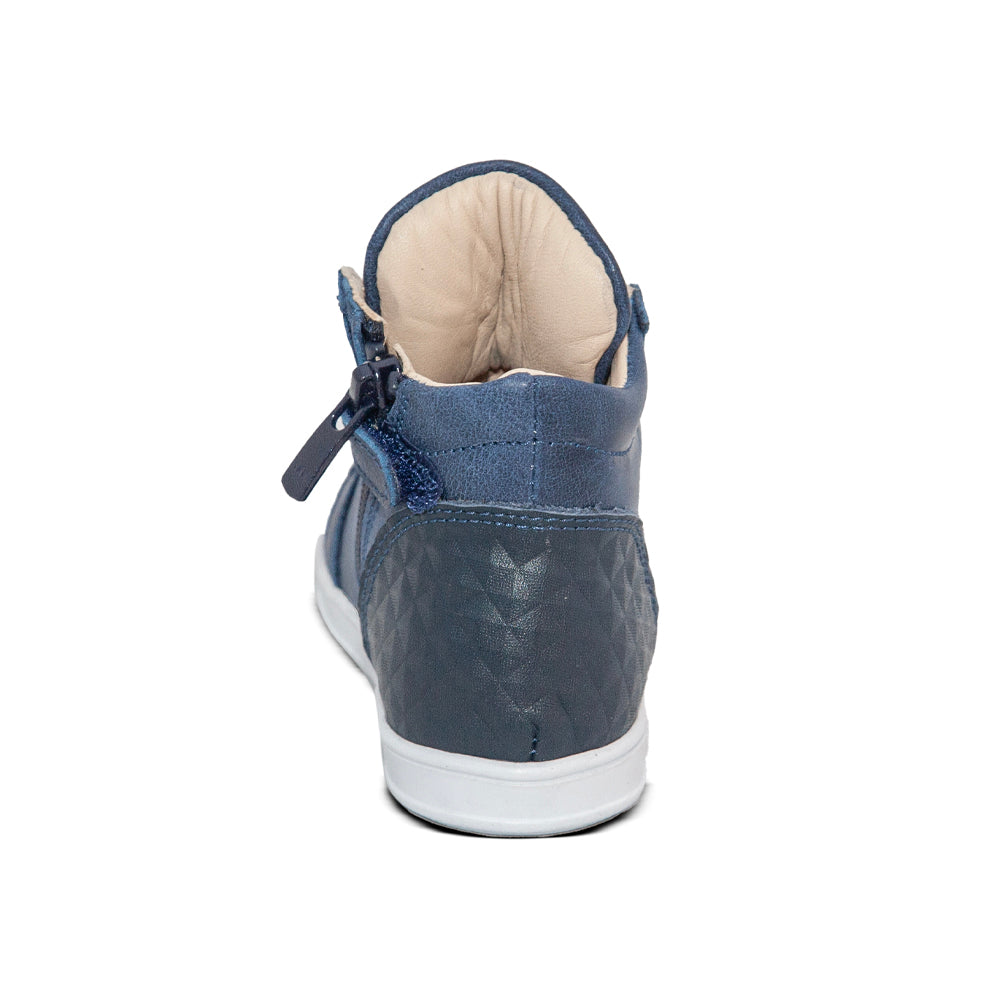
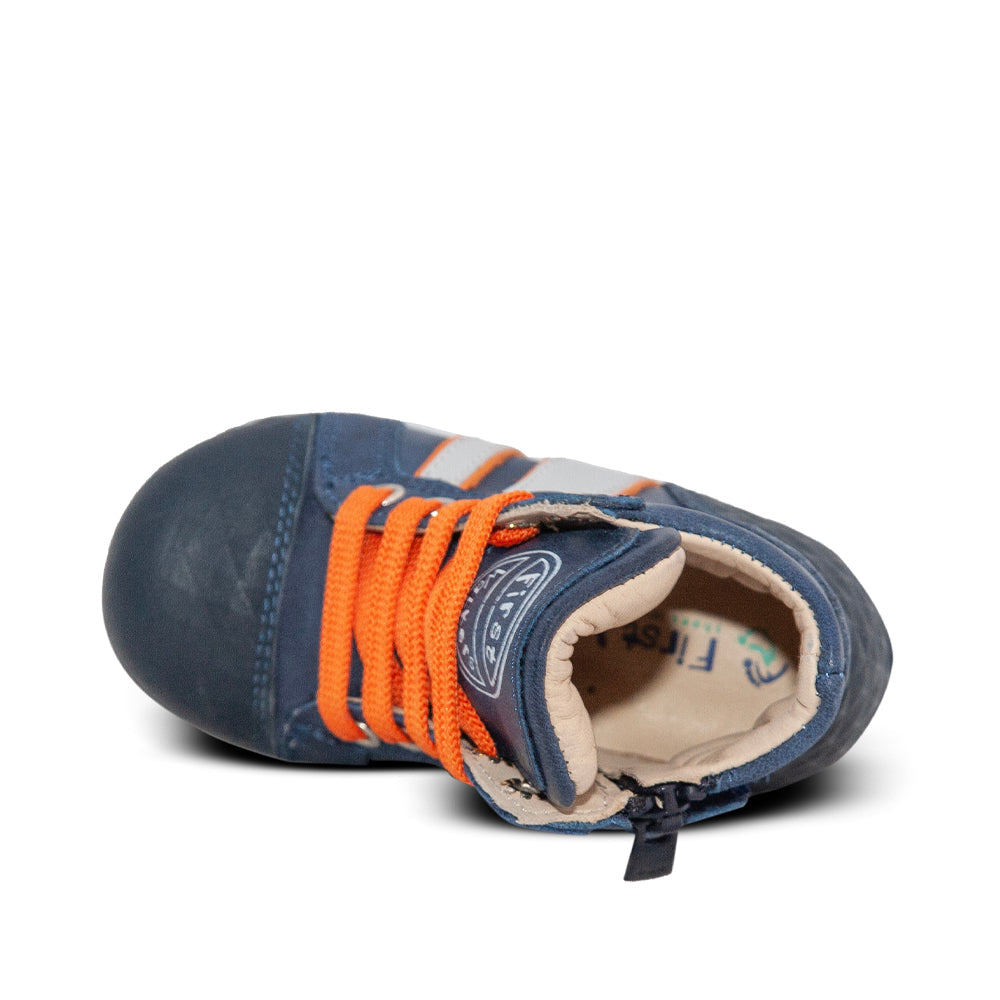
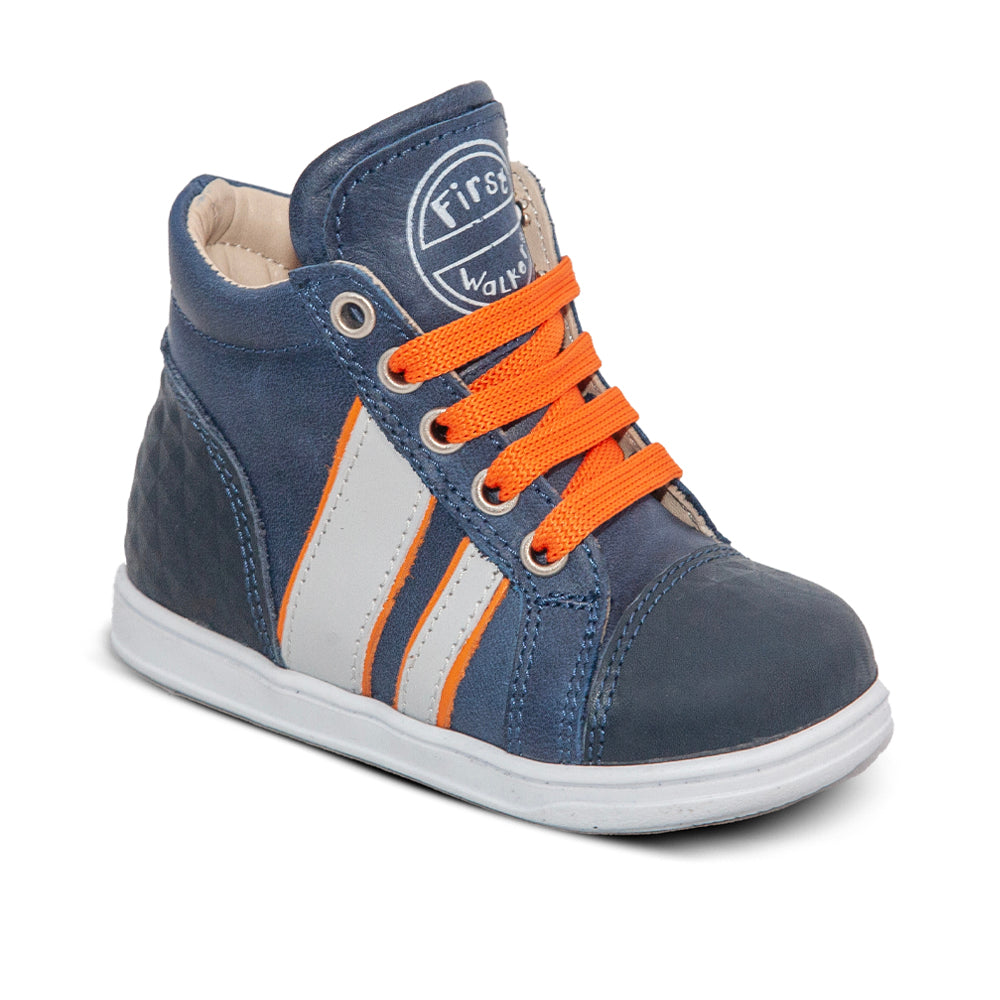
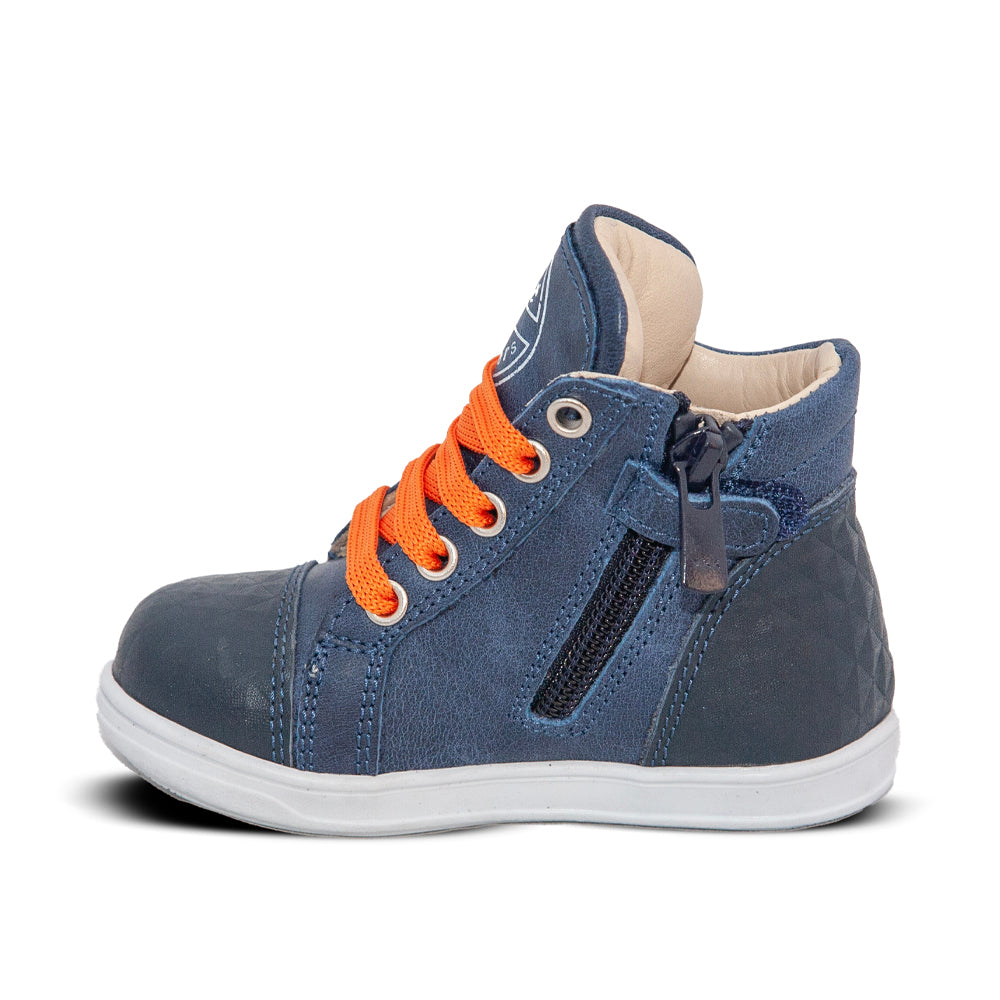
Groovy Stephen Sneakers
Athletic style with hidden orthopedic support.
Type
Sneakers
Material
Leather
Sizes
18–30 (EU) | 2–11.5 (UK)
Benefits for kids with flat feet
- High-top genuine leather provides extended ankle support
- High arch addresses midfoot deficiency without looking medical
- Cushioned outsoles dissipate impact during active play
- Lace-plus-zipper for custom fit and quick access
- Sporty navy and orange colors appeal to kids
Why they're a top choice
The Groovy Stephen delivers orthopedic fundamentals within athletic sneaker styling that boys actually want to wear. The high-top construction provides extended ankle support during running, jumping, and direction changes, while high arch support addresses collapsed arches without visible clinical indicators.
This eliminates the social friction that overtly medical-looking footwear creates. Boys want shoes that match their peers' sneakers, and the Groovy Stephen delivers that aesthetic while secretly providing the structural support their flat feet require. It encourages consistent wear rather than complaints about looking different.
8
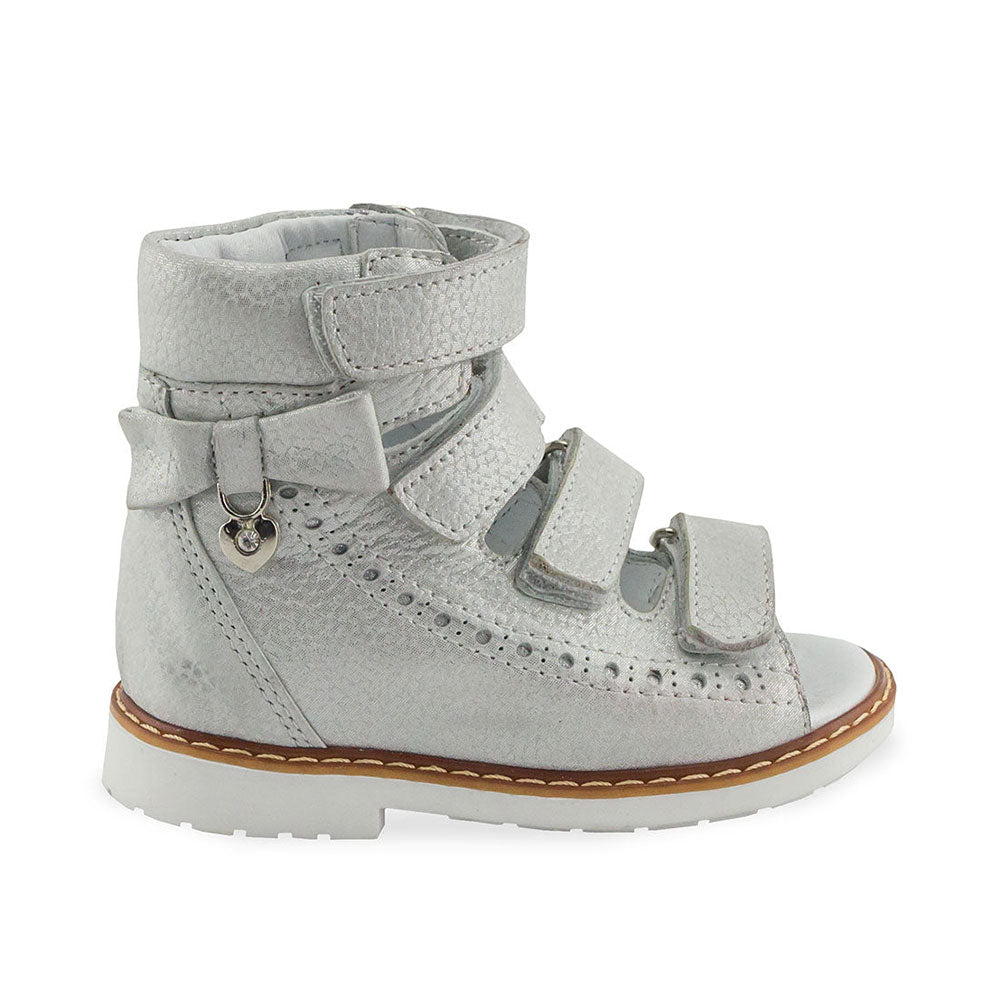
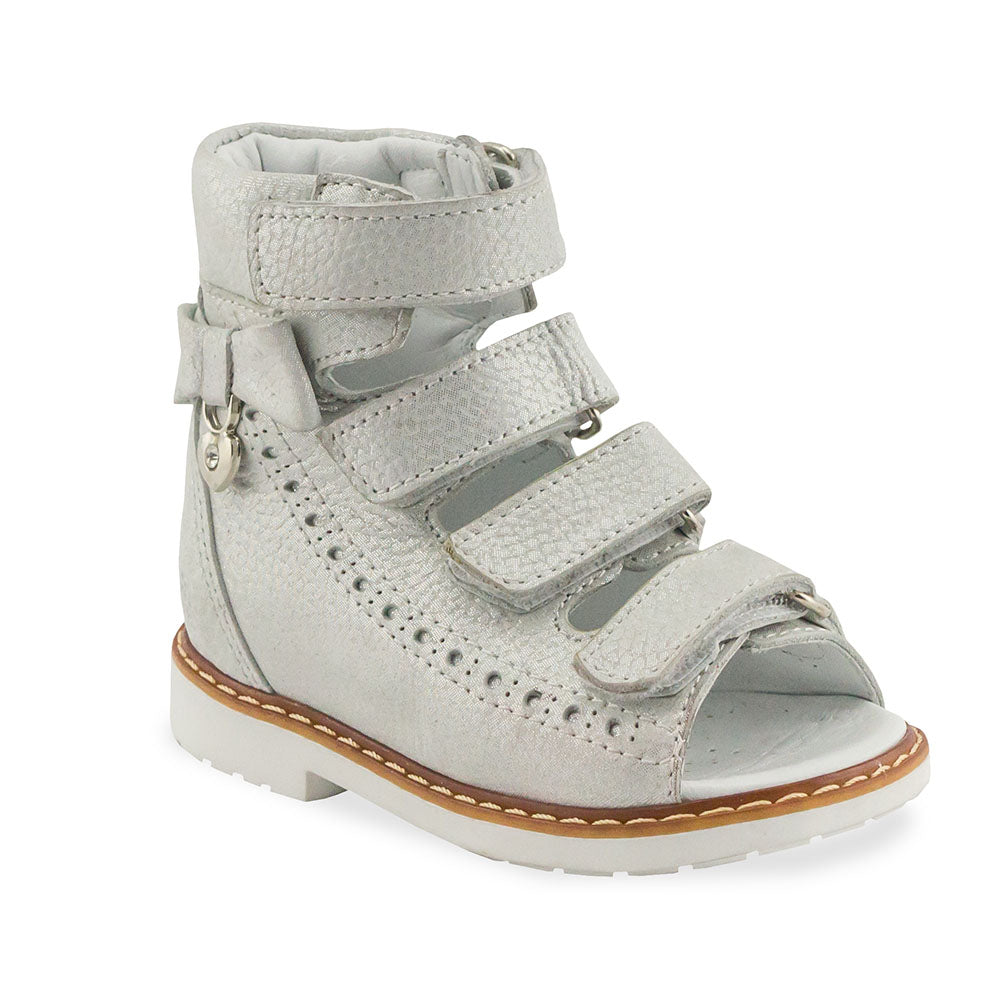
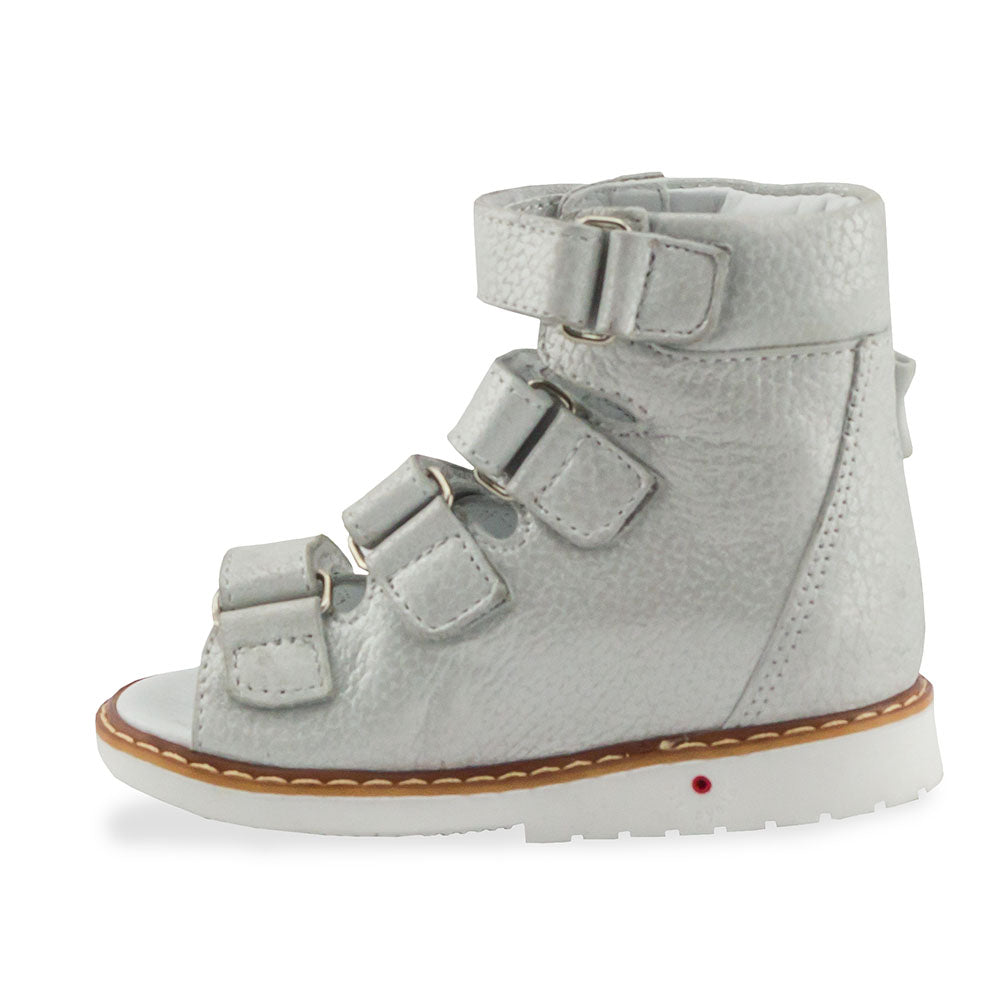
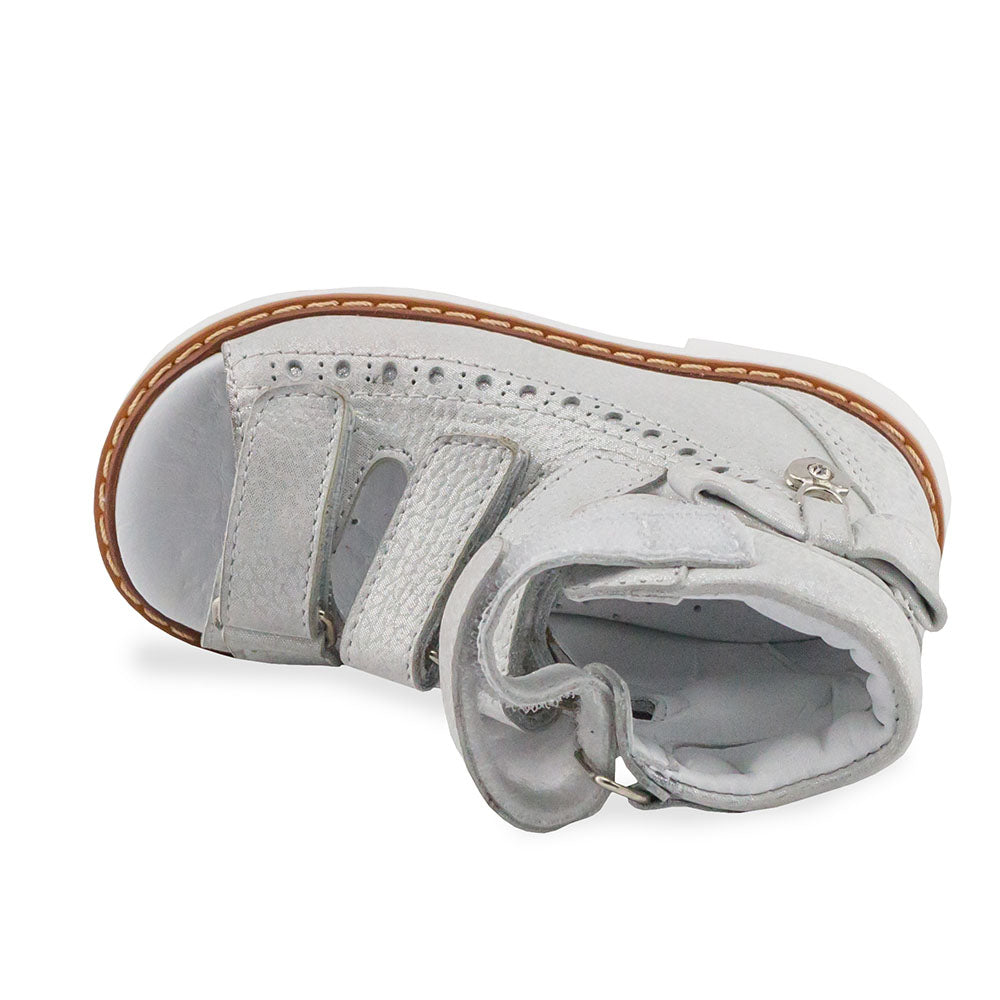
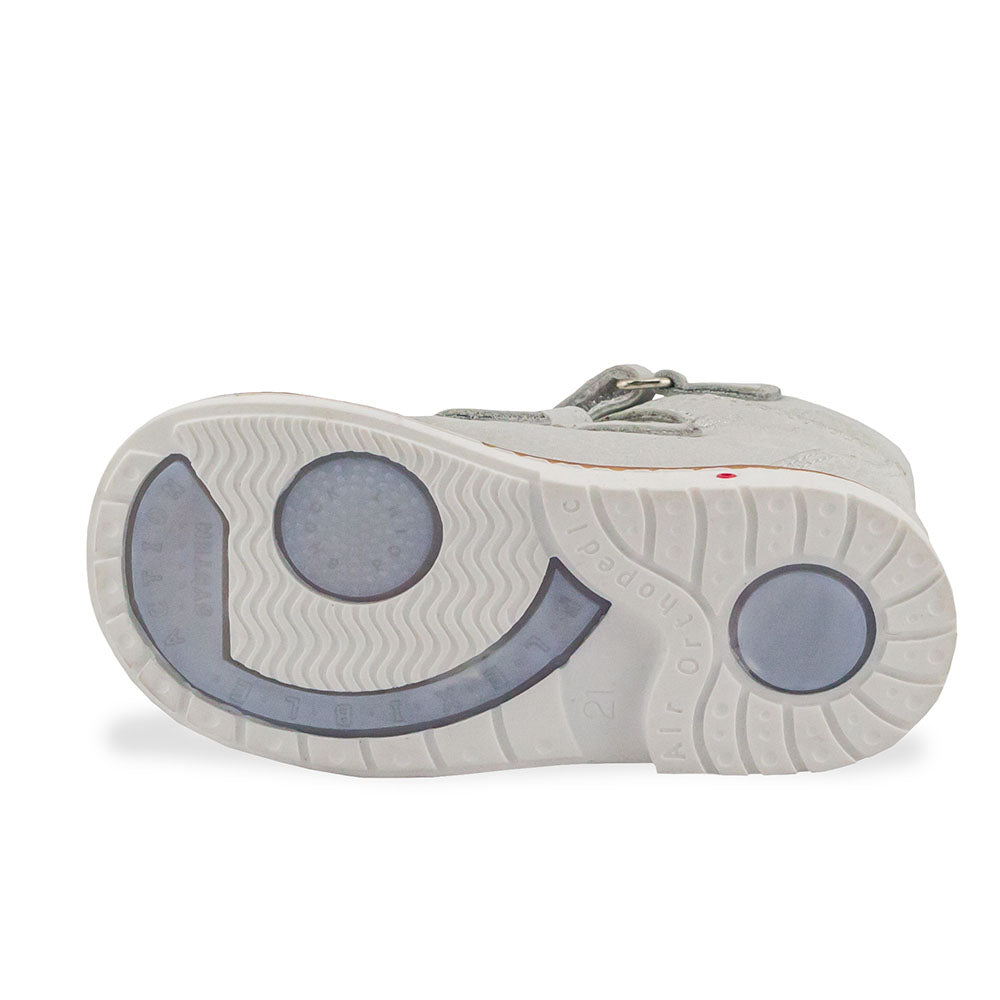
Cluey Lucy Sandals
Dressy style meets measurable gait improvement.
Type
Sandals
Material
Leather
Sizes
18–30 (EU) | 2–11.5 (UK)
Benefits for kids with flat feet
- Four Velcro straps secure the forefoot, midfoot, and ankle zones
- Thomas' heel supportsthe medial arch at its origin
- High arch reinforces the entire medial longitudinal arch
- Extended ankle support controls the hindfoot despite an open design
- Smoky silver finish complements dresses and formal wear
Why they're a top choice
The Cluey Lucy merges high-top sandal construction with comprehensive orthopedic features typically reserved for enclosed footwear. Four adjustable straps enable precise tension control that accommodates varying foot widths while maintaining support.
Perfect for fashion-conscious occasions where girls want stylish footwear—birthday parties, family gatherings, restaurant outings. Unlike clinical-looking orthopedic options that clash with party attire, this sandal functions as genuine fashion footwear while delivering structural correction. Parents report measurable walking improvements in reviews.
9
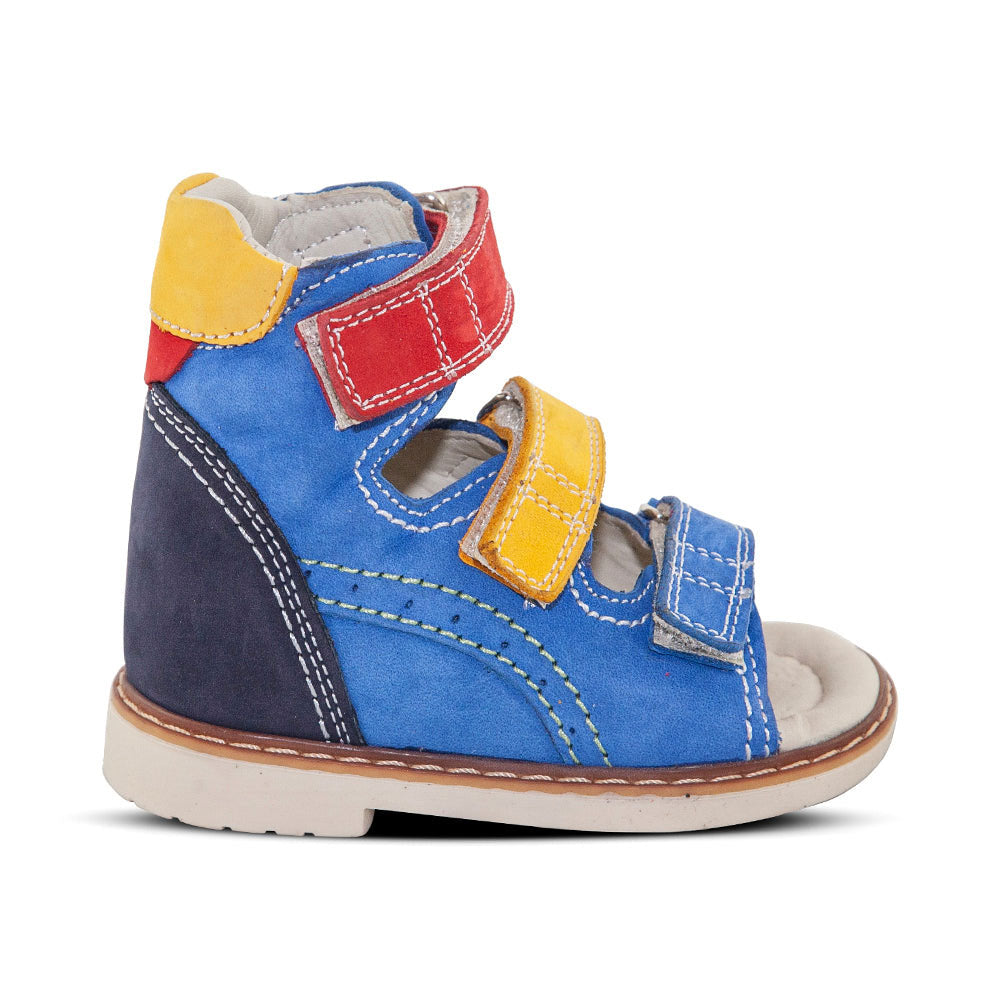
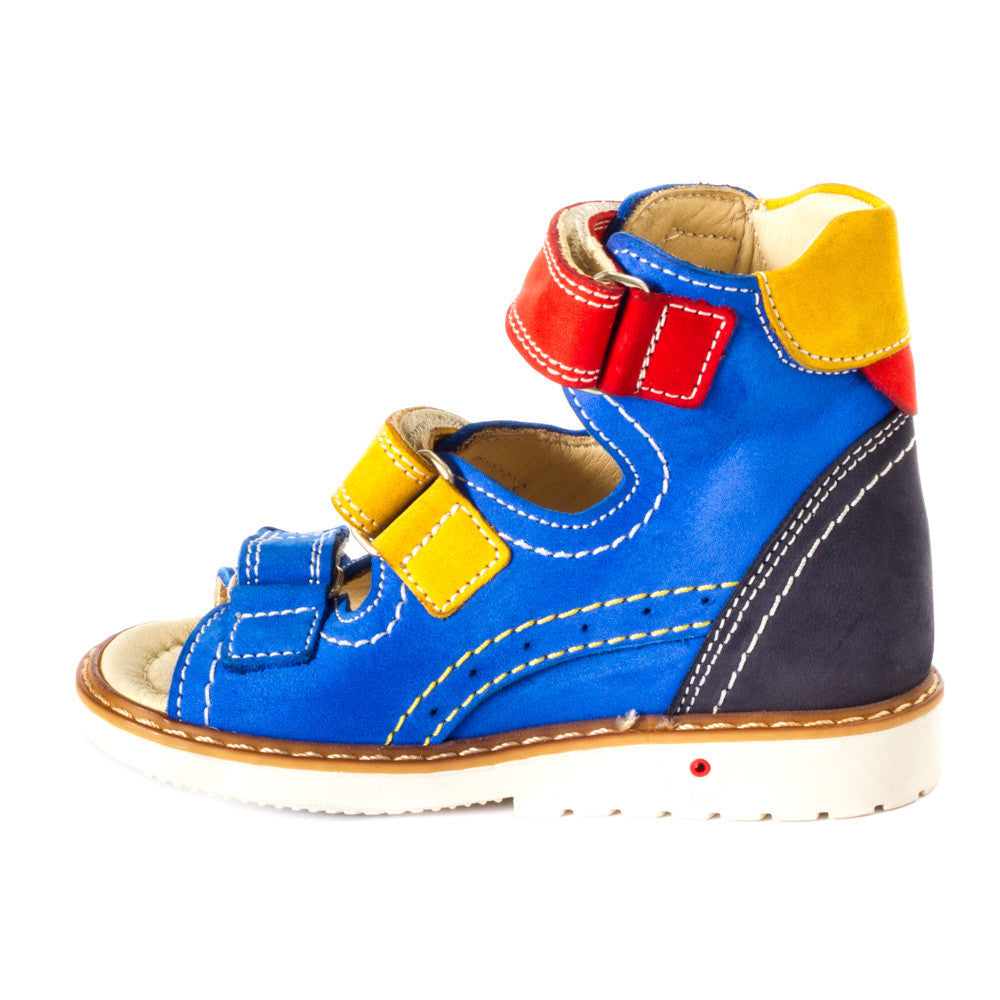
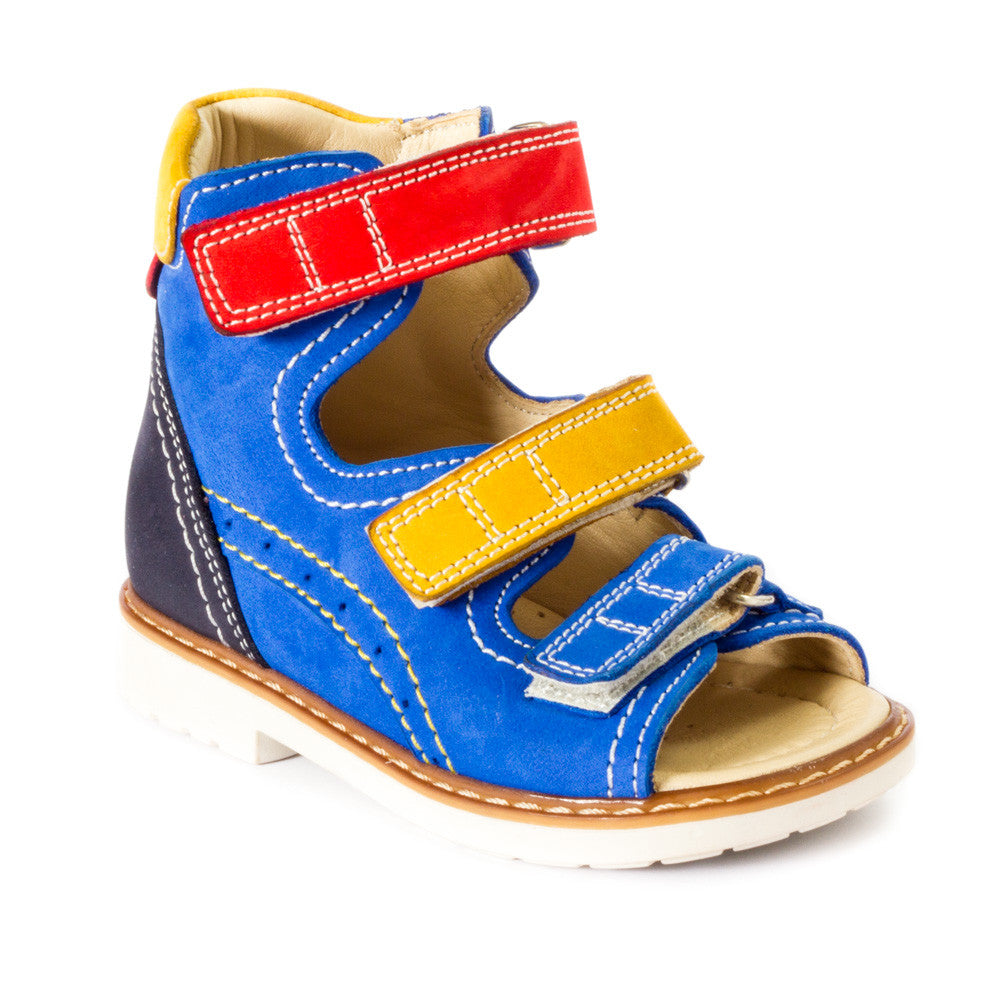
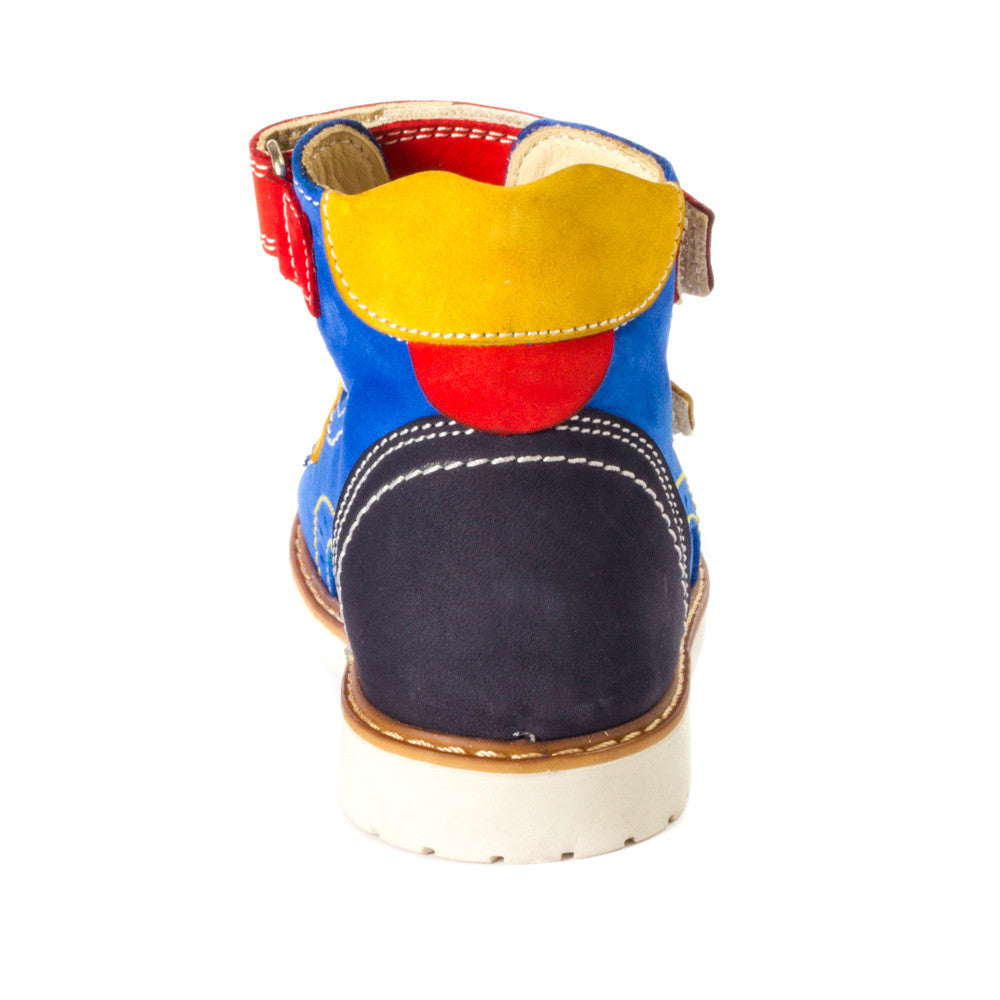
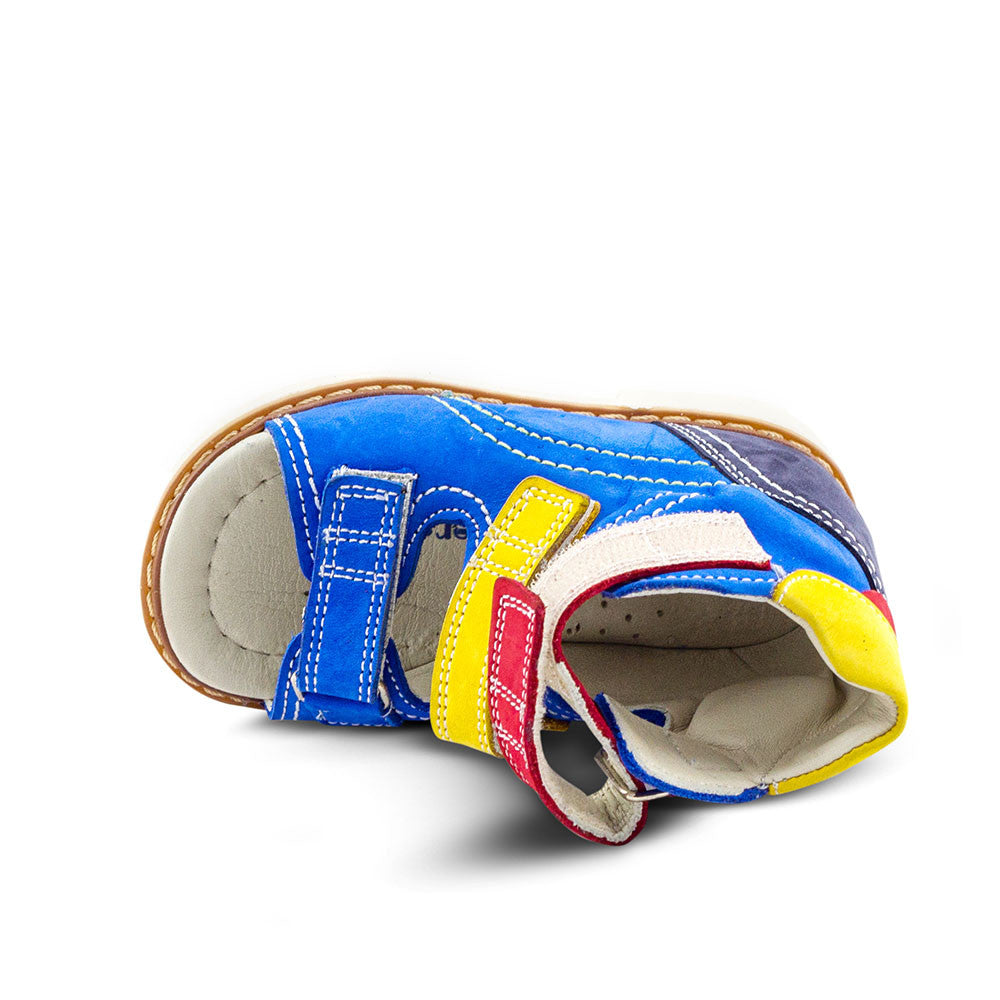
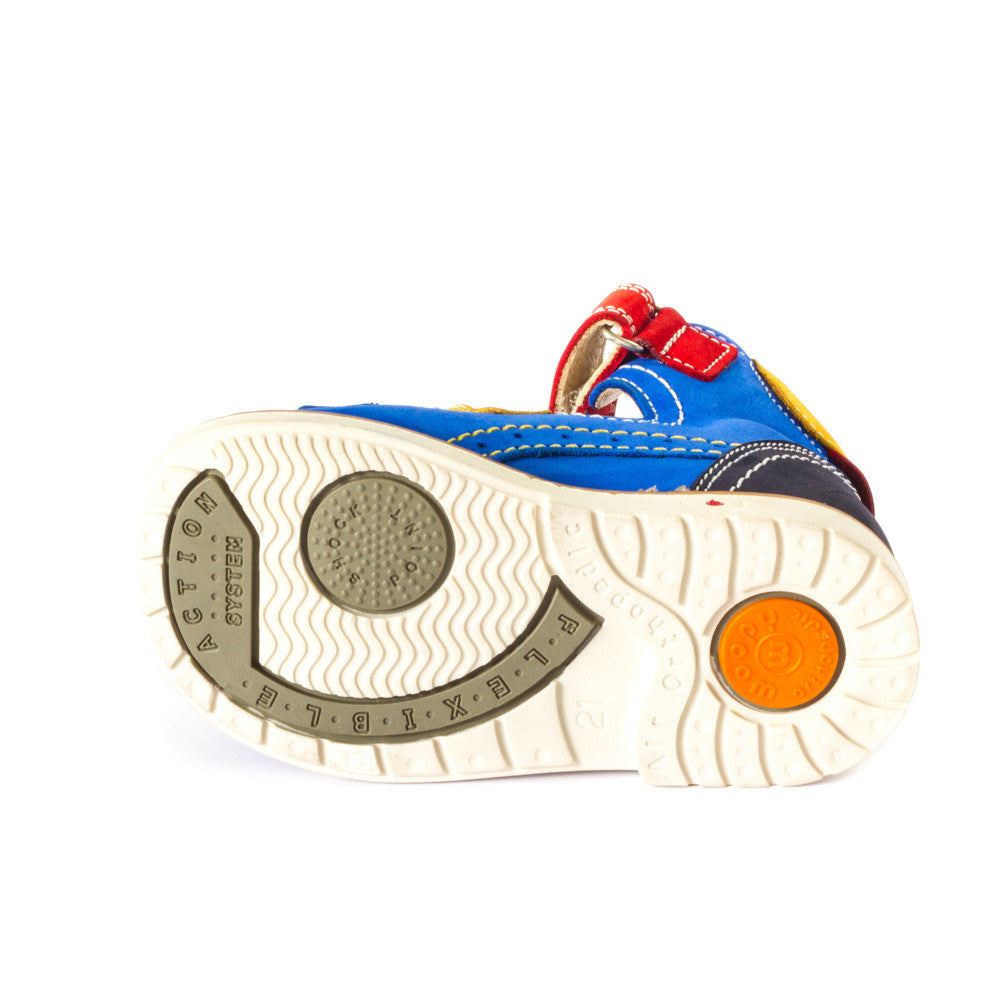
Jumpin' Zach Sandals
Wide-foot accommodation with serious support.
Type
Sandals
Material
Nubuck Leather
Sizes
18–30 (EU) | 2–11.5 (UK)
Benefits for kids with flat feet
- Anatomic design with three independent straps for wide feet
- Triple-strap system distributes tension without creating pressure
- Thomas heel provides medial support where wide feet collapse
- High arch counters increased the medial loading of wider feet
- Extended ankle support controls exaggerated rolling
Why they're a top choice
The Jumpin' Zach addresses the specific challenge of wide, flat feet. Wide feet struggle with standard orthopedic footwear that creates pressure points or gaps—this sandal's triple-strap system distributes tension across zones to accommodate broader profiles without compromising security.
The Thomas heel provides medial support where wide, flat feet commonly collapse, while high arch support counters the increased loading wider feet experience. Perfect for active warm-weather play where enclosed shoes create uncomfortable pressure and heat on already-wide feet.
10
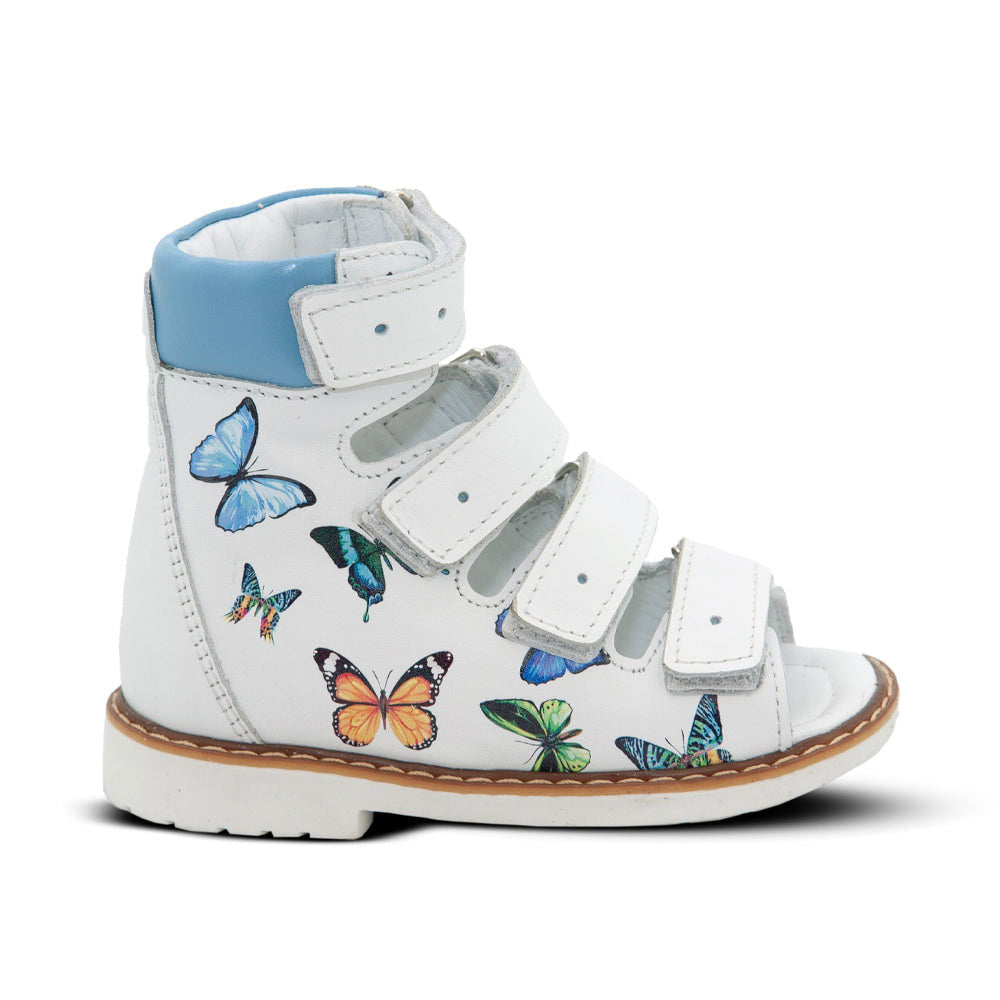
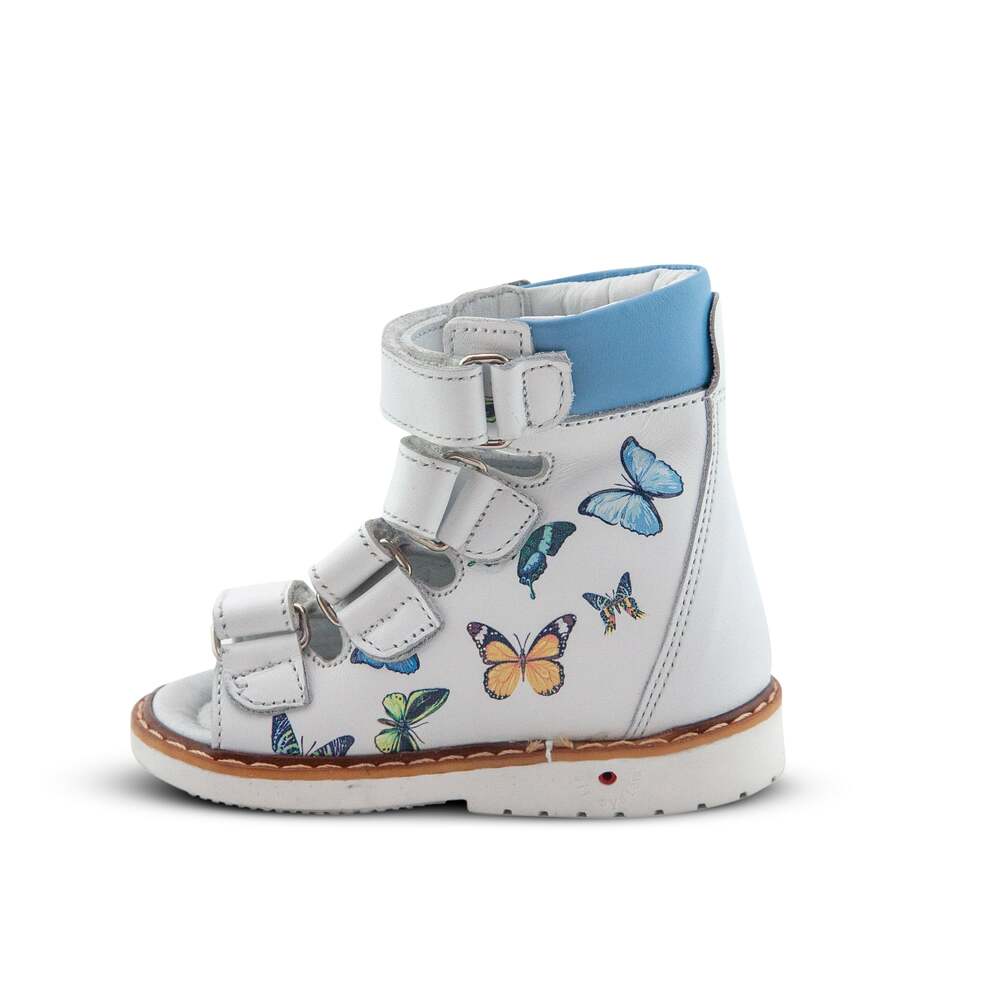
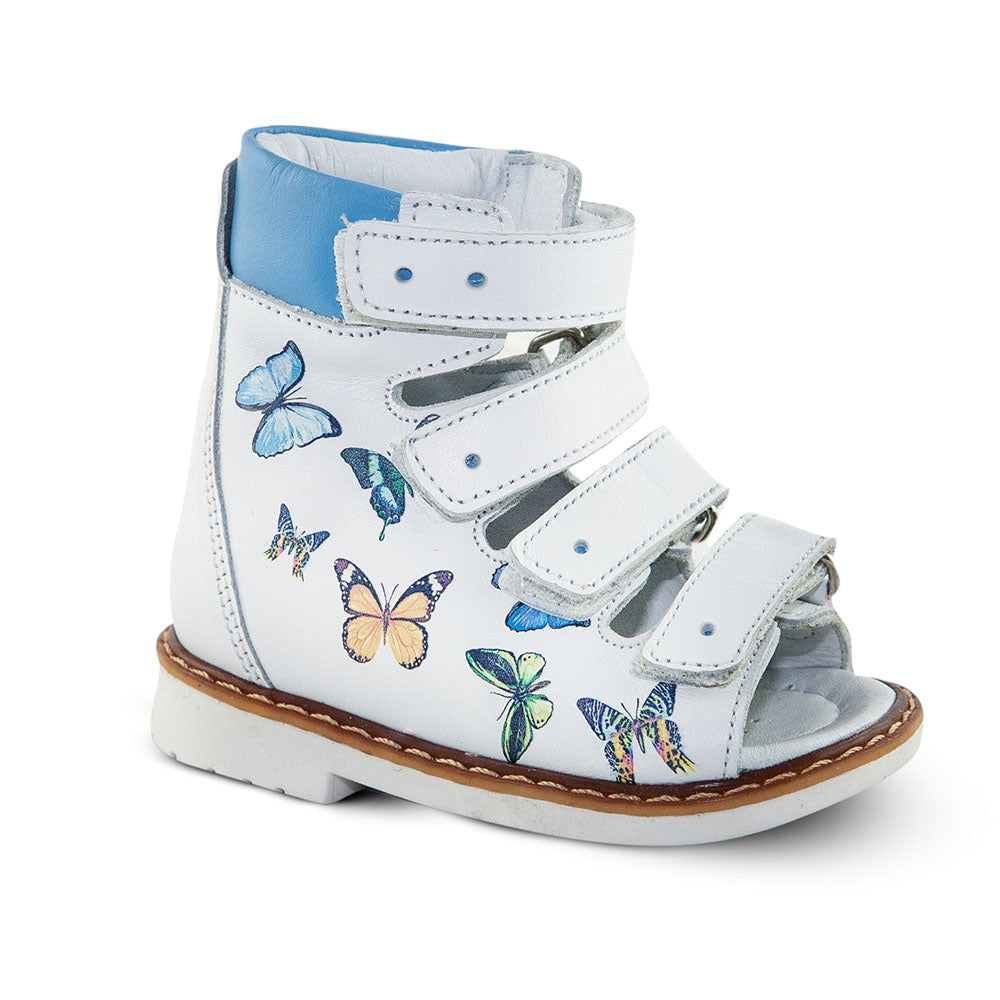
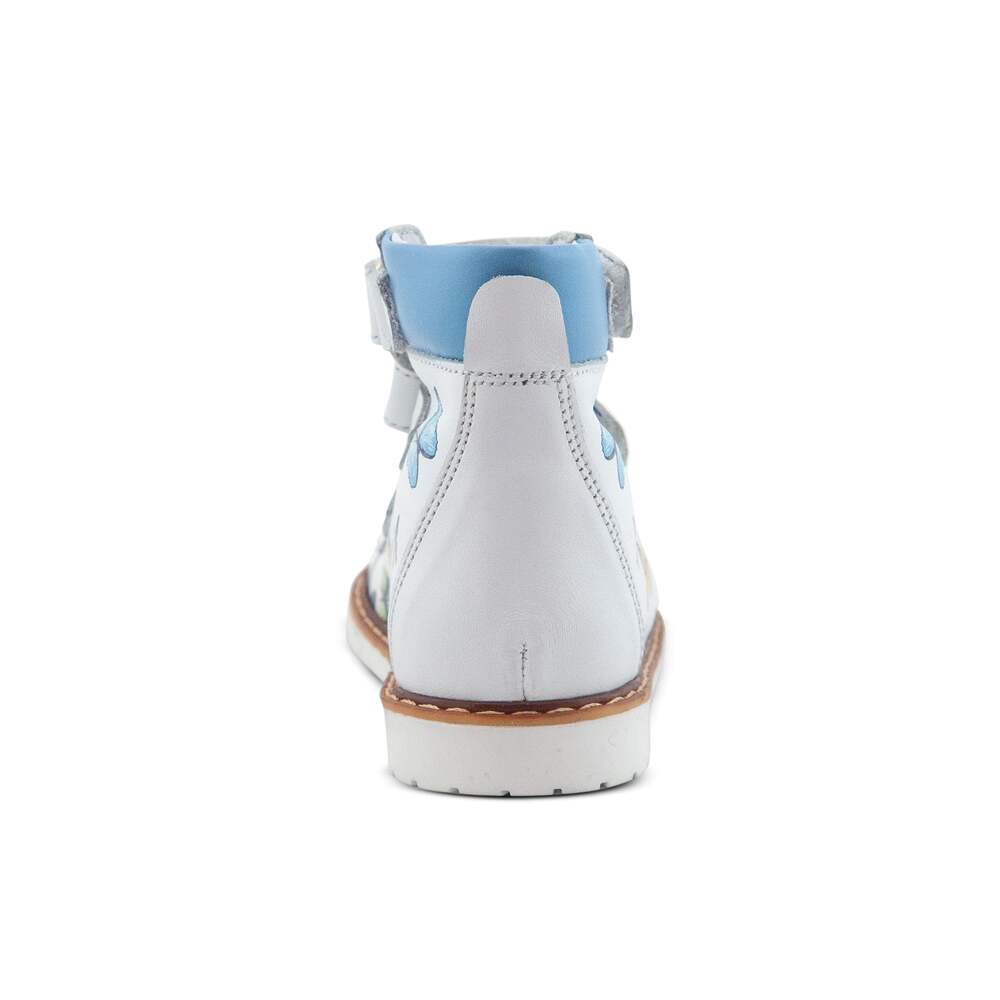
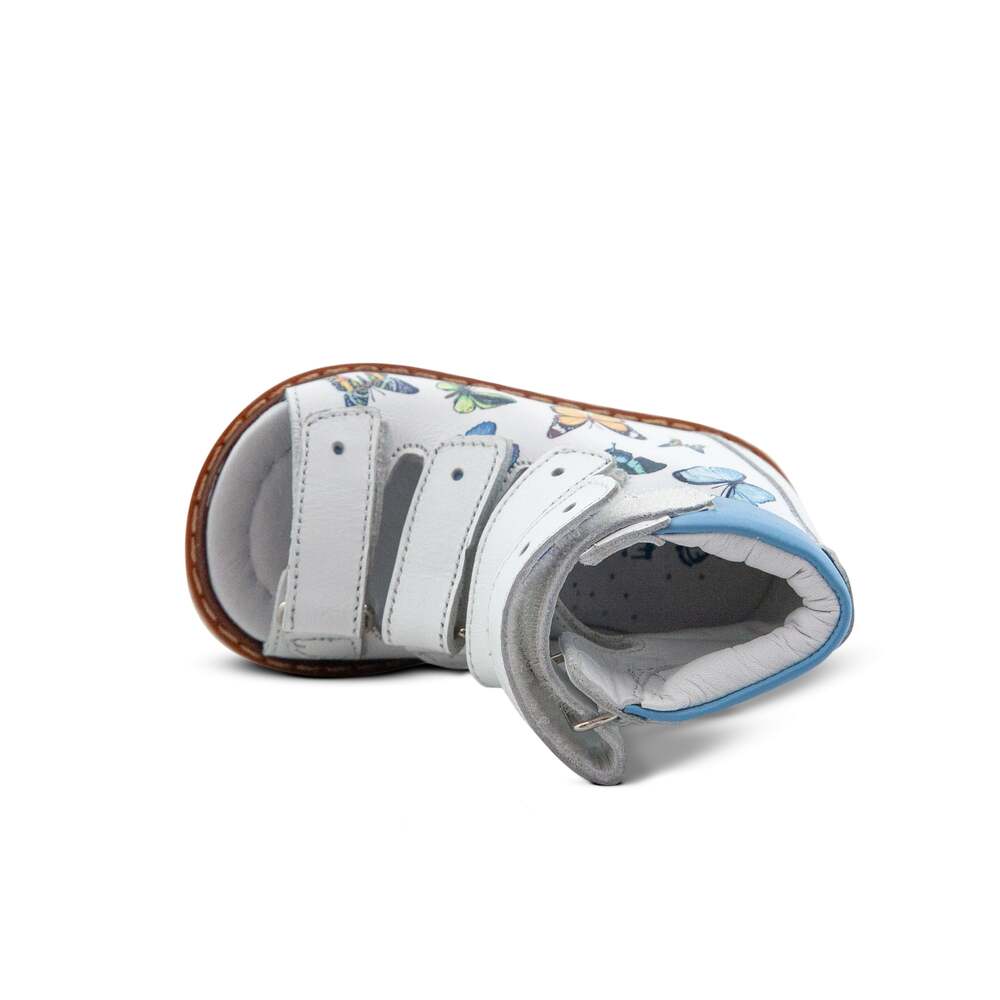
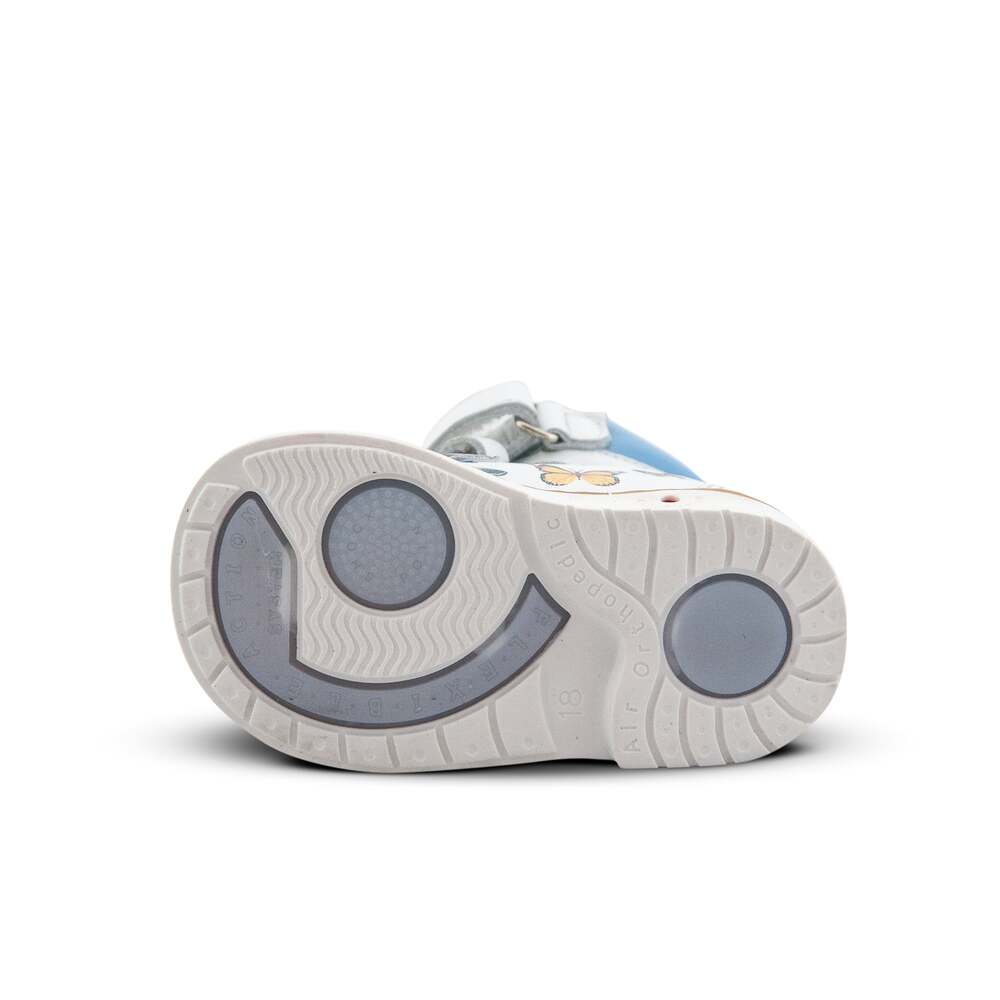
Bindi Blues Sandals
Precision fit eliminates gaps for narrow profiles.
Type
Sandals
Material
Leather
Sizes
18–30 (EU) | 2–11.5 (UK)
Benefits for kids with flat feet
- Four-strap Velcro enables precise cinching at each zone
- Eliminates slack that undermines correction in narrow feet
- Thomas' heel concentrates support for the reduced surface area
- High arch maintains integrity without gaps
- Extended ankle support prevents compensatory motion
Why they're a top choice
The Bindi Blues solves the fitting challenge of narrow, flat feet. Standard orthopedic footwear often leaves gaps that compromise structural support, but this four-strap system enables precise cinching at the forefoot, midfoot, upper ankle, and lower ankle.
The Thomas heel provides medial support that narrow flat feet particularly require, as their reduced surface area concentrates loading forces rather than distributing them. Perfect for everyday activities where narrow flat feet need consistent structural containment without the slippage that undermines correction in poorly-fitted shoes.
Choosing the Right Shoes for Your Child's Flat Feet
Shoes for kids with flat feet need specific features to actually help: firm heel counters that stop ankle rolling, structured arch support that addresses the collapsed midfoot, and stable midsoles that resist twisting. These elements work together to reduce pain, improve stability, and support comfortable movement.
The Johnny Rigel provides reliable everyday arch support that handles daycare through playground without constant shoe changes, while the Billy Smooth delivers school-appropriate styling with orthopedic-grade support for all-day wear. Both offer the structural elements that flat feet genuinely need to move comfortably.
Support Your Child's Feet
Explore our collection of orthopedic footwear designed specifically for kids with flat feet.
References
1. Kardm, S. M., Alanazi, Z. A., Aldugman, T. a. S., Reddy, R. S., & Gautam, A. P. (2025). Prevalence and functional impact of flexible flatfoot in school-aged children: a cross-sectional clinical and postural assessment. Journal of Orthopaedic Surgery and Research, 20(1), 783. https://doi.org/10.1186/s13018-025-06207-y
2. Yasin, M. S., Al-Labadi, G. M., Alshrouf, M. A., AlRaie, B. A., Ibrahim, R. A., & AlRaie, L. A. (2023). Pediatric and Adolescent Flatfoot: a questionnaire based Middle East and North Africa study. International Journal of General Medicine, Volume 16, 2055–2061. https://doi.org/10.2147/ijgm.s400720
FAQs
At what age should I worry about my child's flat feet?
Most kids' arches develop naturally between ages 2-10. If flat feet persist beyond age 10, cause pain, create fatigue during activity, or show visible ankle collapse that worsens over time, consult a pediatric podiatrist for evaluation.
Can shoes alone fix flat feet?
Supportive shoes with proper arch support help manage symptoms and support comfortable movement, but they don't "fix" flat feet. For mild, flexible flat feet without pain, quality supportive footwear often provides adequate correction as natural arch development continues.
When should my child see a specialist about flat feet?
Seek professional evaluation when kids exhibit persistent foot or leg pain, unusual fatigue during walking, visible ankle collapse worsening over time, reluctance to participate in physical activities, or asymmetrical flat feet affecting one side more than the other.
Should kids with flat feet go barefoot sometimes?
Yes. Barefoot time on safe surfaces (grass, sand, indoor carpeting) allows intrinsic foot muscles to activate and strengthen. Use supportive shoes during extended activity, school hours, and on hard surfaces. Reserve barefoot periods for controlled settings where consequences of instability remain low.
How often should I replace my child's flat feet shoes?
Every 4-6 months for active kids, regardless of cosmetic condition. Midsole support structures compress and degrade before visible damage appears. A shoe that looks fine may have lost 40-60% of its corrective capacity, undermining the support your child needs.