10 Best Wide-Gait Toddlers' Shoes for Better Movement Control
A wide gait is normal in early walkers and usually self-corrects by age 3. The right shoes provide stability without forcing changes, helping your toddler build confidence and balance naturally.




Updated December 4, 2025
AI Summary


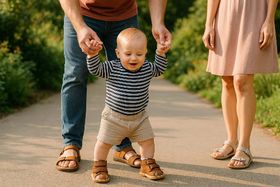
Your toddler finally started walking, but something looks different. Their legs stay far apart with every step, like they're walking on a balance beam. You're wondering if this wide-legged stance is normal or if you should be worried.
The truth is that most toddlers walk with a wide gait when they're learning. It's their body's way of staying balanced while they figure out how to walk.
But the shoes you choose right now matter. The wrong ones can slow down natural gross motor development, while the right ones support your child's journey from wobbly walker to confident runner.
Our Picks for the 10 Best Wide Gait Toddler Shoes
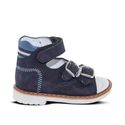
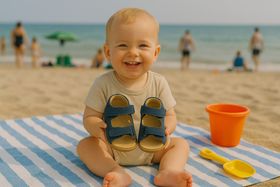
Andy Blue Sandals
Dual-buckle sandal with Thomas heel and shock absorption.
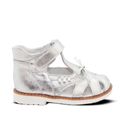
Silvery Ellie Sandals
T-strap Mary Jane design with a wide toe box.
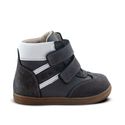
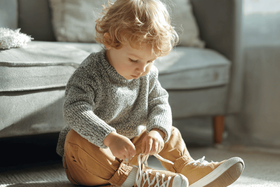
Silas Mateo Sneakers
High-top sneaker with dual Velcro and ankle support.
Show more
What a Wide Gait Actually Means in Toddlers
A wide gait in your toddler is when they walk with their feet farther apart than you'd expect. Picture a wider base of support, like they're constantly straddling an invisible line. This looks different from the typical wobbly walk you see in new walkers.
Now, all toddlers start with some version of wide-based walking. Their balance systems are still developing, so their bodies naturally widen the stance for stability. Most kids gradually narrow their gait between ages 2 and 3 as their muscles get stronger and coordination improves.
The difference you're looking for is persistence. If your child is still walking with legs wide apart after age 3, or if they're showing other developmental delays, that's when you'd want to talk to your pediatrician. But for toddlers under 3, that wide-legged stance is usually just part of learning to walk.
Everyday Challenges Your Wide-Gait Toddler Might Face
Balance is the biggest hurdle. Your toddler might fall more often than other kids their age, especially when they try to change direction or walk on uneven surfaces [1]. That wide stance gives them stability, but it also makes quick movements harder.
Running comes later for wide-gait toddlers. Most kids don't develop smooth running patterns until around 15 to 18 months anyway, but your child might take a bit longer. Their coordination is still catching up to their ambition.
Heel-to-toe walking takes practice too. You might notice your toddler lands flat-footed instead of rolling from heel to toe as older kids and adults do. This is completely normal for early walkers and gradually improves as they gain experience and confidence with each step.
What Makes Shoes Different for Wide-Gait Toddlers
- Wide Toe Box Lets Toes Spread Naturally: Gives their toes room to move, prevents cramping, and stops compensating movements. Shoes with adjustable Velcro straps also help manage swelling and reduce pressure points
- Low, Stable Heel Counter Supports Without Restricting: Provides gentle guidance instead of rigid correction. Flat designs keep their balance natural and prevent elevated-heel wobbling
- Flexible Soles Let Feet Move and Learn: Allow natural bending and give the sensory feedback toddlers need for balance development, while still protecting against sharp objects
- Minimal Cushioning Improves Ground Feel: Thin, responsive soles help toddlers sense the ground better, making each step more stable and supporting a more natural gait
What to Avoid in Wide Gait Toddler Shoes
- Memory Foam Creates Unstable Walking Surfaces: Dense cushioning compresses unevenly and too slowly, making balance harder and disrupting natural movement patterns
- Overly Grippy Soles Can Cause Trips and Falls: Aggressive traction stops the foot too abruptly, increasing tripping risk and preventing the small sliding adjustments toddlers need for balance learning
- High-Top Ankle Construction Restricts Natural Movement: Limits ankle mobility, encourages compensations at the hips and knees, and can reinforce a wide stance instead of helping it improve
10 Best Wide-Gait Toddler Shoes
1

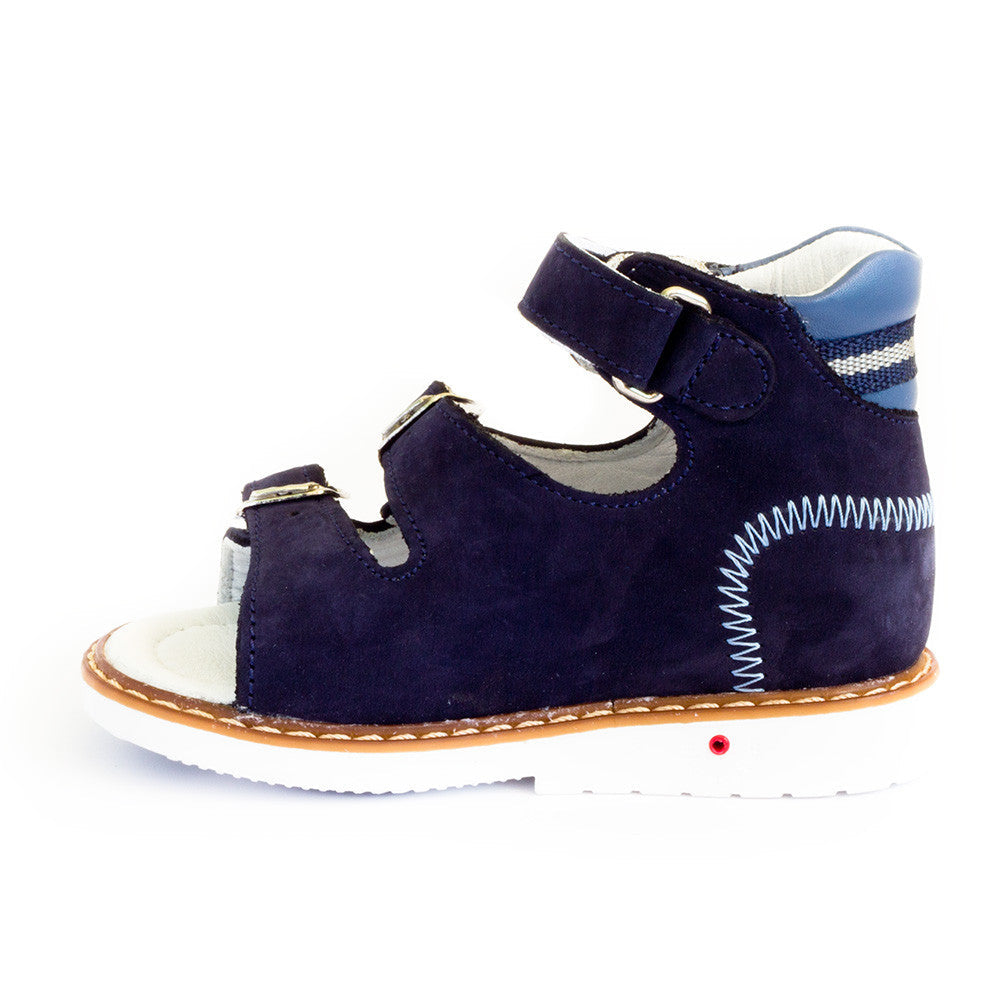
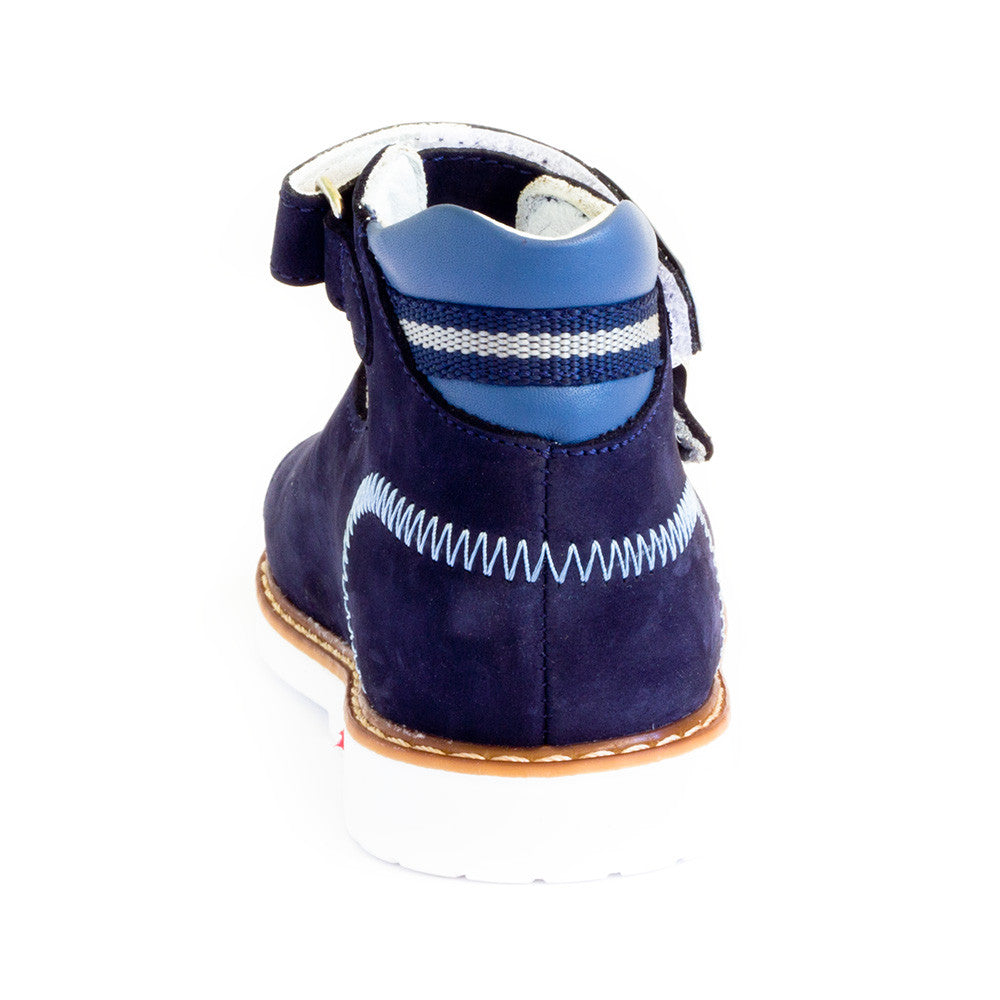
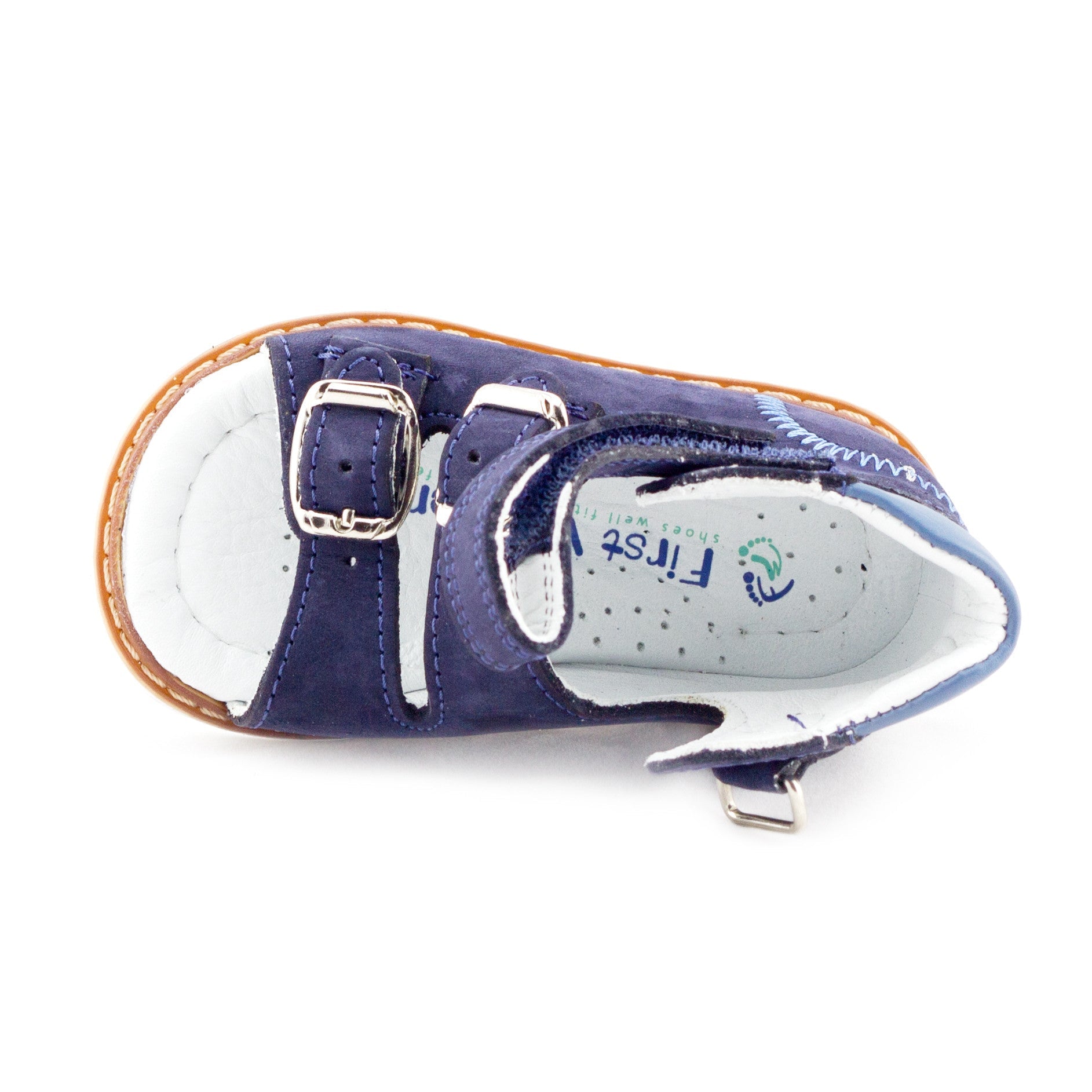
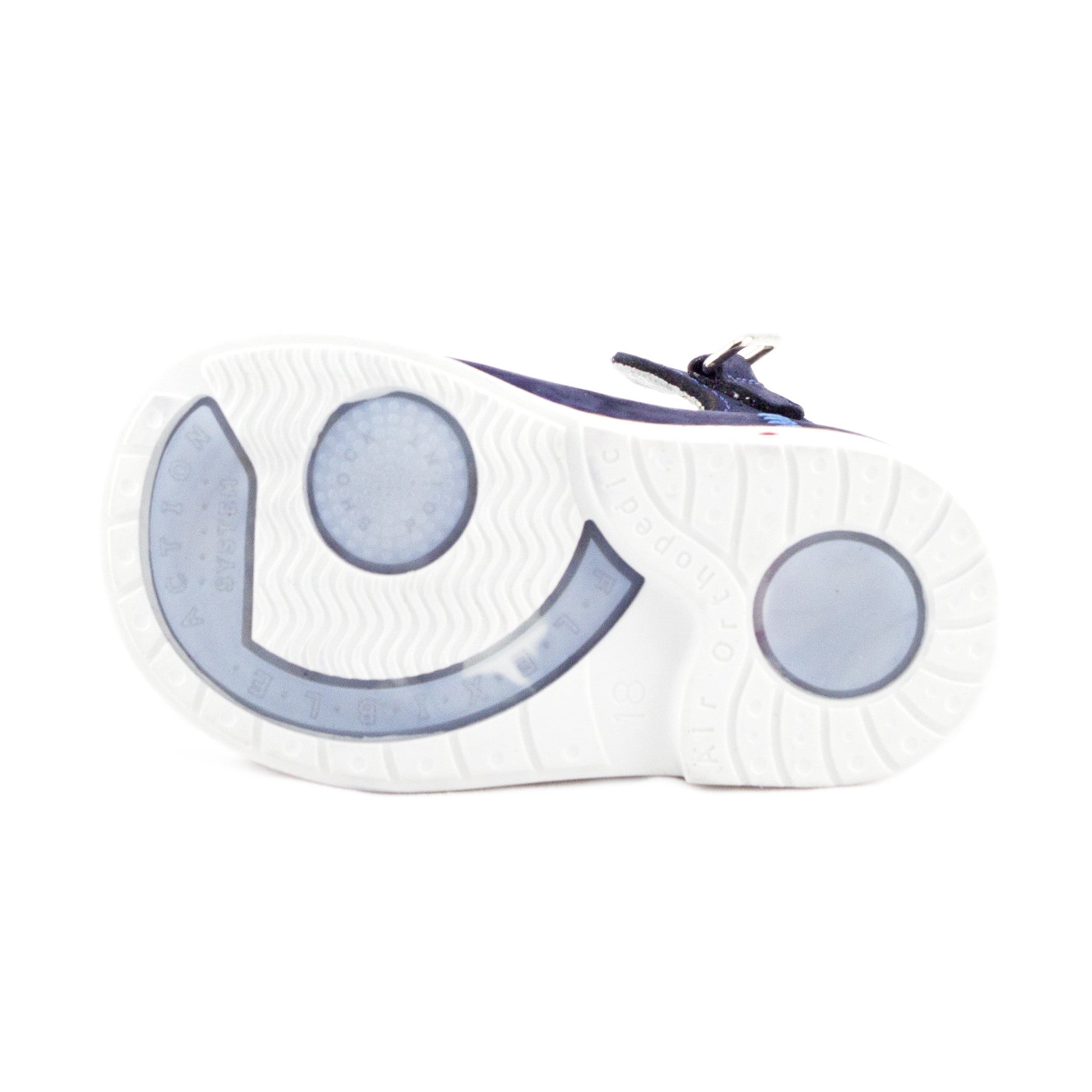
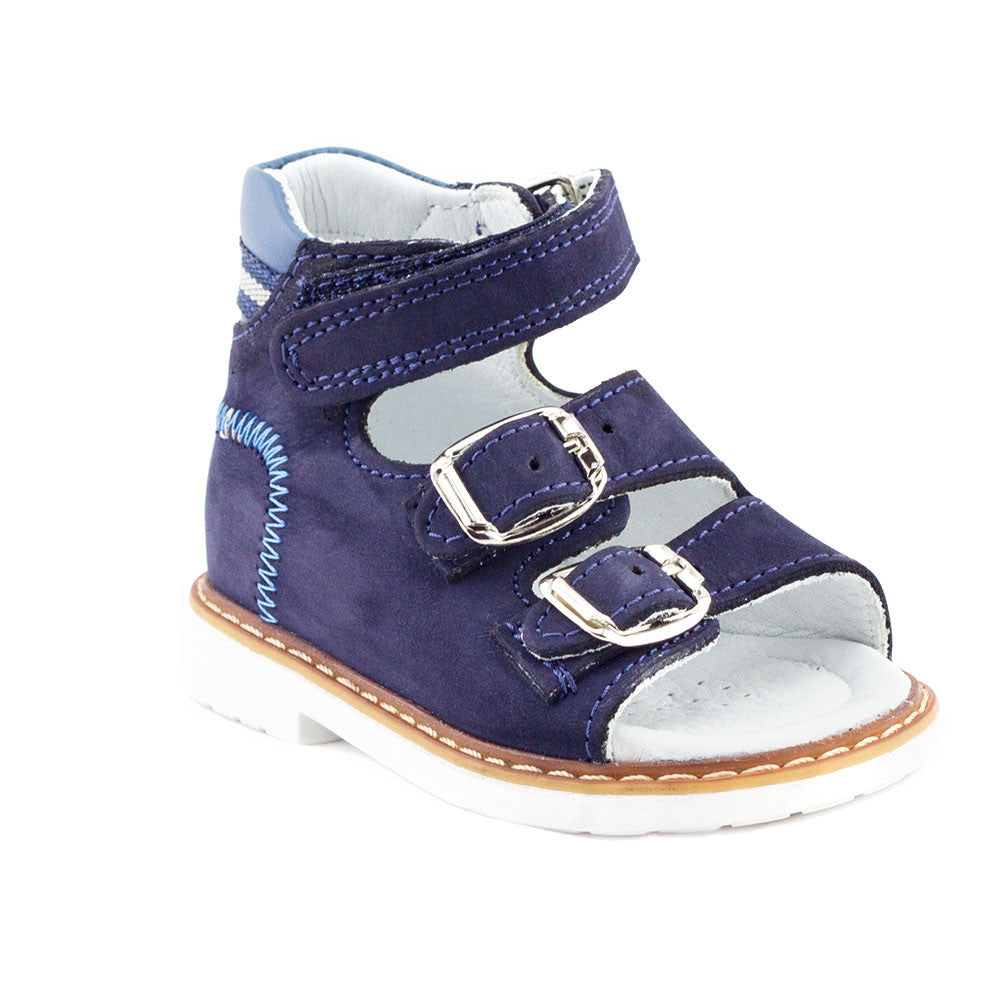
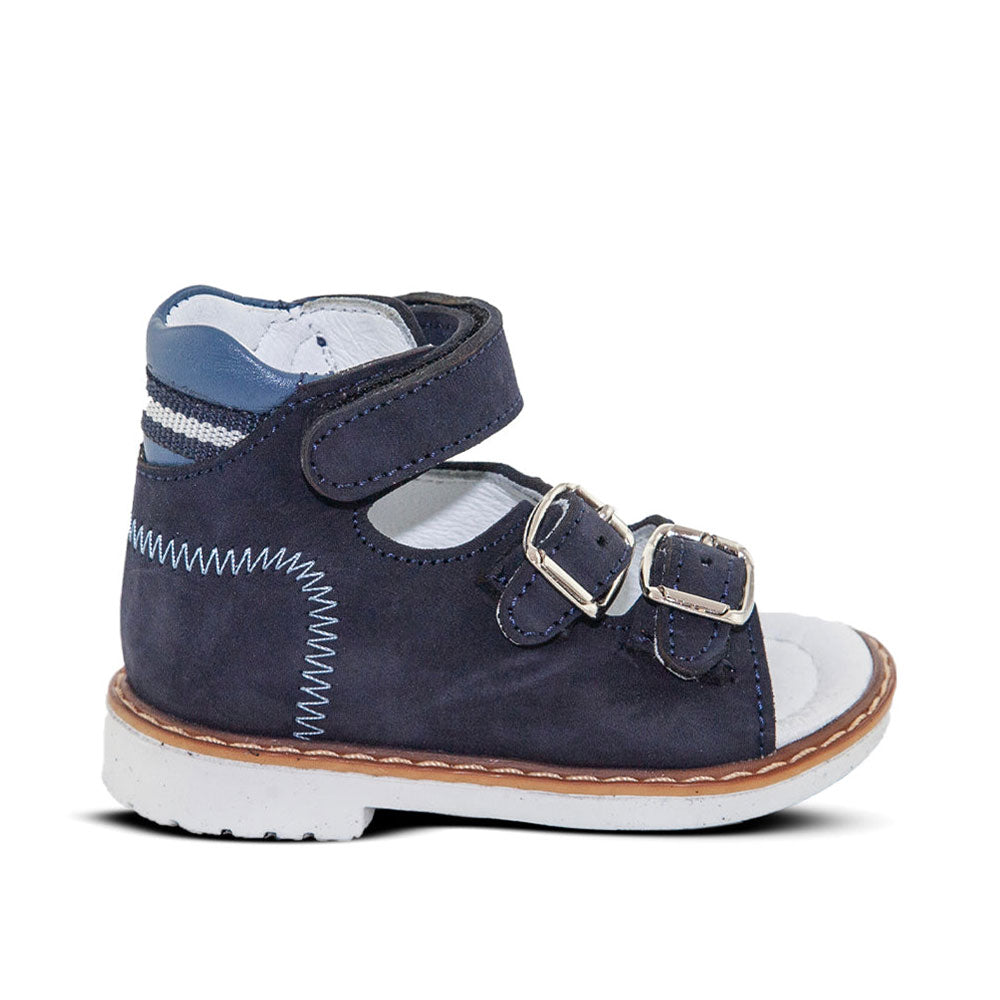
Andy Blue Sandals
All-day stability with room for natural foot expansion.
Type
Sandals
Material
Nubuck Leather
Sizes
18–30 (EU) | 2–11.5 (UK)
Benefits for kids with a wide gait
- Dual-buckle straps adjust independently across the forefoot and midfoot
- Open sandal design eliminates side compression while keeping feet secure
- Thomas' heel provides extra medial support during prolonged stance phases
- Shock-absorbent thermoplastic outsoles create a stable walking platform
- Anti-bacterial insoles maintain hygiene during extended daily wear
Why they're a top choice
The Andy Blue works with your toddler's wide gait instead of fighting against it. The dual-buckle system lets you customize the fit around their wider foot profile without creating tight spots that would change how they walk naturally. That open sandal construction means their feet can spread and move the way they need to while still staying protected.
What makes this shoe special for wide-gait toddlers is the Thomas heel design. It gives extra support on the inside edge of the foot, helping with that inward rolling tendency that often comes with wide stance walking.
The shock-absorbent sole creates a stable base that builds confidence with every step, while the breathable construction keeps little feet comfortable from breakfast to bedtime.
2
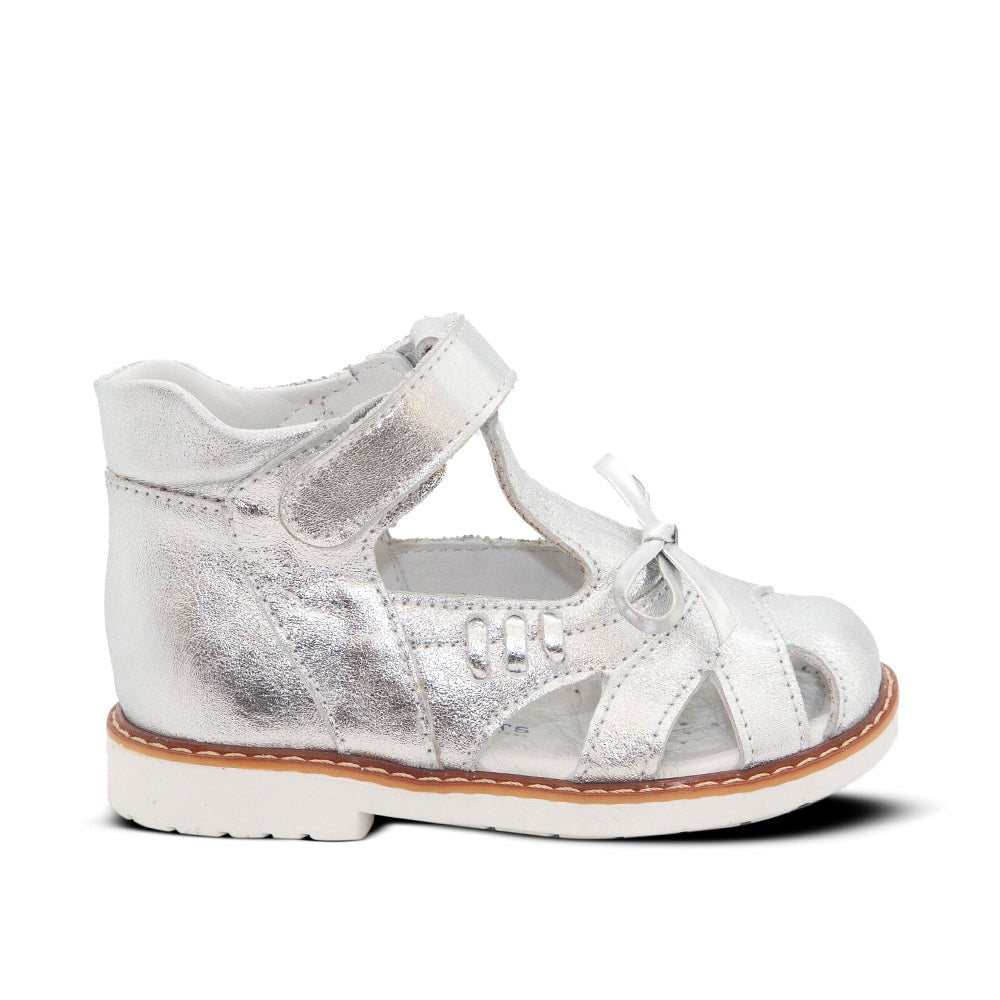
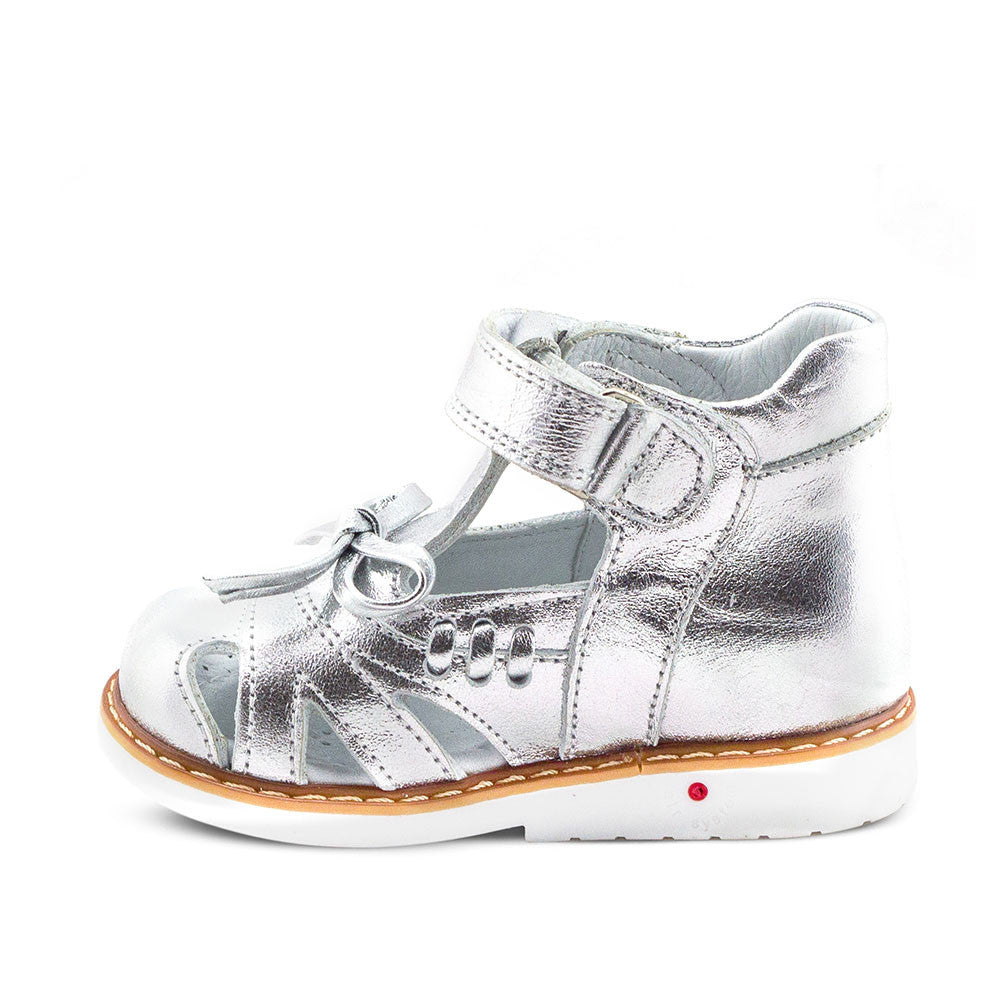
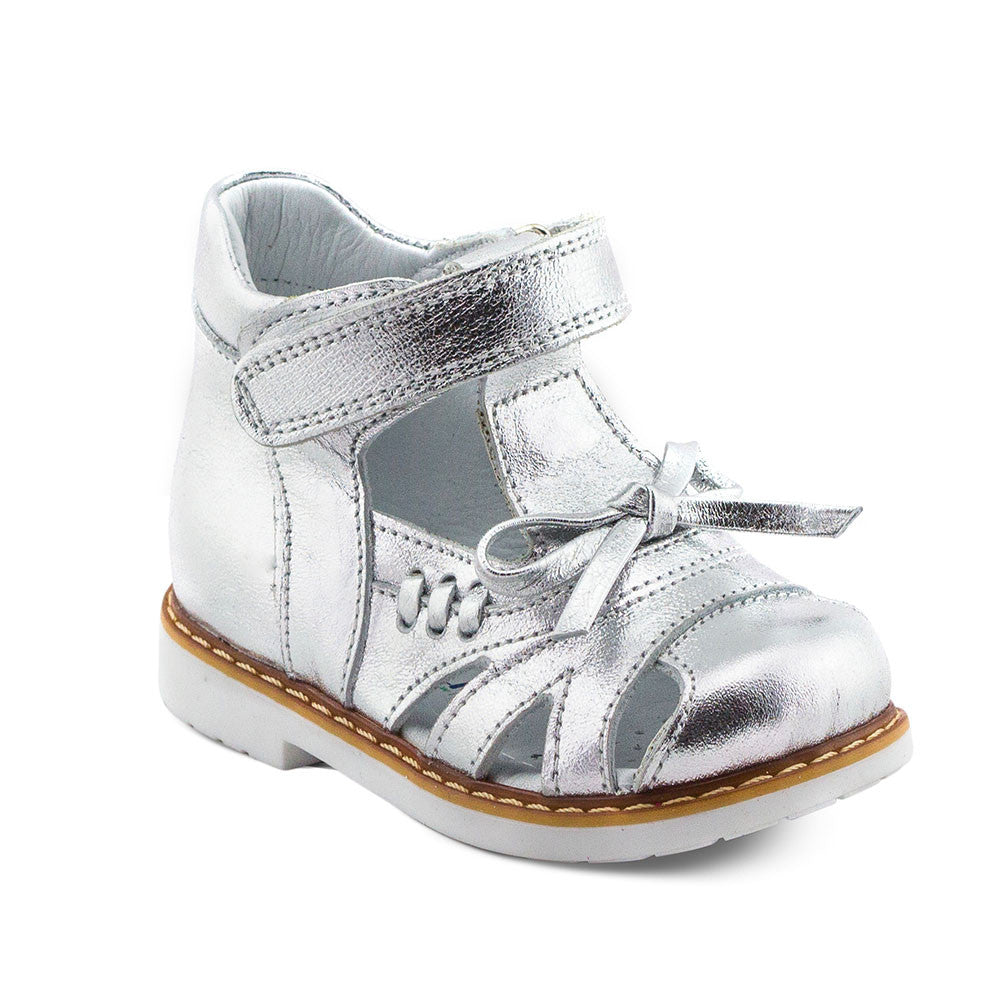
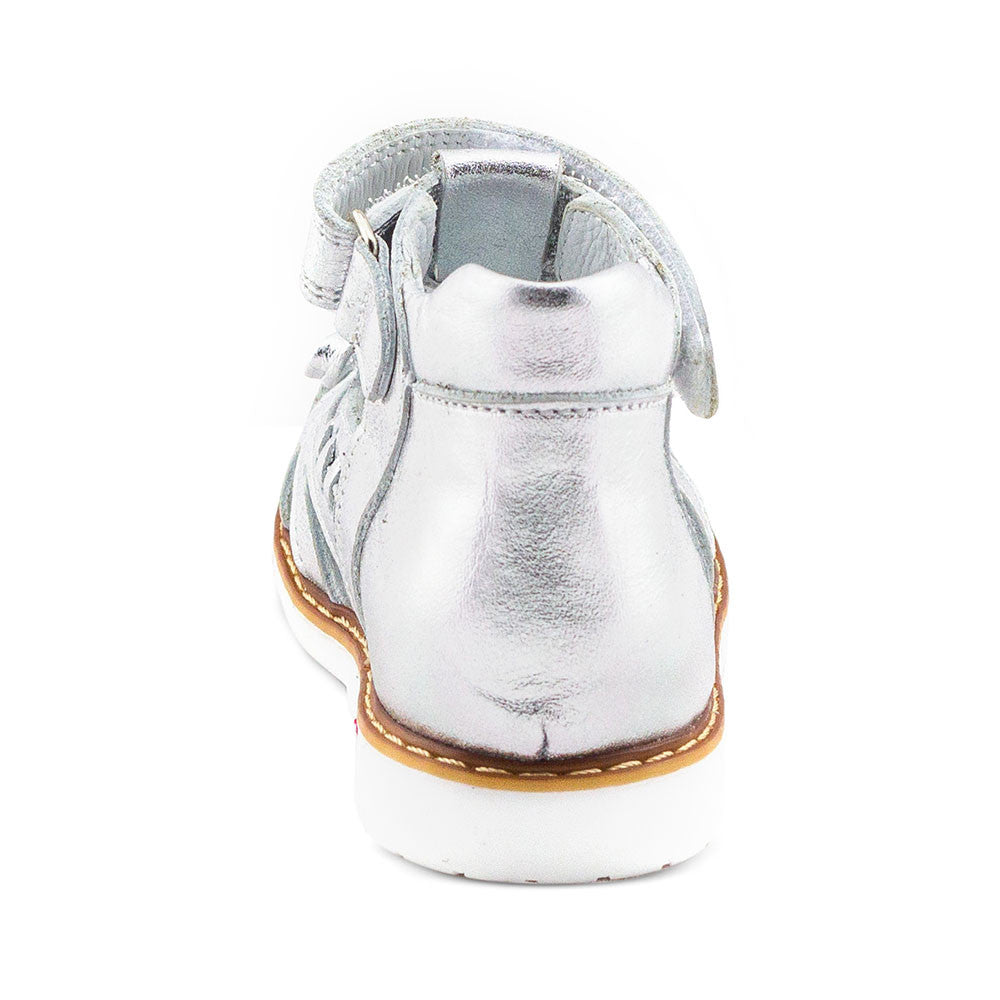
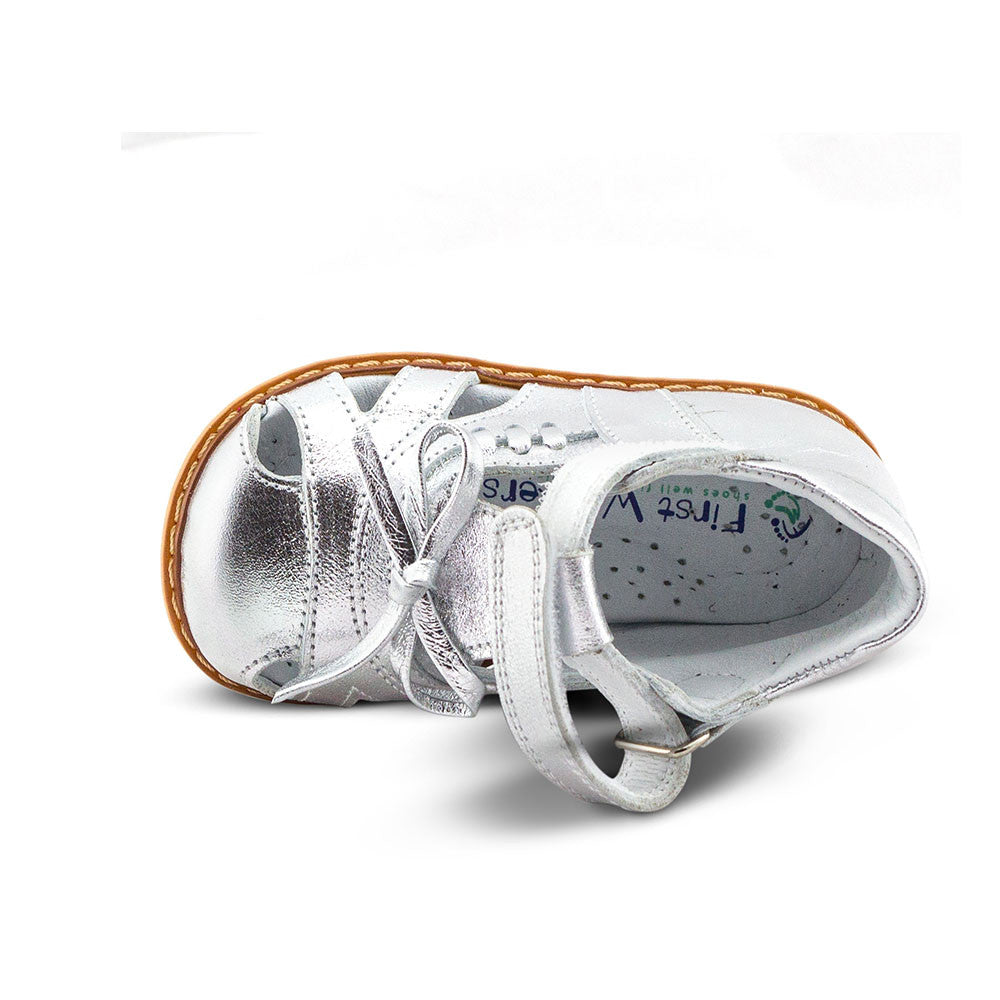
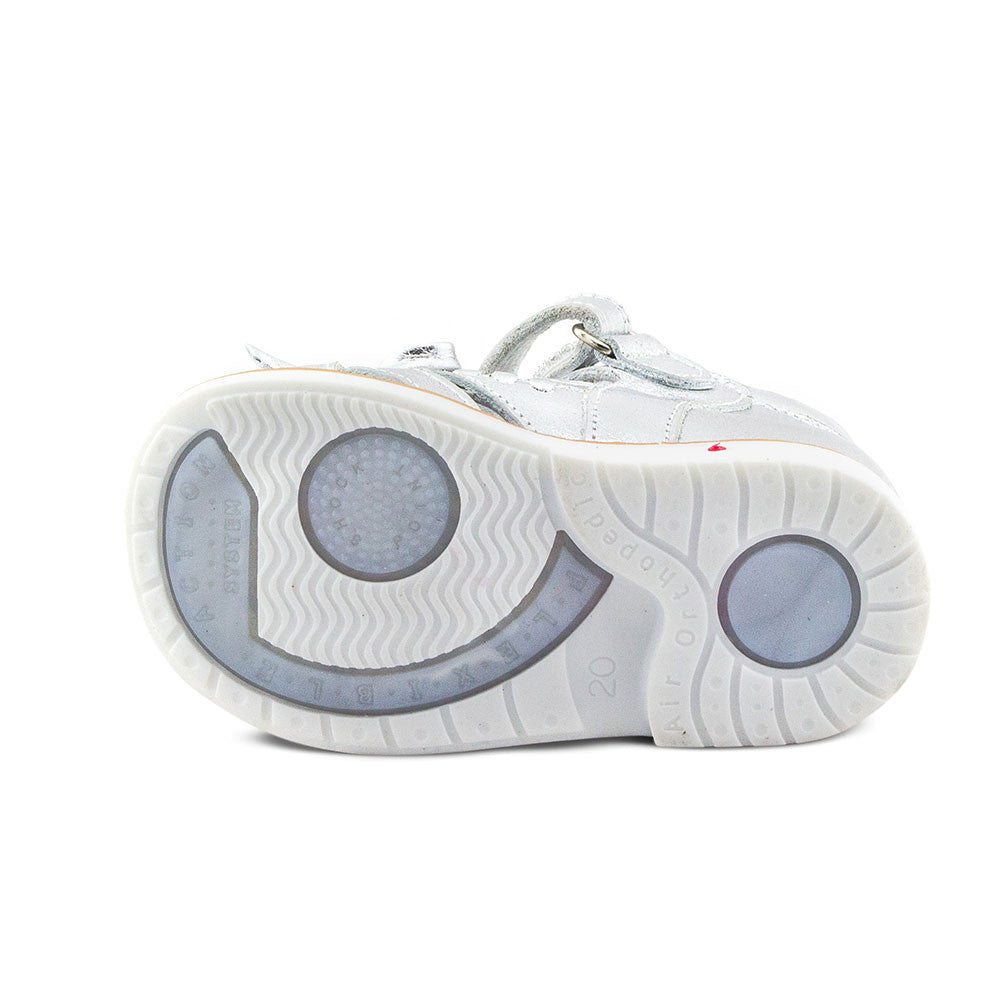
Silvery Ellie Sandals
Special occasion style with wide-foot accommodation.
Type
Sandals
Material
Leather
Sizes
18–30 (EU) | 2–11.5 (UK)
Benefits for kids with a wide gait
- T-strap design distributes pressure evenly without pinching
- Wide toe box specifically built for a broader forefoot stance
- A single Velcro strap adjusts for a custom midfoot fit
- Thomas' heel and arch support create a stable foundation
- Elegant silver finish makes dressing up easy
Why they're a top choice
The Silvery Ellie solves that frustrating problem of finding party shoes that don't compromise your daughter's gait development. The T-strap Mary Jane design looks adorable while actually serving a purpose: spreading pressure across the top of the foot instead of creating one tight band that restricts movement.
That wide toe box is the real star here. Your daughter's toes can spread naturally during weight-bearing, which is essential for balance when she's dancing at birthday parties or walking around during family celebrations.
The Silvery Ellie proves that shoes for wide-gait toddlers don't have to look medical or boring, giving your little girl confidence in both her steps and her style.
3
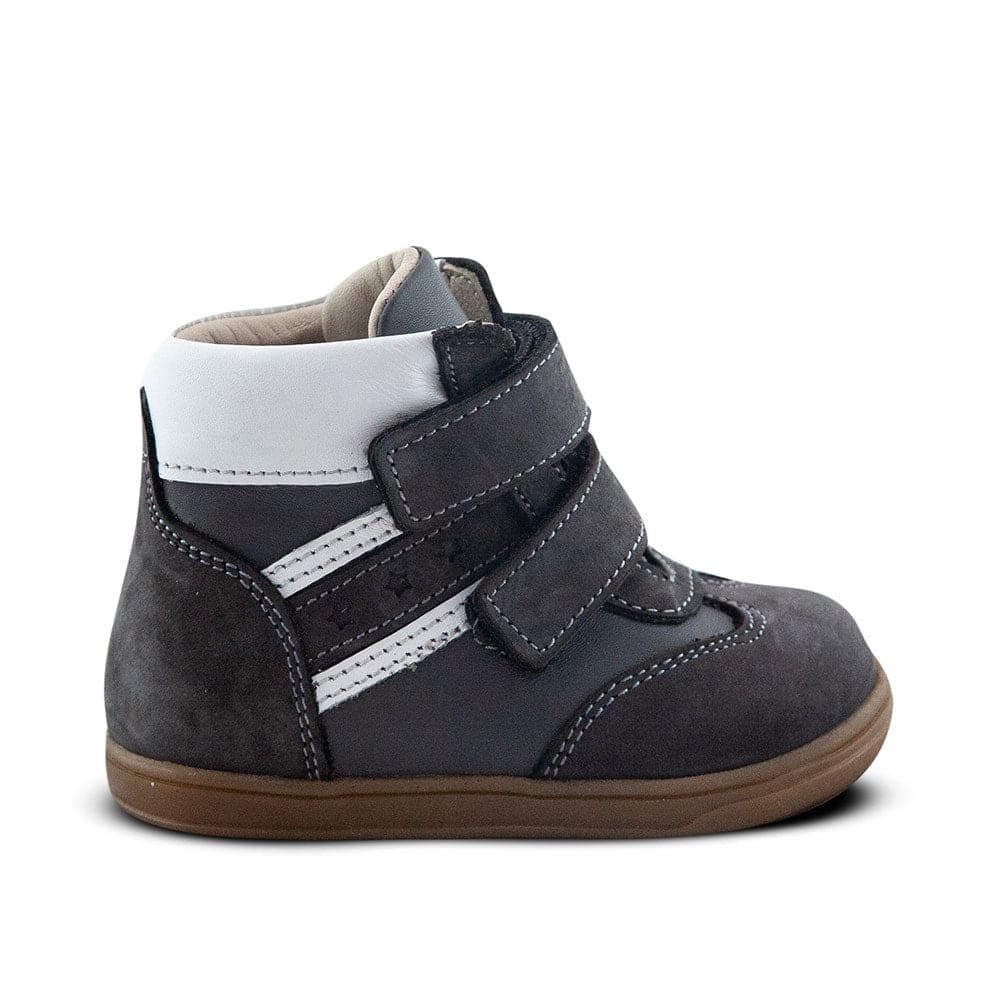
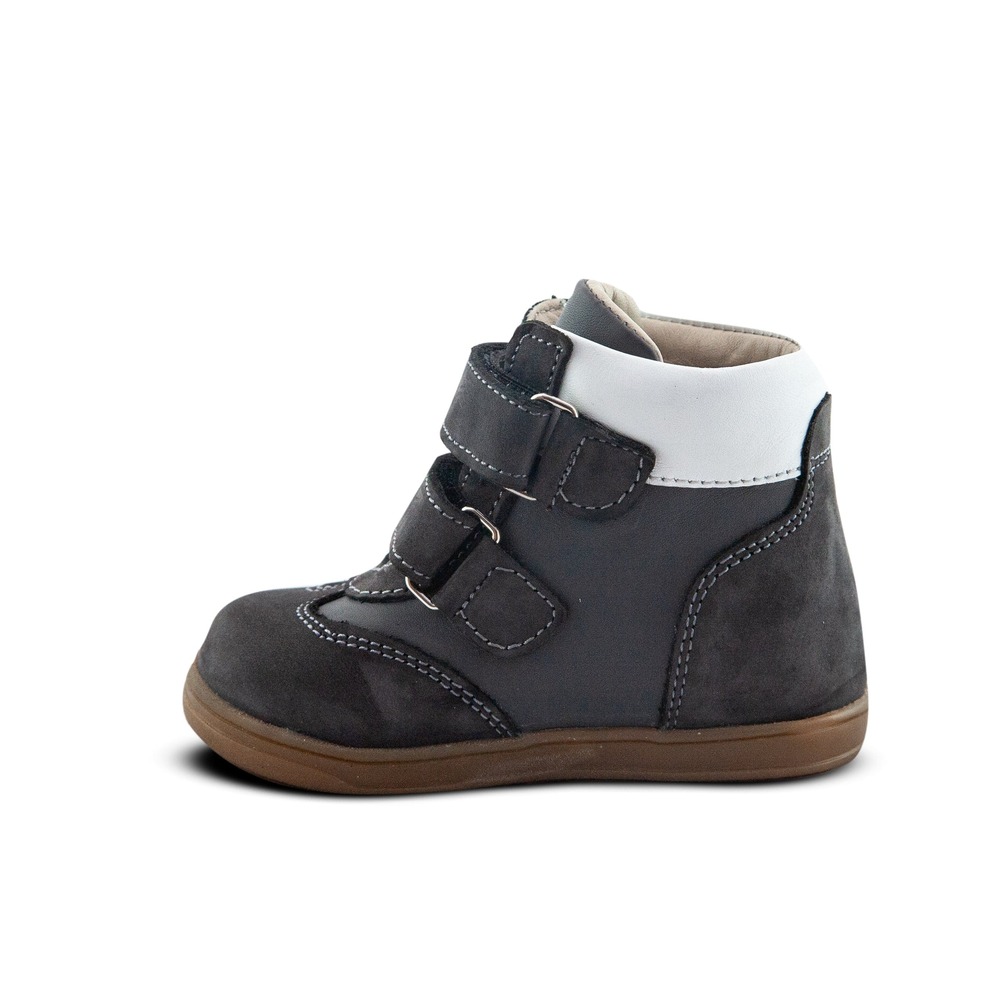
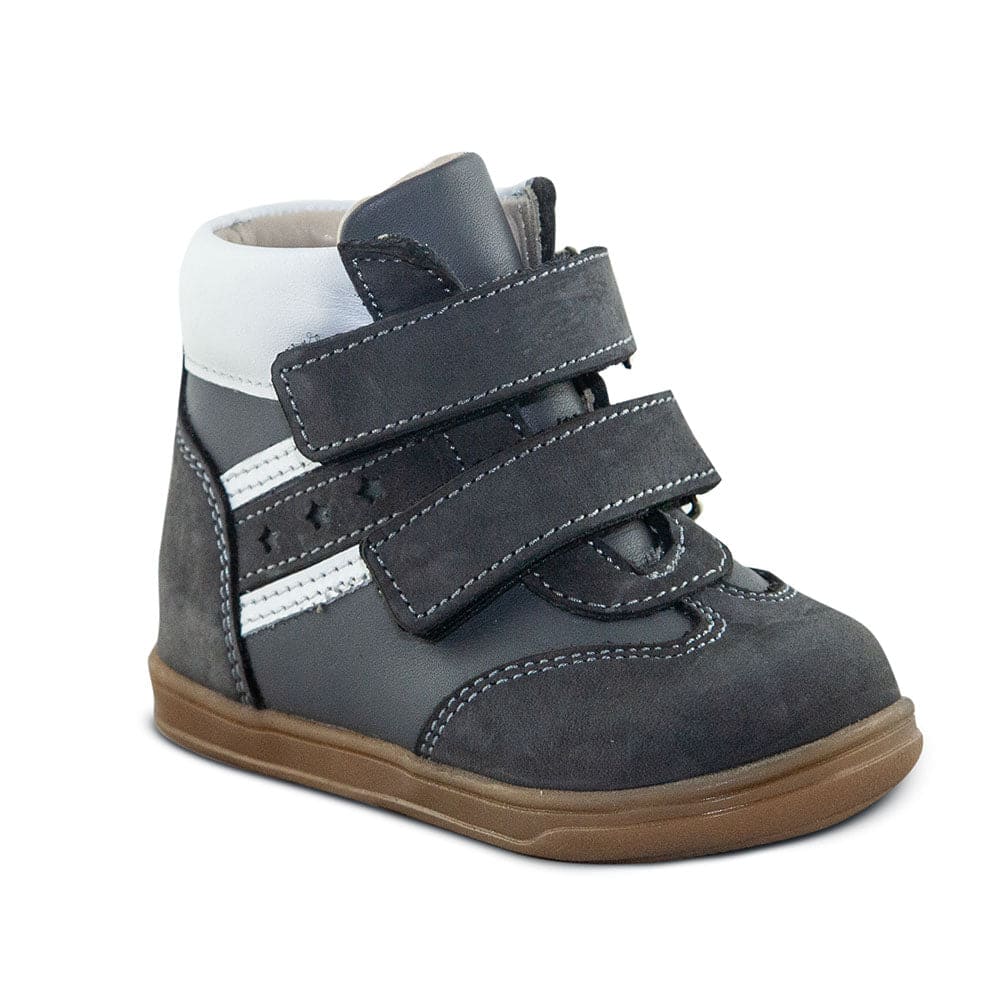
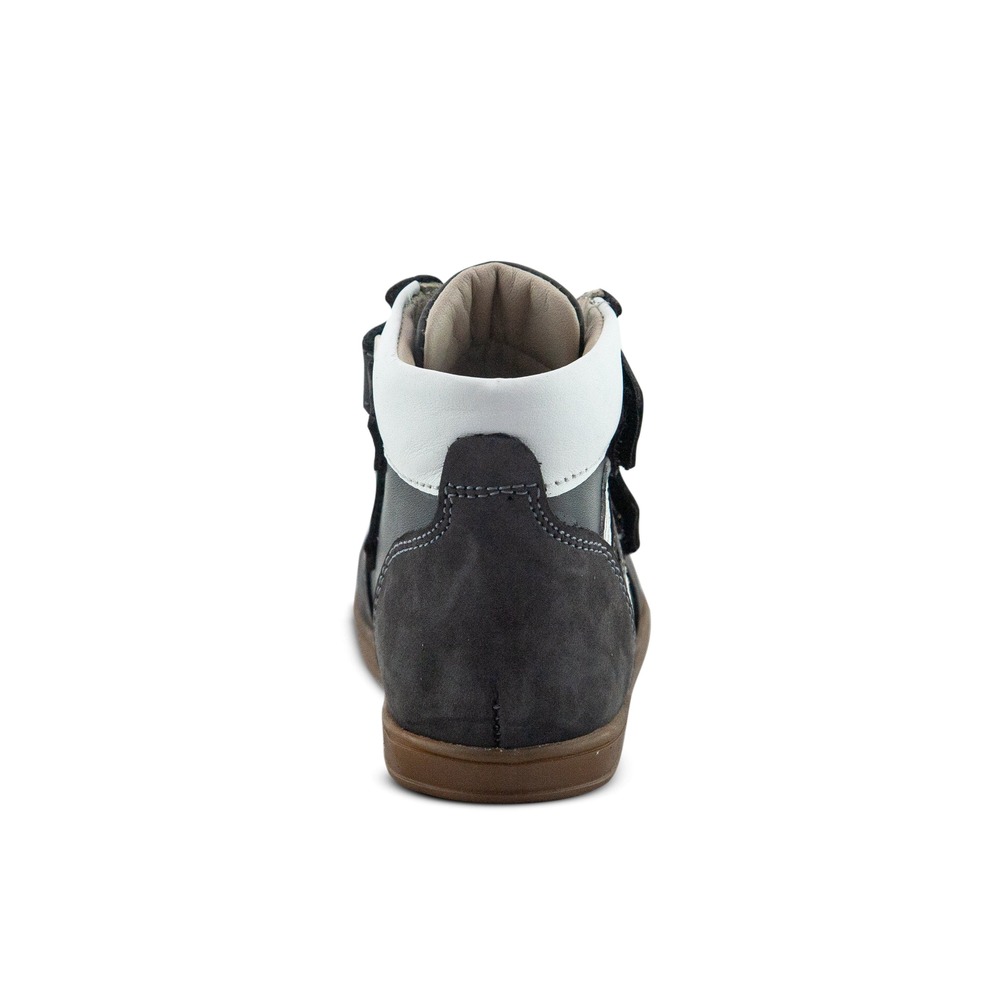
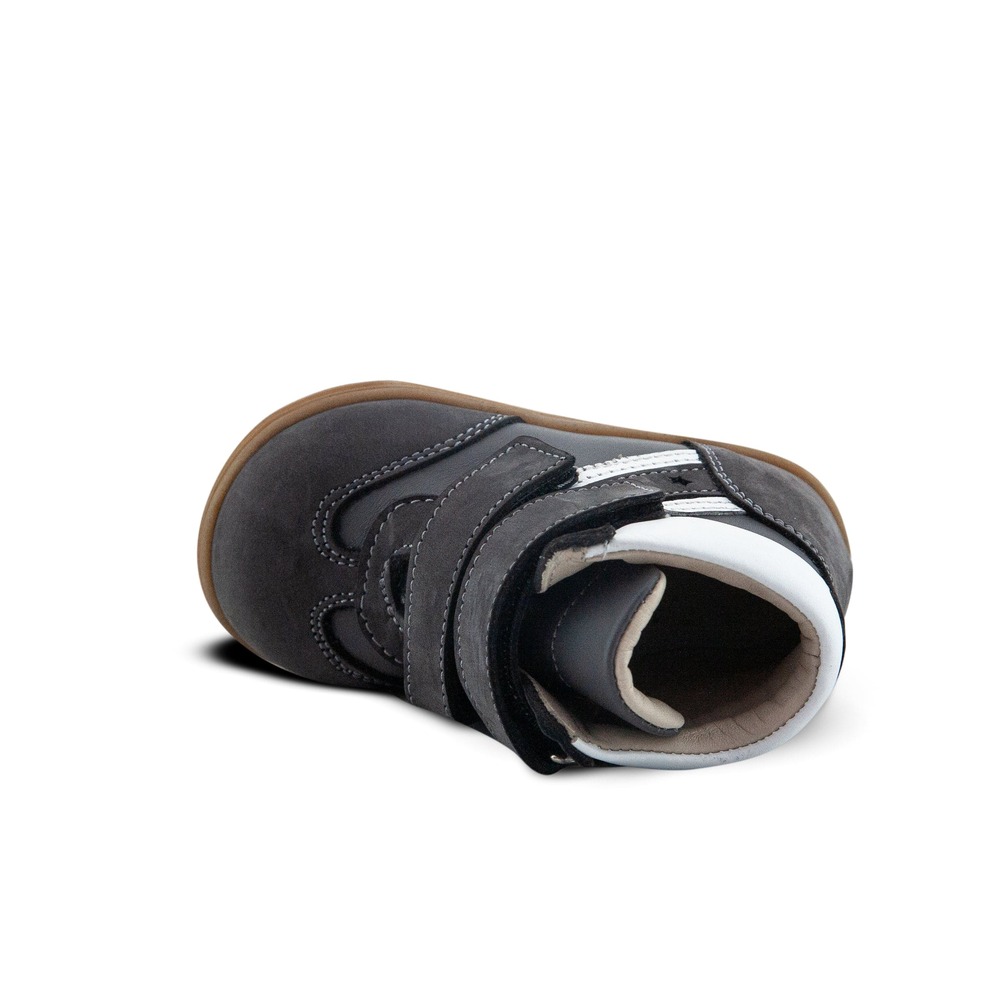
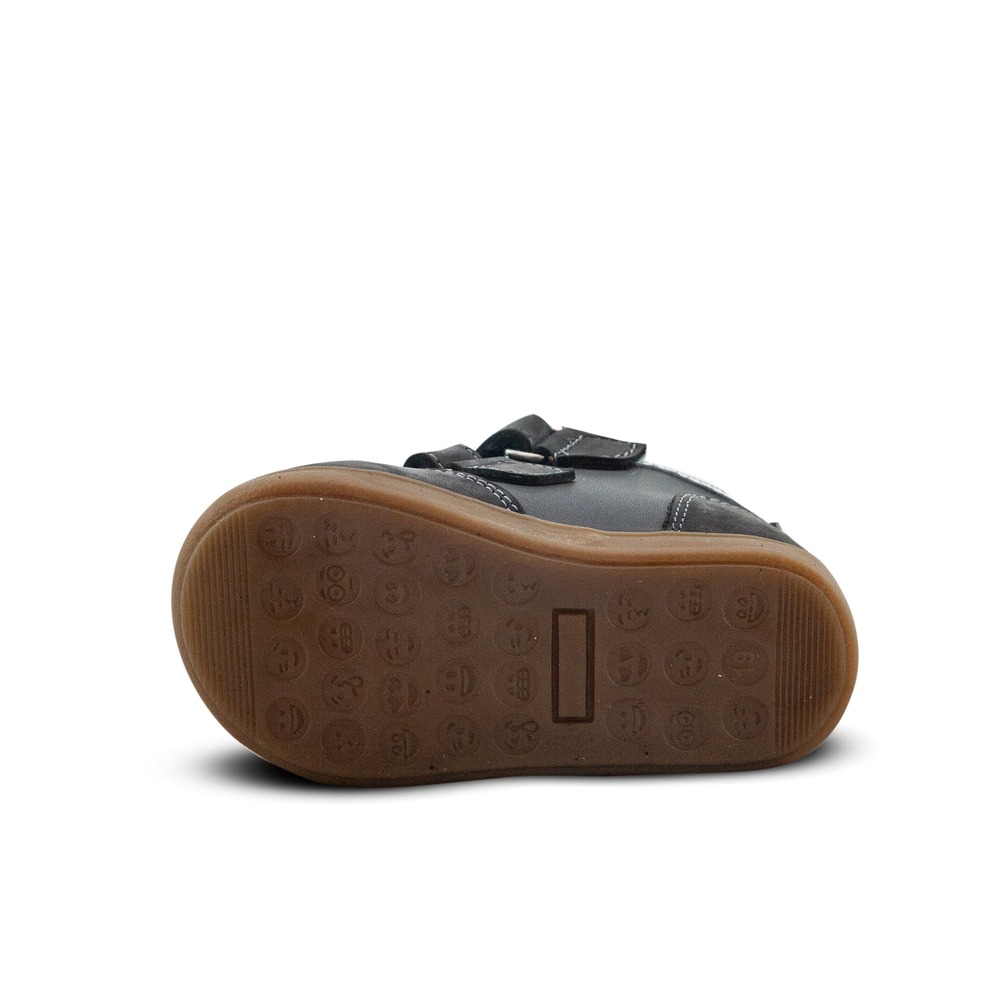
Silas Mateo Sneakers
Tough construction that survives active play patterns.
Type
Sneakers
Material
Nubuck Leather
Sizes
18–30 (EU) | 2–11.5 (UK)
Benefits for kids with a wide gait
- Dual Velcro straps create independent adjustment zones
- High-top design provides ankle stability without restriction
- Nubuck leather withstands irregular wear from atypical gait
- An extended collar distributes pressure around the ankle joint
- Shock-absorbent outsole maintains consistent ground contact
Why they're a top choice
The Silas Mateo sneakers handle the rough-and-tumble reality of boys who play hard despite their wide-gait challenges. Those dual Velcro straps give you precision control over fit, crucial when your son's wider foot profile needs accommodation without swimming in oversized shoes.
The high-top construction adds ankle support that wide-gait toddlers often need during active play. But unlike restrictive ankle boots, this design distributes support around the entire ankle rather than clamping down.
The Silas Mateo survives playground adventures, climbing attempts, and all the jumping that comes with toddler life, making it the reliable choice when you need shoes that last as long as your son's energy does.
4
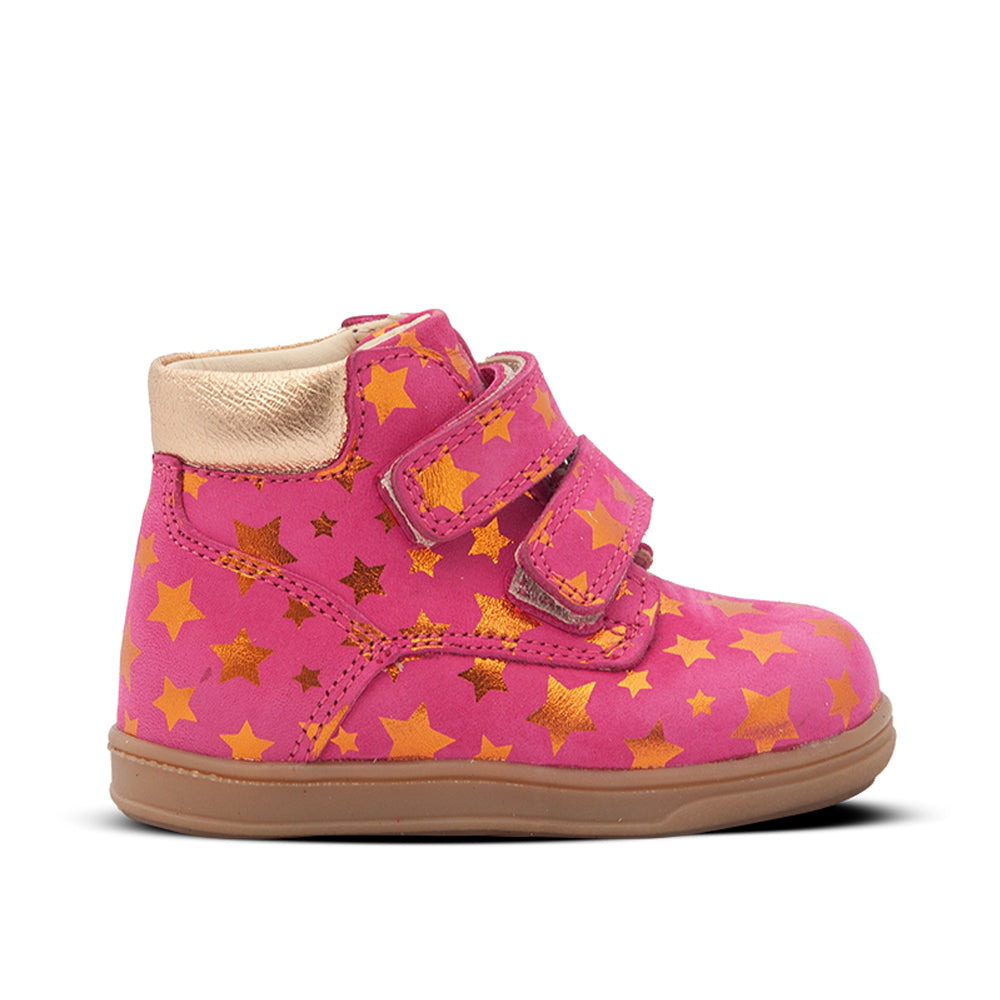
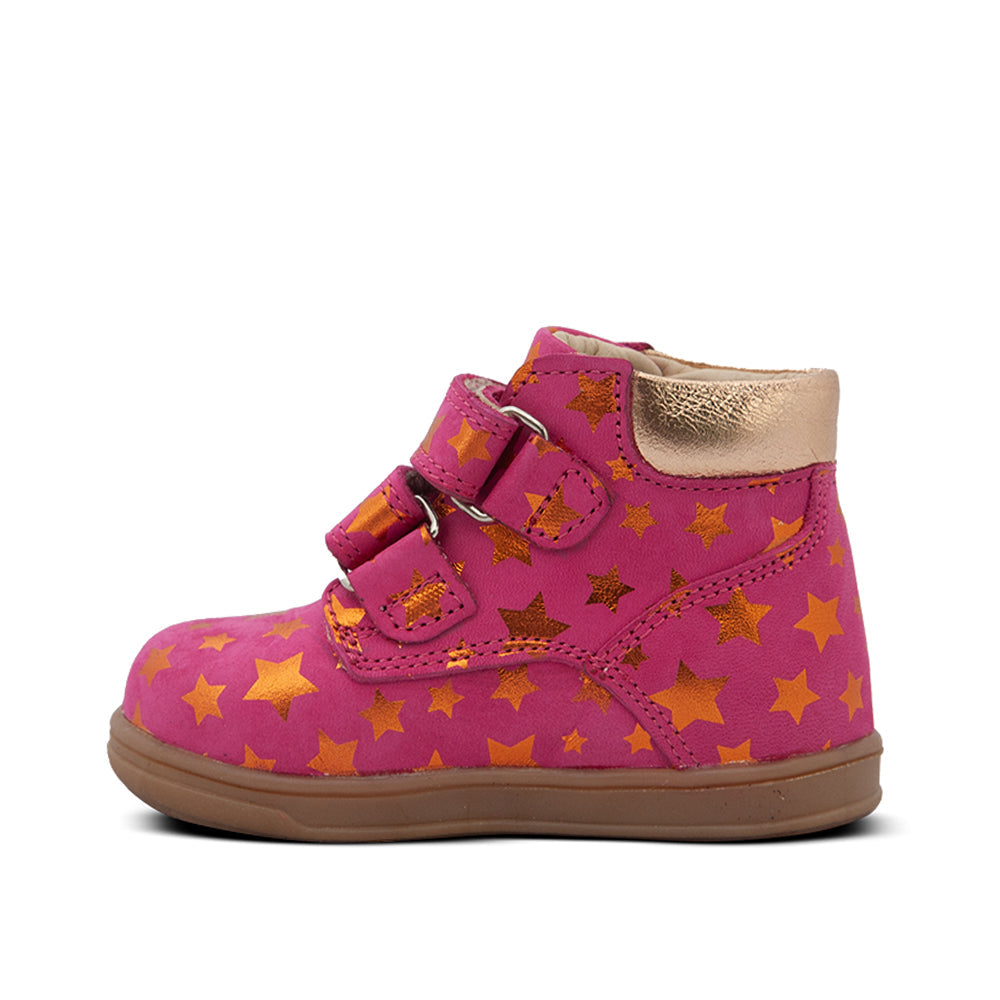
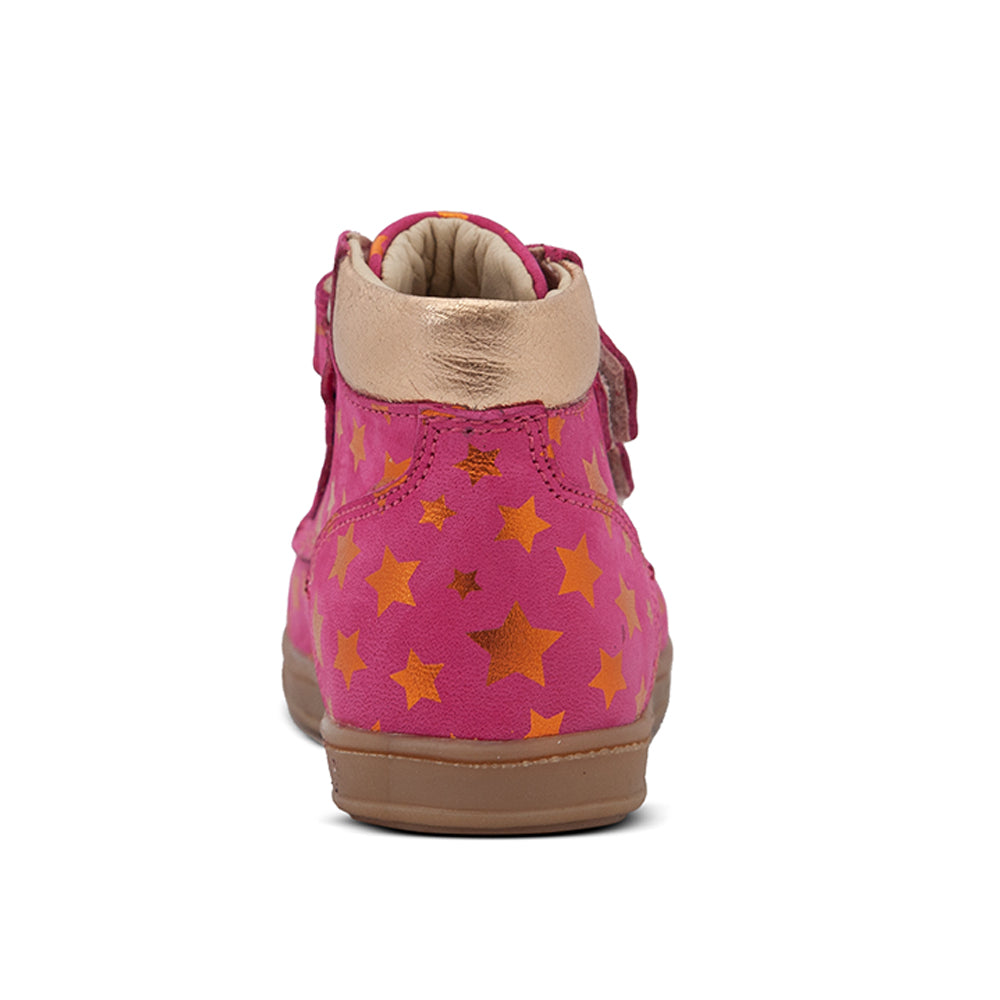
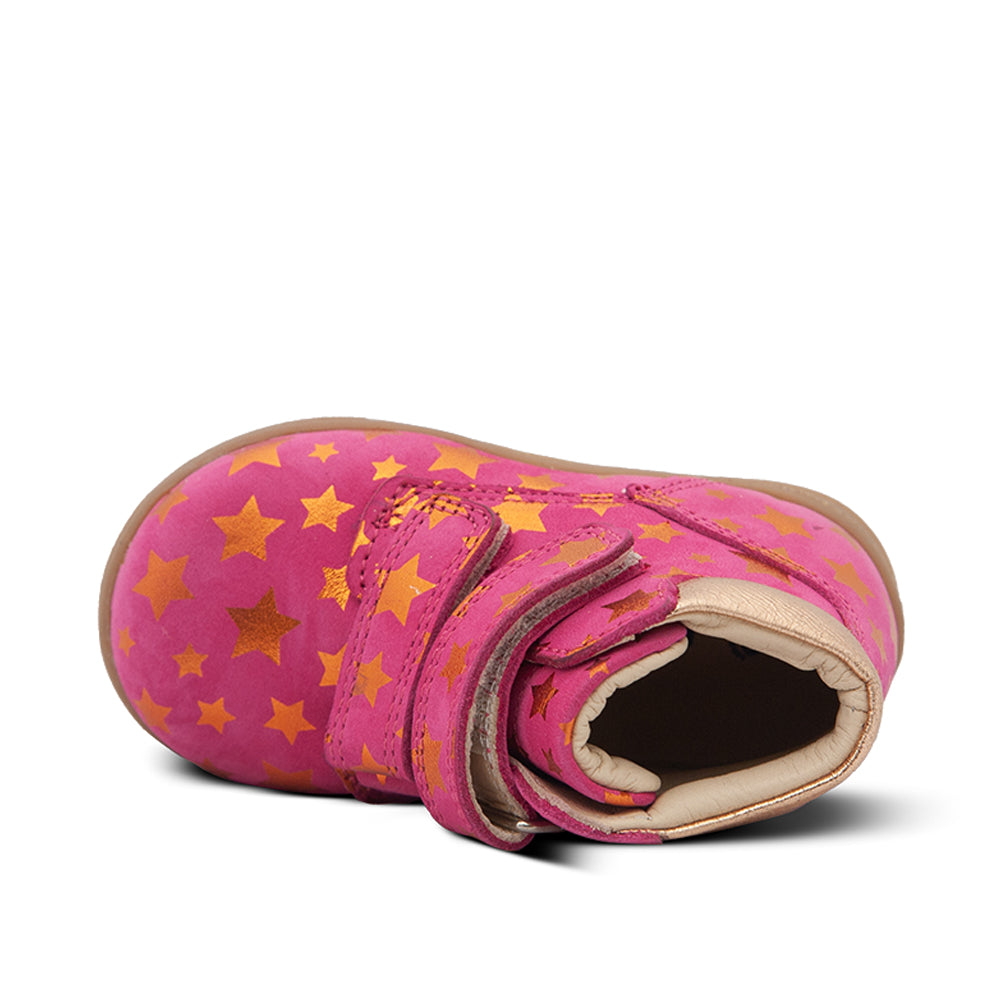
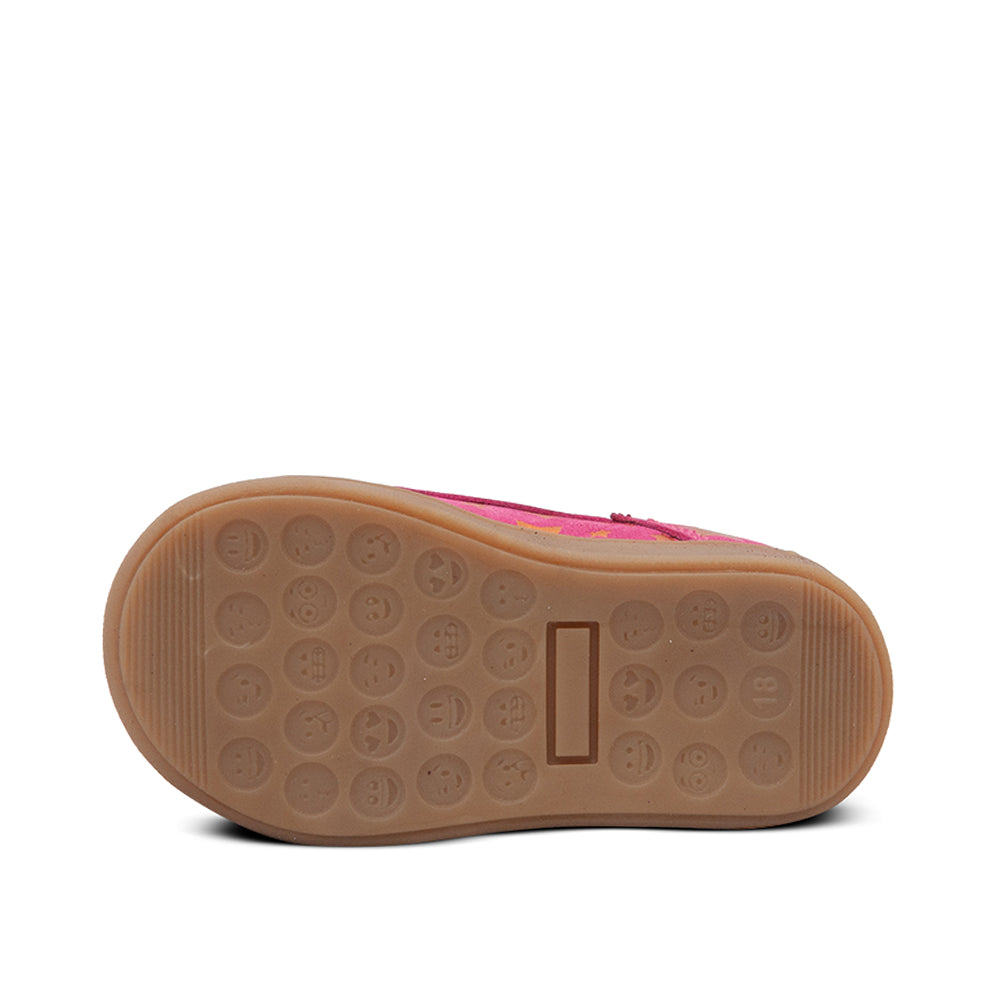
Blushful Betty Sneakers
Maximum stability for the earliest walking attempts.
Type
Sneakers
Material
Premium Leather
Sizes
18–30 (EU) | 2–11.5 (UK)
Benefits for kids with a wide gait
- Orthopedic-grade construction engineered for new walkers
- High built-in arch support controls excessive foot pronation
- The extended ankle collar maintains alignment without restricting motion
- Dual velcro straps allow micro-adjustments during the learning phase
- Removable insole accommodates custom orthotics if needed later
Why they're a top choice
The Blushful Betty sneaker is specifically made for that crucial moment when your toddler is taking their very first independent steps with a wide stance. The orthopedic construction provides the structured support that builds confidence during those wobbly early attempts when every step feels like an adventure.
What sets this shoe apart is how it supports without forcing. The high arch support and extended ankle collar guide proper positioning while your daughter's own muscles do the work of learning balance.
The Blushful Betty acts as training wheels for walking, providing security when needed but not taking over the natural development process that turns wide-gait walkers into confident movers.
5
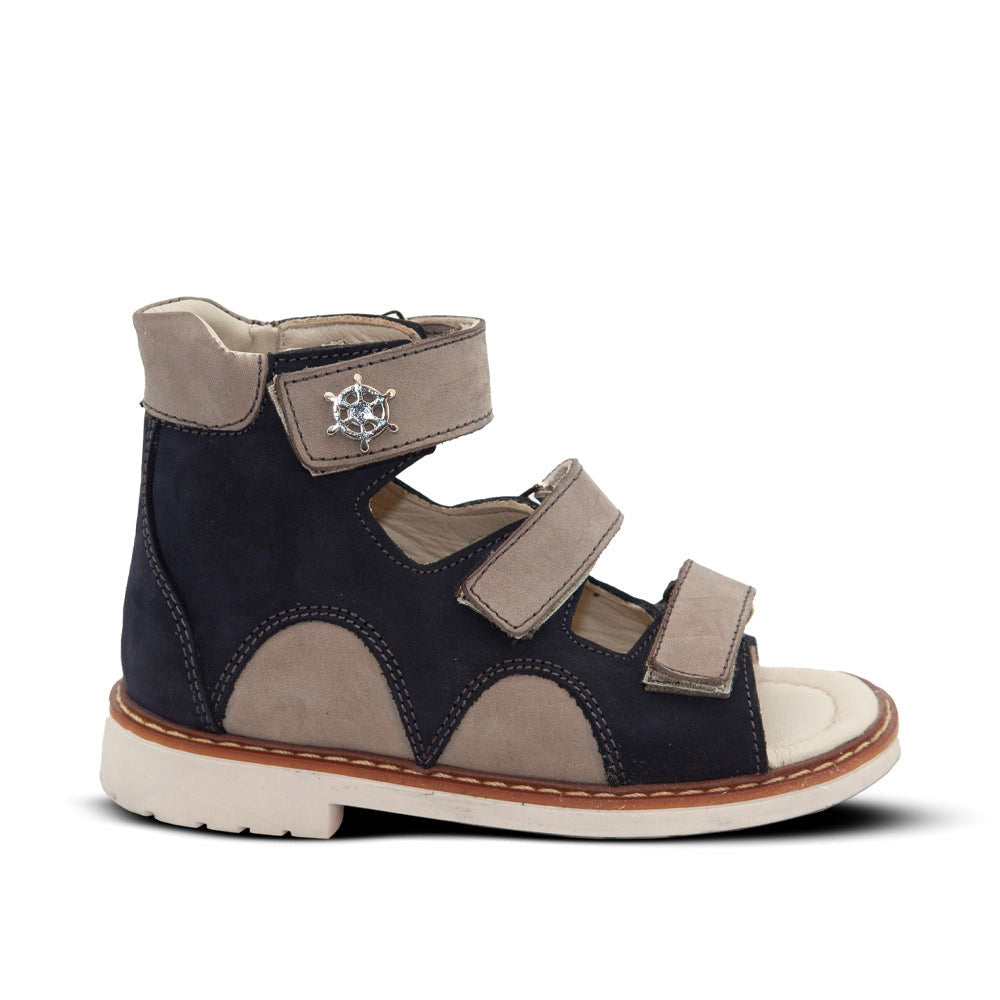
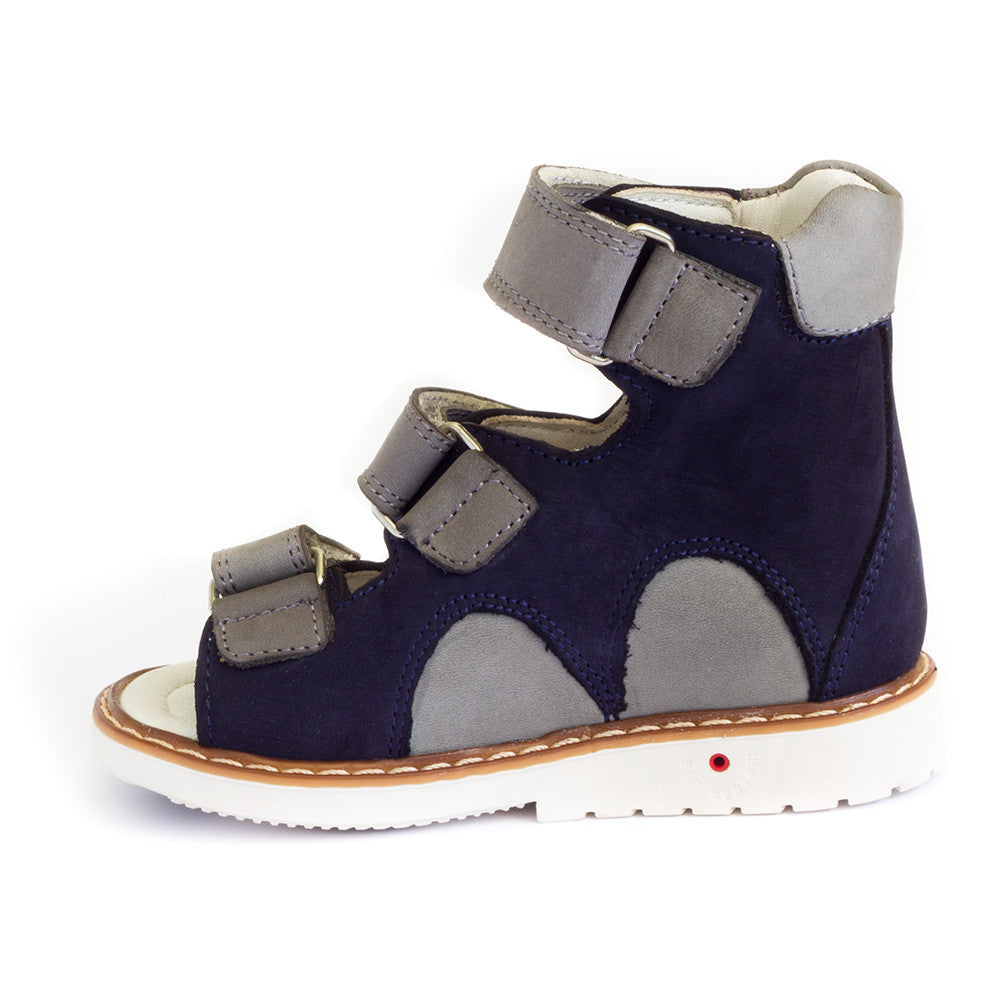
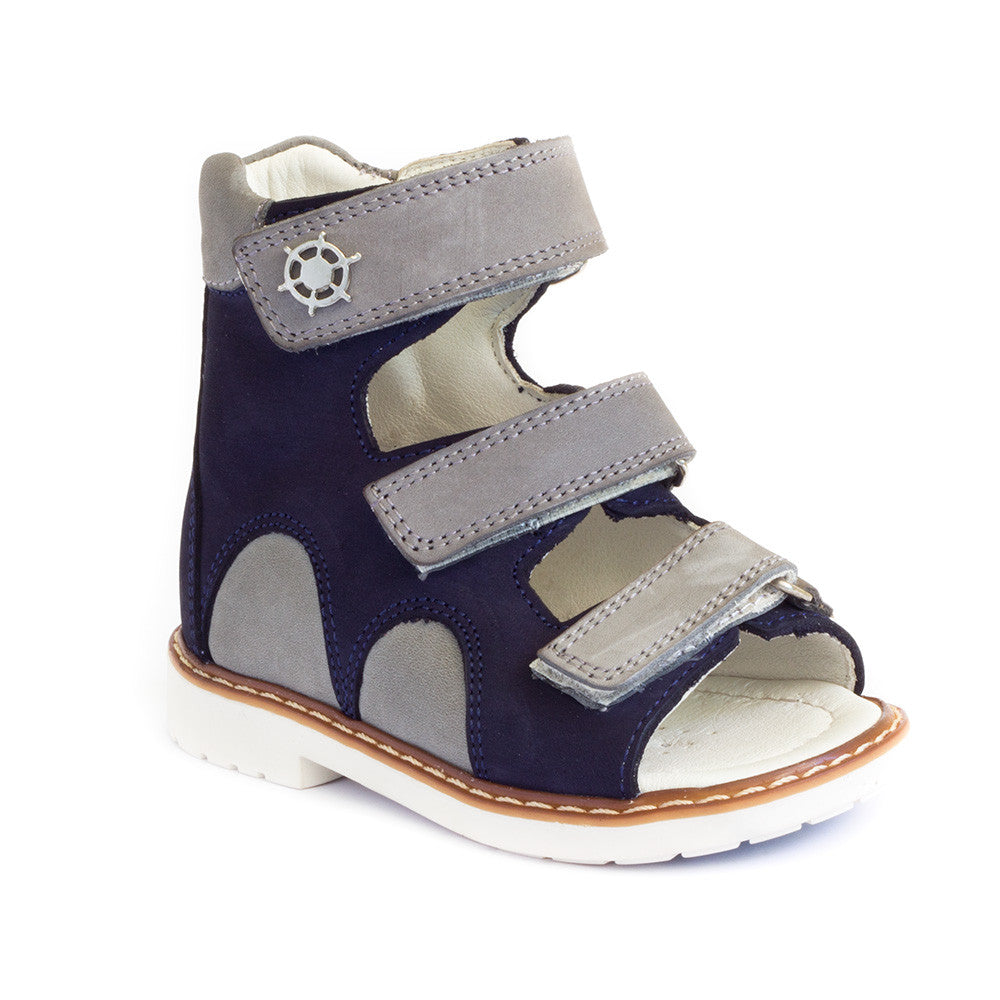
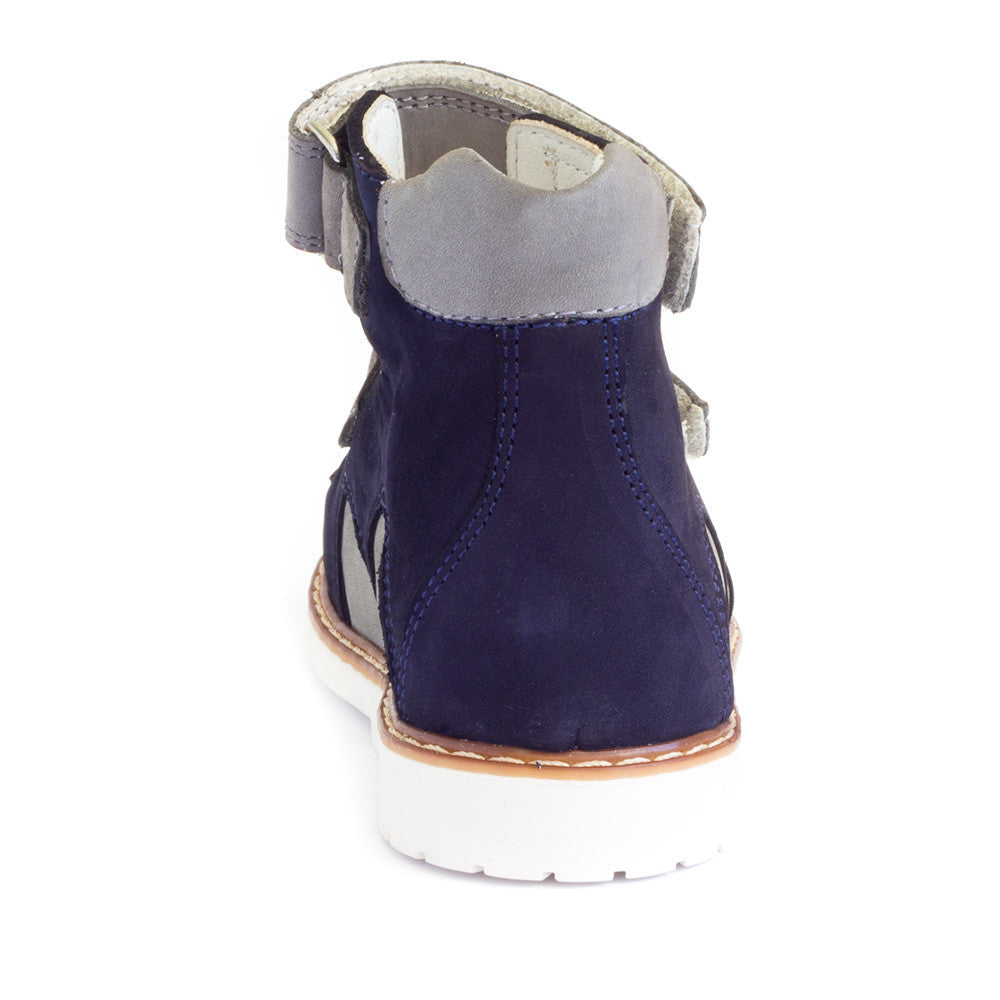
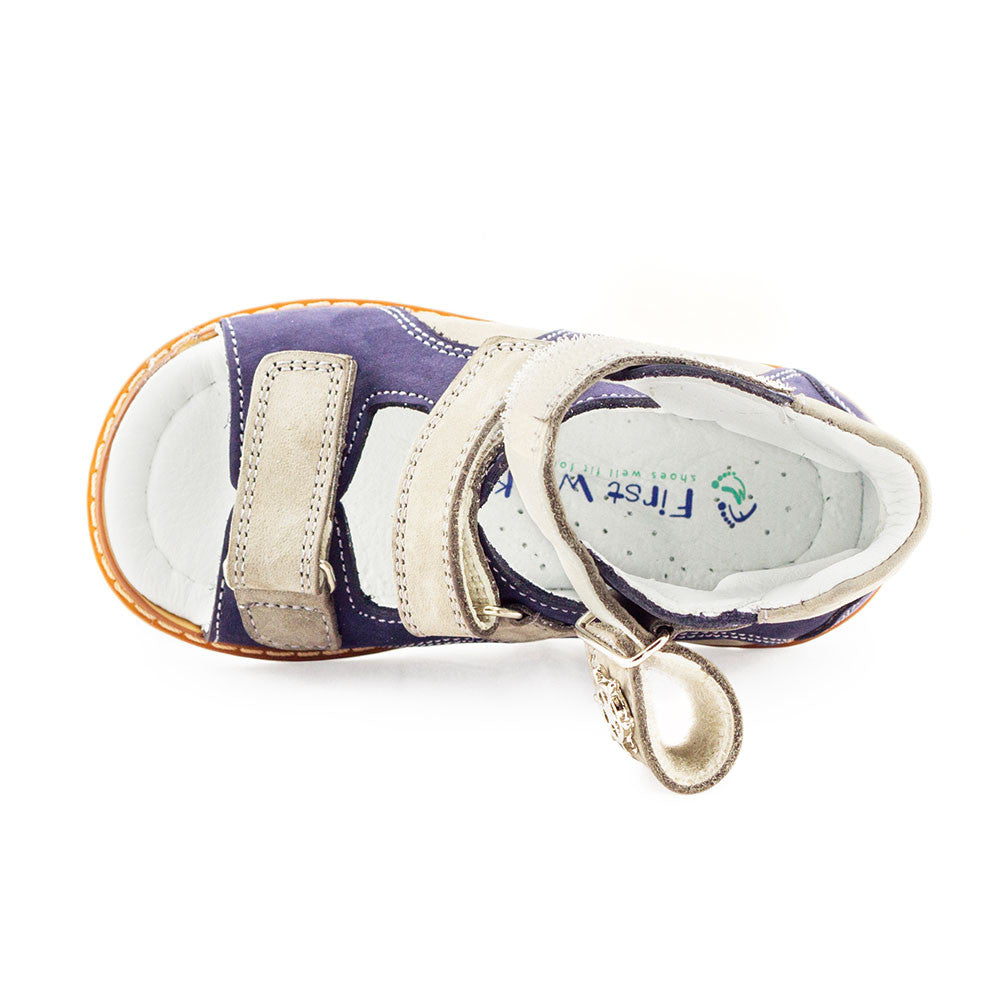
Captain Caleb Sandals
Progressive control for energetic explorers.
Type
Sandals
Material
Premium Leather
Sizes
18–30 (EU) | 2–11.5 (UK)
Benefits for kids with a wide gait
- The three-strap velcro system creates motion control across multiple zones
- The lowest strap prevents excessive toe-out positioning
- The middle strap manages midfoot expansion during movement
- The upper ankle strap controls rearfoot stability
- Thomas' heel and shock-absorbent sole guide proper foot positioning
Why they're a top choice
The Captain Caleb takes motion control seriously with its three-strap system that manages different parts of your toddler's foot independently. This matters when your child is running, jumping, and changing direction constantly despite their wide gait. Each strap has a job: forefoot security, midfoot control, and ankle stability.
The high-top sandal design combines support with breathability, perfect for active toddlers who work up a sweat during outdoor adventures. The Captain Caleb sandal excels when your wide-gait toddler needs maximum control during varied activities without overheating or feeling weighed down by heavy, restrictive footwear.
6
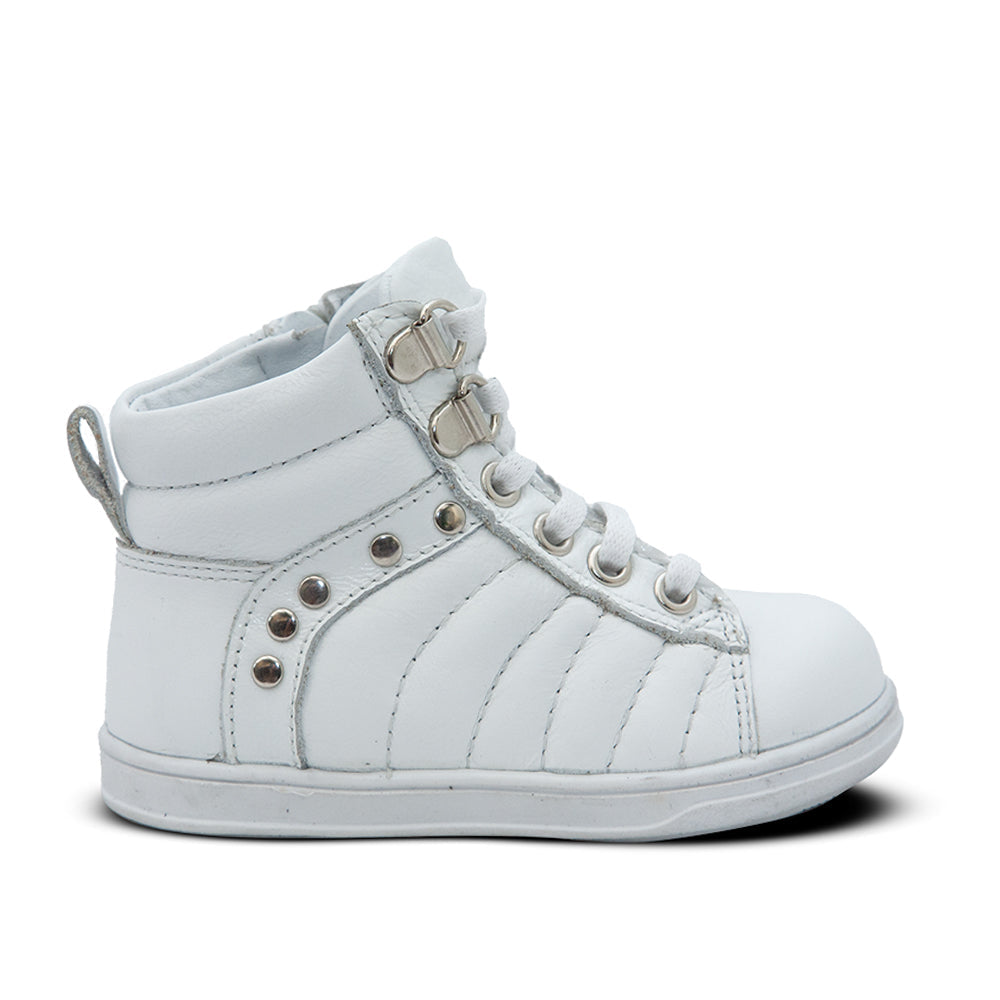
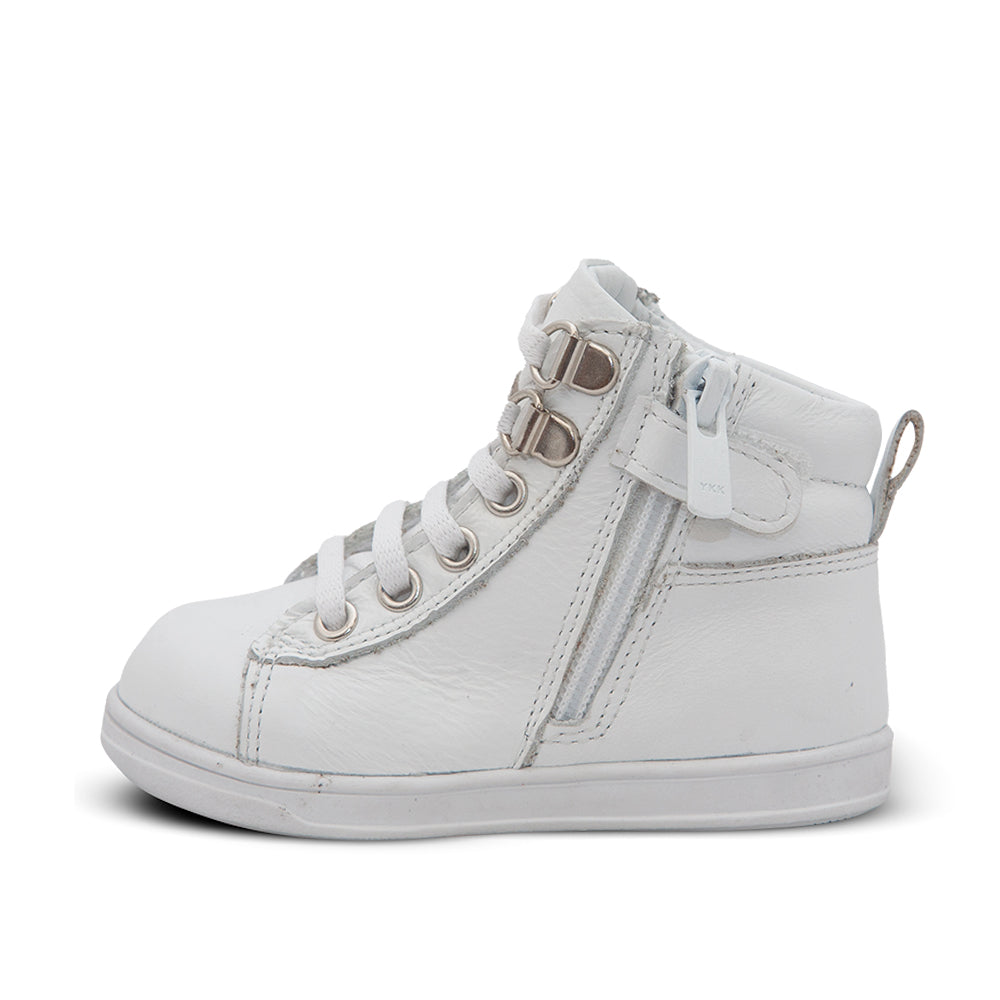
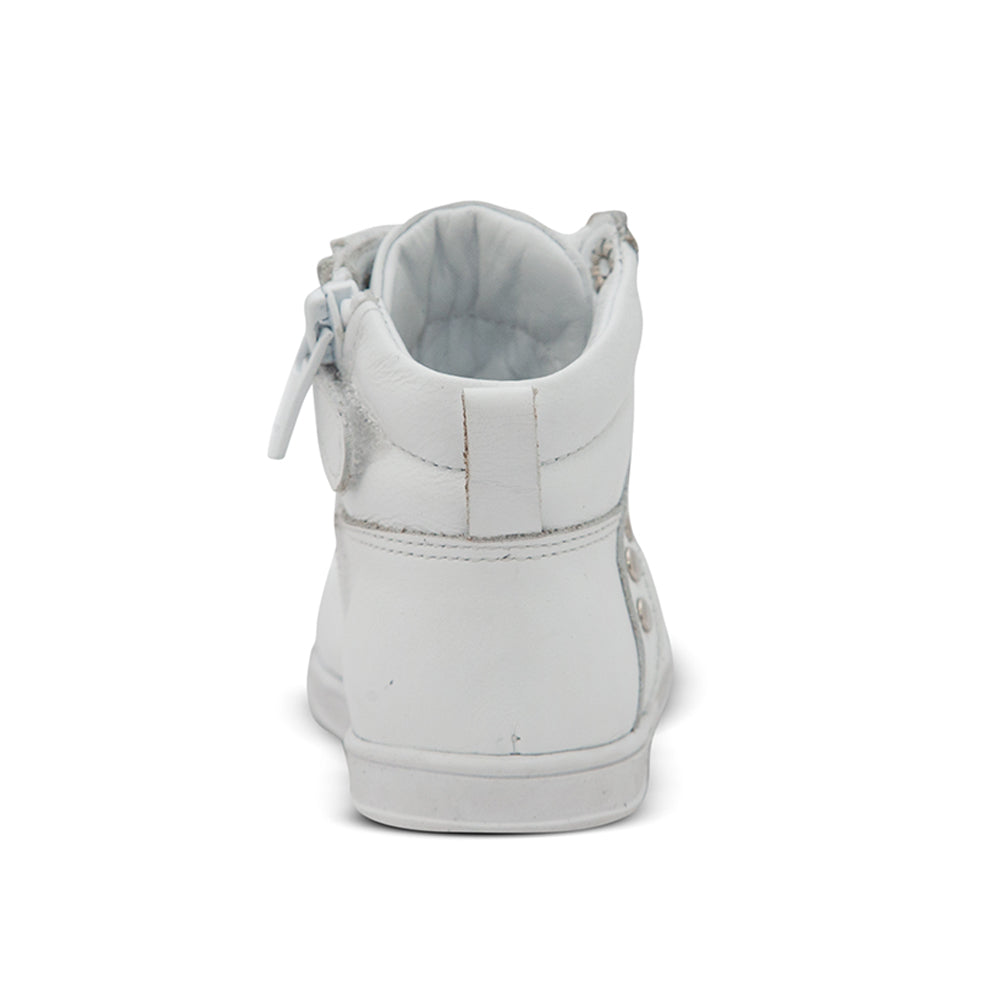
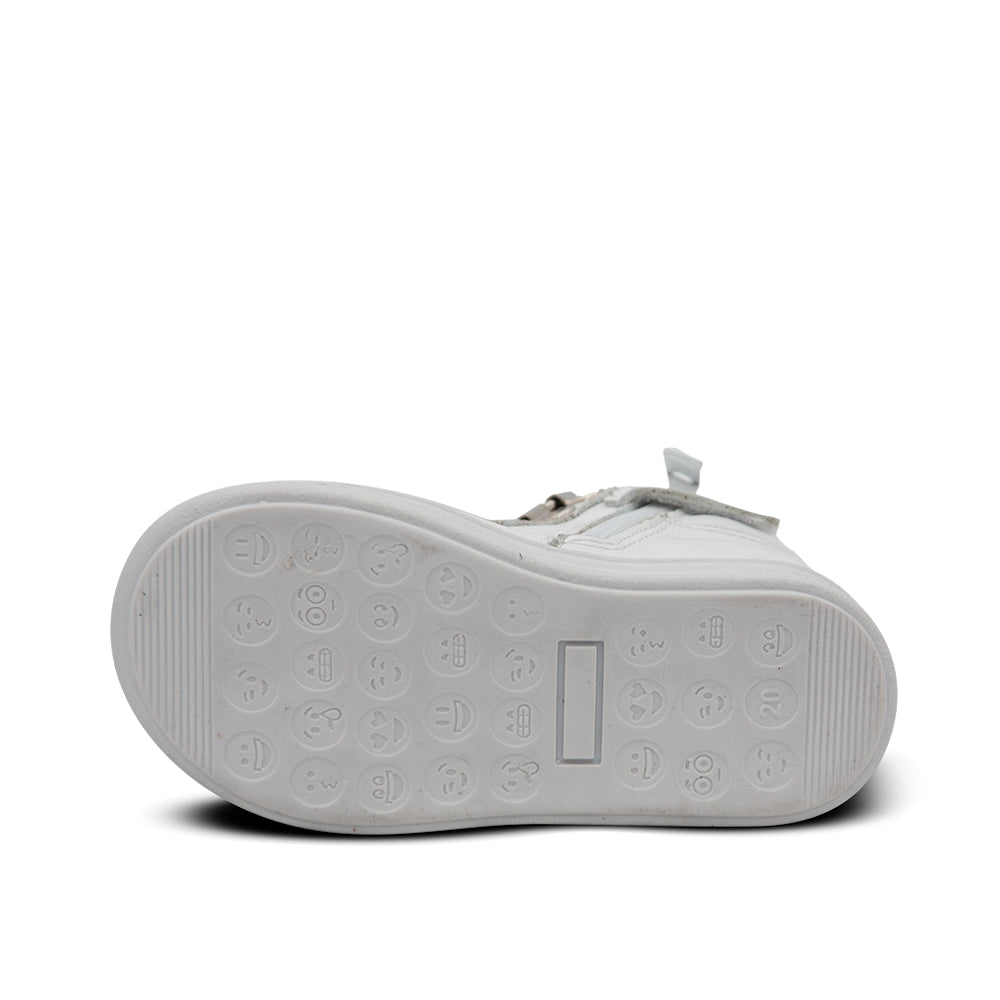
Billy Smooth Sneakers
Adventure-ready with a customizable fit.
Type
Sneakers
Material
Leather
Sizes
18–30 (EU) | 2–11.5 (UK)
Benefits for kids with a wide gait
- Dual-closure system combines lacing with a side zipper
- Laces allow precise tension across the forefoot and midfoot
- The side zipper enables easy entry without disturbing the fit
- High-top leather provides lateral support for outdoor terrain
- Shock-absorbent outsole handles varied ground surfaces
Why they're a top choice
The Billy Smooth brings something unique with its combination closure system. You can lace it exactly right for your toddler's wide foot, then use the side zipper for quick on-and-off without redoing all that adjustment work. This is a game-changer for outdoor adventures where you're constantly dealing with shoes.
The structured leather construction stands up to hiking trails, nature walks, and playground equipment while still flexing enough for natural foot movement. The Billy Smooth is built for families who love outdoor time and need shoes that support wide-gait toddlers across different terrains without constant worry about stability or durability.
7
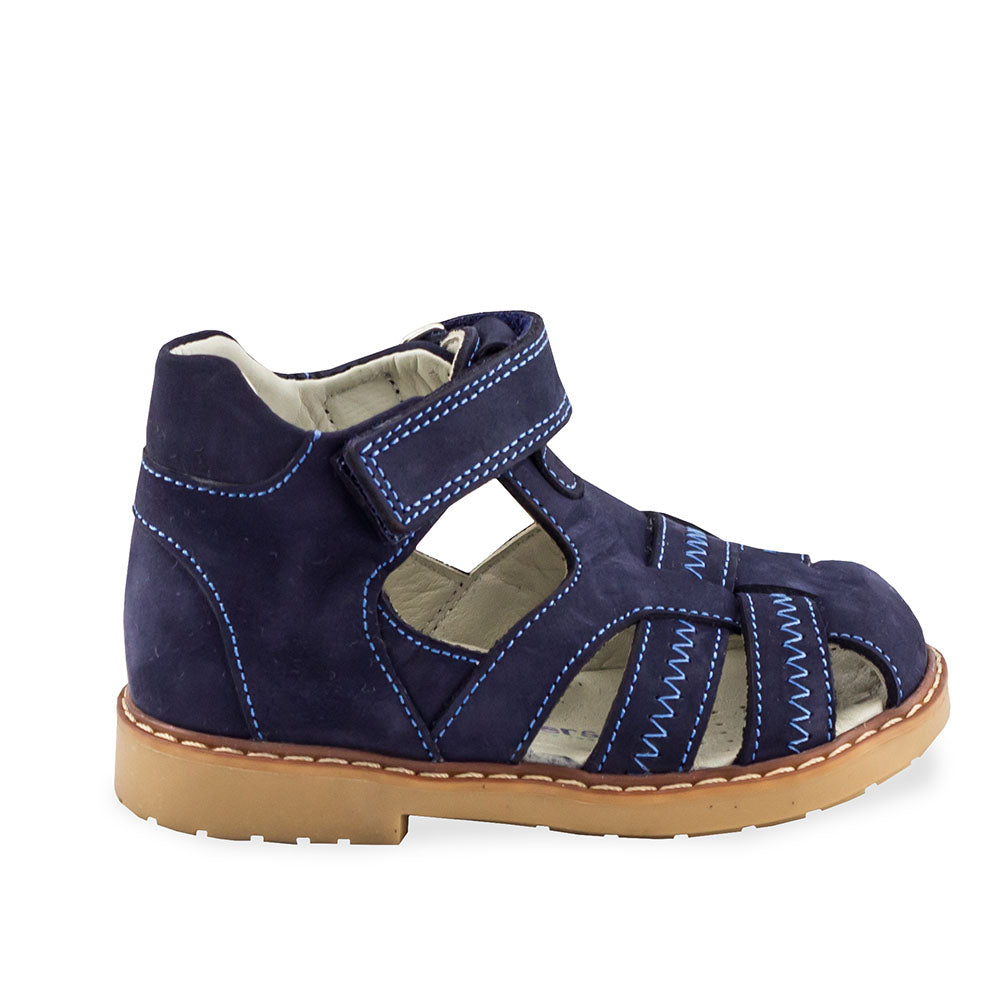
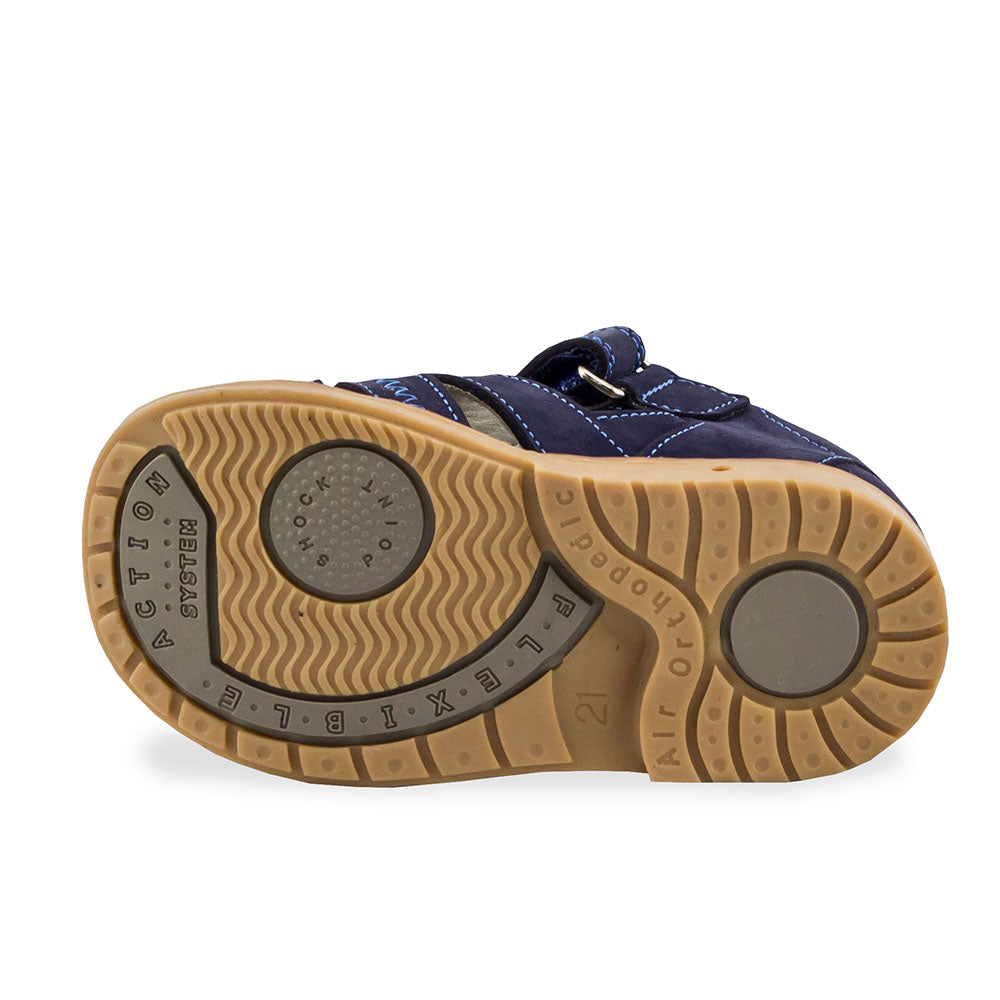
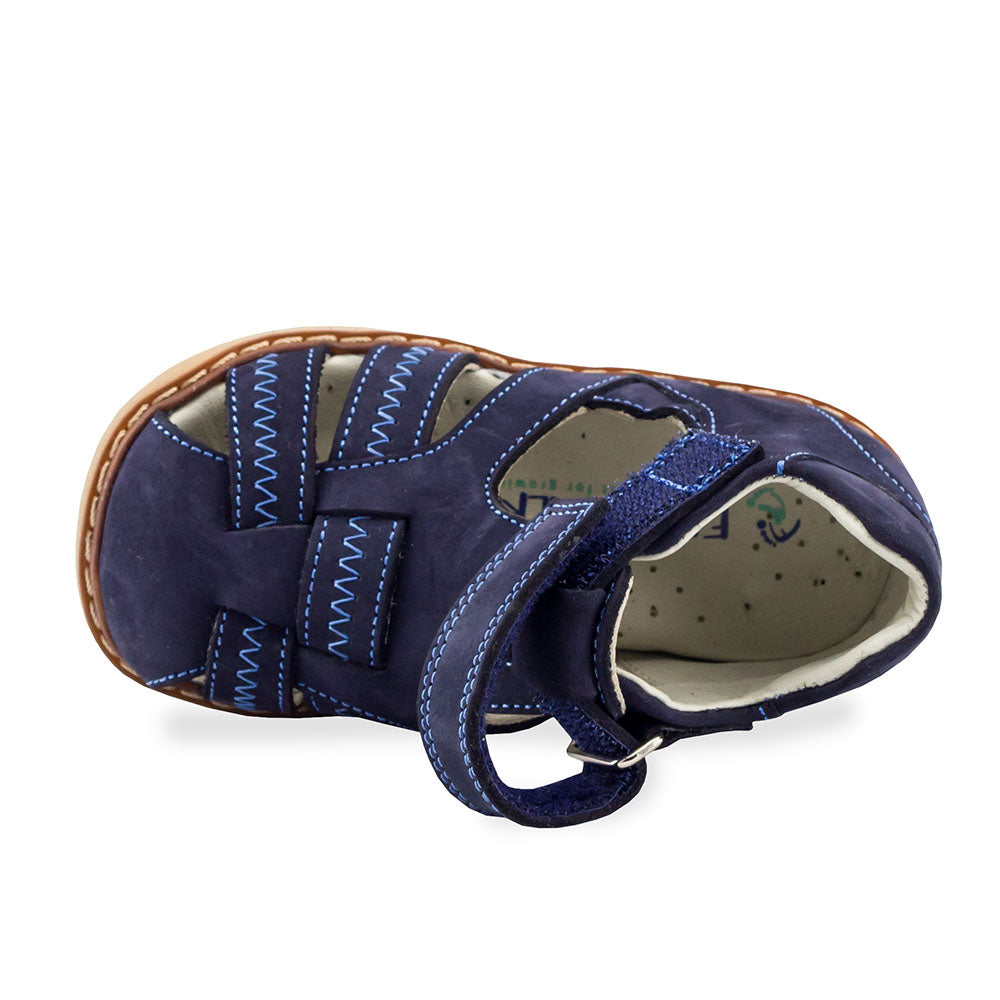
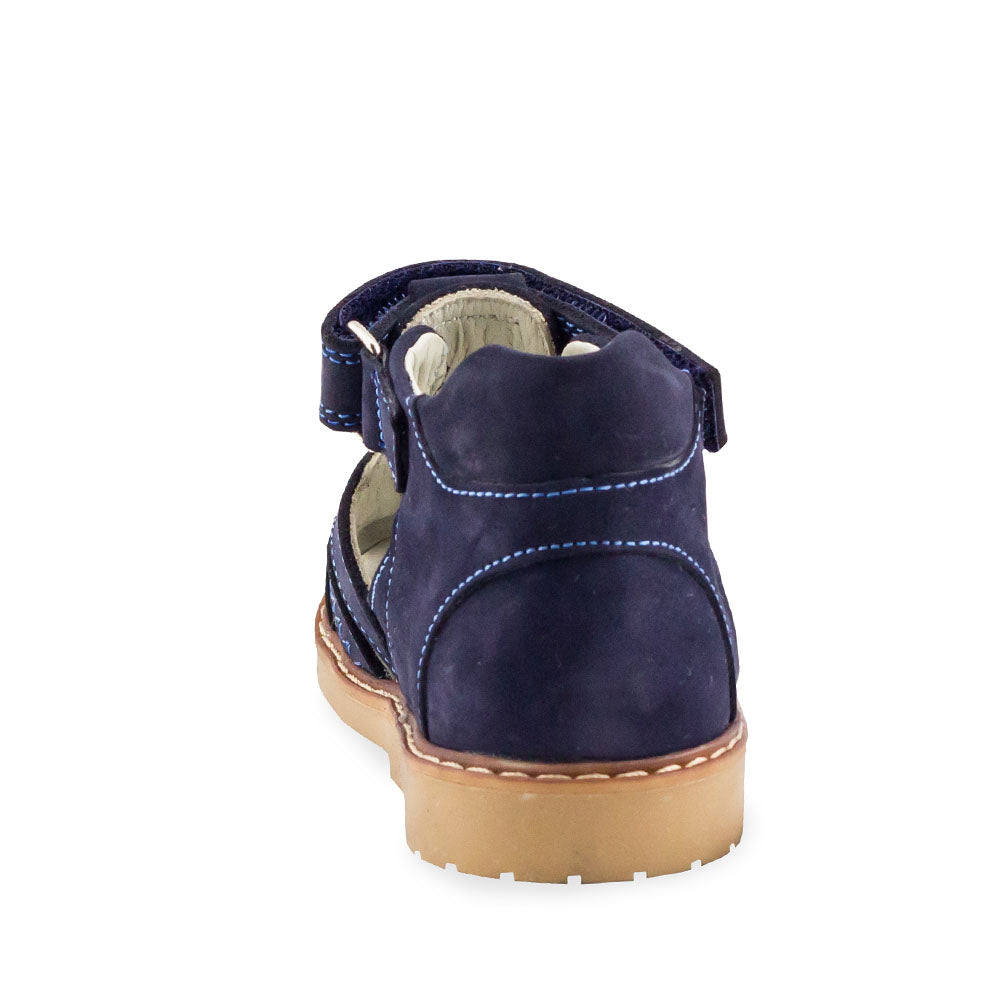
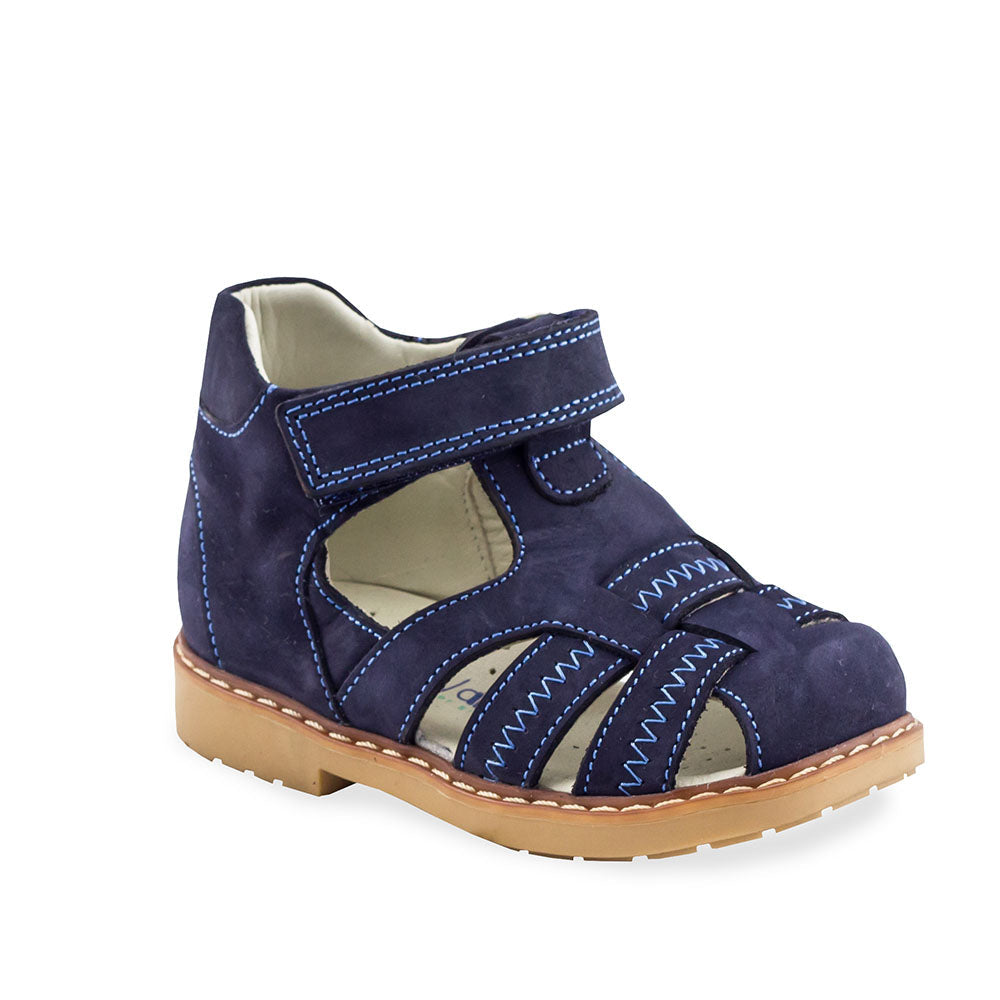
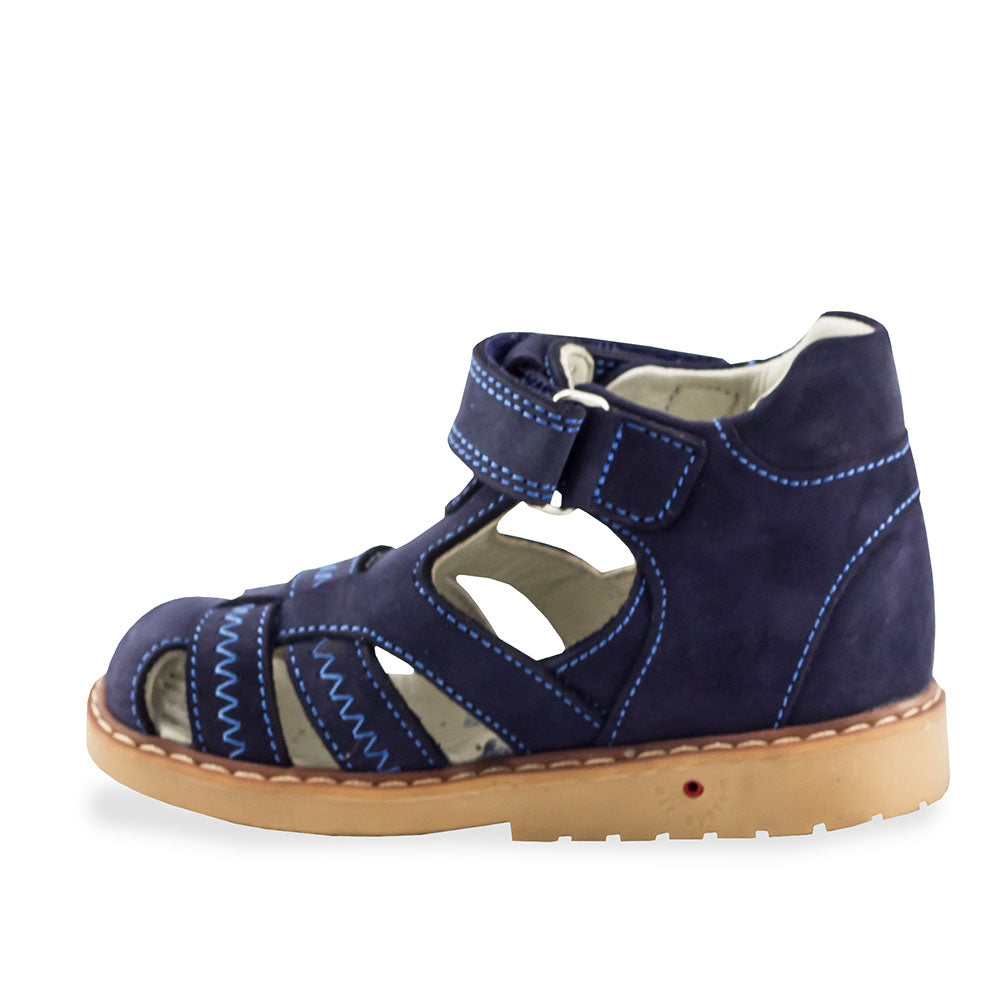
Dandy Dominic Sandals
Gentle support for home and classroom environments.
Type
Sandals
Material
Nubuck Leather
Sizes
18–30 (EU) | 2–11.5 (UK)
Benefits for kids with a wide gait
- Dual-closure system combines lacing with a side zipper
- Laces allow precise tension across the forefoot and midfoot
- The side zipper enables easy entry without disturbing the fit
- High-top leather provides lateral support for outdoor terrain
- Shock-absorbent outsole handles varied ground surfaces
Why they're a top choice
The Dandy Dominic is designed for the hours your toddler spends indoors at home or daycare, where heavy-duty protection isn't necessary, but bare feet aren't practical. The closed-toe design prevents stubbed toes, while the open sides keep feet from overheating during extended indoor wear.
This shoe provides just enough support without overdoing it. Your wide-gait toddler gets the stability they need on smooth floors while maintaining maximum ground feel that helps their balance development. The Dandy Dominic strikes that perfect balance between protection and freedom that indoor environments require.
8
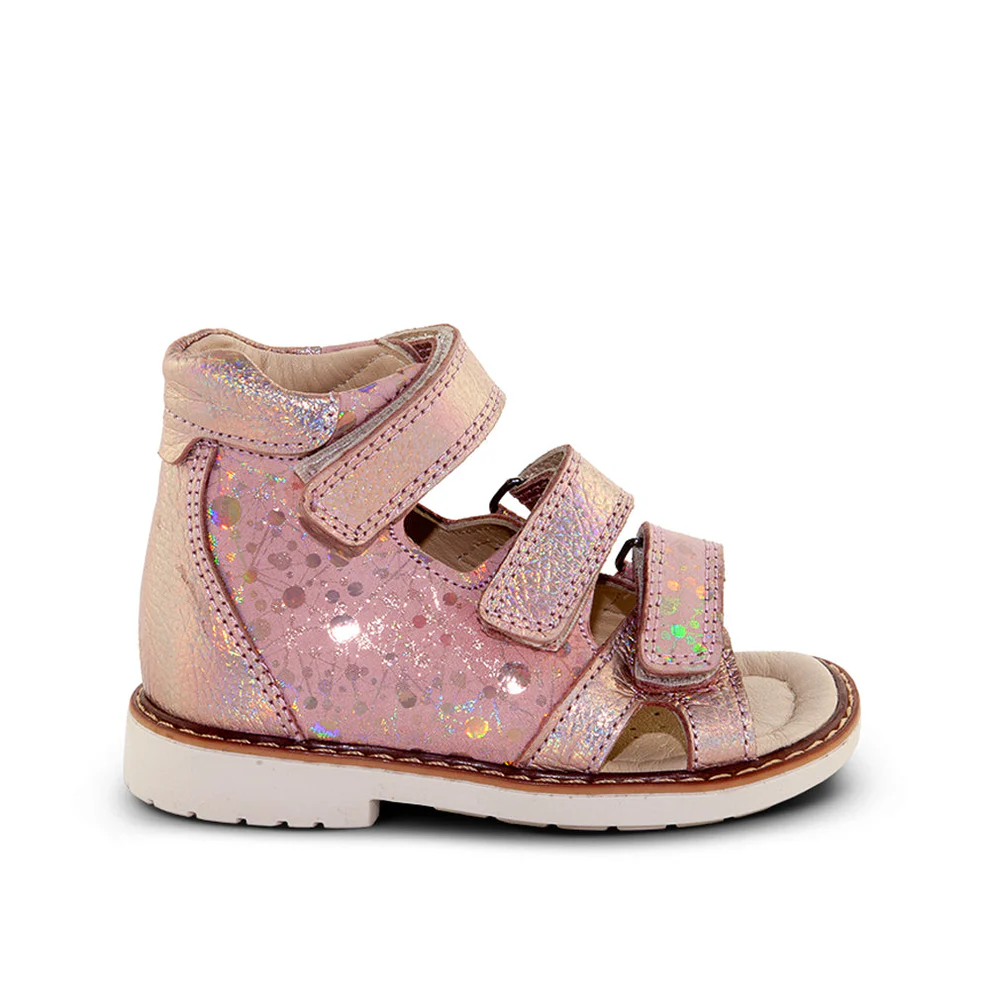
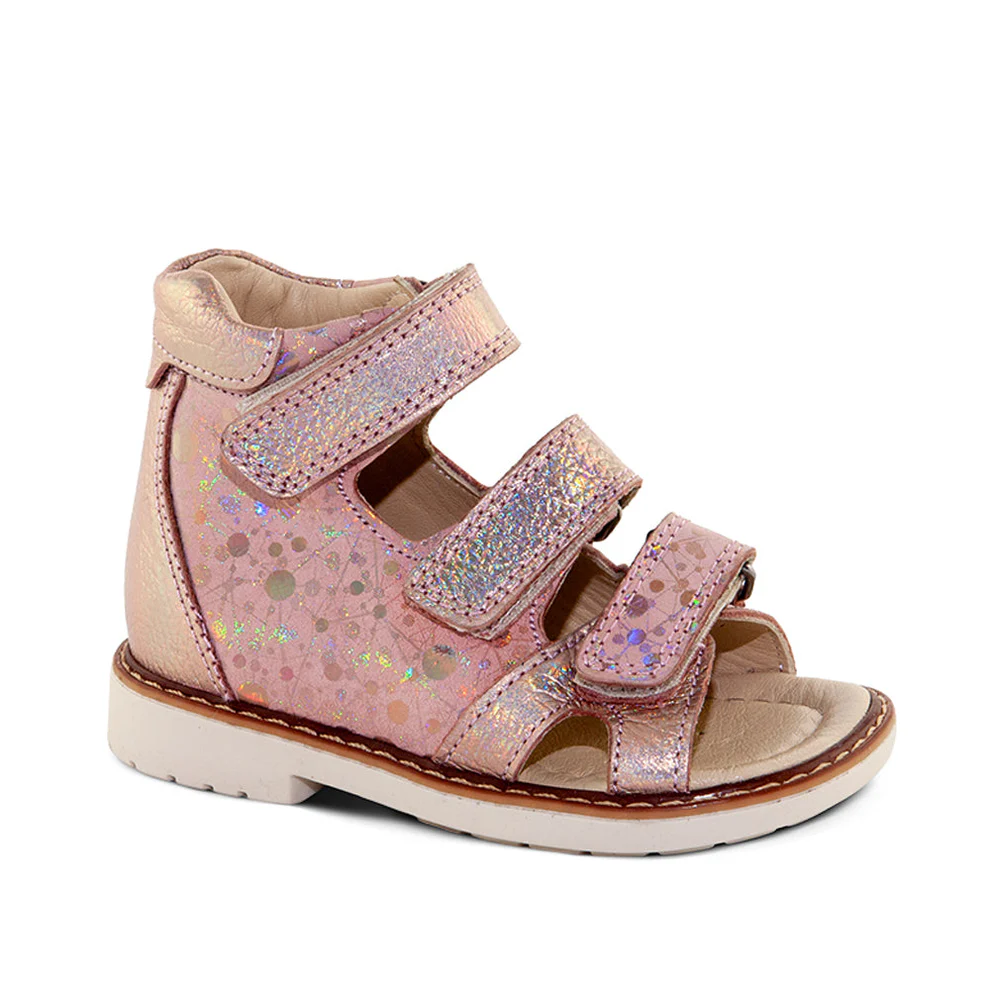
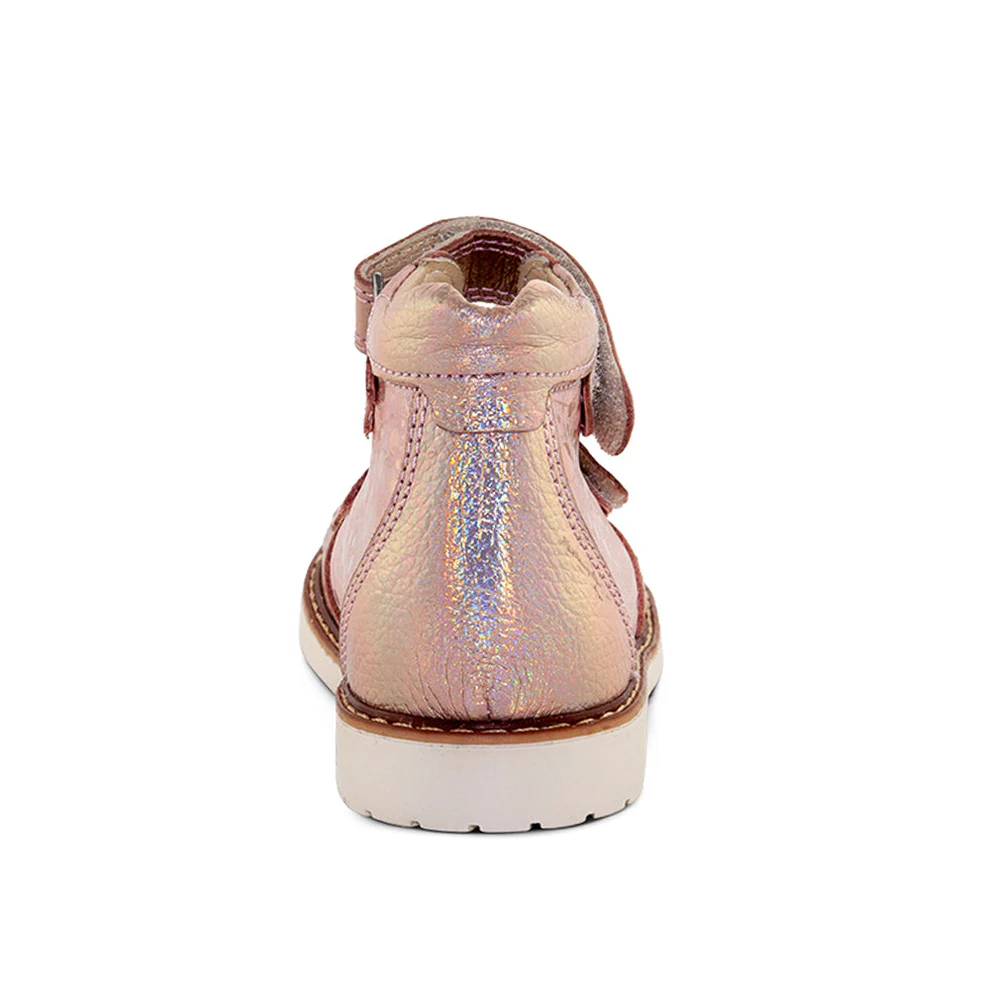
Sophia Sparkle Sandals
Cool comfort for summer adventures.
Type
Sandals
Material
Leather
Sizes
18–30 (EU) | 2–11.5 (UK)
Benefits for kids with a wide gait
- Dual-closure system combines lacing with a side zipper
- Laces allow precise tension across the forefoot and midfoot
- The side zipper enables easy entry without disturbing the fit
- High-top leather provides lateral support for outdoor terrain
- Shock-absorbent outsole handles varied ground surfaces
Why they're a top choice
The Sophia Sparkle handles hot weather beautifully with its maximum ventilation design. Three straps keep your daughter's feet secure while the open construction lets air flow freely around wide-gait feet that need to stay cool during summer play.
The sparkle accents make this shoe a favorite with fashion-conscious toddlers, which means less fighting about wearing proper footwear. The Sophia Sparkle proves you don't have to choose between cute and functional when finding summer shoes for wide-gait toddlers. Quick-drying properties make it perfect for beach trips and pool days where water play is part of the fun.
9
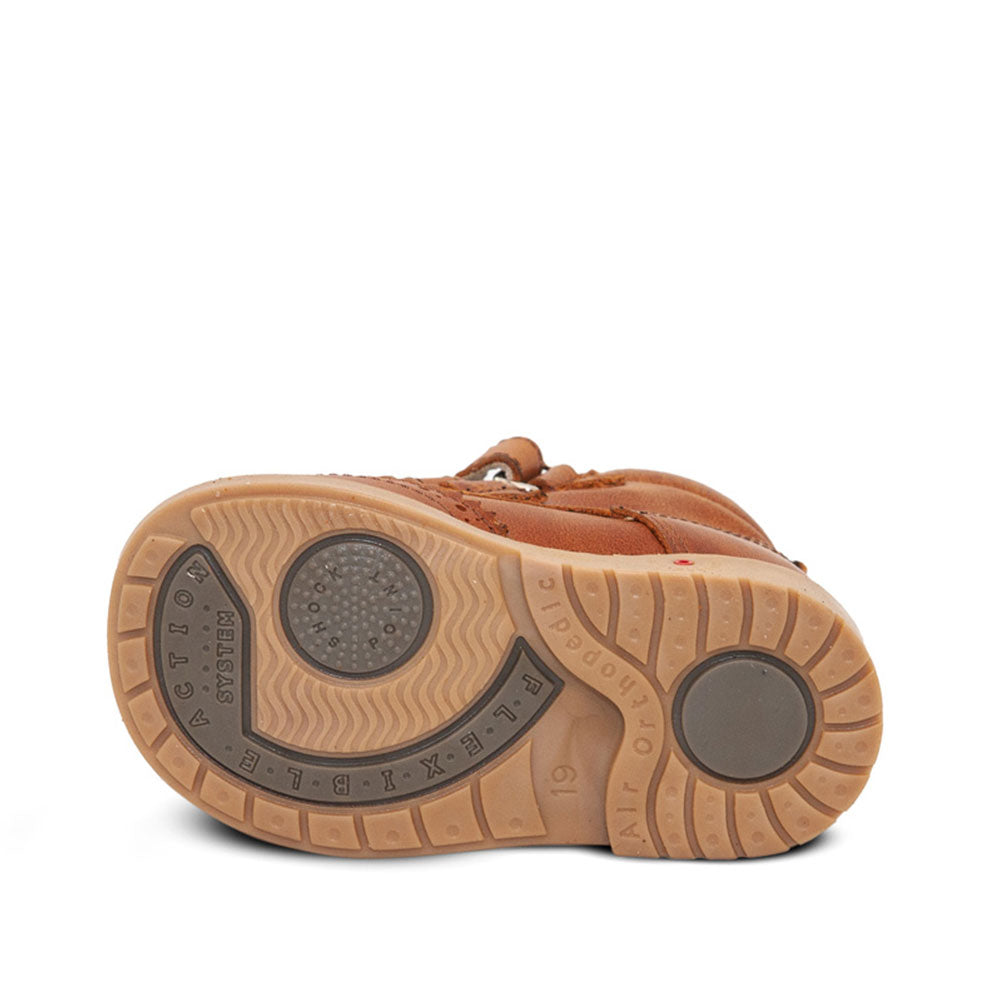
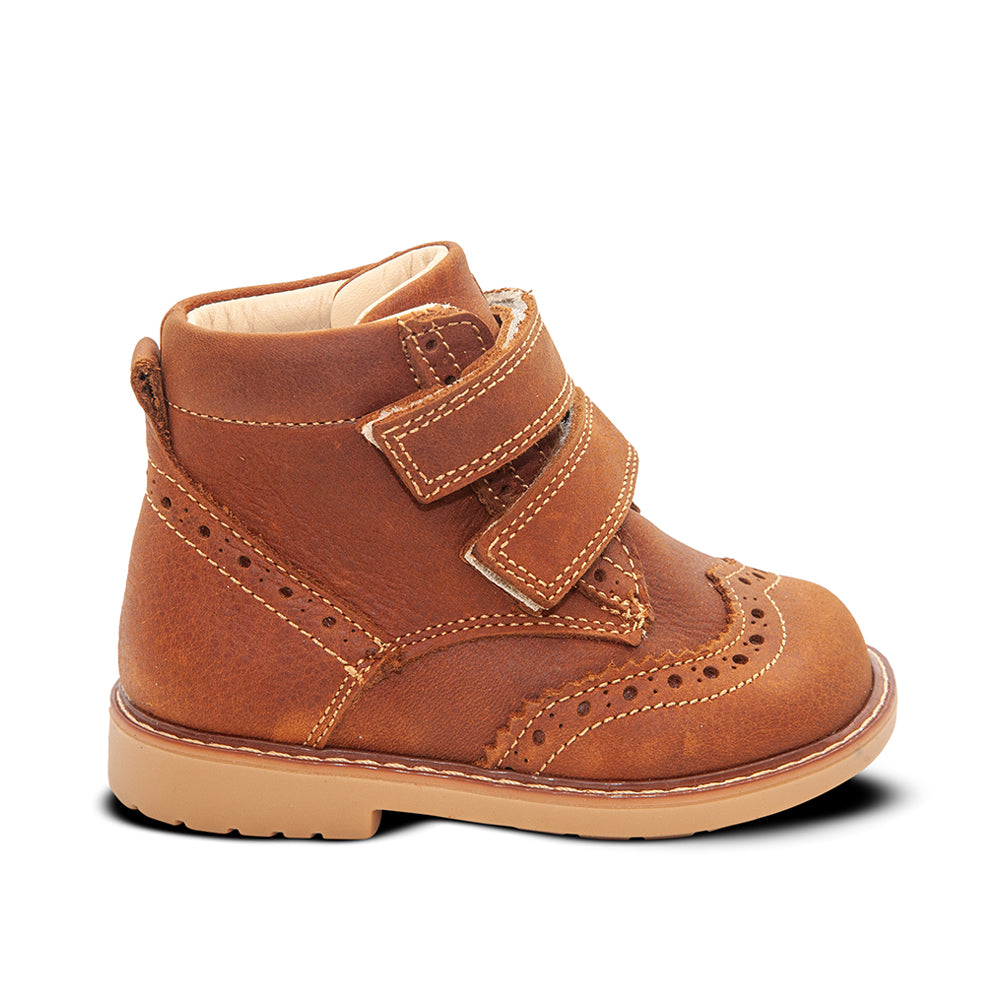
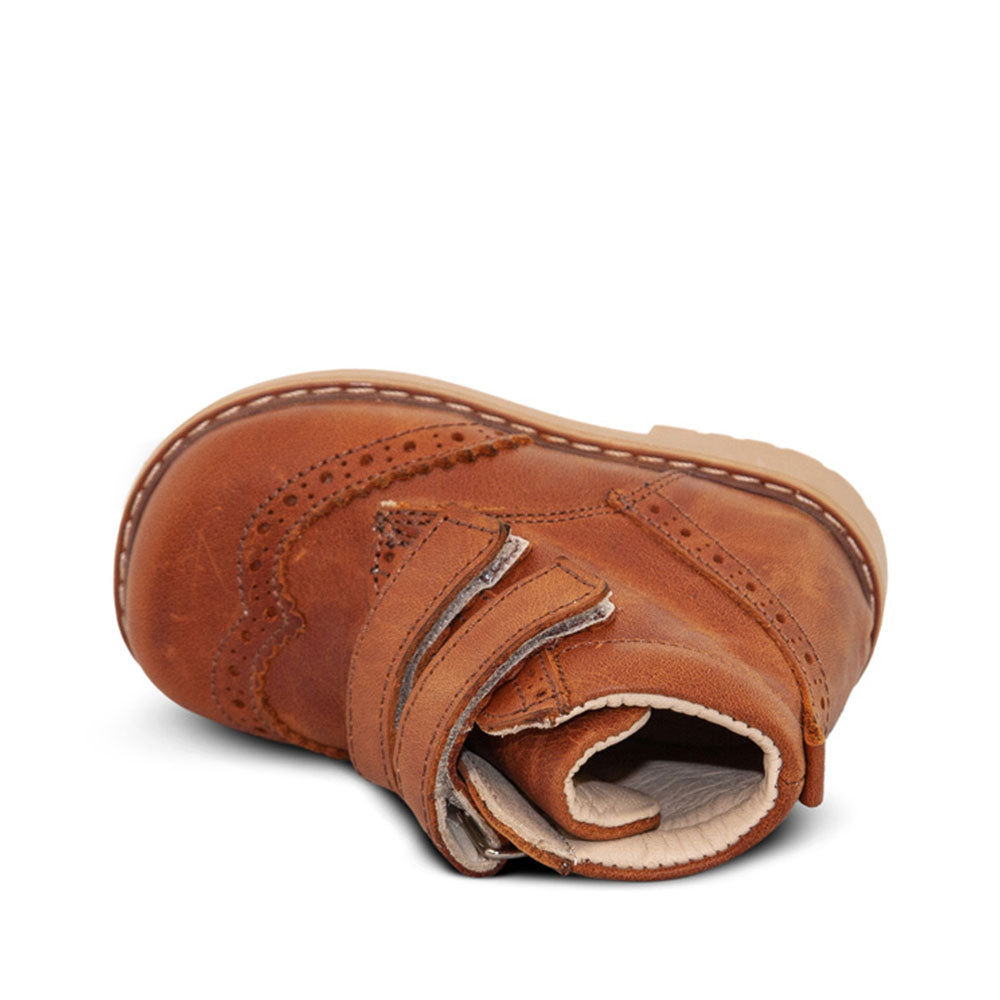
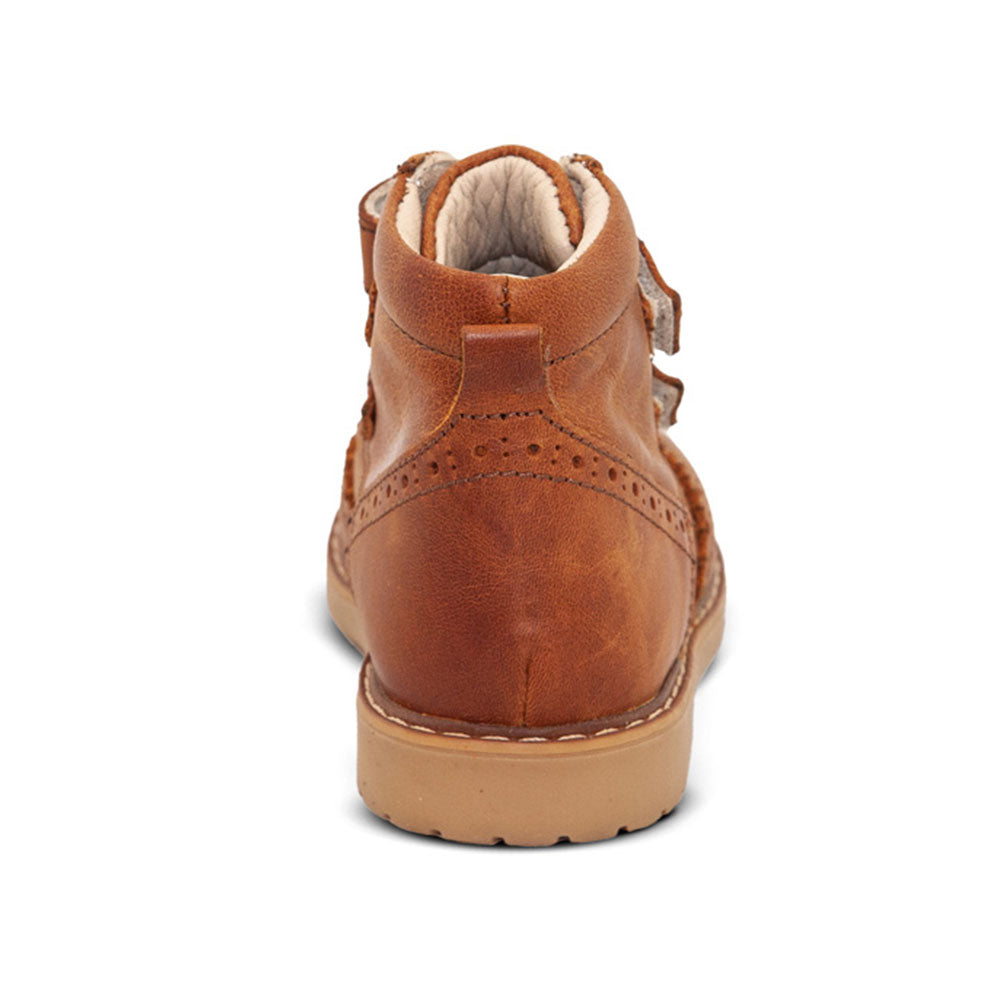
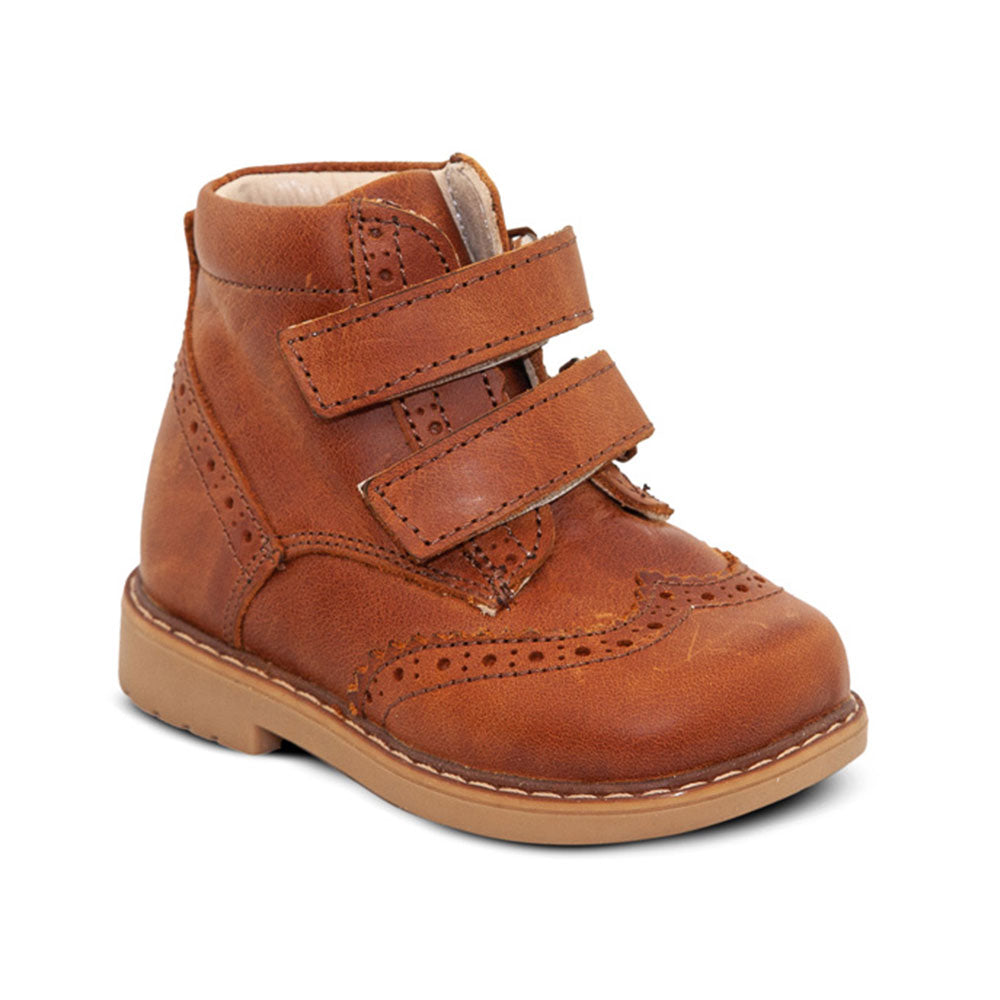
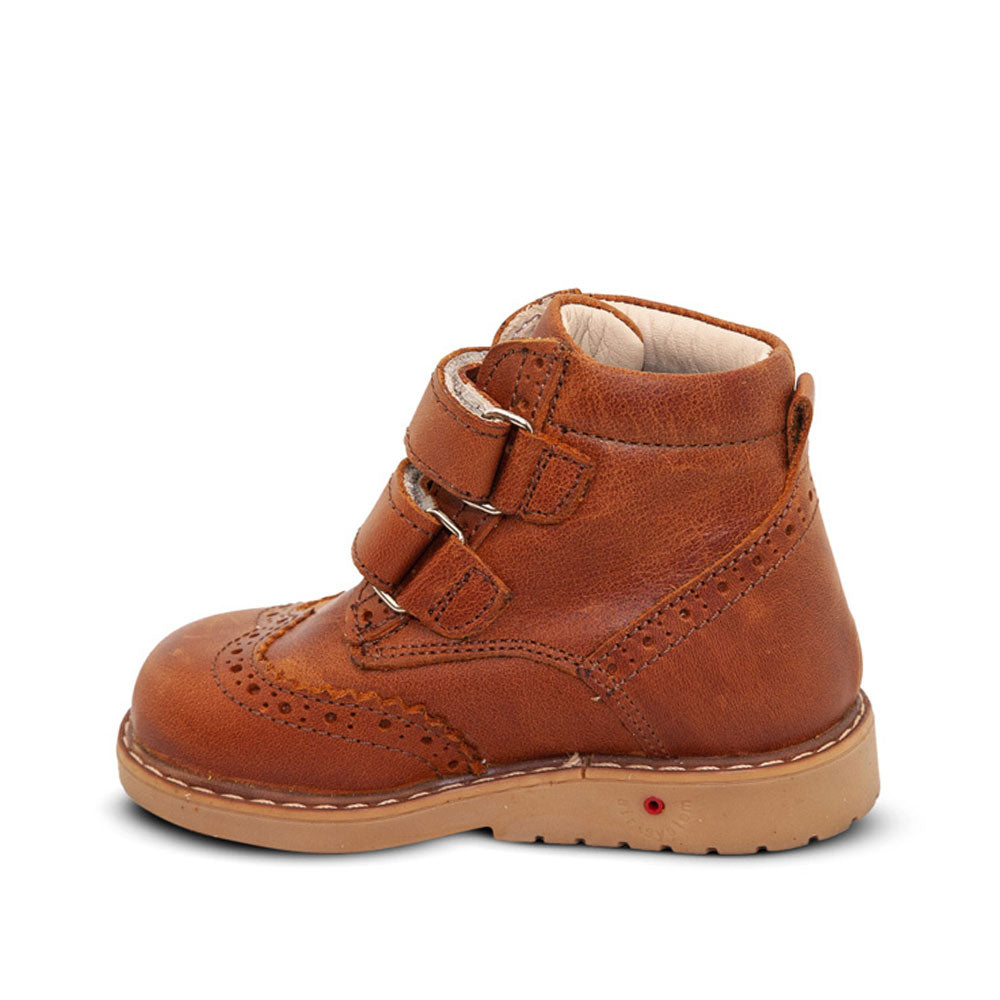
Louis Grim High-Top Boots
Winter warmth with wide-foot accommodation.
Type
Boots
Material
Leather
Sizes
18–30 (EU) | 2–11.5 (UK)
Benefits for kids with a wide gait
- High-top boot construction provides thermal insulation
- Premium calfskin leather flexes to accommodate wider feet
- Dual velcro adjusts for thick socks and temperature swelling
- The reinforced ankle collar adds stability on slippery surfaces
- Shock-absorbent outsole delivers winter traction
Why they're a top choice
The Louis Grim tackles cold-weather challenges head-on with insulated construction that keeps wide-gait toddlers warm during winter outdoor play. The calfskin leather naturally flexes to accommodate wider foot shapes, even when thick socks are added for extra warmth.
Winter surfaces are tricky for toddlers who already have balance challenges. The reinforced ankle support and grippy outsole help your child navigate snow, ice, and wet pavement safely. The Louis Grim ensures winter doesn't mean staying inside all season, giving wide-gait toddlers the protection and stability they need for cold-weather adventures.
10
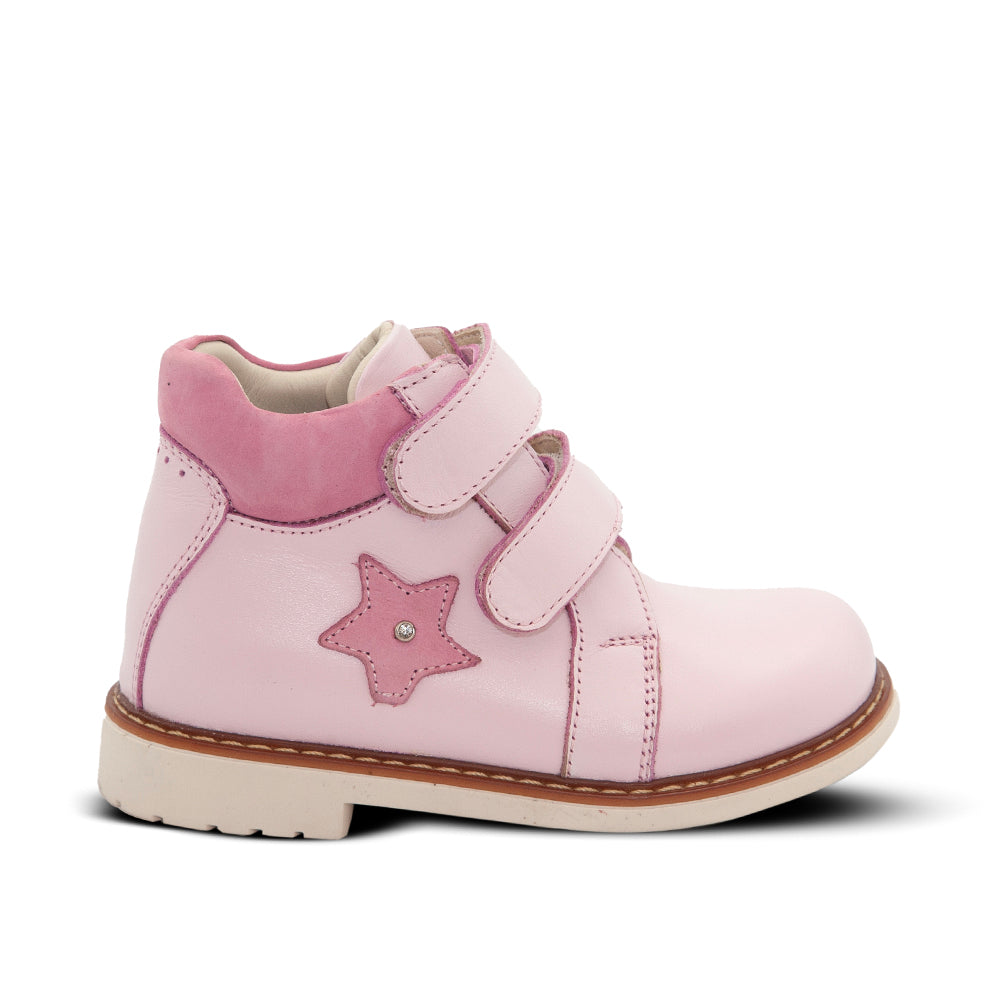
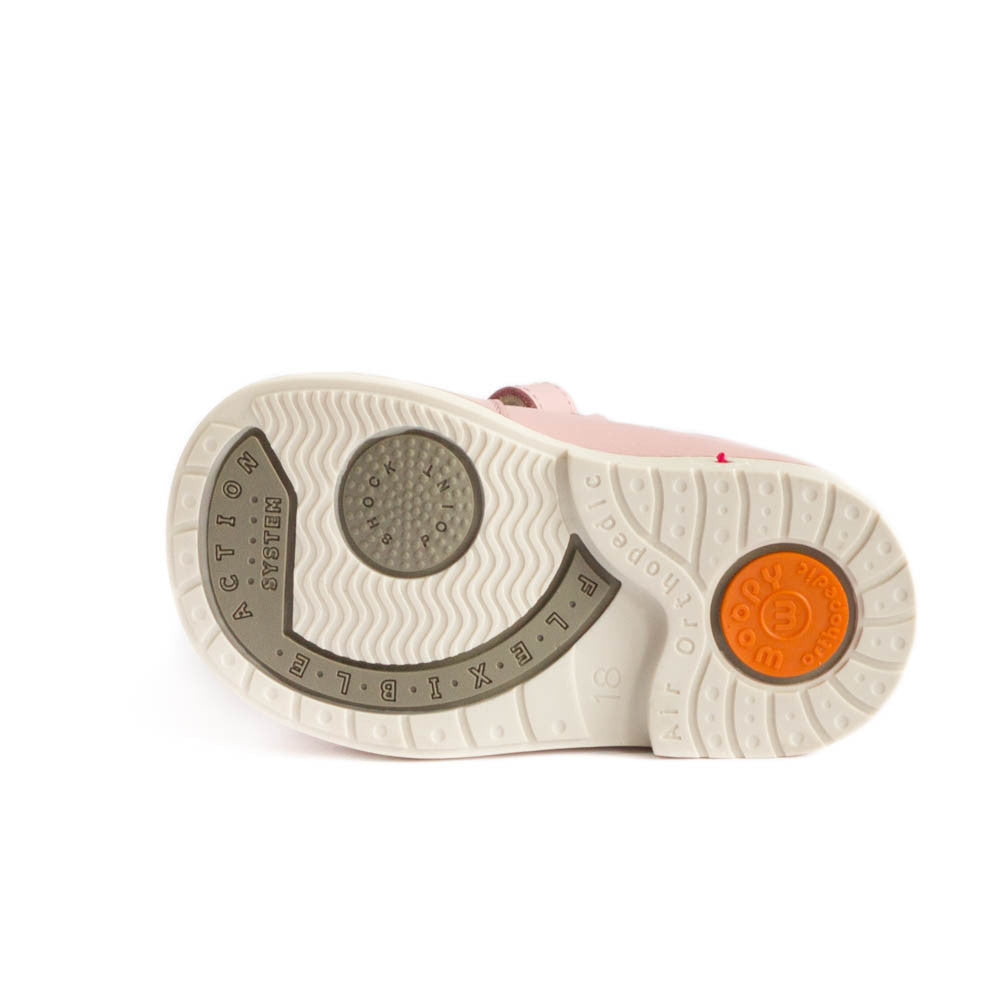
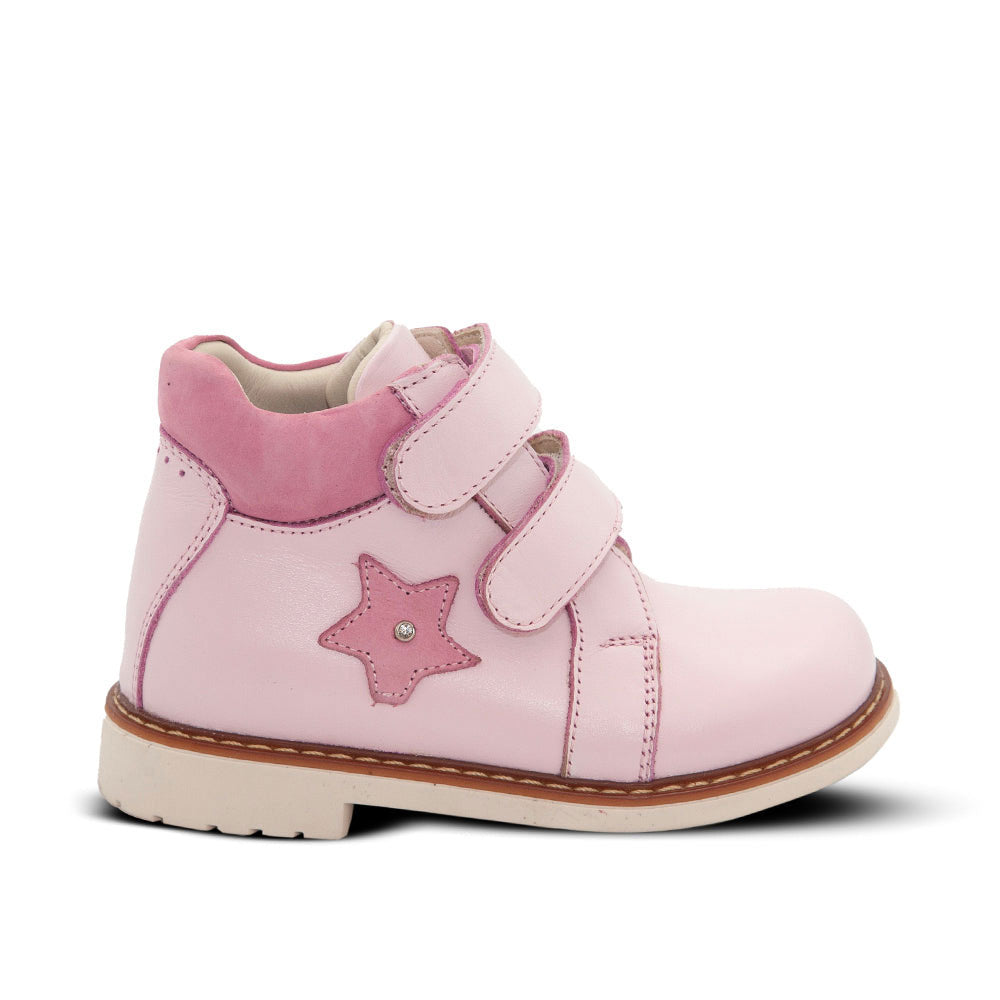
Petit Coralie Boots
Active moisture management for active toddlers.
Type
Boots
Material
Leather
Sizes
18–30 (EU) | 2–11.5 (UK)
Benefits for kids with a wide gait
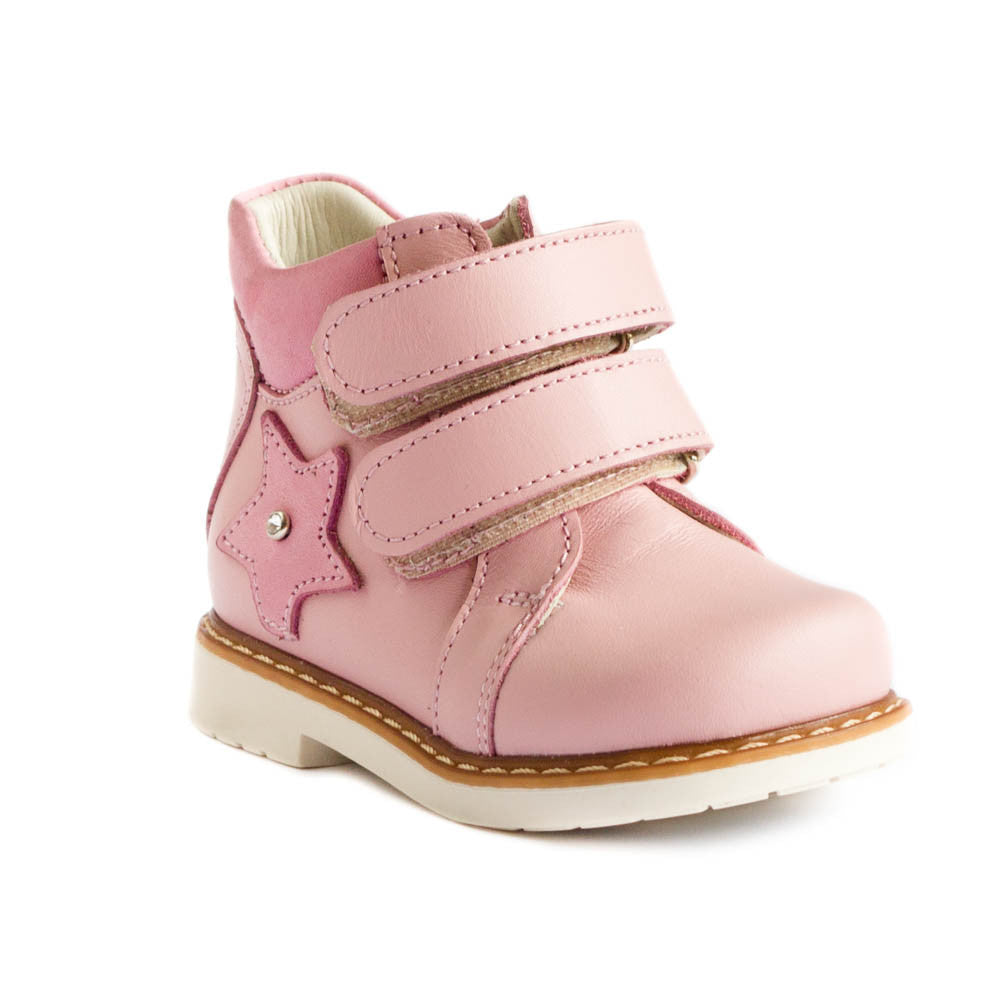
- High-top boot construction provides thermal insulation
- Premium calfskin leather flexes to accommodate wider feet
- Dual velcro adjusts for thick socks and temperature swelling
- The reinforced ankle collar adds stability on slippery surfaces
- Shock-absorbent outsole delivers winter traction
Why they're a top choice
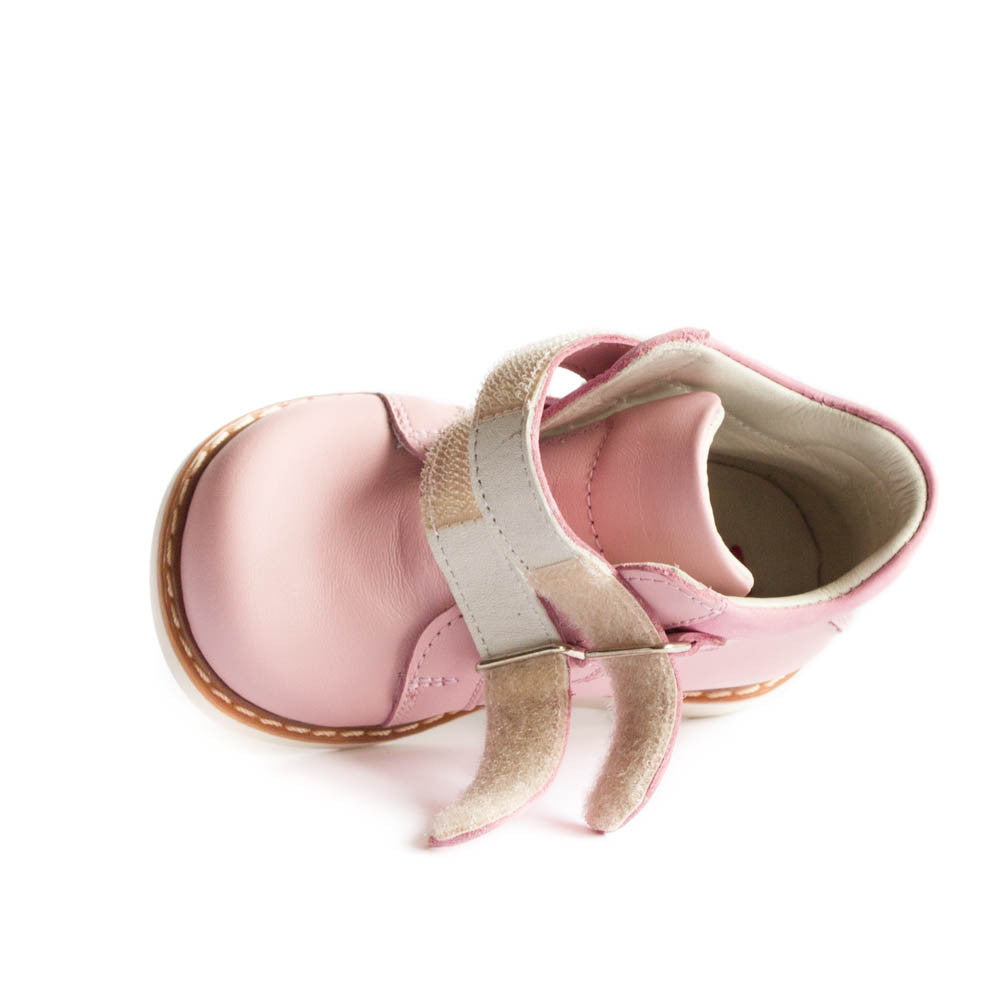
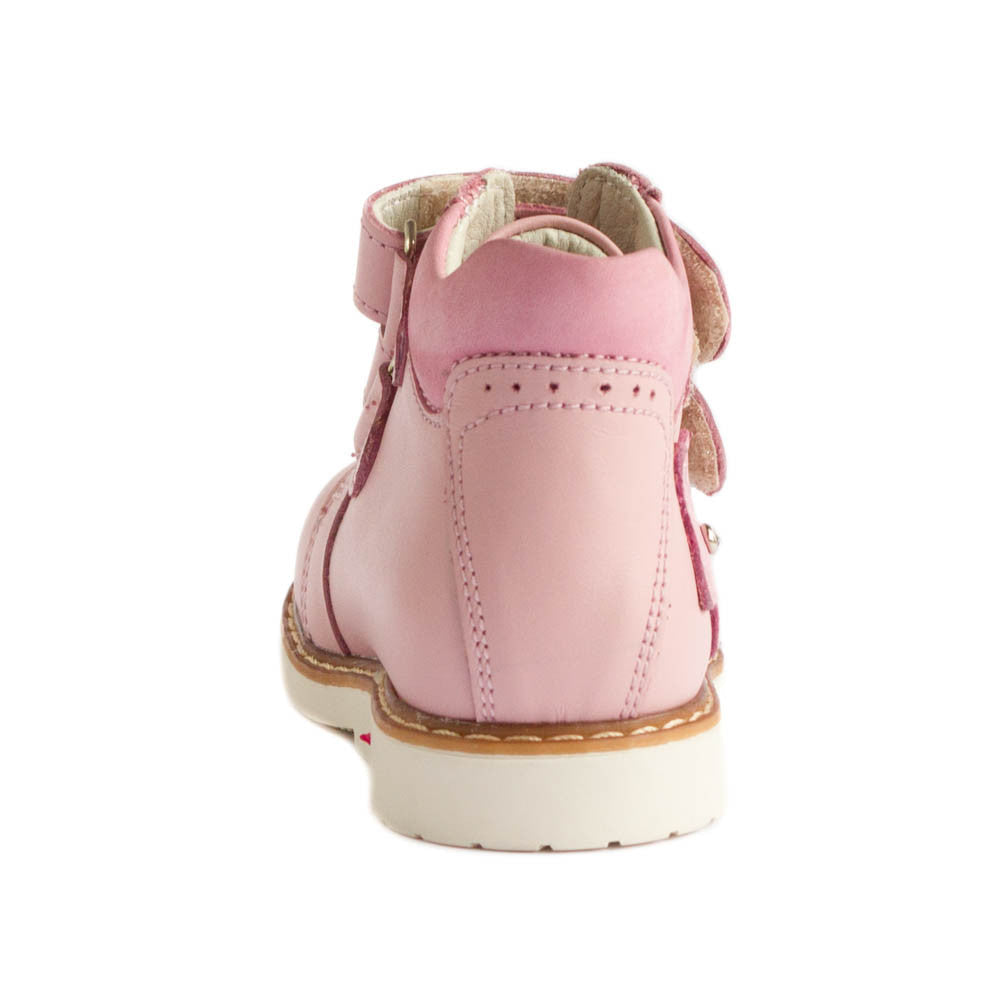
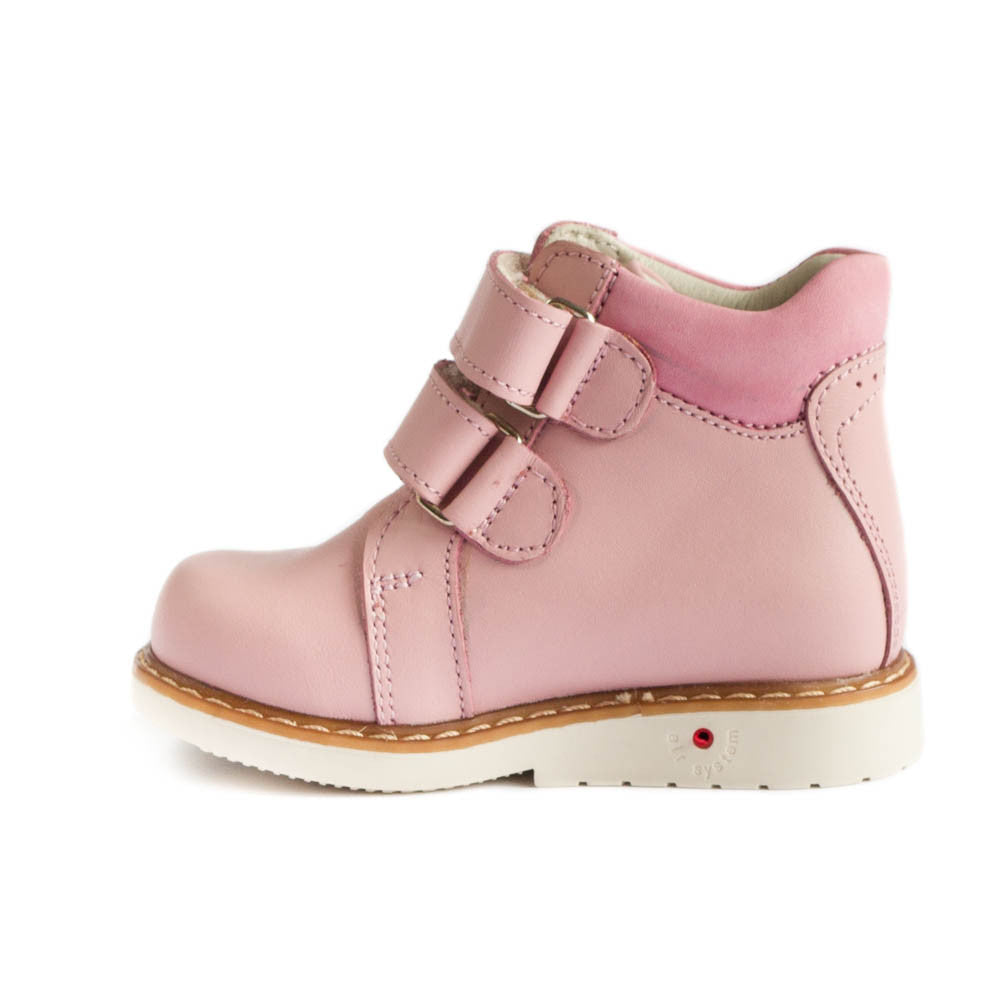
The Petit Coralie specifically addresses sweaty feet with its advanced moisture-management system. The strategically placed air valves actively remove humidity rather than just hoping it evaporates eventually. This matters for active wide-gait toddlers who work hard during play and practice sessions.
The anti-bacterial insole technology prevents odor and hygiene issues that come with excessive foot perspiration. The Petit Coralie extends comfortable wear time significantly, letting your toddler focus on building balance and coordination skills instead of being bothered by hot, damp, uncomfortable feet.
Choosing the Right Shoes for Your Wide-Gait Toddler
Shoes for wide-gait toddlers should support natural development without forcing changes. Your child's body knows how to narrow their stance over time as balance improves and muscles strengthen. The right shoes simply provide stability and comfort during that natural learning process.
The Andy Blue offers dependable everyday support that works across most situations, while the Captain Caleb provides enhanced control for active toddlers who need extra guidance during energetic play. Both options give wide-gait toddlers the foundation they need to build confidence and coordination naturally.
Support Your Baby's Feet
Explore our collection of supportive footwear designed for little feet.
References
1. Walking (GAIT) abnormalities | Boston Children’s Hospital. (n.d.). https://www.childrenshospital.org/conditions/walking-gait-abnormalities
FAQs
Is wide gait normal in toddlers?
Yes, completely normal. Most toddlers walk with a wide stance when learning. It usually self-corrects by age 3 as balance and coordination improve naturally.
What causes wide gait in toddlers?
A wide gait is your toddler's natural balance strategy. Their muscles and coordination are still developing, so their body creates a wider base for stability during early walking.
When should I worry about my toddler's wide gait?
Talk to your pediatrician if the wide stance persists beyond age 3, or if you notice developmental delays, pain, or regression in other motor skills.
Can the wrong shoes make wide gait worse?
Yes. Stiff soles, elevated heels, and restrictive designs can interfere with natural balance development and potentially slow the natural narrowing process.
Do wide gait toddlers need special shoes?
Not necessarily "special" but definitely specific features: wide toe boxes, flexible soles, minimal cushioning, and adjustable closures that support without restricting natural movement.