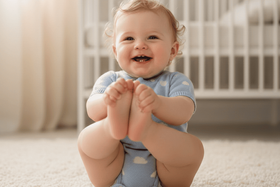
Should Babies Wear Shoes When Learning How to Walk?
Babies don't need shoes when learning to walk indoors. Barefoot walking strengthens foot muscles, improves balance, and supports natural development. Shoes are only necessary outdoors for protection from sharp objects, rough surfaces, or extreme temperatures after your baby has walked independently for 4-6 weeks.




Updated April 24, 2025
AI Summary


When your baby takes their first steps, you will automatically start wondering if they should be wearing shoes. Will it help them walk better, or will they get in the way?
The decision can impact foot development, balance, and confidence. Choosing the right footwear—or none at all—during this stage is key to supporting healthy growth and natural movement.
Should Babies Wear Shoes When Learning to Walk?
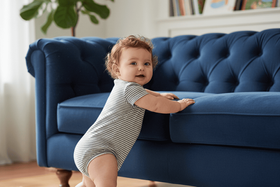
No, shoes aren't necessary for babies learning to walk indoors or in safe environments. Barefoot walking promotes optimal foot development, sensory integration, and balance.
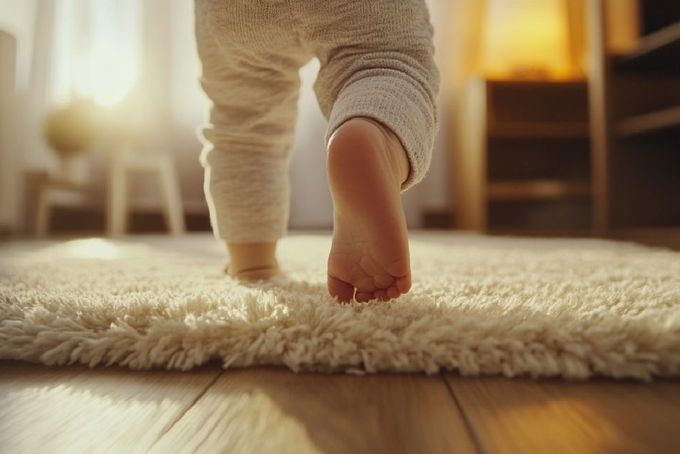
Barefoot is best during the learning phase. Your baby's feet need to feel the ground to build the muscles and coordination required for confident walking.
In my physiotherapy practice, I recommend barefoot time as the default, with minimalist shoes used situationally for safety.
Benefits of Barefoot Walking for Baby Development
Going barefoot in early childhood (9-18 months) builds strong foot muscles and promotes a natural walking style. Let's look at why barefoot matters so much:
Barefoot walking strengthens your baby's feet. When your baby walks without shoes, every step activates muscles that support their arches and ankles. Research shows barefoot practice strengthens foot muscles up to 57% more than wearing shoes early [1].
It also improves balance and body awareness through proprioception—your baby's sense of where their body is in space. Ground contact stimulates over 200,000 nerve endings in each foot, sending feedback to your baby's developing brain.
Muscle and Arch Development Benefits
Barefoot walking in childhood builds healthier feet for adulthood. Kids who walk barefoot often develop better coordination and stronger arches, reducing strain on their feet over time.
Your baby's arches develop gradually through movement, not through shoe support. Flat feet are completely normal in babies. Those arches form as your child walks, runs, and plays—especially barefoot.
Barefoot walking in childhood can also lower the risk of adult foot issues like arch pain or plantar fasciitis. Let your baby walk barefoot at home for several hours daily on safe surfaces to strengthen their feet naturally.
Safe Barefoot Environments
Safe environments for barefoot walking include:
Clean indoor floors, including hardwood, carpet, and tile, provide safe barefoot practice where babies can feel surface textures without injury risk from sharp objects or extreme temperatures.
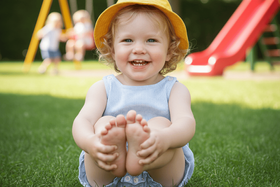
Soft outdoor surfaces like grass, sand, or rubber playgrounds let your baby experience different textures while building foot strength. These surfaces are gentle enough for tender baby feet while providing sensory variety.
Understanding Your Baby's Foot Development
Your baby's feet are different from yours in important ways. Understanding this helps you make better decisions about shoes.
Baby feet have more cartilage than bone. At birth, your baby has 22 separate bones in each foot that are mostly cartilage. These gradually harden into the 26 bones adults have—a process that takes until around age 18-20.
The fat pads in baby feet provide natural cushioning. That chubby appearance isn't just cute—it's protective padding that helps your baby's developing feet [2].
Arches form gradually, not overnight. Flat feet are normal in babies and toddlers. Arches develop through barefoot movement as muscles strengthen and bones mature, typically becoming visible between ages 2 and 6.
Baby feet grow fast—about one full size every 3-4 months in the first three years. This rapid growth is another reason early shoes aren't necessary. Your baby will outgrow them before they wear them out [2].
When Should Your Baby Wear Shoes?
Understanding barefoot benefits helps you know how to encourage your baby to walk and when protective footwear becomes necessary as your baby progresses from indoor practice to outdoor exploration.
Age and Readiness Indicators
Babies typically need their first shoes around 12-15 months, after walking independently for 4-6 weeks. However, timing depends on developmental readiness—balance, coordination, and walking confidence—not just age.
Before independent walking, barefoot practice or socks provide optimal sensory feedback for foot development. Don't rush into shoes. Let your baby master walking barefoot first.
Activity-Specific Shoe Needs
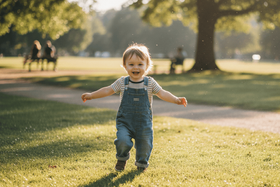
Your baby should wear shoes in outdoor areas with sharp objects, rough surfaces, or extreme temperatures. Concrete sidewalks, gravel paths, hot pavement, and public parks all need foot protection.
Public spaces like stores or clinics are also a concern for hygiene, so having your baby wear shoes protects their feet from germs and potential infections.
Reserve shoes for these situations. The rest of the time, barefoot is better.
How to Choose the Right Shoes for Your Baby
When outdoor protection becomes necessary, choosing the right shoes matters tremendously. Here's what to look for:
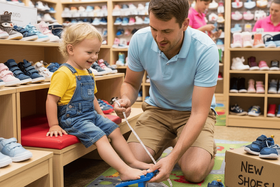
Flexible Soles: The sole should bend at the ball of the foot when you press it. This allows natural foot movement during walking. Stiff soles prevent proper foot mechanics and can delay development
Wide Toe Boxes: Your baby's toes need room to spread naturally during each step. Shoes that squeeze toes together affect balance and can cause problems later. With shoes for wide feet, your baby can wiggle their toes freely inside
Lightweight Construction: Heavy shoes tire your baby's developing leg muscles quickly. Light shoes reduce fatigue and let your baby walk longer
Breathable Materials: These prevent moisture buildup and keep feet comfortable. Synthetic materials trap heat and sweat, leading to discomfort and blisters
Adjustable Closures: Baby's feet swell throughout the day. Adjustable straps let you customize the fit for comfort. They also make shoes easier to get on and off
Low or Zero Heel Drop: The heel and toe should be roughly the same height. This maintains your baby's natural posture and doesn't force unnatural walking patterns
Skip rigid soles, narrow toe boxes, heavy constructions, and elevated heels. These restrict natural foot movement and can interfere with development.
When selecting your baby's first pair of shoes, these features protect feet while maintaining the benefits of barefoot mechanics.
Helping Your Baby's Walking Development
Supporting your baby through their first steps means providing opportunities for barefoot practice in safe environments. Focus on several hours of barefoot practice daily on clean, safe surfaces.
Monitor when your baby walks independently for 4-6 consecutive weeks—this signals they're ready for outdoor shoes. Until then, grip socks work great for slippery floors while keeping barefoot benefits.
When the time comes for shoes, prioritize the features that support natural development. A great option to consider is the range from First Walkers, which are designed with lightweight materials, adjustable straps for a snug fit, and ample toe space to support growing feet comfortably.
Browse Orthopedic Shoes
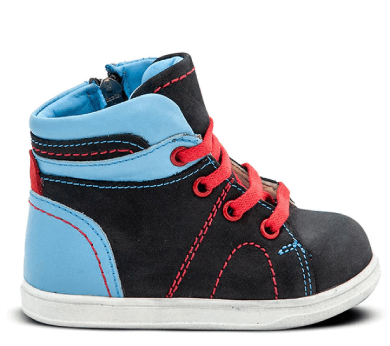
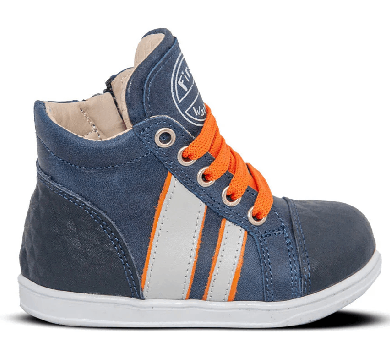
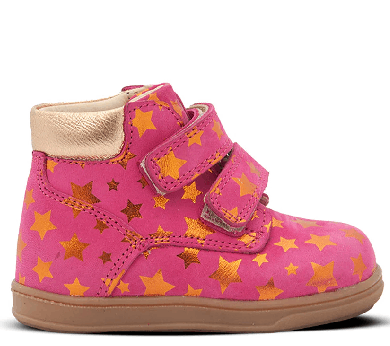
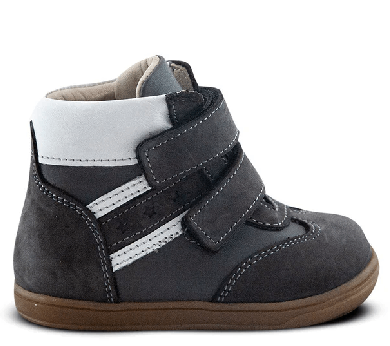
Our collection features supportive sandals, sneakers, and leather shoes in a variety of colors that support healthy foot development in children aged 0-7 years.
Browse Orthopedic Shoes
References
1. Wang, Y., Jiang, H., Yu, L., Gao, Z., Liu, W., Mei, Q., & Gu, Y. (2023). Understanding the role of children’s footwear on children’s feet and GAIT Development: A Systematic scoping review. Healthcare, 11(10), 1418. https://doi.org/10.3390/healthcare11101418
2. Babies and children’s feet - Bradford District Care NHS Foundation Trust. (2025, October 13). Bradford District Care NHS Foundation Trust. https://www.bdct.nhs.uk/babies-and-childrens-feet/
FAQs
When should babies start wearing shoes?
Babies should start wearing shoes around 12-15 months, after walking independently for 4-6 weeks. However, timing depends on your baby's developmental readiness—balance, coordination, and walking confidence—not just age. Before independent walking, barefoot or socks provide optimal sensory feedback. Reserve shoes for when outdoor protection is needed.
Are barefoot shoes good for babies learning to walk?
Yes, barefoot (minimalist) shoes are excellent when protection is needed. Research found toddlers wearing barefoot shoes developed higher arches and more natural walking patterns than those in conventional shoes. Look for zero-drop soles, wide toe boxes, thin flexible materials, and lightweight construction that mimics barefoot walking while protecting from outdoor hazards.
Should babies wear shoes indoors?
No, babies don't need shoes indoors in safe environments. Indoor barefoot time strengthens foot muscles, improves balance, and supports natural arch development. Socks with grip treads prevent slipping on smooth floors while maintaining sensory benefits. Save shoes for outdoor activities where sharp objects, rough surfaces, or temperature extremes require protection.
How do I know if baby shoes fit properly?
Check fit using four tests: there's a thumb's width of space (1-1.5 cm) between your baby's longest toe and the shoe tip, the heel stays in place during walking without slipping, your baby can wiggle toes freely inside, and there are no red marks after wearing. Recheck fit every 6-8 weeks since baby feet grow about one full size every 3-4 months.
Do shoes help babies learn to walk?
No, research shows shoes don't speed up walking development and may actually delay it. Barefoot babies typically walk 1-2 months earlier than babies who wear shoes regularly because ground sensation provides critical balance feedback. Introduce shoes only after independent walking is established, not during the learning phase.