Why Does My Baby Walk With One Foot Turned Out? Pediatric Insight
Most babies walk with one foot turned outward due to developing muscles, bone rotation, or natural balance strategies—and it's usually completely normal. This walking pattern typically corrects on its own as strength and coordination improve, though certain red flags require medical evaluation.




Updated February 10, 2026
AI Summary


If you've noticed your baby walking with one foot turned out like a little duck, it may look awkward, and it's only natural to start worrying about their hips, bones, or development.
However, there's no need to stress. Out-toeing is one of the most common walking patterns parents spot during those first wobbly months of independent walking. And in most cases, it's exactly what nature intended during a toddler's motor development.
What Causes a Baby to Walk With One Foot Turned Out
Out-toeing, often called "duck foot," happens when your baby's foot points outward instead of straight ahead. Several developmental and physical factors can cause this walking pattern, and most are completely normal parts of learning to walk.
Bone Rotation: Newborns are born with about 40 degrees of femoral anteversion, which means the thighbone rotates inward naturally [1]. As your baby starts walking, the leg may rotate outward, causing a wide gait to compensate. This usually corrects itself as your child grows.
Weak Muscles: Walking is brand new for your baby. Their hip and core muscles aren't strong enough yet to keep the leg perfectly straight, so turning the foot out becomes a natural stability strategy [2]. Think of it like riding a bicycle, wobbly at first, smoother with practice.
Hard or Slippery Surfaces: Your baby may turn one foot outward to feel more stable and avoid falling on tricky surfaces. If this happens repeatedly, it can become a habit.
Footwear Choices: Shoes with stiff soles or high tops restrict movement, making it harder for your baby to walk naturally. When movement feels limited, babies often rotate the foot outward to compensate.
Do Babies Naturally Outgrow Walking With One Foot Turned Out
Yes, most babies naturally outgrow walking with one foot turned outward, especially during the first year or two of independent walking. As your baby's hip, core, and leg muscles get stronger and they gain confidence, foot placement usually straightens on its own [3].
Gentle encouragement when walking to play, crawl, climb, squat, and reach for toys helps strengthen the muscles needed for proper alignment. Most children show significant improvement by age 2-3, and many are completely symmetrical by ages 4-5.
When to Seek Medical Evaluation for Out-Toeing in Babies
Most out-toeing is harmless and temporary, but certain signs need professional evaluation:
- Pain, limping, or suddenly preferring to crawl after previously walking.
- Out-toeing that gets worse rather than better over several months.
- Frequent falls that interfere with play and exploration.
- Stiffness, tightness, or very low muscle tone in the legs.
- Delays in running, jumping, or climbing [3].
Supporting Healthy Walking Alignment in Babies
Focus on allowing natural movement rather than trying to "correct" foot position. Choose lightweight first-walker shoes with flexible soles that bend easily, a wide toe box, and flat heels. Avoid stiff, heavy shoes and skip hand-me-downs that may not fit properly.
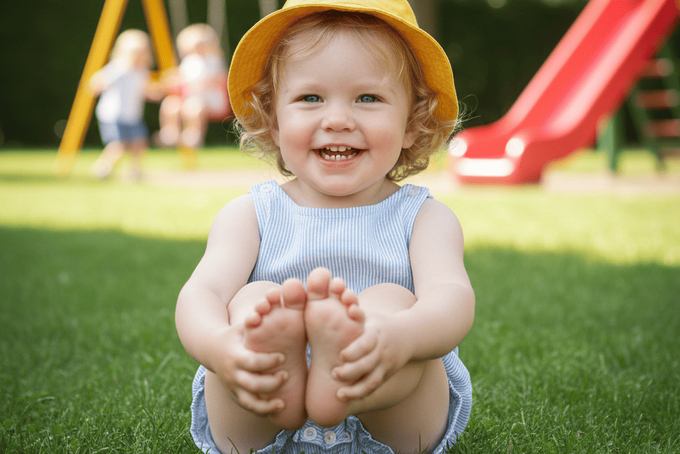
Walking barefoot or with barefoot shoes on safe surfaces helps babies strengthen foot and ankle muscles, develop balance, and sense the ground—all of which support natural alignment [4]. When barefoot isn't practical, socks with grips work well.
Encourage plenty of floor play, crawling, squatting, climbing, and walking on varied surfaces. Healthy alignment develops best through time, strength, and play.
Support Natural Walking Development
Explore our guide to the best first walker shoes for healthy foot alignment.
References
1. Femoral anteversion. (2021, August 8). Johns Hopkins Medicine. https://www.hopkinsmedicine.org/health/conditions-and-diseases/femoral-anteversion
2. Ocean Kids Health. (n.d.). Why Core Strength is Crucial for Kids - Paediatric Exercise Physiology. https://www.oceankidshealth.com.au/why-core-strength-is-crucial-for-kids/
3. Out-Toeing. (n.d.). Nemours KidsHealth. https://kidshealth.org/en/parents/out-toeing.html
4. Splichal, E. (2024, May 17). Why children should be barefoot until age four for healthy brain and body development. Naboso Technology, Inc. https://www.naboso.com/blogs/the-barefoot-advantage/why-children-should-be-barefoot-until-age-four-for-healthy-brain-and-body-development?srsltid=AfmBOop2rHb48vFEmZYjthHiKqlblkdaohnuLEd8kdgmUL9WrCk8LAM_
FAQs
Is it normal for babies' feet to turn out when walking?
Yes, it's completely normal. Most babies turn one or both feet outward while learning to walk as a natural stability strategy. Their hip and core muscles are still developing strength.
When should I worry about my baby walking with feet turned out?
Seek evaluation if you notice pain, limping, worsening over time (especially beyond age 4-5), frequent falls, muscle stiffness, or delays in motor skills like running and jumping.
Can wearing the wrong shoes cause out-toeing in babies?
Stiff or poorly fitting shoes can encourage out-toeing by restricting natural foot movement, making babies compensate by rotating their feet outward. Hand-me-down shoes that don't fit properly can also contribute to poor walking patterns.
At what age does out-toeing usually correct itself?
Most children show significant improvement by age 2-3, with many achieving symmetrical walking by ages 4-5 as muscles strengthen and bones rotate into alignment.
Does out-toeing mean my baby will have flat feet?
Not necessarily. Out-toeing and flat feet are separate issues, though both are common in early walkers and often resolve naturally with growth and strength development.
How does walking with one foot turned out affect my baby's balance?
In the short term, babies adjust by widening their stance or rotating their trunk to stay upright. This looks awkward but is the nervous system experimenting with stability. Mild asymmetry at this stage is common and rarely harmful.
Does out-toeing delay walking progress in babies?
No, out-toeing usually does not delay independent walking. Most babies turn a foot outward as a stability strategy, which actually makes walking easier in early stages. Walking skills progress normally as strength and coordination improve.
Can a baby who walks with one foot turned out develop the same issue in the other foot?
Yes, it can happen. Early walking is often asymmetrical because babies favor one side for balance. As they grow, the body may redistribute load and muscle use, making the other foot turn outward too. This is especially likely if the cause is bone alignment or overall muscle tone rather than a one-sided issue.
Is out-toeing more common in children with autism?
Out-toeing can appear in some children with autism due to differences in muscle tone, joint flexibility, motor control, and sensory processing. However, many autistic children walk typically, and many typically developing children show out-toeing. Out-toeing alone is not a sign of autism.
What role does position in the womb play in out-toeing?
If your baby's hips were positioned with the tibia rotated outward in the uterus, they may continue that pattern as a toddler. Bones twist slightly to fit in the womb and gradually untwist during the first few years of life.
Should I try to correct my baby's out-toeing or let it resolve naturally?
Don't force feet to point straight. Healthy alignment develops best through time, strength, and natural play. Focus on providing proper footwear, barefoot time, and varied movement opportunities rather than trying to "correct" foot position.
Can imitating family members cause out-toeing in babies?
Yes, babies constantly watch and copy movements of parents, siblings, and caregivers. If someone in the household walks with feet turned outward, your baby may unconsciously imitate that posture while practicing balance and gait.