Does Covering Babies' Feet Slow Development? What Experts Say
Covering babies' feet doesn't slow development when done right. Problems only come from tight, restrictive coverings that limit toe movement and sensory feedback. Properly fitted socks and flexible shoes allow normal growth.




Published December 27, 2025
AI Summary


You've heard that babies should go barefoot for healthy development, and now you're worried every time you put socks on your little one. Maybe you're second-guessing those cute footed pajamas or wondering if shoes will hinder your toddler's development and walking progress.
Here's the truth: covering babies' feet doesn't slow development when it's done appropriately. Properly fitted foot coverings allow feet to develop just as well as bare feet. Problems only arise when coverings are too tight or restrictive [1].
When Foot Coverings Become a Problem
Inappropriate foot coverings interfere with development in three specific ways:
Sensory Feedback Gets Blocked: Baby feet contain sensory receptors that send crucial information about balance and body position to the brain. Stiff soles reduce this feedback significantly
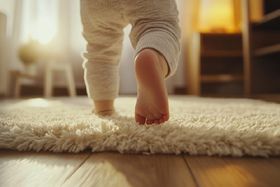
Toe Movement Gets Restricted: Babies learn to walk by gripping the ground with their toes [2]. Tight socks or rigid shoes prevent this natural gripping and muscle engagement
Bones Get Cramped: Infant foot bones are still soft cartilage. When cramped by tight coverings, they can't straighten out and grow properly
The worst culprits:
- Tight socks that leave marks and restrict circulation
- Rigid-soled shoes that prevent natural foot flexion
- Outgrown footed pajamas where toes are cramped inside
What Actually Supports Healthy Foot Development
For Everyday Socks
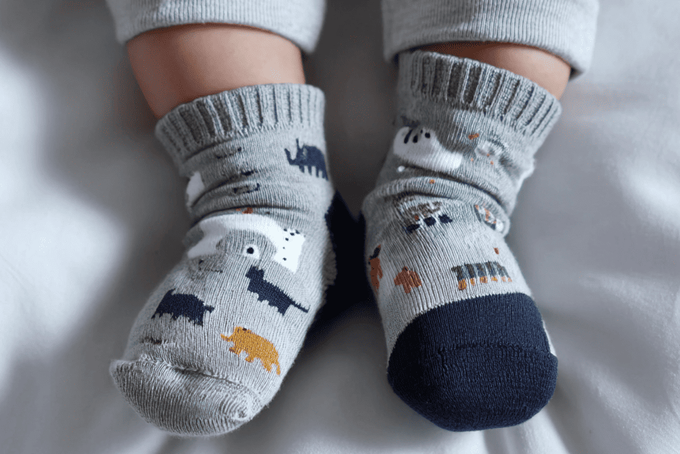
Do the finger test—slip your pinky between the sock and ankle easily. Socks shouldn't leave marks on the skin. Check fit weekly as babies grow rapidly.
Baby Shoes When Needed
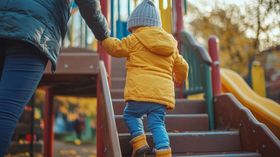
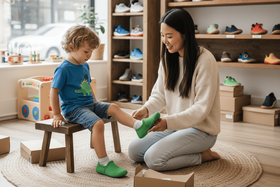
Choose flexible soles and wide toe boxes. Leave a finger-width distance between the big toe and the shoe edge. Shoes should be worn only once your child starts walking outdoors for protection [3].
Baby Footwear for Sleep
Properly sized footed pajamas work fine. Switch to footless styles during awake playtime to allow unrestricted movement.
Baby Footwear for Indoor Time
Let your baby go barefoot during active play to maximize sensory development. Reserve coverings for cold exposure, sleep, or outdoor activities.
What Works Best for Baby's Feet?
Covering your baby's feet won't slow development as long as coverings fit properly and don't restrict movement. The key is choosing flexible, properly sized options and balancing covered time with barefoot play.
When protection is needed, orthopedic prewalker shoes with wide toe boxes provide safety without compromising natural development. Check fit weekly and prioritize barefoot time during indoor play for optimal sensory growth.
Help Your Little One's Feet
Explore our collection of orthopedic footwear designed specifically for supporting little feet.
References
1. Babies and children’s feet - Bradford District Care NHS Foundation Trust. (2025, October 13). Bradford District Care NHS Foundation Trust. https://www.bdct.nhs.uk/babies-and-childrens-feet/
2. Movement milestones: Babies 4 to 7 months. (n.d.). HealthyChildren.org. https://www.healthychildren.org/English/ages-stages/baby/Pages/Movement-4-to-7-Months.aspx
3. Carter, J. (2021, March 2). When Should my Toddler Begin Wearing Shoes? - Melanie Massey Physical Therapy. Melanie Massey Physical Therapy. https://mmptinc.com/when-should-my-toddler-begin-wearing-shoes/
FAQs
Can my baby wear socks all day?
Yes, as long as they fit properly and don't leave marks. Do the finger test regularly—you should easily slip your pinky between the sock and ankle. Give your baby barefoot time during active play for sensory development.
When should babies start wearing shoes?
The American Academy of Pediatrics recommends shoes once children start walking outdoors for protection. Before that, socks are sufficient indoors. When you do buy shoes, choose flexible soles with wide toe boxes.
Are footed pajamas bad for baby's development?
No, properly fitted footed pajamas are fine for sleep. Problems only occur when they're outgrown and cramping toes. Check fit weekly and switch to footless styles during awake playtime for unrestricted movement.
How do I know if my baby's socks are too tight?
Tight socks leave red marks on skin that don't fade within 30 minutes. You shouldn't feel resistance when slipping your pinky finger between the sock and ankle. If circulation looks restricted or toes appear cramped, size up immediately.
Should babies go barefoot at home?
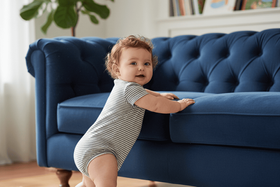
Yes, barefoot time during indoor play maximizes sensory development and allows natural toe gripping. Research shows barefoot activity benefits balance and motor skills. Reserve socks or shoes for cold exposure, outdoor time, or when protection is needed.