What is Pigeon-Toed in Toddlers and Children? A Parent's Guide
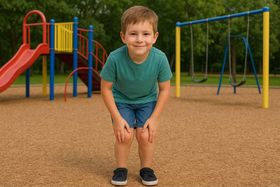
Pigeon toes, or in-toeing, is when a child's feet point inward while standing or walking. It's a common and mostly temporary developmental pattern in toddlers and children that usually resolves naturally by ages 8–10 without treatment.




Published June 5, 2026
AI Summary


If you've noticed your toddler's feet seeming to point inward when they walk, don't worry. This might be pigeon toes, and it's one of the most common things paediatric podiatrists see in young children.
In most cases, it is not a problem. It's simply your child's body doing what it's supposed to do as it grows. Let's go over what causes this condition and how to support your little one.
What Pigeon Toes Mean for Your Child
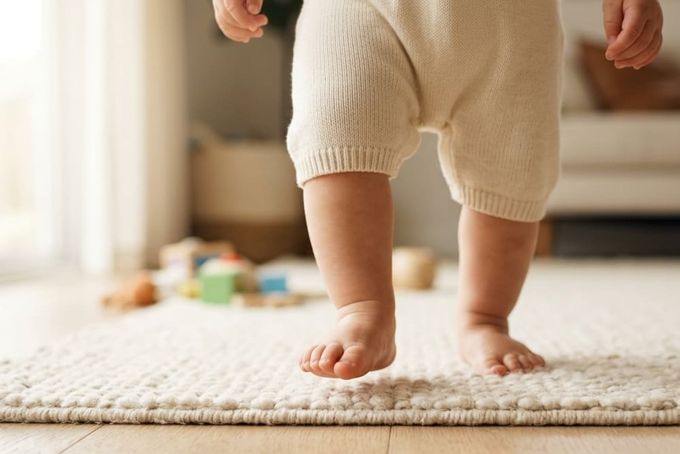
Pigeon toed, also called in-toeing, is different from toe walking in the sense that your child's toes point inward rather than straight ahead while they're standing, walking, or playing. It's not a single condition but rather a pattern that can come from different parts of the leg, depending on your child's age [1].
- In babies, it often comes from the shape of the foot itself.
- In toddlers aged one to two, it usually comes from a slight inward twist of the shinbone.
- In older children aged three to nine, the thigh bone is most commonly the cause.
Each of these resolves naturally as your child's bones grow and straighten.
The pattern will look more obvious when your child is tired or running, and may appear more on one side than the other.
What Causes Pigeon Toes in Toddlers and Children
There are three main causes of pigeon toes in children, and each is tied to a specific stage of development [2].
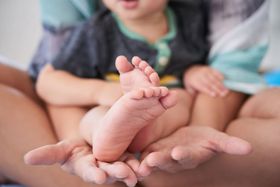
- Metatarsus adductus affects newborns and young babies. The forefoot curves slightly inward, most likely from the baby's position in the womb. The majority of cases resolve on their own within the first year to eighteen months of life.
- Internal tibial torsion is the most common cause in toddlers between one and three years old. The shinbone is slightly twisted inward, which causes the feet to point in even when the knees face forward. This almost always corrects itself between ages two and four.
- Femoral anteversion affects children aged three to nine. The thigh bone rotates inward more than usual, causing both the knees and toes to face inward. Research shows this resolves naturally in the vast majority of children by age nine without any intervention [3].
Everyday habits like W-sitting or cross-legged sitting are often seen alongside pigeon toes, but they don't cause the foot condition. Keep in mind that children find these positions comfortable because of the way their bones are currently shaped.
What to Watch for and When to Seek Help for Pigeon-Toed Toddlers
Most children with pigeon toes feel completely fine. However, some signs tell you it's time to get a professional opinion.
A paediatrician will assess the pattern and may refer you to a paediatric orthopaedic specialist if needed.
Physical therapy can also help maintain strength, balance, and coordination during the years when the bones are still developing, even if it does not correct the in-toeing itself.
How to Tell Pigeon Toes Apart From Other Foot Conditions
It's understandable to wonder whether what you're seeing is something more serious. Pigeon toes are generally flexible and painless. Your child can still run, jump, and play without difficulty.
- Clubfoot looks quite different. The heel turns downward, the toes point upward, and the foot has a rigid C-shape that limits movement at the ankle.
- Bowlegs and knock knees affect the alignment of the knees rather than the feet, which is not what you see with in-toeing.
If your child's pattern is rigid, painful, or affects only one side, that warrants a visit to your paediatrician.
How to Support a Pigeon-Toed Toddler at Home
The most important thing you can do is not panic and avoid rushing into unnecessary interventions. Braces and orthotics have not shown significant results in quality research, and aggressive early treatment can interfere with the natural process of bone maturation [5].
What does help is:
- Keeping your child active.
- Encouraging barefoot play on safe surfaces.
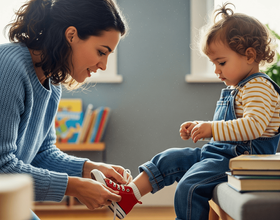
- Making sure their shoes support natural movement without restricting it.
If your child is tripping frequently or you have noticed changes in how they grip the floor with their toes, supportive footwear can make a real difference to their confidence and comfort while their bones continue to develop.
Will Pigeon-Toed Children Grow Out of It Naturally
The short answer is yes, in the vast majority of cases. Research shows that internal tibial torsion resolves on its own in 90–95% of children by age eight [6]. Most in-toeing patterns correct themselves as the bones mature, typically by ages eight to ten, with nothing more than time and monitoring needed.
Your child can absolutely live a full, active, and pain-free life with pigeon toes. The key is keeping an eye on their comfort, their activity levels, and whether the pattern is improving gradually over time. If it is, you are likely on the right track.
Learn About Kids' Foot Conditions:

References
1. Pigeon toes (Intoeing). (2026, April 24). Cleveland Clinic. https://my.clevelandclinic.org/health/diseases/22186-pigeon-toes-intoeing
2. Jarman, M. (2023, October 23). Pediatric In-Toeing (Pigeon toes) causes and treatment. Pediatric Foot & Ankle. https://pediatricfootankle.com/foot-conditions/in-toeing-pigeon-toes/
3. Femoral anteversion | Boston Children’s Hospital. (n.d.). https://www.childrenshospital.org/conditions-treatments/femoral-anteversion
4. Is your child Pigeon-Toed? How to correct and cope. (2017, February 7). Riley Children’s Health. https://www.rileychildrens.org/connections/is-your-child-pigeon-toed-how-to-correct-and-cope
5. parag@sancheti.com. (2026, April 16). Child Walking Inward? In-Toeing Causes & Treatment Guide. Sancheti Orthopaedic Hospital. https://sanchetihospital.org/blog/in-toeing-pigeon-toes-in-children-causes-and-solutions/
6. Gonzales, A. S., Saber, A. Y., Ampat, G., & Mendez, M. D. (2023, July 22). Intoeing. StatPearls - NCBI Bookshelf. https://www.ncbi.nlm.nih.gov/books/NBK499993/
FAQs
What is pigeon toed in toddlers?
It is when a toddler's feet point inward while walking or standing. It is a common developmental pattern that usually resolves on its own.
What causes pigeon toes in children?
The cause depends on age. In babies, it is often foot shape, in toddlers, a slight shinbone twist, and in older children, an inward rotation of the thigh bone.
Can pigeon toes be corrected without treatment?
Yes. Most cases resolve naturally by ages eight to ten without braces, orthotics, or surgery.
Is being pigeon toed bad for my child?
Not in most cases. It rarely causes pain or limits activity and typically straightens out as the child grows.
What does pigeon toed look like?
The toes point inward when the child stands or walks. It may look more obvious when they are tired or running.
When should I worry about pigeon toes in my toddler?
If your child has pain, trips constantly, the pattern only affects one side, or shows no improvement by age nine or ten, see a paediatrician.